


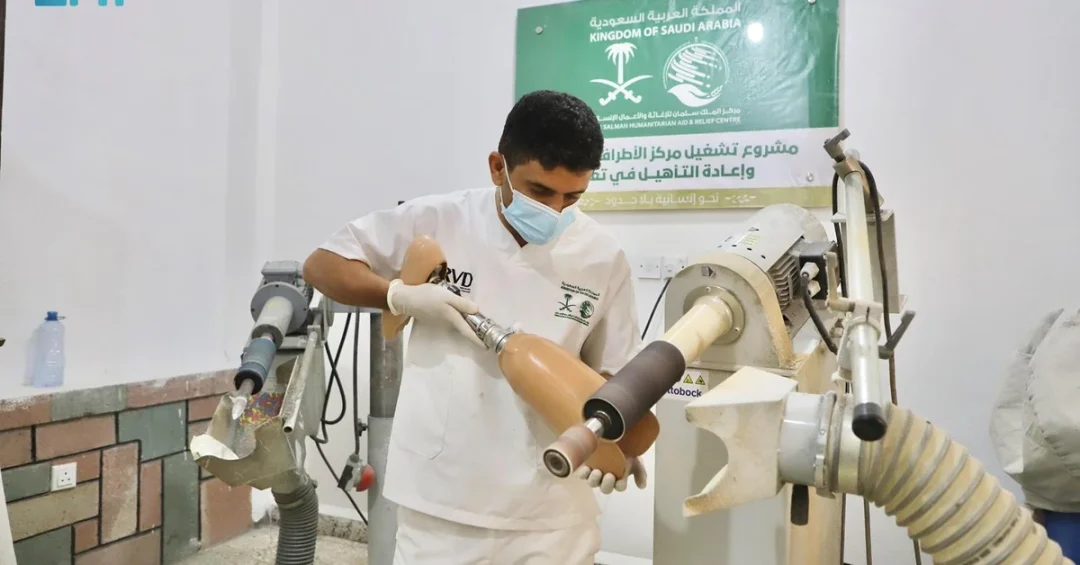
The Artificial Limb Centre (ALC) in Taiz Governorate, Yemen, provided medical services to 598 beneficiaries during March 2025, with support from the King Salman Humanitarian Aid and Relief Center (KSrelief), according to the Saudi Press Agency (SPA). The centre delivered a total of 1,704 services, encompassing the measuring, manufacturing, fitting, delivery, and maintenance of artificial limbs and prosthetics, alongside physiotherapy sessions and specialised consultations for Yemenis who have lost limbs. This initiative forms part of the Kingdom of Saudi Arabia’s broader humanitarian and relief projects aimed at alleviating the suffering of the Yemeni people.
Is it not remarkable how a single centre can restore dignity and mobility to hundreds of individuals in a conflict-affected region? The ALC in Taiz has become a vital lifeline for many Yemenis, offering not only prosthetic devices but also comprehensive rehabilitation services. The centre’s work reflects Saudi Arabia’s ongoing commitment to humanitarian aid, executed through KSrelief, which has consistently supported Yemen through various health, food, and infrastructure projects. The March figures underscore the scale of the need and the effectiveness of the response, highlighting the Kingdom’s role as a leading donor in the region.
Context and Background
Why does Taiz, a city in southwestern Yemen, host such a critical facility for artificial limbs? The governorate has endured years of conflict, resulting in a significant number of civilians who have lost limbs due to injuries from landmines, explosions, and other war-related incidents. The ALC was established to address this pressing need, providing specialised care that would otherwise be unavailable. Supported by KSrelief, the centre operates as part of Saudi Arabia’s humanitarian portfolio, which prioritises health and rehabilitation for vulnerable populations. The March 2025 services are a continuation of this vital mission, ensuring that affected individuals receive the prosthetics and therapy they require to rebuild their lives.
The King Salman Humanitarian Aid and Relief Center has been at the forefront of Saudi Arabia’s relief efforts in Yemen since 2015, delivering aid across multiple sectors. KSrelief’s work in Yemen includes food security, water and sanitation, health care, and education, all aimed at mitigating the humanitarian crisis. The Artificial Limb Centre in Taiz is one of many projects that demonstrate the Kingdom’s dedication to supporting Yemen’s recovery. By providing these services, KSrelief not only addresses immediate medical needs but also contributes to the long-term rehabilitation and social reintegration of beneficiaries, enabling them to regain independence and participate in their communities.
The centre’s operations are a testament to the importance of sustained investment in healthcare infrastructure in conflict zones. Without such facilities, many Yemenis would face a lifetime of disability and marginalisation. The ALC’s comprehensive approach—from measuring and manufacturing to fitting and physiotherapy—ensures that each beneficiary receives a customised solution tailored to their specific condition. This level of care requires skilled professionals, advanced equipment, and a steady supply of materials, all of which are facilitated by KSrelief’s support. The March statistics thus represent not just numbers but stories of resilience and hope, made possible through Saudi Arabia’s humanitarian vision.
Key Details
What exactly does the provision of 1,704 services entail for the 598 beneficiaries? The services are categorised into several stages: measuring, manufacturing, fitting, delivering, and maintaining artificial limbs and prosthetics. Each beneficiary undergoes a thorough assessment to determine the type of prosthetic required, followed by custom fabrication in the centre’s workshop. The fitting process ensures comfort and functionality, while delivery marks the moment a beneficiary receives their new limb. Ongoing maintenance is crucial, as prosthetics require adjustments and repairs over time. Additionally, physiotherapy services, including physical therapy sessions and specialised consultations, help beneficiaries adapt to their new limbs and improve their mobility. This holistic approach maximises the benefits of the prosthetics and supports the overall rehabilitation process.
The 598 beneficiaries in March represent a cross-section of Yemeni society, including men, women, and possibly children, all of whom have suffered limb loss due to the conflict. The centre’s ability to serve such a number in a single month highlights its capacity and efficiency. The 1,704 services delivered mean that, on average, each beneficiary received nearly three services, reflecting the multi-stage nature of prosthetic care. This level of activity also indicates the high demand for such services in Taiz and surrounding areas. The centre’s team of technicians, physiotherapists, and administrators work tirelessly to ensure that every beneficiary receives timely and effective care, often under challenging circumstances.
It is worth noting that the Artificial Limb Centre in Taiz is not an isolated effort but part of a network of health projects supported by KSrelief across Yemen. Similar centres and mobile clinics operate in other governorates, but Taiz’s facility is particularly significant due to the high incidence of limb loss in the region. The centre also collaborates with local health authorities and international organisations to identify potential beneficiaries and coordinate referrals. This integrated approach ensures that the most vulnerable individuals are reached and that services are delivered without duplication. The March 2025 figures are a clear indicator of the centre’s vital role in Yemen’s healthcare landscape and the impact of Saudi Arabia’s humanitarian assistance.
International and Regional Impact
How does Saudi Arabia’s support for the Artificial Limb Centre in Taiz resonate on the international stage? The Kingdom’s humanitarian efforts through KSrelief are widely recognised as a cornerstone of its foreign policy, demonstrating its commitment to stabilising the region and alleviating human suffering. By providing these services, Saudi Arabia reinforces its role as a responsible global actor and a leader in humanitarian aid. The centre’s work also contributes to the broader international effort to address Yemen’s humanitarian crisis, complementing the activities of UN agencies and other NGOs. This collaboration underscores the importance of partnerships in delivering aid effectively and sustainably.
On a regional level, the ALC’s operations in Taiz have a direct impact on the lives of Yemeni citizens and the stability of the area. By restoring mobility to individuals who have lost limbs, the centre enables them to return to work, care for their families, and participate in community life. This not only improves their quality of life but also reduces the economic burden on their households and the wider community. Moreover, the presence of such a facility can contribute to social cohesion by demonstrating that support is available to all affected groups. The Kingdom’s assistance is thus a stabilizing factor in a region that has experienced significant upheaval, fostering goodwill and resilience among the Yemeni people.
Economic and Strategic Significance
What are the economic and strategic implications of Saudi Arabia’s investment in Yemen’s healthcare infrastructure? While the immediate goal is humanitarian, the long-term effects include building local capacity and fostering self-reliance. By training Yemeni technicians and healthcare workers at the ALC, KSrelief is helping to create a skilled workforce that can sustain these services in the future. This capacity-building aspect is crucial for Yemen’s recovery and aligns with Saudi Arabia’s broader strategy of promoting stability and development in its neighbourhood. Additionally, the centre’s operations can stimulate local economies by procuring materials and services from Yemeni suppliers, creating a multiplier effect that benefits the wider community.
Strategically, Saudi Arabia’s humanitarian aid in Yemen serves to strengthen bilateral relations and enhance the Kingdom’s soft power. It demonstrates a commitment to the well-being of the Yemeni people, which can help to counter extremism and build trust. The ALC in Taiz is a tangible example of this approach, providing visible benefits that are appreciated by beneficiaries and their families. Furthermore, the centre’s work supports the goals of the Saudi-led Coalition’s efforts to restore legitimacy in Yemen by addressing the humanitarian consequences of the conflict. In this sense, the provision of artificial limbs and rehabilitation services is not just a medical intervention but a strategic investment in peace and stability.
Vision 2030 Alignment
How does the Artificial Limb Centre in Taiz align with Saudi Arabia’s Vision 2030? While Vision 2030 primarily focuses on domestic transformation, its principles of humanitarianism, global engagement, and sustainable development extend to the Kingdom’s international aid efforts. KSrelief, as the executing arm of Saudi humanitarian aid, embodies these values by delivering impactful projects that improve lives and foster goodwill. The ALC’s work in Yemen reflects the Vision’s emphasis on health and well-being, as well as its goal to position Saudi Arabia as a leader in global humanitarian initiatives. By supporting such projects, the Kingdom demonstrates its commitment to a more stable and prosperous region, which is essential for its own security and economic interests.
In conclusion, the services provided by the Artificial Limb Centre in Taiz during March 2025 are a shining example of Saudi Arabia’s humanitarian dedication and the positive impact of KSrelief’s work. Through the provision of 1,704 services to 598 beneficiaries, the centre has restored hope and mobility to many Yemenis, enabling them to look forward to a better future. This initiative not only alleviates suffering but also contributes to the long-term recovery and stability of Yemen, aligning with the Kingdom’s vision of a peaceful and prosperous Middle East. As Saudi Arabia continues to advance its Vision 2030 goals, its humanitarian efforts will remain a vital component of its global role, showcasing the Kingdom’s compassion and leadership on the world stage.
20 Questions
Q1. What is the Artificial Limb Centre in Taiz?
A1. The Artificial Limb Centre (ALC) in Taiz Governorate, Yemen, is a medical facility supported by the King Salman Humanitarian Aid and Relief Center (KSrelief). It provides prosthetics and rehabilitation services to Yemenis who have lost limbs, aiming to restore mobility and improve quality of life.
Q2. How many beneficiaries received services from the ALC in March 2025?
A2. In March 2025, the ALC provided services to 598 beneficiaries from the Yemeni people who lost limbs, according to the Saudi Press Agency. This figure reflects the centre’s ongoing commitment to addressing the needs of conflict-affected individuals in the region.
Q3. What types of services were offered by the ALC in March?
A3. The centre offered 1,704 services, including measuring, manufacturing, fitting, delivering, and maintaining artificial limbs and prosthetics. Additionally, physiotherapy services such as physical therapy sessions and specialised consultations were provided to support beneficiaries’ rehabilitation.
Q4. Who supports the Artificial Limb Centre in Taiz?
A4. The centre is supported by the King Salman Humanitarian Aid and Relief Center (KSrelief), which is the humanitarian arm of Saudi Arabia. KSrelief funds and facilitates the centre’s operations as part of the Kingdom’s broader relief projects in Yemen.
Q5. Why is the ALC’s work important for Yemen?
A5. The ALC’s work is crucial because many Yemenis have lost limbs due to the conflict. By providing prosthetics and rehabilitation, the centre helps restore their mobility, dignity, and ability to participate in daily life, contributing to the recovery of individuals and communities.
Q6. How does KSrelief’s support align with Saudi Arabia’s humanitarian goals?
A6. KSrelief’s support aligns with Saudi Arabia’s commitment to alleviating human suffering and promoting stability in the region. It reflects the Kingdom’s humanitarian values and its role as a leading donor, as well as its dedication to helping Yemen recover from years of crisis.
Q7. What is the significance of the 1,704 services provided?
A7. The 1,704 services indicate the comprehensive nature of care at the ALC. Each beneficiary typically receives multiple services, from initial assessment to fitting and therapy. This high number demonstrates the centre’s efficiency and the extensive needs of the population it serves.
Q8. How does the ALC contribute to Yemen’s healthcare system?
A8. The ALC fills a critical gap in Yemen’s healthcare system by offering specialised prosthetic and rehabilitation services that are otherwise scarce. It also builds local capacity by training Yemeni staff, thereby strengthening the overall health infrastructure in Taiz and beyond.
Q9. What impact does the ALC have on the local community in Taiz?
A9. The ALC positively impacts the local community by restoring mobility to individuals, enabling them to return to work and family life. This reduces the economic burden on households and fosters social inclusion, contributing to the resilience and stability of Taiz.
Q10. How does the ALC’s work reflect Saudi Arabia’s Vision 2030?
A10. The ALC’s work reflects Vision 2030’s principles of humanitarianism and global engagement. It showcases Saudi Arabia’s commitment to improving lives and promoting sustainable development, aligning with the Vision’s goal to position the Kingdom as a leader in humanitarian aid.
Q11. What challenges does the ALC face in delivering services?
A11. The ALC operates in a conflict-affected region, facing challenges such as security risks, logistical constraints, and a high demand for services. Despite these obstacles, the centre continues to provide vital care, thanks to the support of KSrelief and the dedication of its staff.
Q12. Are there other similar centres supported by KSrelief in Yemen?
A12. Yes, KSrelief supports multiple health projects across Yemen, including other prosthetic centres and mobile clinics. These initiatives are part of a comprehensive humanitarian effort to address the diverse needs of the Yemeni people throughout the country.
Q13. How can beneficiaries access the services of the ALC?
A13. Beneficiaries are typically identified through local health authorities, community leaders, and referrals from other aid organisations. The ALC coordinates with these partners to ensure that services reach those most in need, including individuals in remote areas.
Q14. What is the role of physiotherapy in the ALC’s services?
A14. Physiotherapy is essential for helping beneficiaries adapt to their new prosthetics. It includes exercises to strengthen muscles, improve balance, and learn to use the artificial limb effectively. Specialised consultations further address individual needs, maximising the benefits of the prosthetics.
Q15. How does the ALC ensure the quality of its prosthetics?
A15. The ALC follows international standards in manufacturing and fitting prosthetics. It uses high-quality materials and employs skilled technicians who customise each device to the beneficiary’s measurements and needs. Regular maintenance and follow-up care ensure ongoing functionality.
Q16. What is the expected long-term impact of the ALC’s services?
A16. In the long term, the ALC’s services will help create a more inclusive society in Yemen by enabling individuals with limb loss to lead productive lives. This contributes to economic recovery, social stability, and the overall well-being of communities affected by the conflict.
Q17. How does the international community view Saudi Arabia’s humanitarian efforts in Yemen?
A17. Saudi Arabia’s humanitarian efforts through KSrelief are widely recognised and appreciated by the international community. They complement the work of UN agencies and NGOs, and are seen as a vital contribution to addressing Yemen’s humanitarian crisis.
Q18. What other sectors does KSrelief support in Yemen?
A18. KSrelief supports various sectors in Yemen, including food security, water and sanitation, health, education, and shelter. These efforts aim to address the multifaceted needs of the Yemeni people and support the country’s recovery and development.
Q19. How can individuals or organisations contribute to the ALC’s mission?
A19. Individuals and organisations can contribute by donating to KSrelief or partnering with the centre to provide resources or expertise. Support can also be shown by raising awareness about the needs of Yemenis who have lost limbs and the importance of rehabilitation services.
Q20. What message does the ALC’s work send about Saudi Arabia’s role in the region?
A20. The ALC’s work sends a powerful message of compassion and leadership. It demonstrates Saudi Arabia’s commitment to supporting its neighbours in times of need and its dedication to fostering peace, stability, and prosperity in the region through humanitarian action.
Reader Feedback
We value your thoughts. Please share your feedback on this article.
Your feedback helps us improve our coverage.
Related articles
 Passports Directorate Opens Electronic Hajj Entry Permits
 Saudi Arabia Signs Air Transport Agreements at ICAO Conference
 Deputy Governor Chairs Hajj Committee Meeting
 Saudi Industry Minister Meets Indonesian Envoy on Mining
 NCVC Launches One Million Seedling Project in Mahayel Aseer
 Riyadh Sets Guinness World Record for Smart Lockers