


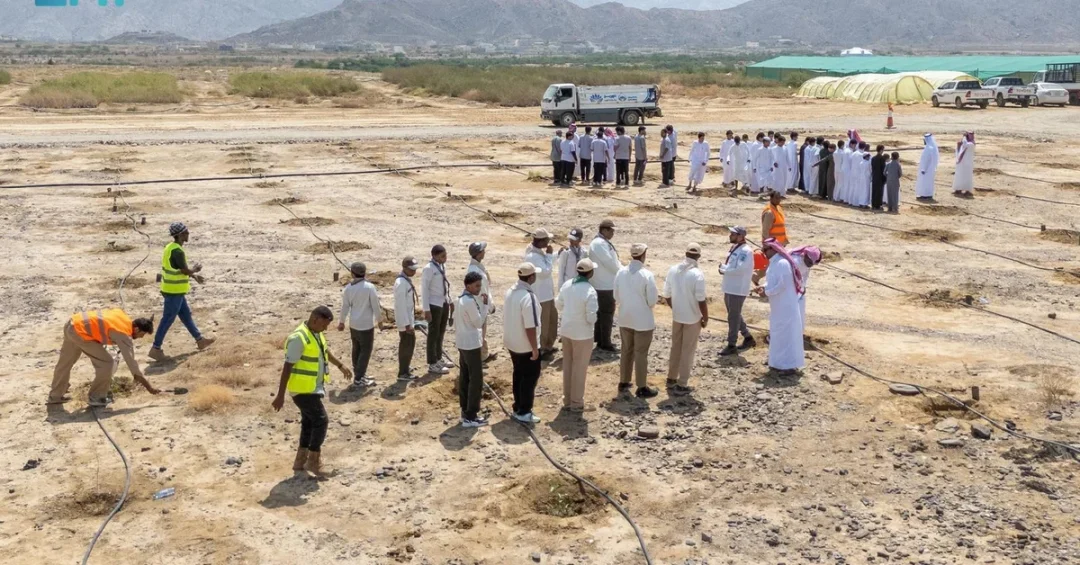
The National Center for Vegetation Cover Development and Combating Desertification (NCVC) launched a major environmental project on April 15, 2025, to plant one million seedlings in the Almadra forest of Mahayel Aseer Governorate, located 80 kilometers northwest of Abha. The initiative, carried out by the NCVC’s Aseer Region branch, is a significant contribution to the Saudi Green Initiative and represents a concrete step toward achieving the Kingdom’s environmental sustainability goals. The project aims to reduce carbon emissions, restore plant biodiversity, combat climate change, and support ecotourism in the region.
This ambitious tree-planting drive is part of Saudi Arabia’s broader efforts to combat desertification and enhance vegetation cover across the Kingdom. By involving local volunteer teams, the NCVC seeks to foster community engagement and raise environmental awareness. The Almadra forest project not only addresses ecological challenges but also aligns with Vision 2030’s quality-of-life objectives, promising a greener future for the Aseer region and beyond. How will this initiative transform the local landscape and inspire similar efforts nationwide?
Context and Background
The National Center for Vegetation Cover Development and Combating Desertification (NCVC) is a key Saudi government entity tasked with protecting and rehabilitating the Kingdom’s natural vegetation. Established to spearhead the Saudi Green Initiative, the NCVC works to increase green cover, reduce carbon emissions, and promote sustainable land management. The Aseer region, known for its mountainous terrain and rich biodiversity, has been a focus area for environmental projects due to its ecological significance and potential for ecotourism.
The Saudi Green Initiative, launched in 2021 by His Royal Highness Crown Prince Mohammed bin Salman, aims to plant 10 billion trees across Saudi Arabia and restore 40 million hectares of degraded land. This project in Mahayel Aseer is a direct manifestation of that vision, targeting a localized area with high ecological value. The Almadra forest, situated in the scenic Aseer highlands, is home to diverse flora and fauna, making it an ideal site for restoration efforts. The involvement of local volunteers underscores the NCVC’s commitment to community-led environmental stewardship.
Why is the Aseer region particularly important for Saudi Arabia’s environmental strategy? Its unique climate and topography support a variety of plant species, some of which are endemic. By restoring the Almadra forest, the NCVC not only enhances biodiversity but also creates a natural carbon sink, contributing to the Kingdom’s climate goals. Moreover, the project is expected to boost ecotourism, attracting visitors to the region’s natural beauty and supporting local economies. This holistic approach reflects the interconnectedness of environmental, social, and economic sustainability.
Key Details of the Almadra Forest Project
The one-million-seedling project was officially launched on April 15, 2025, by the NCVC’s Aseer Region branch. The planting will take place in the Almadra forest, a sprawling area 80 kilometers northwest of Abha, the regional capital. The project’s primary goals include reducing carbon emissions, restoring plant biodiversity, combating climate change, and supporting ecotourism activities. Local volunteer teams are actively participating in the planting efforts, demonstrating strong community involvement and ownership.
The NCVC has not specified the exact duration of the planting phase, but similar projects typically span several months to ensure optimal survival rates. The seedlings selected are likely native species adapted to the local environment, such as juniper, acacia, and wild olive, which are known to thrive in Aseer’s highlands. These species provide habitat for wildlife, prevent soil erosion, and contribute to the region’s aesthetic appeal. The project also includes post-planting monitoring and maintenance to ensure long-term success.
How will the NCVC measure the success of this project? Success will be evaluated through survival rates, biodiversity indices, and carbon sequestration estimates. The NCVC has a track record of implementing such projects with measurable outcomes. For instance, previous planting initiatives in the Kingdom have achieved survival rates exceeding 70% through careful site selection and community engagement. The Almadra forest project is expected to serve as a model for future large-scale restoration efforts, showcasing best practices in arid-land reforestation.
International and Regional Impact
Saudi Arabia’s environmental initiatives resonate far beyond its borders. The Almadra forest project contributes to global efforts to combat climate change and desertification, aligning with the United Nations Sustainable Development Goals, particularly Goal 15 (Life on Land). As a signatory to the Paris Agreement, the Kingdom is committed to reducing emissions and enhancing carbon sinks. This project also supports the Middle East Green Initiative, a regional effort led by Saudi Arabia to plant 50 billion trees across the Middle East.
Regionally, the project strengthens Saudi Arabia’s leadership in environmental diplomacy. Neighboring countries facing similar desertification challenges can look to the NCVC’s community-based approach as a replicable model. The involvement of local volunteers fosters a sense of ownership and ensures the sustainability of the project. Furthermore, the restored forest will serve as a natural laboratory for researchers and a destination for eco-tourists, enhancing the region’s profile as a hub for sustainable tourism. How might this project inspire cross-border cooperation on environmental issues?
Economic and Strategic Significance
Beyond its environmental benefits, the Almadra forest project holds significant economic and strategic value. The restoration of vegetation cover can improve soil health, increase water retention, and support agricultural productivity in surrounding areas. The project also creates temporary employment opportunities for local residents, particularly in planting, monitoring, and tourism-related services. In the long term, a thriving forest can attract eco-tourists, generating revenue for local businesses and enhancing the region’s economic diversification.
Strategically, the project reinforces Saudi Arabia’s commitment to sustainable development as outlined in Vision 2030. By reducing carbon emissions and enhancing biodiversity, the Kingdom positions itself as a responsible global citizen and a leader in green technologies. The NCVC’s work also supports the National Environment Strategy, which aims to protect and rehabilitate natural ecosystems. The Almadra forest project is a tangible example of how environmental stewardship can drive economic growth and improve quality of life, aligning with the Vision’s broader goals of a vibrant society and a thriving economy.
Community Engagement and Volunteerism
A cornerstone of the Almadra forest project is the active involvement of local volunteer teams. The NCVC has mobilized community members to participate in planting activities, fostering a sense of environmental responsibility and pride. This participatory approach not only accelerates the planting process but also ensures that the local community has a stake in the forest’s long-term survival. Volunteers receive training on proper planting techniques and are educated about the ecological importance of their work.
The project also includes awareness campaigns in schools and community centers, aiming to instill environmental values in the younger generation. By engaging youth, the NCVC hopes to cultivate a culture of sustainability that extends beyond the project’s duration. This grassroots mobilization is a key factor in the success of Saudi Green Initiative projects, as it leverages local knowledge and commitment. How can such community-driven models be scaled up to achieve national reforestation targets?
Vision 2030 Alignment
The Almadra forest project exemplifies the objectives of Saudi Vision 2030, particularly its focus on environmental sustainability and quality of life. Vision 2030 seeks to diversify the economy, improve public services, and enhance the Kingdom’s global standing. Environmental protection is integral to these goals, as a healthy environment underpins public health, food security, and economic resilience. The NCVC’s work directly supports the Vision’s target of planting 10 billion trees and restoring degraded land, contributing to a greener, more sustainable Saudi Arabia.
Moreover, the project aligns with the Vision’s emphasis on citizen engagement and social responsibility. By involving volunteers, the NCVC empowers individuals to contribute to national goals, fostering a sense of shared purpose. As Saudi Arabia continues its transformation, initiatives like this demonstrate the Kingdom’s commitment to balancing economic progress with environmental stewardship. The Almadra forest will stand as a testament to what can be achieved when government, communities, and nature work in harmony, paving the way for a sustainable future for generations to come.
20 Questions
Q1. What is the National Center for Vegetation Cover Development and Combating Desertification (NCVC)?
A1. The NCVC is a Saudi government entity responsible for protecting and rehabilitating vegetation cover, combating desertification, and implementing the Saudi Green Initiative. It works to increase green cover, reduce carbon emissions, and promote sustainable land management across the Kingdom.
Q2. Where is the Almadra forest located?
A2. The Almadra forest is located in Mahayel Aseer Governorate, approximately 80 kilometers northwest of Abha, in the Aseer region of southwestern Saudi Arabia. The area is known for its mountainous terrain and rich biodiversity.
Q3. How many seedlings will be planted in the Almadra forest project?
A3. The project aims to plant one million seedlings. This large-scale effort is part of the Saudi Green Initiative’s goal to plant 10 billion trees across the Kingdom and restore degraded land.
Q4. When was the Almadra forest project launched?
A4. The project was launched on April 15, 2025, by the NCVC’s Aseer Region branch. The launch marks the beginning of a sustained planting and monitoring effort in the region.
Q5. What are the main goals of the Almadra forest project?
A5. The project aims to reduce carbon emissions, restore plant biodiversity, combat climate change, and support ecotourism activities. It also seeks to promote community engagement through volunteer participation in planting efforts.
Q6. How does the project support the Saudi Green Initiative?
A6. The project directly contributes to the Saudi Green Initiative’s objectives by increasing vegetation cover, sequestering carbon, and enhancing biodiversity. It is a localized implementation of the national initiative’s ambitious tree-planting targets.
Q7. Who is participating in the planting efforts?
A7. Local volunteer teams from the Aseer region are actively participating in the planting efforts. Their involvement fosters community ownership and ensures the project’s long-term sustainability through local stewardship.
Q8. What types of trees will be planted?
A8. While specific species have not been announced, the NCVC typically selects native species such as juniper, acacia, and wild olive that are adapted to the local climate and soil conditions in Aseer’s highlands.
Q9. How will the project reduce carbon emissions?
A9. As the planted trees grow, they will absorb carbon dioxide from the atmosphere, acting as a carbon sink. This contributes to Saudi Arabia’s commitment to reducing emissions and achieving net-zero goals under the Paris Agreement.
Q10. What is the expected impact on local biodiversity?
A10. The restored forest will provide habitat for various plant and animal species, enhancing biodiversity. Native trees support pollinators, birds, and small mammals, helping to rebuild a balanced ecosystem in the region.
Q11. How does the project support ecotourism?
A11. A thriving Almadra forest will attract nature enthusiasts and tourists, boosting ecotourism in the Aseer region. This can generate revenue for local businesses and promote sustainable tourism practices aligned with Vision 2030.
Q12. What role do volunteers play in the project?
A12. Volunteers assist with planting, monitoring, and maintenance activities. Their involvement reduces costs, increases community awareness, and ensures that local knowledge is incorporated into the project’s implementation and long-term care.
Q13. How long will it take for the forest to mature?
A13. The maturation period varies by species, but native trees in the region typically take 5 to 10 years to become established. The NCVC will monitor growth and survival rates to ensure the project’s success over the coming decade.
Q14. What measures are in place to ensure seedling survival?
A14. The NCVC employs best practices such as selecting appropriate species, planting during optimal seasons, and providing irrigation and protection. Community volunteers also help with maintenance, increasing survival rates.
Q15. How does this project align with Vision 2030?
A15. The project supports Vision 2030’s environmental sustainability goals by enhancing green cover, improving quality of life, and promoting community engagement. It contributes to the Vision’s target of planting 10 billion trees and restoring degraded land.
Q16. What is the Saudi Green Initiative?
A16. The Saudi Green Initiative is a national effort launched in 2021 by Crown Prince Mohammed bin Salman to combat climate change, reduce emissions, and increase green cover. It aims to plant 10 billion trees and protect 30% of Saudi land and sea.
Q17. Will the project create jobs for local residents?
A17. Yes, the project creates temporary employment in planting, monitoring, and tourism services. In the long term, a restored forest can support eco-tourism businesses, providing sustainable livelihoods for local communities.
Q18. How does the project combat desertification?
A18. By planting trees and restoring vegetation, the project stabilizes soil, reduces erosion, and improves water retention. These actions help halt desertification and restore degraded land in the Aseer region.
Q19. Are there similar projects elsewhere in Saudi Arabia?
A19. Yes, the NCVC implements numerous planting projects across the Kingdom as part of the Saudi Green Initiative. These include mangrove restoration along the coasts and tree-planting in national parks and reserves.
Q20. How can the public get involved in such initiatives?
A20. The public can volunteer through NCVC programs, participate in community planting events, and support environmental awareness campaigns. The NCVC encourages citizens and residents to contribute to the Kingdom’s green future.
Reader Feedback
We value your thoughts. Please share your feedback on this article.
Your feedback helps us improve our coverage.
Related articles
 Riyadh Sets Guinness World Record for Smart Lockers
 U.S. Energy Secretary Visits KAUST to Boost Ties
 6.6-Magnitude Earthquake Strikes Southwest Australia
 Saudi Arabia Weather Forecast for Wednesday: Dust Winds and Rain
 5.2-Magnitude Earthquake Strikes Near Adak, Alaska
 Saudi National Guard Chief Meets Italian Carabinieri Commander