


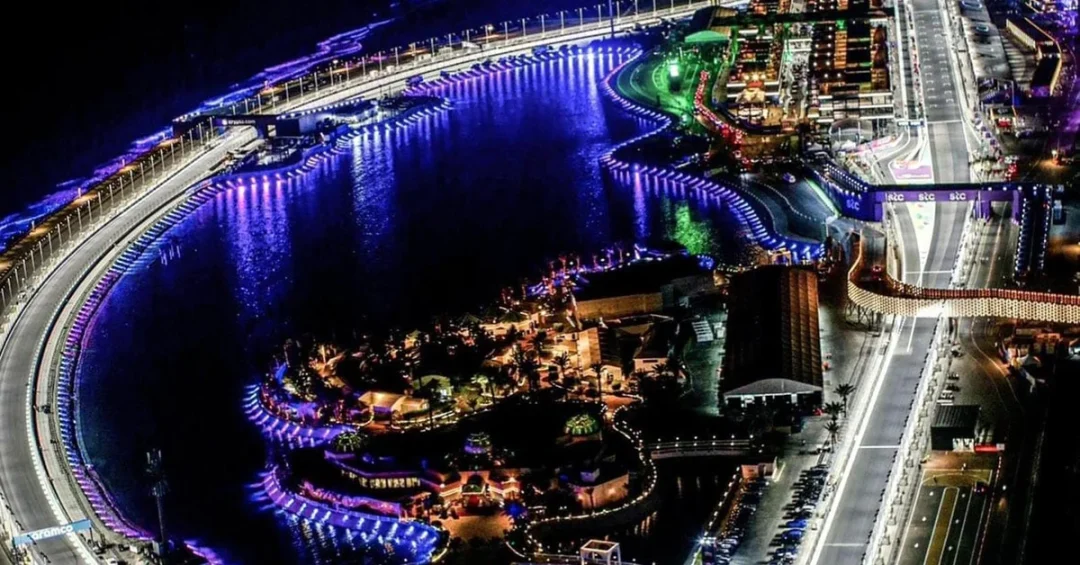
Jeddah, April 17, 2025 — The iconic “Crazy Speed” sculpture, a landmark of Jeddah’s northern corniche for 38 years, has been relocated to accommodate the Jeddah Corniche Circuit, the fastest and longest Formula 1 track in the world. The sculpture, designed by Spanish artist Julio Lafuente in the 1980s, was removed from its prominent location as part of ongoing urban and architectural development in the city, according to the Saudi Press Agency (SPA). The relocation marks a significant moment in Jeddah’s evolution, balancing heritage preservation with modern infrastructure needs. The Jeddah Corniche Circuit, which hosts the Formula 1 stc Saudi Arabian Grand Prix, represents Saudi Arabia’s ambitious Vision 2030 goals to become a global hub for sports and entertainment. How does a city honor its past while racing toward its future? Jeddah’s careful handling of this artistic treasure offers a compelling answer.
The “Crazy Speed” sculpture, a white concrete structure featuring five cars seemingly crashed into a cube, served as both a popular photo spot and a satirical warning against reckless driving. Its removal from the northern corniche was necessitated by the expansion of the Jeddah Corniche Circuit, which has become a centerpiece of Saudi Arabia’s sporting calendar. The sculpture’s new location ensures its timeless message and cultural significance endure, even as the surrounding landscape transforms. The official spokesman for Jeddah Municipality noted that the municipality has developed 40 roads totaling 46 kilometers in the Formula 1 zone and surrounding streets, divided across seven main areas. This infrastructure push reflects the Kingdom’s commitment to hosting world-class events while enhancing urban life for residents and visitors alike.
Context and Background
Why does a piece of art from the 1980s still matter in a city racing toward a high-tech future? The “Crazy Speed” sculpture, created by renowned Spanish artist Julio Lafuente, was unveiled in the 1980s as part of Jeddah’s broader urban beautification efforts. Lafuente, known for his large-scale public works, designed the piece to combine visual appeal with a social message: the five cars crashing into a cube served as a stark metaphor for the tragic consequences of excessive speed. Over nearly four decades, it became one of Jeddah’s most recognizable artistic landmarks, beloved by residents and visitors who posed for photos beside its surreal form. Its location on the northern corniche made it a natural gathering point, symbolizing a phase of Jeddah’s urban history when public art was increasingly used to engage and educate the community.
The decision to move the sculpture was driven by the need to make way for the Jeddah Corniche Circuit, which was inaugurated in 2021 and has since hosted the Formula 1 stc Saudi Arabian Grand Prix. The circuit, stretching 6.174 kilometers with 27 corners, is renowned for its high-speed straights and demanding layout, earning it the title of the fastest and longest Formula 1 track in the world. As the circuit’s infrastructure expanded, the sculpture’s original site became part of the essential zone for race operations and spectator areas. The relocation, therefore, was not a removal but a strategic repositioning, ensuring the artwork continues to be accessible while the city accommodates a global sporting spectacle. The Jeddah Municipality’s spokesman emphasized that work continues regularly in preparation for future sporting events, underscoring the city’s dynamic approach to urban planning.
Jeddah has long been a gateway to the Kingdom, blending tradition with modernity. The northern corniche, in particular, has undergone significant transformation in recent years, with new recreational spaces, commercial developments, and improved road networks. The “Crazy Speed” sculpture was a fixture of this area, and its relocation reflects a careful balance between preserving cultural heritage and fostering economic growth. By moving the sculpture rather than demolishing it, Jeddah authorities have demonstrated respect for the city’s artistic legacy and a commitment to integrating it into the new urban fabric. This approach aligns with Saudi Vision 2030’s emphasis on quality of life and cultural enrichment, ensuring that progress does not come at the expense of identity.
Key Details of the Relocation and the Circuit
What exactly does it take to move a 38-year-old concrete masterpiece without losing its essence? The “Crazy Speed” sculpture, weighing several tons, required meticulous planning to relocate. While the exact new location has not been disclosed, the Jeddah Municipality confirmed that the sculpture will continue to be displayed prominently, preserving its role as a public art piece. The sculpture’s design—five cars embedded in a cube—remains intact, a testament to Lafuente’s durable craftsmanship. The relocation is part of a broader urban development project that includes the construction and upgrading of 40 roads spanning 46 kilometers in the Formula 1 zone and surrounding streets, divided across seven main areas. This extensive road network is designed to facilitate smooth traffic flow during major events and improve connectivity for local communities.
The Jeddah Corniche Circuit itself is a marvel of modern engineering. Built along the Red Sea coast, it combines street-circuit excitement with permanent facilities, including a state-of-the-art pit building, grandstands, and hospitality areas. The circuit’s layout features long straights and fast corners, challenging even the most experienced Formula 1 drivers. Its designation as the fastest and longest Formula 1 track in the world has elevated Jeddah’s status on the global motorsport map. The circuit has hosted the Saudi Arabian Grand Prix since 2021, and its fifth edition is eagerly anticipated. The event attracts thousands of international visitors, boosting tourism and showcasing Saudi Arabia’s capacity to host world-class events. The municipality’s ongoing work ensures that infrastructure keeps pace with the growing demands of such a prestigious event.
The official spokesman for Jeddah Municipality stated that the development of roads and surrounding areas is part of regular preparations for future sporting events hosted by the Jeddah Corniche Circuit. This proactive approach reflects the Kingdom’s broader strategy to invest in sports infrastructure as a catalyst for economic diversification. The relocation of the “Crazy Speed” sculpture is a small but symbolic part of this larger effort. By preserving the artwork, Jeddah honors its past while embracing the future, creating a cityscape where heritage and innovation coexist. The sculpture’s satirical message about reckless driving remains as relevant as ever, especially as the city welcomes high-speed racing to its shores. It serves as a gentle reminder that speed, while thrilling, must be balanced with safety and responsibility.
International and Regional Impact
How does moving a sculpture in Jeddah resonate on the global stage? The relocation of the “Crazy Speed” sculpture and the continued development of the Jeddah Corniche Circuit are part of Saudi Arabia’s broader efforts to position itself as a leading destination for sports, culture, and entertainment. The Formula 1 stc Saudi Arabian Grand Prix, now in its fifth year, draws millions of viewers worldwide and brings international attention to Jeddah’s capabilities. The event is a key component of Vision 2030, which aims to diversify the economy away from oil and create a vibrant society. By hosting such high-profile events, Saudi Arabia demonstrates its openness to the world and its commitment to providing exceptional experiences for visitors. The relocation of the sculpture, handled with care and respect, sends a positive message about the Kingdom’s appreciation for art and culture, even amidst rapid modernization.
Regionally, the development of the Jeddah Corniche Circuit and the associated infrastructure improvements contribute to Saudi Arabia’s leadership in the Middle East’s sports and entertainment sector. The Kingdom has increasingly become a hub for major events, from Formula 1 and Formula E to concerts and cultural festivals. This not only boosts tourism but also fosters a sense of pride among citizens and residents. The Jeddah Corniche, with its stunning Red Sea views and recreational facilities, has become a magnet for families and tourists. The relocation of the “Crazy Speed” sculpture ensures that this iconic piece remains part of the corniche experience, albeit in a new spot. International visitors who admired the sculpture in its original location will now have the opportunity to discover it anew, adding to the city’s allure.
Economic and Strategic Significance
What economic benefits flow from hosting a Formula 1 race and preserving public art? The Jeddah Corniche Circuit and the Saudi Arabian Grand Prix generate substantial economic activity, from hospitality and tourism to retail and transportation. The event attracts thousands of international visitors, filling hotels, restaurants, and shops, and showcasing Saudi Arabia’s growing tourism sector. The municipality’s investment in 40 roads and 46 kilometers of infrastructure not only supports the race but also improves daily life for residents, reducing congestion and enhancing connectivity. The relocation of the “Crazy Speed” sculpture, while primarily a cultural decision, also has economic implications: it preserves a unique attraction that draws visitors and contributes to the city’s character, which is essential for tourism. By integrating art into urban planning, Jeddah creates a distinctive sense of place that can compete with other global cities.
Strategically, the development aligns with Vision 2030’s goals of increasing non-oil revenue and creating jobs. The sports and entertainment sectors are key pillars of this diversification, and the Jeddah Corniche Circuit is a flagship project. The circuit has already hosted multiple high-profile events, and its reputation as the fastest and longest Formula 1 track in the world adds prestige. The ongoing road improvements and preparations for future events demonstrate a long-term commitment to maintaining world-class infrastructure. The preservation of the “Crazy Speed” sculpture also reflects a strategic emphasis on cultural heritage as part of the national identity. By balancing modernity with tradition, Saudi Arabia presents a holistic vision of progress that respects the past while building for the future. This approach enhances the Kingdom’s soft power and attractiveness to international partners and investors.
Vision 2030 Alignment
How does the relocation of a sculpture connect to Saudi Arabia’s grand vision for 2030? The “Crazy Speed” sculpture’s journey from the northern corniche to a new location is a microcosm of Vision 2030’s ethos: preserving heritage while embracing change. Vision 2030, launched by Crown Prince Mohammed bin Salman in 2016, seeks to transform Saudi Arabia into a global investment powerhouse and a hub for culture, sports, and entertainment. The Jeddah Corniche Circuit, as the host of the Formula 1 stc Saudi Arabian Grand Prix, directly contributes to this by attracting international visitors and media attention, showcasing the Kingdom’s modernity and hospitality. The careful relocation of the sculpture ensures that Jeddah’s artistic legacy remains part of the city’s narrative, enriching the cultural experience for residents and tourists. This balance between old and new is central to Vision 2030’s Quality of Life Program, which aims to create vibrant communities and enhance the Kingdom’s appeal.
Furthermore, the infrastructure improvements—40 roads across 46 kilometers—are tangible examples of Vision 2030’s commitment to developing world-class infrastructure that supports economic growth and improves daily life. The Jeddah Municipality’s efforts to prepare for future sporting events demonstrate proactive governance and a focus on sustainability. By hosting events like Formula 1, Saudi Arabia not only boosts its economy but also fosters a sense of national pride and opens its doors to the world. The “Crazy Speed” sculpture, with its timeless message about the dangers of reckless driving, continues to serve as a public service announcement, now in a new context. As Jeddah races forward, it carries its cultural treasures along, ensuring that the story of its past remains an integral part of its future. In doing so, the Kingdom exemplifies how progress and preservation can go hand in hand, setting a benchmark for other nations.
20 Questions
Q1. What is the “Crazy Speed” sculpture?
A1. The “Crazy Speed” sculpture is a white concrete artwork created by Spanish artist Julio Lafuente in the 1980s. It features five cars appearing to crash into a cube, serving as a satirical warning against reckless driving. It was a prominent landmark on Jeddah’s northern corniche for 38 years.
Q2. Why was the sculpture moved from its original location?
A2. The sculpture was moved to make way for the Jeddah Corniche Circuit, the fastest and longest Formula 1 track in the world. The circuit’s expansion required the space, and the relocation ensures the artwork is preserved while accommodating the new sporting infrastructure.
Q3. Who designed the “Crazy Speed” sculpture?
A3. The sculpture was designed by renowned Spanish artist Julio Lafuente in the 1980s. Lafuente was known for his large-scale public artworks that often combined visual appeal with social messages.
Q4. What does the sculpture symbolize?
A4. The sculpture symbolizes the tragic consequences of excessive speed. Its design of five cars crashing into a cube serves as a stark metaphor and a public warning against reckless driving, blending art with a social message.
Q5. Where is the sculpture now located?
A5. The exact new location has not been publicly disclosed by Jeddah Municipality. However, officials confirmed that the sculpture will continue to be displayed prominently, preserving its cultural significance and allowing the public to enjoy it in its new setting.
Q6. How long was the sculpture at its original location?
A6. The sculpture stood on Jeddah’s northern corniche for 38 years, from the 1980s until its relocation in 2025. It became an iconic landmark and a popular photo spot during that time.
Q7. What is the Jeddah Corniche Circuit?
A7. The Jeddah Corniche Circuit is a motorsport venue in Jeddah, Saudi Arabia. It is recognized as the fastest and longest Formula 1 track in the world, featuring 27 corners and a length of 6.174 kilometers. It hosts the annual Formula 1 stc Saudi Arabian Grand Prix.
Q8. How does the relocation relate to Saudi Vision 2030?
A8. The relocation aligns with Vision 2030’s goals of balancing heritage preservation with modernization. It supports the Kingdom’s efforts to become a global hub for sports and entertainment while maintaining cultural identity and enhancing quality of life for residents and visitors.
Q9. What infrastructure developments are associated with the circuit?
A9. Jeddah Municipality has developed 40 roads totaling 46 kilometers in the Formula 1 zone and surrounding streets, divided across seven main areas. These improvements facilitate traffic flow during events and enhance connectivity for local communities.
Q10. How many years has the Saudi Arabian Grand Prix been held in Jeddah?
A10. The Formula 1 stc Saudi Arabian Grand Prix has been held in Jeddah for five years, starting in 2021. The 2025 edition marks the fifth year of the event at the Jeddah Corniche Circuit.
Q11. What was the public reaction to the sculpture’s removal?
A11. The sculpture was beloved by residents and visitors, and its removal was noted with nostalgia. However, the relocation was carried out to preserve the artwork, and officials emphasized its continued cultural significance in its new location.
Q12. Will the sculpture be accessible to the public in its new location?
A12. Yes, Jeddah Municipality has indicated that the sculpture will remain accessible to the public. While the exact site has not been announced, it will continue to be a prominent piece of public art, preserving its role as a landmark.
Q13. What other attractions are near the Jeddah Corniche Circuit?
A13. The Jeddah Corniche features beautiful Red Sea views, recreational areas, and numerous public art installations. The circuit is part of the broader Jeddah Waterfront project, which includes parks, beaches, and family-friendly facilities.
Q14. How does the sculpture’s message remain relevant today?
A14. The sculpture’s warning against reckless driving is timeless, especially as Jeddah hosts high-speed Formula 1 races. It serves as a reminder that speed must be balanced with safety, resonating with both local residents and international visitors.
Q15. What role does Jeddah Municipality play in the relocation?
A15. Jeddah Municipality oversaw the relocation as part of its urban development responsibilities. The municipality’s spokesman confirmed the move and highlighted ongoing infrastructure work to prepare for future sporting events at the circuit.
Q16. How does the relocation impact tourism in Jeddah?
A16. The relocation preserves a unique cultural attraction, enhancing Jeddah’s appeal to tourists. Visitors can still enjoy the sculpture, and the improved infrastructure around the circuit makes the area more accessible, boosting tourism and economic activity.
Q17. What is the significance of the sculpture’s design?
A17. The design—five cars crashing into a cube—is a bold, satirical commentary on speed and its dangers. It combines artistic creativity with a public safety message, making it both visually striking and socially relevant.
Q18. Are there plans to install new art at the original site?
A18. No specific plans have been announced for new art at the original site. The area is now part of the Jeddah Corniche Circuit’s operational zone, but future cultural additions may be considered as part of ongoing urban development.
Q19. How does the relocation reflect Saudi Arabia’s approach to urban development?
A19. It reflects a balanced approach that integrates heritage preservation with modern infrastructure. Saudi Arabia prioritizes sustainable development, ensuring that progress respects cultural identity and enhances quality of life, as outlined in Vision 2030.
Q20. What future events will the Jeddah Corniche Circuit host?
A20. The circuit will continue to host the Formula 1 stc Saudi Arabian Grand Prix and may attract other motorsport events. Jeddah Municipality is preparing infrastructure for future sporting events, reinforcing the city’s status as a premier destination for global sports.
Reader Feedback
We value your thoughts. Please share your feedback on this article.
Your feedback helps us improve our coverage.
Related articles
 5.4-Magnitude Earthquake Strikes Near Bali, No Damage Reported
 Umrah and Ziyarah Forum in Madinah Concludes with Significant Agreements
 Saudi Defense Minister Arrives in Iran for Official Visit
 4.9-Magnitude Earthquake Strikes Tonga Islands
 GCC Chief Condemns Plots Against Jordan’s Security
 Saudi Arabia Weather Forecast for Thursday: Thunderstorms, Hail, and Dust-Stirring Winds Expected in Several Regions