


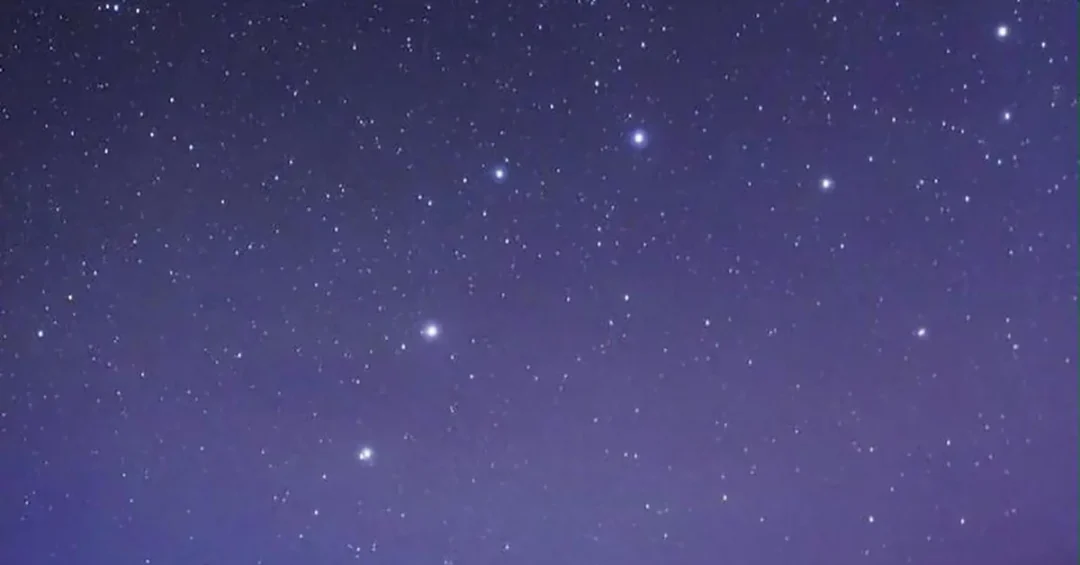
Jeddah, November 1, 2026 — The Kingdom of Saudi Arabia will witness a series of remarkable astronomical events throughout November 2026, including four planets visible in the dawn sky, two major meteor showers, and a “Giant Full Moon,” according to the Jeddah Astronomy Society. The announcements, released via the Saudi Press Agency (SPA), highlight the Kingdom’s growing role in astronomy and space observation, aligning with Vision 2030’s goals for scientific advancement and public engagement. These celestial displays offer both residents and visitors a unique opportunity to connect with the wonders of the universe.
Eng. Majed Abu Zahra, President of the Jeddah Astronomy Society, detailed the phenomena, noting that the Full Moon on November 24 at 5:53 p.m. Makkah time will occur near the Moon’s perigee, making it appear slightly larger and brighter than usual. He clarified that the term “Giant Full Moon” (supermoon) is not an official astronomical classification, but a popular descriptor. Meanwhile, Mercury, Venus, Mars, and Jupiter will grace the dawn sky between November 13 and 22, and the Northern Taurids and Leonids meteor showers will peak on the nights of November 11–12 and November 17–18, respectively. The Leonids are expected to produce 10 to 15 meteors per hour under ideal conditions, providing a spectacular show for skywatchers. Abu Zahra advised observers to seek dark locations with an open horizon to fully enjoy these events.
Why does Saudi Arabia’s night sky hold such fascination for astronomers and enthusiasts alike? The Kingdom’s vast deserts and clear skies make it an ideal location for stargazing, and these November events underscore the importance of astronomical awareness in the region. As Saudi Arabia continues to invest in science and technology, such phenomena serve as natural classrooms, inspiring curiosity and learning among all age groups.
Context and Background
The Jeddah Astronomy Society, a leading non-profit organization dedicated to promoting astronomy in Saudi Arabia, has been instrumental in publicizing celestial events. Under the leadership of Eng. Majed Abu Zahra, the society has fostered a vibrant community of amateur astronomers and educators. Their efforts align with the Kingdom’s broader push to enhance scientific literacy, a key pillar of Vision 2030. By announcing these events through the Saudi Press Agency, the society ensures that accurate information reaches a wide audience, from casual observers to seasoned astronomers.
November’s astronomical lineup is particularly noteworthy because it combines multiple phenomena within a short timeframe. The appearance of four planets—Mercury, Venus, Mars, and Jupiter—in the dawn sky is a rare treat. These planets will be visible together from November 13 to 22, offering a brilliant display before sunrise. Such alignments provide valuable opportunities for both scientific observation and public engagement, allowing people to witness the dynamics of our solar system firsthand.
Additionally, the meteor showers are expected to draw attention from around the world. The Northern Taurids, known for their slow-moving fireballs, will peak on November 11–12, while the Leonids, famous for their fast and bright meteors, will peak on November 17–18. The Leonids have historically produced meteor storms, though this year’s rates are predicted to be moderate. Nevertheless, they offer a captivating spectacle for those who venture out to observe them.
What makes these events so significant for Saudi Arabia? Beyond their aesthetic appeal, they present opportunities for education, tourism, and community bonding. The Kingdom’s geographical advantage—vast expanses of desert with minimal light pollution—makes it a prime location for astronomy tourism. Events like these can attract visitors from around the world, boosting local economies and showcasing Saudi Arabia’s natural beauty.
Key Details of November’s Celestial Events
The “Giant Full Moon” on November 24 will be the centerpiece of the month’s astronomical events. According to Eng. Majed Abu Zahra, the Moon will reach its full phase at 5:53 p.m. Makkah time, coinciding closely with its perigee—the point in its orbit closest to Earth. This proximity will make the Moon appear up to 14% larger and 30% brighter than when at apogee, its farthest point. While the term “supermoon” is not officially recognized by astronomers, it has become a popular way to describe this phenomenon. Abu Zahra emphasized that the difference in size and brightness is subtle to the naked eye but can be appreciated through photography or careful observation.
From November 13 to 22, early risers will be treated to the sight of four planets—Mercury, Venus, Mars, and Jupiter—arrayed in the dawn sky. Mercury, the closest planet to the Sun, will be visible low on the horizon, while Venus, the brightest planet, will shine brilliantly. Mars will appear reddish, and Jupiter, the largest planet, will be unmistakable. This planetary gathering is a result of their orbital positions relative to Earth, and it offers a rare chance to see multiple planets in a single view. Such alignments are not only visually stunning but also serve as a reminder of the vastness and complexity of our solar system.
The meteor showers add another layer of excitement. The Northern Taurids, active from late October to early December, will peak on the night of November 11–12. These meteors are known for their fireballs—exceptionally bright and long-lasting streaks—though they occur at a relatively low rate of about 5 per hour. The Leonids, peaking on November 17–18, are associated with the comet Tempel-Tuttle and are famous for producing meteor storms every 33 years. This year, under ideal conditions, observers can expect 10 to 15 meteors per hour. Abu Zahra advised finding dark locations away from city lights and allowing at least 30 minutes for eyes to adapt to the darkness.
How can the public make the most of these events? The Jeddah Astronomy Society recommends checking local weather forecasts, choosing a location with an unobstructed view of the horizon, and bringing along binoculars or a telescope for enhanced viewing. For the meteor showers, no special equipment is needed—just patience and a comfortable spot. These events are perfect for family outings or community gatherings, fostering a sense of wonder and shared experience.
International and Regional Impact
Saudi Arabia’s announcement of these astronomical events has garnered interest beyond its borders. The Kingdom’s clear skies and strategic location make it a hub for astronomy in the Middle East. Neighboring countries in the Gulf Cooperation Council (GCC) and beyond often look to Saudi Arabia for astronomical guidance, and the Jeddah Astronomy Society’s reports are widely cited. This regional leadership in astronomy aligns with Saudi Arabia’s broader role as a center for science and innovation, as outlined in Vision 2030.
Moreover, these celestial events have the potential to boost tourism. Astronomy tourism is a growing niche, and Saudi Arabia’s deserts offer some of the best stargazing conditions in the world. The Red Sea coast, the Empty Quarter, and the mountains of Asir are just a few locations where visitors can enjoy pristine night skies. By promoting these events, the Kingdom can attract both domestic and international tourists, contributing to economic diversification and cultural exchange. The Saudi Press Agency’s coverage ensures that the information reaches a global audience, further enhancing Saudi Arabia’s image as a destination for scientific and natural wonders.
What does this mean for the global scientific community? Collaborative opportunities abound. Saudi universities and research institutions are increasingly partnering with international organizations to study astronomy and space science. Events like these provide data for citizen science projects and educational initiatives, reinforcing the Kingdom’s commitment to advancing human knowledge. As the world looks to the skies, Saudi Arabia stands ready to contribute and lead.
Economic and Strategic Significance
The economic implications of astronomy-related activities are significant. Tourism, education, and technology sectors can all benefit from increased interest in celestial events. For instance, hotels and tour operators in regions with optimal viewing spots may see a surge in bookings. The Saudi government, through its Vision 2030 programs, has been investing in infrastructure and services to support such tourism, including improved roads, accommodations, and guided tours. These efforts not only create jobs but also diversify the economy away from oil dependence.
Strategically, Saudi Arabia’s focus on astronomy and space science is part of a larger push to become a knowledge-based economy. The establishment of the Saudi Space Commission in 2018 and the recent launch of satellite programs demonstrate the Kingdom’s ambition to be a player in the global space industry. By engaging the public with events like the November sky shows, Saudi Arabia nurtures a culture of scientific inquiry and innovation. This grassroots enthusiasm can lead to a skilled workforce capable of driving future advancements in space technology and research.
How does this align with Saudi Arabia’s long-term goals? Vision 2030 emphasizes the development of human capital and the creation of a vibrant society. Astronomy, as a gateway science, inspires young minds to pursue careers in STEM fields. The Jeddah Astronomy Society’s outreach programs, supported by the government, are crucial in this regard. They organize workshops, star parties, and educational campaigns that reach thousands of students each year. By making astronomy accessible, Saudi Arabia is investing in its most valuable resource: its people.
Vision 2030 Alignment
The November 2026 astronomical events perfectly exemplify the spirit of Vision 2030. They showcase Saudi Arabia’s natural advantages, promote scientific education, and stimulate economic growth through tourism and innovation. The Kingdom’s leadership in disseminating this information through official channels like the Saudi Press Agency underscores a commitment to transparency and public engagement. As Saudi Arabia continues to transform, events like these remind us of the importance of looking up—both literally and metaphorically—to envision a brighter future.
In conclusion, the celestial wonders of November 2026 offer more than just a visual spectacle; they represent an opportunity for Saudi Arabia to shine on the global stage. By fostering a culture of curiosity and discovery, the Kingdom is not only celebrating the universe but also building a legacy of knowledge and progress. So mark your calendars, find a dark spot, and prepare to be amazed by the skies above Saudi Arabia. The future is looking up.
20 Questions
Q1. What astronomical events are expected in Saudi Arabia in November 2026?
A1. November 2026 will feature four planets in the dawn sky, two meteor showers (Northern Taurids and Leonids), and a “Giant Full Moon” on November 24. These events are visible across the Kingdom and are detailed by the Jeddah Astronomy Society.
Q2. When will the “Giant Full Moon” occur and why is it called that?
A2. The “Giant Full Moon” will occur on November 24 at 5:53 p.m. Makkah time. It is called “Giant” because the Moon is near its perigee, making it appear slightly larger and brighter, though “supermoon” is not an official astronomical term.
Q3. Which planets will be visible in the dawn sky and when?
A3. Mercury, Venus, Mars, and Jupiter will be visible in the dawn sky from November 13 to 22. They will appear together, offering a rare planetary alignment for observers.
Q4. What are the peak dates for the meteor showers in November 2026?
A4. The Northern Taurids will peak on the night of November 11–12, and the Leonids will peak on November 17–18. Both showers are expected to produce meteors visible to the naked eye.
Q5. How many meteors per hour can be expected from the Leonids?
A5. Under ideal conditions, the Leonids are expected to produce 10 to 15 meteors per hour. This rate is moderate but still provides a beautiful display for skywatchers.
Q6. What advice did Eng. Majed Abu Zahra give for observing these events?
A6. Abu Zahra advised observers to choose dark locations with an open horizon, away from city lights, and to allow time for eyes to adapt to the darkness for the best viewing experience.
Q7. Who is Eng. Majed Abu Zahra?
A7. Eng. Majed Abu Zahra is the President of the Jeddah Astronomy Society. He is a prominent figure in Saudi astronomy, often providing expert commentary on celestial events.
Q8. What is the Jeddah Astronomy Society?
A8. The Jeddah Astronomy Society is a non-profit organization dedicated to promoting astronomy in Saudi Arabia. It engages the public through events, workshops, and educational programs.
Q9. Why is the “Giant Full Moon” not an official astronomical term?
A9. The term “supermoon” is not officially recognized by astronomers because the difference in size and brightness is not significant enough for formal classification. It is a popular descriptor.
Q10. How does the Moon’s perigee affect its appearance?
A10. At perigee, the Moon is closest to Earth, making it appear up to 14% larger and 30% brighter than at apogee. This creates the illusion of a “Giant Full Moon.”
Q11. What are the Northern Taurids known for?
A11. The Northern Taurids are known for producing fireballs—exceptionally bright and long-lasting meteors. They peak in November but have a lower hourly rate than other showers.
Q12. What are the Leonids known for?
A12. The Leonids are famous for producing meteor storms every 33 years. They are associated with the comet Tempel-Tuttle and are known for fast, bright meteors.
Q13. Can these events be seen from cities in Saudi Arabia?
A13. While possible, city lights can hinder visibility. For the best experience, observers should travel to darker locations such as deserts or rural areas with clear skies.
Q14. Are there any special viewing locations in Saudi Arabia for these events?
A14. Yes, areas like the Empty Quarter, the Red Sea coast, and the Asir mountains offer dark skies ideal for astronomy. These locations are increasingly popular for astrotourism.
Q15. How can the public learn more about these astronomical events?
A15. The public can follow announcements from the Jeddah Astronomy Society and the Saudi Press Agency. Local astronomy clubs and online resources also provide information and tips.
Q16. What is the significance of these events for Saudi Vision 2030?
A16. These events promote scientific education, tourism, and innovation, aligning with Vision 2030’s goals to diversify the economy and foster a knowledge-based society.
Q17. Will there be any official events or gatherings for skywatching?
A17. The Jeddah Astronomy Society may organize star parties or guided observations. Interested individuals should check with local astronomy groups for updates.
Q18. How does astronomy contribute to Saudi Arabia’s economy?
A18. Astronomy boosts tourism, creates jobs in hospitality and education, and inspires innovation in technology and space science, supporting economic diversification.
Q19. What is the best time to observe the planetary alignment?
A19. The planets will be visible in the dawn sky between November 13 and 22. The best time is about an hour before sunrise, when the sky is still dark.
Q20. What equipment is needed to view these events?
A20. No special equipment is needed for meteor showers or the full moon. For planets, binoculars or a small telescope can enhance the view, but they are also visible to the naked eye.
Reader Feedback
We value your thoughts. Please share your feedback on this article.
Your feedback helps us improve our coverage.
Related articles
 Saudi Arabia’s First Wind Turbine Inaugurated in Turaif
 Taibah University Marks Arab Chemistry Week with Scientific Events
 SDAIA Issues Vibe Coding Guide for Secure AI Development
 University of Tabuk Concludes Gulf Cybersecurity Forum 2026
 KAUST Hosts 13th Saudi HPC/AI Conference in Jeddah
 Tuwaiq Academy Wins GCC Digital Government Award