


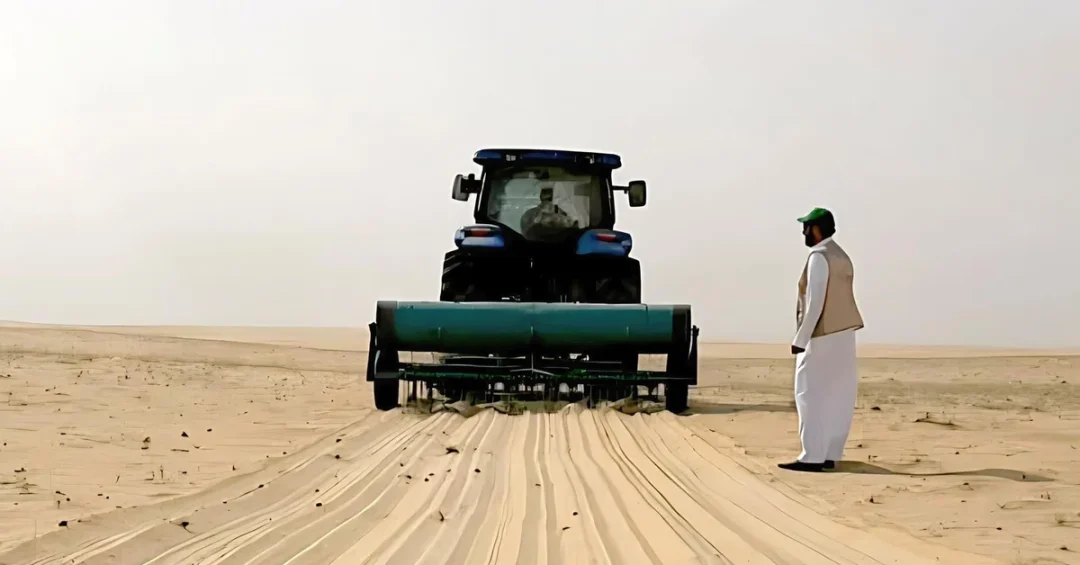
The National Center for Vegetation Cover Development and Combating Desertification (NCVC) launched a campaign on Sunday to sow native wild and rangeland plant seeds in Jubail, Eastern Region, as part of the third season of its initiative to rehabilitate natural grazing lands through seeding and rainwater harvesting, coinciding with the 2026 National Greening Season. The campaign, announced via the Saudi Press Agency, aims to expand vegetation cover, restore degraded land, rehabilitate rangelands, and promote environmental sustainability, in line with national targets for conserving natural resources. Have you ever wondered how a desert nation transforms its landscapes into thriving ecosystems? This initiative represents a significant step in Saudi Arabia’s ongoing efforts to combat desertification and enhance environmental resilience.
The NCVC, a key government body under the Ministry of Environment, Water and Agriculture, directly sows native seeds suited to local environmental conditions and the Kingdom’s vegetation zones. Sites are carefully selected to ensure successful rehabilitation, preserve plant genetic resources, and help plants adapt to different climatic conditions. This campaign is part of the third season of the NCVC’s broader initiative to rehabilitate natural grazing lands, which combines seeding with rainwater harvesting techniques. By focusing on native species, the NCVC ensures that the rehabilitation efforts are sustainable and compatible with the region’s ecology, supporting the Kingdom’s long-term environmental goals.
Context and Background
Why is Saudi Arabia investing so heavily in vegetation cover and desertification control? The Kingdom faces significant environmental challenges, with desertification threatening biodiversity, agriculture, and water resources. In response, the NCVC was established to lead national efforts in vegetation development and combat desertification. The center oversees rangelands, forests, and national parks across the Kingdom, working to restore ecosystems and promote sustainable land management. The campaign in Jubail is part of the third season of an initiative that began in previous years, building on successes and lessons learned to expand impact.
The 2026 National Greening Season provides a strategic framework for these activities, aligning with the Saudi Green Initiative and Vision 2030. The National Greening Season is a nationwide effort to plant millions of trees and rehabilitate degraded lands, contributing to the Saudi Green Initiative’s target of planting 10 billion trees across the Kingdom. The NCVC’s campaign in Jubail specifically targets rangelands, which are vital for livestock grazing and biodiversity. By sowing native seeds, the NCVC not only restores vegetation but also enhances the resilience of these ecosystems to climate change.
This campaign is not an isolated event; it is part of a sustained national program. The NCVC has been actively implementing similar campaigns in various regions, each tailored to local conditions. The third season indicates a maturing approach, with refined techniques and expanded scope. The use of rainwater harvesting is particularly important in arid regions, as it maximizes water availability for seed germination and growth. This integrated approach demonstrates Saudi Arabia’s commitment to innovative environmental solutions.
Key Details
What exactly does the NCVC’s campaign in Jubail involve? The campaign focuses on sowing native wild and rangeland plant seeds. These seeds are selected for their suitability to the local environment, ensuring high survival rates and ecological compatibility. The NCVC directly sows the seeds at selected sites, employing techniques that promote successful rehabilitation. This includes preparing the soil, timing the sowing to coincide with expected rainfall, and using rainwater harvesting structures to capture and store water. The center also monitors the sites to assess progress and make necessary adjustments.
The initiative aims to expand vegetation cover, which is crucial for carbon sequestration, soil stabilization, and habitat creation. Restoring degraded land improves ecosystem services, such as water filtration and nutrient cycling. Rehabilitating rangelands supports traditional grazing activities and enhances biodiversity. By preserving plant genetic resources, the NCVC contributes to global conservation efforts. The campaign also helps plants adapt to different climatic conditions, which is essential in the face of climate change. The NCVC’s work extends beyond Jubail; it oversees vegetation sites across the Kingdom, ensuring a coordinated national approach.
The third season of the initiative builds on previous successes. In earlier seasons, the NCVC tested various seeding methods and identified best practices. This season, they are scaling up operations in Jubail and other regions. The campaign coincides with the 2026 National Greening Season, which amplifies public awareness and participation. The NCVC collaborates with local communities, government agencies, and environmental organizations to maximize impact. This collaborative model ensures that rehabilitation efforts are inclusive and sustainable.
International and Regional Impact
How does Saudi Arabia’s environmental campaign resonate beyond its borders? The NCVC’s efforts in Jubail contribute to regional environmental stability. Desertification knows no borders; by combating it within the Kingdom, Saudi Arabia helps reduce dust storms and sand encroachment that affect neighboring countries. The campaign also positions Saudi Arabia as a leader in environmental sustainability in the Middle East. The Kingdom’s participation in global environmental agreements, such as the United Nations Convention to Combat Desertification, is reinforced by such concrete actions. International observers note that Saudi Arabia’s approach combines traditional knowledge with modern science, offering a model for other arid nations.
Regionally, the campaign supports the Middle East Green Initiative, which aims to plant 50 billion trees across the region. Saudi Arabia’s domestic efforts are a cornerstone of this broader vision. The NCVC shares expertise with neighboring countries, fostering cooperation on desertification control. The campaign’s success in Jubail could inspire similar initiatives in other Gulf states. Furthermore, the use of native seeds preserves genetic diversity that is valuable globally. By protecting plant genetic resources, Saudi Arabia contributes to international food security and biodiversity conservation. The campaign also enhances the Kingdom’s soft power, showcasing its commitment to global environmental challenges.
Economic and Strategic Significance
What are the economic benefits of rehabilitating rangelands and expanding vegetation cover? Healthy rangelands support livestock production, a key economic activity in rural Saudi Arabia. By restoring grazing lands, the NCVC helps sustain pastoral livelihoods and reduce pressure on urban areas. Improved vegetation cover also enhances soil fertility, which can benefit agriculture. The campaign’s use of rainwater harvesting reduces reliance on desalinated water, saving energy and costs. Additionally, restored ecosystems can attract eco-tourism, creating new economic opportunities. The NCVC’s work aligns with Vision 2030’s goal of diversifying the economy and promoting sustainable development.
Strategically, the campaign strengthens Saudi Arabia’s environmental security. Desertification threatens food and water security; by combating it, the Kingdom mitigates these risks. The NCVC’s monitoring and protection of vegetation sites ensure long-term sustainability. The initiative also supports the Saudi Green Initiative’s target of reducing carbon emissions by 278 million tons per annum by 2030. Vegetation acts as a carbon sink, helping Saudi Arabia meet its climate commitments. The campaign’s focus on native species ensures that the ecological benefits are enduring. Moreover, the NCVC’s efforts contribute to the Kingdom’s international standing as a responsible environmental steward.
Vision 2030 Alignment
How does the NCVC’s campaign in Jubail align with Saudi Vision 2030? Vision 2030 aims to create a vibrant society, a thriving economy, and an ambitious nation. Environmental sustainability is a cross-cutting theme. The campaign supports the vision’s goal of preserving the environment and natural resources for future generations. It also contributes to the quality of life objectives by creating greener, healthier landscapes. The NCVC’s work is integral to the Saudi Green Initiative, which is a key component of Vision 2030. By rehabilitating rangelands, the campaign enhances the Kingdom’s environmental resilience and supports economic diversification through sustainable land use.
Furthermore, the campaign exemplifies the vision’s emphasis on innovation and collaboration. The NCVC employs advanced techniques in seeding and rainwater harvesting, demonstrating a commitment to modern solutions. The involvement of local communities and international partners reflects the vision’s inclusive approach. As Saudi Arabia continues to implement Vision 2030, initiatives like this will play a vital role in achieving environmental targets. The NCVC’s campaign in Jubail is a testament to the Kingdom’s dedication to a sustainable future, where economic growth and environmental stewardship go hand in hand. In conclusion, this campaign not only sows seeds in the ground but also sows the seeds of a greener, more prosperous Saudi Arabia. What greater legacy could a nation strive for?
20 Questions
Q1. What is the NCVC?
A1. The National Center for Vegetation Cover Development and Combating Desertification (NCVC) is a Saudi government body under the Ministry of Environment, Water and Agriculture, responsible for vegetation development and combating desertification across the Kingdom.
Q2. What campaign was launched in Jubail?
A2. The NCVC launched a campaign to sow native wild and rangeland plant seeds in Jubail, Eastern Region, as part of the third season of its initiative to rehabilitate natural grazing lands through seeding and rainwater harvesting.
Q3. When was the campaign launched?
A3. The campaign was launched on Sunday, November 2, 2026, coinciding with the 2026 National Greening Season, as reported by the Saudi Press Agency.
Q4. What are the main goals of the campaign?
A4. The campaign aims to expand vegetation cover, restore degraded land, rehabilitate rangelands, and promote environmental sustainability, in line with national targets for conserving natural resources.
Q5. Why are native seeds used?
A5. Native seeds are suited to local environmental conditions and the Kingdom’s vegetation zones, ensuring successful rehabilitation, preserving plant genetic resources, and helping plants adapt to different climatic conditions.
Q6. What is rainwater harvesting in this context?
A6. Rainwater harvesting involves capturing and storing rainwater to support seed germination and plant growth, maximizing water availability in arid regions like Jubail.
Q7. What is the National Greening Season?
A7. The National Greening Season is a nationwide Saudi initiative to plant millions of trees and rehabilitate degraded lands, contributing to the Saudi Green Initiative’s target of planting 10 billion trees.
Q8. How does this campaign relate to the Saudi Green Initiative?
A8. The campaign supports the Saudi Green Initiative by expanding vegetation cover, which aids carbon sequestration and aligns with the target of planting 10 billion trees and reducing carbon emissions.
Q9. What areas does the NCVC oversee?
A9. The NCVC oversees rangelands, forests, and national parks across the Kingdom, working to restore ecosystems and promote sustainable land management.
Q10. How does the campaign benefit local communities?
A10. The campaign rehabilitates rangelands, supporting livestock grazing and pastoral livelihoods, and can attract eco-tourism, creating economic opportunities for local communities.
Q11. What is the third season of the initiative?
A11. The third season refers to the current phase of the NCVC’s multi-year initiative to rehabilitate natural grazing lands, building on previous seasons’ successes and lessons learned.
Q12. How does the campaign combat desertification?
A12. By sowing native seeds and restoring vegetation, the campaign stabilizes soil, reduces erosion, and enhances ecosystem resilience, directly combating desertification.
Q13. What role does the Ministry of Environment, Water and Agriculture play?
A13. The ministry oversees the NCVC, providing strategic direction and support for national efforts in vegetation development and desertification control.
Q14. How does this campaign align with Vision 2030?
A14. It supports Vision 2030’s environmental sustainability goals, enhances quality of life, and contributes to economic diversification through sustainable land use and eco-tourism.
Q15. What are the expected outcomes of the campaign?
A15. Expected outcomes include expanded vegetation cover, restored degraded land, rehabilitated rangelands, preserved plant genetic resources, and enhanced environmental sustainability.
Q16. How does the NCVC monitor vegetation sites?
A16. The NCVC develops, protects, and monitors vegetation sites through regular assessments, ensuring successful rehabilitation and adaptive management.
Q17. What is the significance of Jubail for this campaign?
A17. Jubail, in the Eastern Region, is a strategic location with diverse ecosystems, making it ideal for piloting and scaling up rehabilitation efforts.
Q18. How can the public support this initiative?
A18. The public can support by participating in tree-planting events, raising awareness, and respecting protected areas, as part of the National Greening Season.
Q19. What international conventions does this campaign support?
A19. It supports the United Nations Convention to Combat Desertification and the Middle East Green Initiative, showcasing Saudi Arabia’s global environmental commitment.
Q20. What is the long-term vision for Saudi Arabia’s environment?
A20. The long-term vision is a sustainable, green Kingdom with thriving ecosystems, as outlined in Vision 2030 and the Saudi Green Initiative, ensuring a better future for generations.
Reader Feedback
We value your thoughts. Please share your feedback on this article.
Your feedback helps us improve our coverage.
Related articles
 GASTAT: Internet Use Reaches 99.6% Among Individuals Aged 15 to 74 in Saudi Arabia
 KAUST Cooling Coating Boosts Power Line Capacity in Heat
 Taibah University to Host International AI Conference Nov 3-5
 Saudi Skies to Dazzle with Planets, Meteors, Supermoon
 Saudi Arabia’s First Wind Turbine Inaugurated in Turaif
 Taibah University Marks Arab Chemistry Week with Scientific Events