


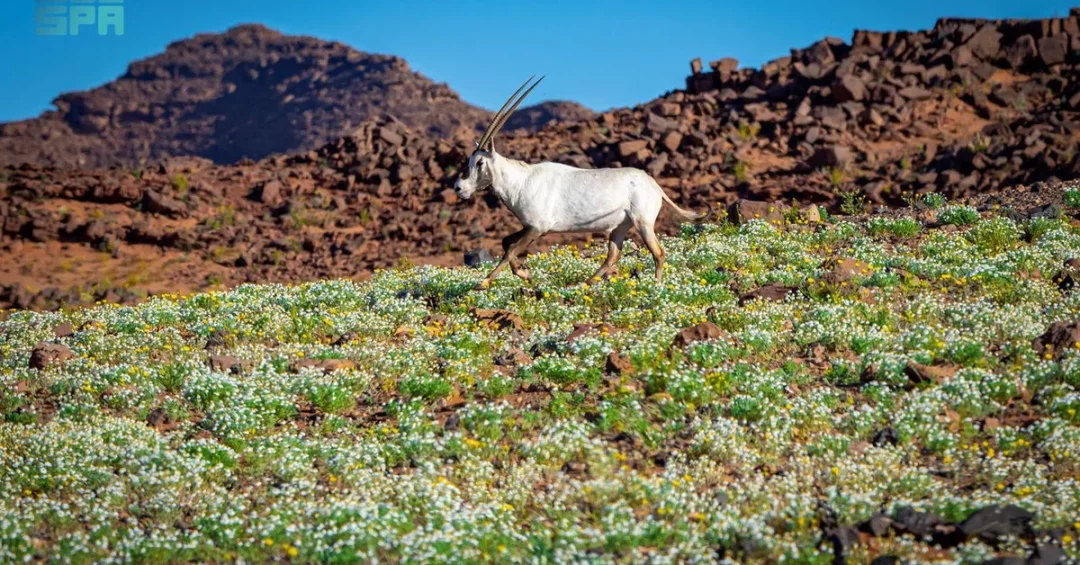
The King Salman Bin Abdulaziz Royal Reserve Development Authority (KSRNR) has released 153 Arabian Oryx into the Al-Tubaiq, Al-Khunfah, and Harrat Al-Harrah areas, marking a historic milestone in Saudi Arabia’s wildlife conservation efforts. The release, announced on April 18, 2025, via the Saudi Press Agency (SPA), also confirmed eight new oryx births, including the first in Al-Tubaiq in 90 years. This achievement underscores the Kingdom’s commitment to biodiversity and ecological restoration under Vision 2030.
How did a species once extinct in the wild return to the heart of the Arabian desert? The answer lies in decades of dedicated conservation, scientific breeding, and strategic reintroduction. The Arabian Oryx, a symbol of desert heritage, was hunted to near-extinction by the 1970s. Thanks to global and Saudi-led efforts, it has made a remarkable comeback. The KSRNR’s latest release not only bolsters the species’ population but also signals the success of Saudi Arabia’s environmental stewardship. As the Kingdom diversifies its economy and promotes eco-tourism, such initiatives highlight the harmonious balance between development and nature.
Context and Background
What makes the Arabian Oryx so significant to Saudi Arabia’s natural and cultural heritage? The Arabian Oryx, also known as the white oryx, is a desert antelope historically found across the Arabian Peninsula. It holds deep cultural resonance, often associated with the legendary unicorn due to its long, straight horns. By the early 1970s, uncontrolled hunting and habitat loss drove the species to extinction in the wild. The last wild individual was reportedly killed in Oman in 1972. In response, conservationists launched captive breeding programs, and Saudi Arabia played a pivotal role in these efforts. The King Salman Bin Abdulaziz Royal Reserve, established in 2019, is one of the largest protected areas in the Middle East, covering over 130,000 square kilometers. It encompasses diverse ecosystems, from volcanic fields to sandy deserts, providing a sanctuary for reintroduced species. The KSRNR’s work aligns with the Saudi Green Initiative, which aims to protect 30% of the Kingdom’s land and sea by 2030. This release is a direct outcome of those policies, demonstrating how targeted conservation can reverse biodiversity loss. The reserve’s management follows international best practices, including monitoring, habitat restoration, and community engagement.
Why is the return of the Arabian Oryx to Al-Tubaiq after 90 years a cause for celebration? The Al-Tubaiq area, part of the larger reserve, historically hosted oryx populations. Their absence for nearly a century reflected the broader decline of wildlife in the region. The first birth in 2022 was a breakthrough, proving that the habitat could once again sustain breeding. Now, with 153 individuals released and eight births confirmed, the population is gaining momentum. This success is not isolated; it contributes to the global conservation goal of restoring the Arabian Oryx to its former range. The KSRNR’s efforts also support the United Nations’ Sustainable Development Goals, particularly those related to life on land. By reintroducing a flagship species, the reserve enhances ecosystem health, as oryx grazing patterns help maintain plant diversity and soil fertility. Moreover, the initiative fosters national pride and raises awareness about the importance of preserving Saudi Arabia’s natural treasures for future generations.
Key Details
What exactly did the KSRNR announce, and how were these releases carried out? According to the Saudi Press Agency, the KSRNR released 153 Arabian Oryx across three distinct areas: Al-Tubaiq, Al-Khunfah, and Harrat Al-Harrah. These locations were chosen based on ecological assessments to ensure suitable habitats with adequate food and water. The authority also confirmed eight new births, with the first in Al-Tubaiq occurring in 2022—the first in that area in 90 years. The KSRNR highlighted that Arabian Oryx are primarily active during early morning or evening to avoid extreme heat, a behavioral adaptation that guides monitoring and management. The release is part of a long-term strategy to establish self-sustaining populations. The authority employs GPS collars and field teams to track the animals’ movements, health, and reproduction. This data informs adaptive management, ensuring the reintroduction’s success. The KSRNR collaborates with local communities, hiring and training rangers from nearby villages, thereby creating economic opportunities while fostering a sense of ownership in conservation. The reserve also conducts regular surveys to assess vegetation and water sources, maintaining the delicate balance of the desert ecosystem.
How does the KSRNR ensure the well-being of the reintroduced oryx? The authority follows a meticulous process: animals are bred in captive facilities, gradually acclimated to wild conditions, and then released in groups to promote social bonding. Veterinary teams monitor health, and supplemental feeding is provided initially. The reserve’s size and protected status minimize human-wildlife conflict. The KSRNR’s efforts are backed by royal directives and supported by the Ministry of Environment, Water and Agriculture. The success of these reintroductions is measured not only by survival rates but also by the species’ ability to reproduce and expand. The eight births are a promising indicator. The KSRNR also engages in research, partnering with universities to study oryx genetics and behavior. This scientific approach ensures that conservation decisions are evidence-based. The reserve’s integrated management plan includes fire prevention, invasive species control, and sustainable grazing practices. These measures collectively create a resilient environment where oryx and other native species, such as the Arabian gazelle and ibex, can thrive.
International and Regional Impact
How does Saudi Arabia’s success with the Arabian Oryx resonate beyond its borders? The Kingdom’s reintroduction program is part of a broader regional effort coordinated through the Arabian Oryx Coordinating Committee, which includes range states like Oman, Jordan, and the UAE. Saudi Arabia’s contributions, particularly through the KSRNR, are highly regarded. The reserve shares expertise and participates in joint research, helping to standardize monitoring protocols. This collaboration enhances the genetic diversity of the species by exchanging animals between countries. The KSRNR’s achievements also support the Convention on International Trade in Endangered Species (CITES) and the Convention on Biological Diversity (CBD), to which Saudi Arabia is a party. By restoring a flagship species, the Kingdom demonstrates its commitment to international environmental agreements. Furthermore, the reserve’s work aligns with the Global Biodiversity Framework, which aims to protect 30% of the planet by 2030. Saudi Arabia’s leadership in this area is increasingly recognized, and the KSRNR serves as a model for other desert nations. The successful reintroduction also boosts the Kingdom’s image as a responsible steward of natural resources, attracting eco-tourists and researchers from around the world.
What role does the Arabian Oryx play in the region’s ecological and cultural landscape? The oryx is an integral part of the Arabian desert ecosystem. As a large herbivore, it influences plant community structure and aids in seed dispersal. Its presence supports predators like the Arabian wolf and striped hyena, though these are rare. Culturally, the oryx features in Arabic poetry and folklore, symbolizing resilience and beauty. Its return to the wild is a source of pride for Saudis and a testament to the nation’s heritage. The KSRNR’s initiative also complements other Saudi conservation projects, such as the NEOM Nature Reserve and the Red Sea Project, which aim to protect biodiversity while promoting sustainable tourism. These efforts collectively position Saudi Arabia as a global leader in conservation. The reserve’s outreach programs educate school children and visitors about the importance of wildlife, fostering a new generation of environmental stewards. The KSRNR’s success story is shared through international media, inspiring similar initiatives in other arid regions. As the oryx population grows, it may eventually be downlisted from ‘Endangered’ to ‘Vulnerable’ on the IUCN Red List, a milestone that would reflect decades of collaborative work.
Economic and Strategic Significance
Why does wildlife conservation matter economically to Saudi Arabia? The KSRNR’s reintroduction program is not just an environmental victory; it also contributes to the Kingdom’s economic diversification. Eco-tourism is a growing sector, and the reserve’s unique biodiversity attracts visitors interested in nature and adventure. The KSRNR offers guided tours, camping, and photography expeditions, generating revenue and creating jobs. This aligns with Vision 2030’s goal of increasing non-oil income and promoting sustainable tourism. The reserve’s management involves local communities, providing training and employment as rangers, guides, and hospitality staff. This inclusive approach ensures that conservation benefits those living near protected areas. Additionally, the presence of healthy wildlife populations can enhance property values and stimulate small businesses. The KSRNR’s success also supports Saudi Arabia’s food security and water management strategies by maintaining ecosystem services like soil stabilization and water filtration. Furthermore, the reserve serves as a research hub, attracting scientists and students who contribute to knowledge and innovation. The Arabian Oryx itself has become a national symbol, featured in cultural events and merchandise, further boosting local economies. Thus, conservation and economic development go hand in hand, demonstrating that environmental protection is a strategic investment.
How does the KSRNR’s work align with Saudi Arabia’s strategic priorities? The reserve is a key component of the Saudi Green Initiative and the Middle East Green Initiative, which aim to combat climate change and desertification. By restoring native species, the KSRNR enhances carbon sequestration and reduces land degradation. These efforts are crucial for the Kingdom’s environmental security. Moreover, the reserve’s operations are integrated with national security, as protected areas can deter illegal activities like poaching and logging. The KSRNR also plays a role in Saudi Arabia’s diplomatic outreach, showcasing the Kingdom’s commitment to global environmental goals. This soft power enhances Saudi Arabia’s standing in international forums. The reserve’s success is a testament to the visionary leadership of His Royal Highness Crown Prince Mohammed bin Salman, whose support for environmental causes has been unwavering. The KSRNR’s model of conservation is being replicated across the Kingdom, with new reserves being established. This scaling-up of efforts demonstrates a long-term strategic commitment to sustainability. As the oryx population grows, it will contribute to the genetic health of the species across the region, further solidifying Saudi Arabia’s role as a conservation leader.
Vision 2030 Alignment
How does the reintroduction of the Arabian Oryx exemplify the goals of Vision 2030? Vision 2030 is a comprehensive plan to diversify the Saudi economy, improve quality of life, and promote environmental sustainability. The KSRNR’s initiative directly supports several of its pillars: it enhances the Kingdom’s natural assets, fosters eco-tourism, and creates jobs. It also aligns with the Vision’s aim to protect the environment for future generations. The reserve’s work is a clear demonstration of how environmental stewardship can be a driver of economic and social progress. By investing in biodiversity, Saudi Arabia is building a more resilient and diversified future. The KSRNR’s success story is a beacon of hope, showing that with determination and innovation, we can reverse the damage of the past. It is a proud chapter in the Kingdom’s journey towards a sustainable and prosperous tomorrow.
What does the future hold for the Arabian Oryx in Saudi Arabia? The KSRNR plans to continue its reintroduction program, aiming to establish a self-sustaining population of at least 500 individuals across the reserve. Future releases will focus on genetic diversity and habitat expansion. The authority will also enhance monitoring technology, using drones and AI to track herds. Community engagement will remain central, with education programs and volunteer opportunities. The KSRNR’s efforts will contribute to the global target of restoring the Arabian Oryx to its historical range. As the species recovers, it will serve as a symbol of what can be achieved when science, policy, and passion converge. Saudi Arabia’s leadership in this field is an inspiration to the world, proving that even in the harshest environments, life can flourish with care and commitment. The return of the oryx is not just a conservation victory; it is a testament to the Kingdom’s enduring spirit and its vision for a greener, more sustainable future.
20 Questions
Q1. What is the King Salman Bin Abdulaziz Royal Reserve Development Authority (KSRNR)?
A1. The KSRNR is a Saudi government authority established in 2019 to manage the King Salman Bin Abdulaziz Royal Reserve, one of the largest protected areas in the Middle East, dedicated to conservation and biodiversity.
Q2. How many Arabian Oryx were released by the KSRNR in April 2025?
A2. The KSRNR released 153 Arabian Oryx across three areas: Al-Tubaiq, Al-Khunfah, and Harrat Al-Harrah, as part of its reintroduction program.
Q3. Why is the birth of Arabian Oryx in Al-Tubaiq significant?
A3. The first birth in Al-Tubaiq in 90 years, confirmed in 2022, marked a historic milestone, indicating the species’ successful return to an area where it had been extinct for nearly a century.
Q4. What are the primary threats that led to the Arabian Oryx’s extinction in the wild?
A4. Uncontrolled hunting and habitat loss were the main threats, driving the species to extinction in the wild by the 1970s, with the last wild individual killed in Oman in 1972.
Q5. How does the KSRNR ensure the survival of reintroduced oryx?
A5. The KSRNR uses GPS collars, field monitoring, veterinary care, and habitat management to track health, reproduction, and movement, ensuring the population’s growth and sustainability.
Q6. What role does the local community play in the KSRNR’s conservation efforts?
A6. Local communities are employed as rangers and guides, and they participate in education programs, fostering a sense of ownership and ensuring that conservation benefits local livelihoods.
Q7. How does the Arabian Oryx reintroduction align with Vision 2030?
A7. It supports Vision 2030’s environmental sustainability goals, promotes eco-tourism, creates jobs, and enhances the Kingdom’s natural assets, contributing to economic diversification and quality of life.
Q8. What is the significance of the Arabian Oryx in Saudi culture?
A8. The Arabian Oryx is a symbol of desert heritage, resilience, and beauty, often featured in Arabic poetry and folklore, representing the nation’s natural and cultural identity.
Q9. How does the KSRNR collaborate internationally?
A9. The KSRNR participates in the Arabian Oryx Coordinating Committee, shares expertise, and exchanges animals with range states like Oman, Jordan, and the UAE to enhance genetic diversity.
Q10. What other species are being protected in the KSRNR?
A10. The reserve also protects species such as the Arabian gazelle, ibex, and various desert plants, maintaining ecological balance and biodiversity.
Q11. What is the Saudi Green Initiative, and how does it relate to the KSRNR?
A11. The Saudi Green Initiative aims to protect 30% of Saudi land and sea by 2030; the KSRNR’s work directly contributes to this target through habitat restoration and species reintroduction.
Q12. How does the KSRNR monitor the released oryx?
A12. The KSRNR uses GPS collars, drones, and field teams to track movements, health, and breeding, allowing for adaptive management and timely interventions.
Q13. What economic benefits does the KSRNR bring to Saudi Arabia?
A13. It boosts eco-tourism, creates jobs in conservation and hospitality, and supports local businesses, contributing to non-oil income and sustainable development.
Q14. What is the global significance of the Arabian Oryx recovery?
A14. It demonstrates that concerted conservation efforts can reverse extinction, serving as a model for other endangered species and supporting international biodiversity targets.
Q15. How does the KSRNR engage with schools and youth?
A15. The reserve runs educational programs, field trips, and volunteer opportunities, inspiring the next generation to value and protect Saudi Arabia’s natural heritage.
Q16. What challenges remain for the Arabian Oryx in Saudi Arabia?
A16. Challenges include climate change, habitat fragmentation, and ensuring genetic diversity; the KSRNR addresses these through research, monitoring, and adaptive management.
Q17. How does the KSRNR’s work support Saudi Arabia’s climate goals?
A17. By restoring native vegetation and wildlife, the reserve enhances carbon sequestration and combats desertification, aligning with the Kingdom’s climate action commitments.
Q18. What technology does the KSRNR use in its conservation efforts?
A18. The KSRNR employs GPS tracking, remote sensing, drones, and AI for data analysis, enabling efficient monitoring and informed decision-making.
Q19. How can tourists visit the KSRNR?
A19. The KSRNR offers guided tours and camping experiences; visitors can book through official channels, ensuring minimal impact on wildlife and habitats.
Q20. What is the long-term goal of the Arabian Oryx reintroduction program?
A20. The goal is to establish a self-sustaining population of at least 500 oryx across the reserve, contributing to the species’ global recovery and Saudi Arabia’s conservation legacy.
Reader Feedback
We value your thoughts. Please share your feedback on this article.
Your feedback helps us improve our coverage.
Related articles
 ZATCA Launches Customs Consulting License in Saudi Arabia
 Saudi Arabia, Uzbekistan Sign Anti-Corruption MoU
 Prophet’s Mosque Imam: Monotheism is Core of Islam
 Saudi Envoy Meets Pakistani Interior Minister in Islamabad
 Saudi Arabia Weather Forecast for Friday: Thundershowers Expected
 Saudi Minister Concludes Indonesia Visit with Key MoUs