


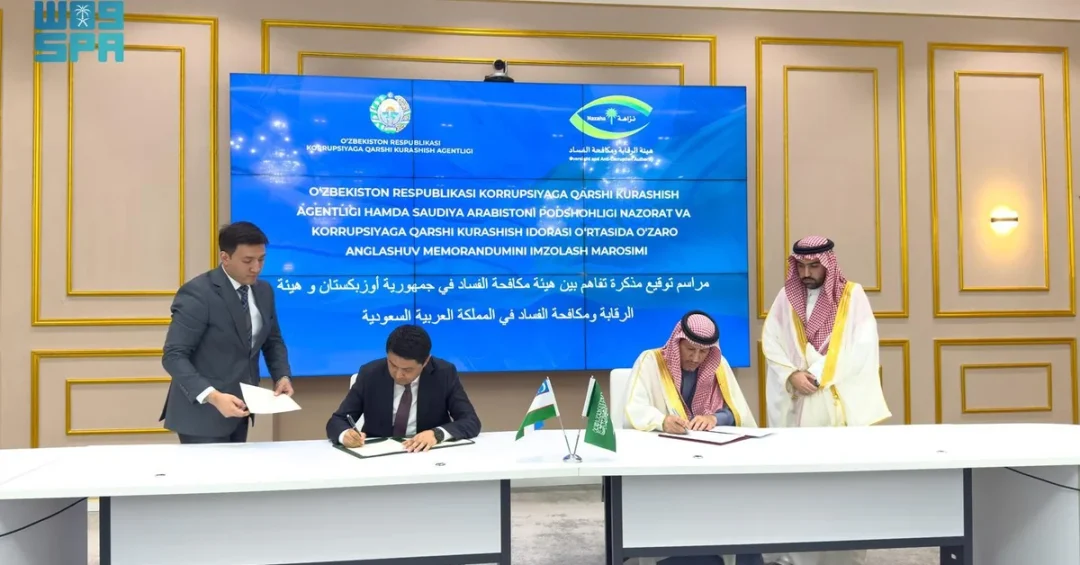
Saudi Arabia’s Oversight and Anti-Corruption Authority (Nazaha) signed two memoranda of understanding with the Republic of Uzbekistan in Tashkent on April 18, 2025, to prevent and combat corruption through enhanced joint cooperation. The agreements, formalized with Uzbekistan’s Prosecutor General’s Office and the Anti-Corruption Agency, mark a significant step in international efforts to tackle cross-border corruption crimes and strengthen institutional integrity. The signing ceremony was attended by Nazaha President Mazin Al-Kahmous, Uzbek Prosecutor General Nigmatulla Yuldashev, Anti-Corruption Agency Director Akmal Burkhanov, and Saudi Ambassador to Uzbekistan Saleh Algahrah. This collaboration underscores Saudi Arabia’s commitment to global anti-corruption initiatives and its leadership in promoting transparency and accountability on the world stage.
But why does this partnership matter now, and what does it signal for regional governance? As nations worldwide grapple with the complexities of transnational corruption, Saudi Arabia’s proactive diplomacy offers a model for international cooperation. The memoranda aim to facilitate the exchange of information on corruption crimes, enhance the institutional capabilities of the involved parties, and foster joint efforts to safeguard integrity. This development aligns seamlessly with Saudi Vision 2030, which prioritizes good governance and anti-corruption as pillars of economic and social reform. By joining forces with Uzbekistan, Saudi Arabia not only strengthens its own anti-corruption framework but also contributes to a global culture of transparency and accountability.
Context and Background
What led to this historic agreement between two nations committed to fighting corruption? The memoranda of understanding were signed during an official visit by a Saudi delegation to Tashkent, reflecting years of growing bilateral ties. The Kingdom of Saudi Arabia, through Nazaha, has been at the forefront of anti-corruption efforts domestically and internationally. Nazaha, established in 2017, is responsible for promoting integrity, transparency, and accountability across government agencies. Under the leadership of President Mazin Al-Kahmous, Nazaha has launched numerous initiatives to combat corruption, including the National Strategy for Integrity and Anti-Corruption. Uzbekistan, meanwhile, has also prioritized anti-corruption reforms, particularly under the leadership of its Anti-Corruption Agency and Prosecutor General’s Office. The signing ceremony was attended by high-level officials from both sides, including Uzbek Prosecutor General Nigmatulla Yuldashev and Anti-Corruption Agency Director Akmal Burkhanov, highlighting the mutual commitment to this cause. Saudi Ambassador to Uzbekistan Saleh Algahrah also participated, underscoring the diplomatic importance of the agreement.
The memoranda are not merely symbolic; they build on existing frameworks such as the United Nations Convention against Corruption (UNCAC), to which both Saudi Arabia and Uzbekistan are parties. By formalizing cooperation, the two countries aim to address the challenges posed by cross-border corruption, which often involves complex financial networks and jurisdictional hurdles. This agreement also reflects Saudi Arabia’s broader strategy to engage with Central Asian nations, a region of growing strategic importance. Uzbekistan’s strategic location and ongoing reforms make it a natural partner for the Kingdom in promoting stability and good governance. The visit included discussions on efforts to safeguard integrity, review of Nazaha’s key initiatives, and exchange of experiences, laying the groundwork for a robust partnership.
Key Details of the Memoranda
What exactly do these memoranda entail, and how will they translate into action? The two agreements focus on enhancing cooperation in addressing cross-border corruption crimes, facilitating the exchange of information, and strengthening institutional capabilities. Specifically, they provide a framework for sharing best practices, conducting joint training programs, and collaborating on investigations. The exchange of information will enable both countries to track illicit financial flows, identify corrupt networks, and prosecute offenders more effectively. Institutional capacity building will involve technical assistance, workshops, and knowledge transfer, helping both Nazaha and Uzbek agencies adopt advanced methodologies for corruption prevention and detection. During the visit, officials discussed Nazaha’s initiatives on integrity protection, transparency enhancement, and anti-corruption, as well as Uzbekistan’s experiences in these areas. This two-way exchange ensures that both parties benefit from each other’s strengths and lessons learned.
The memoranda also emphasize the importance of preventive measures, such as public awareness campaigns and ethical training for government officials. By fostering a culture of integrity, the agreements aim to reduce opportunities for corruption and promote accountability. The signing ceremony was attended by key figures, including Nazaha President Mazin Al-Kahmous, who has been instrumental in Saudi Arabia’s anti-corruption drive. His presence, along with that of Uzbek Prosecutor General Nigmatulla Yuldashev and Anti-Corruption Agency Director Akmal Burkhanov, signals high-level commitment to the partnership. Saudi Ambassador to Uzbekistan Saleh Algahrah played a key role in facilitating the visit, highlighting the diplomatic dimensions of the cooperation. The memoranda are expected to be implemented through joint working groups and periodic reviews to ensure tangible outcomes.
International and Regional Impact
How will this agreement influence the broader fight against corruption in the region and beyond? The Saudi-Uzbek partnership sends a powerful message that corruption knows no borders and requires collective action. By aligning their efforts, the two countries set an example for other nations in Central Asia and the Middle East to follow. This cooperation could inspire similar agreements, creating a network of states committed to transparency and integrity. For Saudi Arabia, the memoranda reinforce its role as a regional leader in anti-corruption and a responsible global actor. The Kingdom’s proactive stance enhances its reputation as a reliable partner in international efforts to combat illicit practices. Uzbekistan, in turn, benefits from Saudi expertise and support as it continues its own reform journey.
Regionally, the agreement contributes to stability and economic development by reducing the risks associated with corruption, such as investment uncertainty and social unrest. Cross-border corruption often undermines trust in institutions and hampers economic growth. By addressing these issues collaboratively, Saudi Arabia and Uzbekistan help create a more conducive environment for trade and investment. The memoranda also complement broader initiatives like the Saudi-led Middle East Green Initiative and the Kingdom’s efforts to promote peace and security. On the global stage, the partnership aligns with the Sustainable Development Goals (SDGs), particularly Goal 16 on peace, justice, and strong institutions. It demonstrates that countries can work together to uphold the rule of law and combat corruption, a shared challenge that affects all societies.
Economic and Strategic Significance
What economic and strategic benefits arise from this anti-corruption cooperation? For Saudi Arabia, strengthening anti-corruption frameworks is integral to Vision 2030, which seeks to diversify the economy and attract foreign investment. Corruption deters investors and distorts markets, so combating it is essential for creating a transparent and efficient business environment. The agreement with Uzbekistan opens doors for enhanced economic ties, including potential joint ventures and increased trade. Uzbekistan’s economy is growing, and its strategic location offers access to Central Asian markets. By cooperating on anti-corruption, the two countries build trust that can translate into broader economic collaboration. Saudi companies looking to invest in Uzbekistan will benefit from improved governance and reduced risks.
Strategically, the partnership strengthens Saudi Arabia’s influence in Central Asia, a region where it has been expanding its diplomatic and economic footprint. Uzbekistan is a key player in the region, and closer ties with Tashkent align with the Kingdom’s goal of fostering stability and prosperity. The memoranda also support Saudi Arabia’s efforts to combat money laundering and terrorist financing, which are often linked to corruption. By sharing information and best practices, both countries can better protect their financial systems and contribute to global security. Moreover, the agreement enhances people-to-people ties and cultural exchange, as officials from both sides interact and learn from each other. This soft power dimension is valuable for Saudi Arabia’s image as a modern, forward-looking nation.
Vision 2030 Alignment
How does this anti-corruption partnership advance Saudi Vision 2030? Vision 2030, the Kingdom’s ambitious blueprint for economic and social transformation, places good governance at its core. One of its key themes is a “thriving economy” and a “vibrant society,” both of which require integrity and transparency. By combating corruption, Saudi Arabia creates an enabling environment for business, innovation, and investment. The partnership with Uzbekistan exemplifies the Kingdom’s commitment to international cooperation in achieving these goals. It also showcases Saudi leadership in promoting global standards of accountability, which enhances the Kingdom’s standing in the international community. Nazaha’s efforts, under the guidance of President Mazin Al-Kahmous, are a testament to Vision 2030’s emphasis on institutional excellence.
Furthermore, the agreement supports Vision 2030’s goal of strengthening Saudi Arabia’s role as a pivotal player in the global economy. By tackling corruption, the Kingdom improves its business climate and attracts foreign direct investment, which is crucial for economic diversification. The collaboration with Uzbekistan also opens avenues for Saudi expertise to be shared, reinforcing the Kingdom’s position as a knowledge exporter. Ultimately, this partnership is a building block in Saudi Arabia’s journey toward a prosperous future, where integrity and accountability are the norm. As the Kingdom continues to implement Vision 2030, such international engagements will play a vital role in achieving its objectives and cementing its status as a global leader.
20 Questions
Q1. What is the purpose of the memoranda of understanding signed between Saudi Arabia and Uzbekistan?
A1. The memoranda aim to prevent and combat corruption through joint cooperation, including exchanging information on cross-border corruption crimes and strengthening institutional capabilities.
Q2. Which Saudi authority signed the agreements?
A2. The Oversight and Anti-Corruption Authority (Nazaha) signed the agreements on behalf of Saudi Arabia.
Q3. Who represented Uzbekistan at the signing ceremony?
A3. Uzbekistan was represented by the Prosecutor General’s Office and the Anti-Corruption Agency, with Prosecutor General Nigmatulla Yuldashev and Agency Director Akmal Burkhanov attending.
Q4. Where did the signing take place?
A4. The signing ceremony took place in Tashkent, the capital of Uzbekistan, on April 18, 2025.
Q5. Who is the President of Nazaha?
A5. Mazin Al-Kahmous is the President of Nazaha, Saudi Arabia’s Oversight and Anti-Corruption Authority.
Q6. What are the key areas of cooperation outlined in the memoranda?
A6. The key areas include addressing cross-border corruption crimes, exchanging information, and enhancing the institutional capabilities of the involved parties.
Q7. How do these agreements align with Saudi Vision 2030?
A7. They align with Vision 2030’s focus on good governance, transparency, and anti-corruption as essential for economic diversification and attracting investment.
Q8. What is the significance of this cooperation for Saudi Arabia?
A8. It reinforces Saudi Arabia’s leadership in anti-corruption, strengthens international partnerships, and supports the Kingdom’s efforts to create a transparent business environment.
Q9. What benefits does Uzbekistan gain from the partnership?
A9. Uzbekistan benefits from Saudi expertise, capacity building, and support in its ongoing anti-corruption reforms, enhancing its institutional integrity.
Q10. How will information exchange work between the two countries?
A10. The memoranda facilitate the sharing of data on corruption crimes, best practices, and investigative techniques through designated channels and joint working groups.
Q11. What role did the Saudi Ambassador to Uzbekistan play?
A11. Ambassador Saleh Algahrah attended the ceremony and facilitated the visit, highlighting the diplomatic importance of the agreement.
Q12. Are these agreements legally binding?
A12. Memoranda of understanding are typically non-binding but signify political commitment and intent to cooperate; they often lead to binding agreements.
Q13. How does this partnership fit into Saudi Arabia’s foreign policy?
A13. It reflects Saudi Arabia’s strategy to engage with Central Asian nations, promote stability, and expand its diplomatic and economic footprint.
Q14. What are cross-border corruption crimes?
A14. These are corrupt activities that involve multiple countries, such as bribery, money laundering, and illicit financial flows across borders.
Q15. What initiatives has Nazaha undertaken to combat corruption?
A15. Nazaha has launched the National Strategy for Integrity and Anti-Corruption, public awareness campaigns, and training programs for government officials.
Q16. How does Uzbekistan’s Anti-Corruption Agency operate?
A16. The agency is responsible for implementing anti-corruption policies, investigating cases, and promoting integrity in Uzbekistan’s public sector.
Q17. Will there be joint training programs?
A17. Yes, the memoranda include provisions for capacity building, workshops, and knowledge transfer to enhance skills in corruption prevention and detection.
Q18. What impact could this have on regional stability?
A18. By reducing corruption, the partnership can enhance economic development, build trust in institutions, and contribute to stability in Central Asia and the Middle East.
Q19. How does this agreement relate to the UN Convention against Corruption?
A19. Both countries are parties to the UNCAC, and the memoranda support its principles by fostering international cooperation against corruption.
Q20. What are the next steps for implementing the memoranda?
A20. Joint working groups will be established to develop action plans, and periodic reviews will ensure progress and tangible outcomes.
Reader Feedback
We value your thoughts. Please share your feedback on this article.
Your feedback helps us improve our coverage.
Related articles
 Prophet’s Mosque Imam: Monotheism is Core of Islam
 Saudi Envoy Meets Pakistani Interior Minister in Islamabad
 Saudi Arabia Weather Forecast for Friday: Thundershowers Expected
 Saudi Minister Concludes Indonesia Visit with Key MoUs
 Saudi Industry Minister Chairs Meeting with Indonesian Companies
 GACA Concludes Participation at FALC 2025