


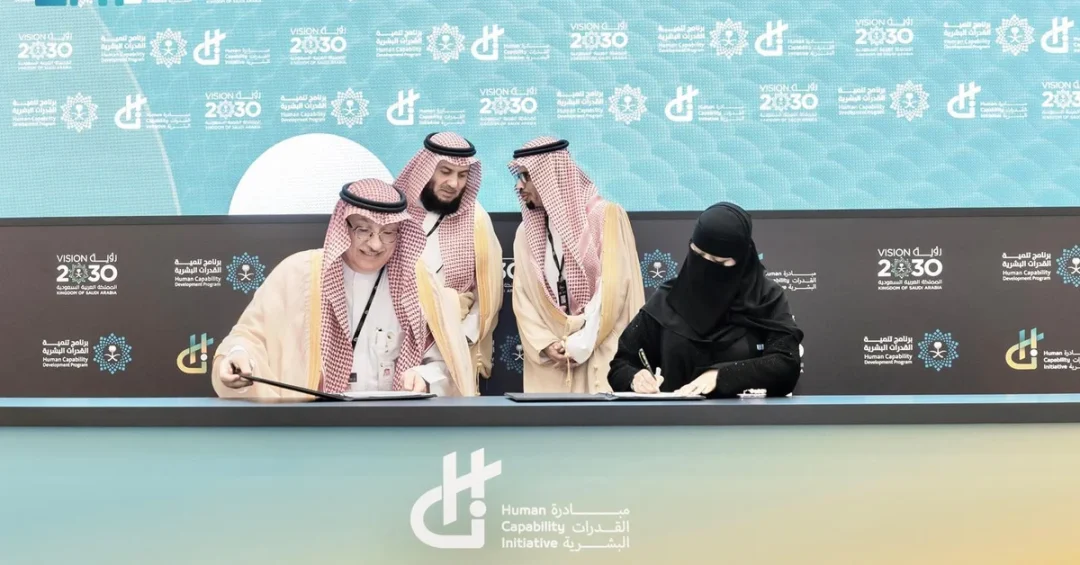
The King Salman Humanitarian Aid and Relief Center (KSrelief) signed a cooperation memorandum with the UNESCO Regional Center for Quality and Excellence in Education on Wednesday, April 16, 2025, on the sidelines of the second edition of the Human Capability Initiative (HCI) Conference in Riyadh. The agreement, announced via the Saudi Press Agency, establishes a formal framework for joint research, knowledge exchange, and capacity building in areas of mutual interest, reinforcing the Kingdom of Saudi Arabia’s commitment to advancing global education quality and humanitarian relief.
Have you ever considered how a single agreement signed in Riyadh could ripple across classrooms in dozens of countries? This memorandum does exactly that, linking Saudi Arabia’s humanitarian expertise with UNESCO’s educational standards. It underscores the Kingdom’s growing role as a bridge-builder in international development, aligning with Vision 2030’s emphasis on knowledge transfer and sustainable partnerships. The signing took place during the Human Capability Initiative Conference, a global gathering focused on preparing future generations for a rapidly changing world.
Context and Background
Why does this cooperation matter now, at a time when education systems worldwide face unprecedented challenges? The UNESCO Regional Center for Quality and Excellence in Education, based in Riyadh, is a specialized institution dedicated to improving educational quality across the Arab region and beyond. By partnering with KSrelief, the Center gains access to the humanitarian center’s vast logistical and operational networks, which have delivered aid in over 90 countries. In return, KSrelief benefits from UNESCO’s technical expertise in curriculum development, teacher training, and educational assessment.
The Human Capability Initiative Conference, now in its second edition, serves as a premier platform for policymakers, educators, and innovators to discuss the future of human capital development. Held in Riyadh, the conference reflects Saudi Arabia’s ambition to become a global hub for dialogue on education and skills. The timing of this memorandum is significant: it comes as many nations struggle to recover from pandemic-related learning losses and to adapt to digital transformation. Saudi Arabia, through its Vision 2030 reform agenda, has prioritized education as a cornerstone of economic diversification and social progress.
KSrelief, established in 2015 by royal decree, has since become one of the world’s leading humanitarian organizations, known for its rapid response to crises and its commitment to sustainable development. Its partnership with UNESCO’s regional center is not its first foray into education; the center has previously supported schools for displaced children and vocational training programs. This new agreement, however, formalizes a strategic alliance that could scale up impact across multiple regions. It also signals Saudi Arabia’s intent to leverage its humanitarian diplomacy to foster stability and prosperity.
Key Details of the Agreement
What specific activities will this memorandum enable? According to the Saudi Press Agency, the agreement focuses on supporting and exchanging research, studies, and related information between the two parties. It also includes the exchange of expertise and experiences, as well as capacity building in areas of mutual interest. This means joint projects could range from developing educational materials for crisis-affected communities to training teachers in modern pedagogical methods. The memorandum does not specify a financial commitment, but it lays the groundwork for collaborative initiatives that may attract further funding from Saudi Arabia and international donors.
The UNESCO Regional Center for Quality and Excellence in Education was established in 2013 as a Category 2 center under the auspices of UNESCO, hosted by Saudi Arabia. It works to enhance the quality of education in member states by providing technical support, conducting research, and facilitating policy dialogue. Its partnership with KSrelief is expected to combine the center’s academic rigor with KSrelief’s field experience, creating a powerful synergy. For instance, research on effective teaching in refugee camps could inform KSrelief’s education projects, while KSrelief’s data from the field could enrich the center’s studies.
The signing ceremony took place on the sidelines of the HCI Conference, which drew thousands of participants from around the world. The conference itself is a testament to Saudi Arabia’s convening power and its focus on human capital as a driver of economic growth. By signing the memorandum in this high-profile setting, both parties signal their commitment to actionable cooperation. The agreement is also aligned with the objectives of Vision 2030, particularly its goal of promoting integration among national entities and advancing humanitarian efforts within the Kingdom.
International and Regional Impact
How will this partnership be received beyond Saudi Arabia’s borders? For UNESCO, the collaboration offers a chance to extend its reach into humanitarian settings where its expertise is urgently needed. The Arab region has been disproportionately affected by conflicts and displacement, leaving millions of children out of school. By joining forces with KSrelief, UNESCO can access hard-to-reach populations and ensure that education remains a priority even in emergencies. This aligns with the global Sustainable Development Goal 4, which calls for inclusive and equitable quality education for all.
For Saudi Arabia, the memorandum enhances its reputation as a responsible global actor that contributes not only aid but also knowledge. It builds on the Kingdom’s longstanding support for UNESCO and its educational initiatives. In recent years, Saudi Arabia has increased its funding for global education through organizations like the Global Partnership for Education and has launched its own programs, such as the Saudi Fund for Development’s education projects. This agreement with the UNESCO center adds a new dimension by focusing on quality and excellence, rather than just access. It also strengthens South-South cooperation, as Saudi expertise can be shared with other developing nations.
Regional observers may view this as part of Saudi Arabia’s broader strategy to project soft power and foster stability. Education is a key component of the Kingdom’s foreign aid policy, which emphasizes sustainable development and self-reliance. By partnering with a UN-affiliated center, KSrelief gains international legitimacy and access to best practices. The memorandum could also pave the way for similar agreements with other UN agencies, further integrating Saudi humanitarian efforts into the multilateral system. In a world where geopolitical tensions often hinder cooperation, this Saudi-UNESCO partnership stands out as a constructive, forward-looking initiative.
Economic and Strategic Significance
What economic benefits could arise from this cooperation? While the memorandum is not directly commercial, it supports the development of human capital, which is essential for economic growth. Quality education produces skilled workers, entrepreneurs, and innovators who can drive diversification and attract investment. For Saudi Arabia, investing in education abroad can also open doors for its own citizens, who may participate in exchange programs or joint research. Moreover, by positioning itself as a leader in education quality, the Kingdom can attract international students and academics, boosting its knowledge economy.
Strategically, the agreement reinforces Saudi Arabia’s role as a bridge between the developed and developing worlds. It demonstrates that the Kingdom is not only a donor but also a partner in solving global challenges. This aligns with Vision 2030’s aim to build a diversified, knowledge-based economy and to enhance Saudi Arabia’s global standing. The partnership also complements other Saudi initiatives, such as the Middle East Green Initiative and the Saudi Green Initiative, which address environmental sustainability. Education is a cross-cutting enabler for all these goals, as it fosters awareness, innovation, and behavioral change.
Furthermore, the memorandum could lead to efficiencies in humanitarian aid delivery. By pooling resources and expertise, KSrelief and UNESCO can avoid duplication and maximize impact. For example, instead of separate needs assessments, they can conduct joint studies that inform both organizations’ strategies. This collaborative approach is increasingly favored by international donors, who seek value for money and measurable outcomes. Saudi Arabia’s leadership in this area could inspire other Gulf states to adopt similar models, enhancing regional cooperation.
Vision 2030 Alignment
How does this memorandum fit into Saudi Arabia’s long-term vision? Vision 2030, launched in 2016 by Crown Prince Mohammed bin Salman, aims to transform the Kingdom into a global investment powerhouse and a hub connecting three continents. A key pillar is the development of human capabilities, which includes education, training, and empowerment of youth and women. The partnership between KSrelief and the UNESCO Regional Center directly supports this pillar by promoting research, capacity building, and knowledge exchange. It also reflects the Vision’s emphasis on strengthening partnerships with international organizations to achieve shared goals.
In the final analysis, this agreement is more than a bureaucratic formality. It represents a commitment to action, a promise to translate shared values into tangible improvements in education quality. As Saudi Arabia continues its journey toward Vision 2030, such collaborations will be vital in building a resilient, knowledge-driven society. They also enhance the Kingdom’s soft power and its reputation as a reliable partner in global development. For the international audience, this story offers a glimpse into how Saudi Arabia is using its resources and influence to make a positive difference, not only in the region but around the world. The coming months will reveal the first concrete projects under this memorandum, and early indications suggest a focus on teacher training and digital learning, areas where both parties have demonstrated expertise.
20 Questions
Q1. What is KSrelief?
A1. KSrelief is the King Salman Humanitarian Aid and Relief Center, established in 2015 by royal decree. It is Saudi Arabia’s primary humanitarian organization, providing aid and development assistance to countries in need worldwide.
Q2. What is the UNESCO Regional Center for Quality and Excellence in Education?
A2. It is a Category 2 UNESCO center based in Riyadh, Saudi Arabia, dedicated to improving education quality in the Arab region and beyond through research, technical support, and policy dialogue.
Q3. When and where was the memorandum signed?
A3. The memorandum was signed on Wednesday, April 16, 2025, on the sidelines of the second edition of the Human Capability Initiative (HCI) Conference in Riyadh, Saudi Arabia.
Q4. What are the main areas of cooperation under this memorandum?
A4. The agreement focuses on supporting and exchanging research, studies, and related information, as well as exchanging expertise and experiences and building capacity in areas of mutual interest.
Q5. How does this memorandum align with Saudi Vision 2030?
A5. It aligns with Vision 2030 by promoting integration among national entities and advancing humanitarian efforts, while supporting human capability development and knowledge exchange.
Q6. What is the Human Capability Initiative Conference?
A6. The HCI Conference is a global event held in Riyadh that brings together policymakers, educators, and innovators to discuss strategies for developing human capital and preparing future generations.
Q7. Why is this partnership important for global education?
A7. It combines KSrelief’s humanitarian reach with UNESCO’s educational expertise, enabling joint efforts to improve education quality in crisis-affected and developing regions, thus advancing Sustainable Development Goal 4.
Q8. Will this agreement involve financial commitments?
A8. The memorandum itself does not specify financial commitments. It establishes a framework for cooperation that may lead to joint projects and funding from various sources.
Q9. How does KSrelief benefit from this partnership?
A9. KSrelief gains access to UNESCO’s technical expertise, research capabilities, and global networks, which can enhance the effectiveness and quality of its educational humanitarian projects.
Q10. How does the UNESCO center benefit?
A10. The center gains access to KSrelief’s field experience, logistical networks, and data from humanitarian settings, enriching its research and allowing it to extend its impact to hard-to-reach populations.
Q11. What specific projects might result from this memorandum?
A11. Potential projects include joint research on education in emergencies, teacher training programs, development of educational materials, and capacity-building workshops for educators in developing countries.
Q12. Is this KSrelief’s first collaboration with UNESCO?
A12. No, KSrelief has previously partnered with UNESCO and other UN agencies on various humanitarian and educational initiatives. This memorandum formalizes and expands cooperation with the UNESCO regional center.
Q13. How does this agreement reflect Saudi Arabia’s foreign aid policy?
A13. It reflects Saudi Arabia’s commitment to sustainable development and humanitarian diplomacy, emphasizing knowledge transfer and capacity building alongside traditional aid.
Q14. What impact could this have on the Arab region?
A14. It could lead to improved education quality in Arab countries, especially those affected by conflict, by providing research-based solutions and training for teachers and administrators.
Q15. Who represented KSrelief and UNESCO at the signing?
A15. The signing was attended by officials from both organizations, though specific names were not disclosed in the initial announcement. The event took place during the HCI Conference.
Q16. How does this memorandum support Saudi Arabia’s soft power?
A16. By positioning the Kingdom as a leader in education quality and humanitarian aid, it enhances Saudi Arabia’s international reputation and influence, showcasing its constructive global role.
Q17. What are the next steps after signing?
A17. The two parties will likely establish a joint working group to identify priority areas, develop project plans, and set timelines for implementation, possibly starting with pilot initiatives.
Q18. Does this agreement focus on any specific education levels?
A18. The memorandum does not specify education levels, but given KSrelief’s work, it may prioritize basic education and vocational training, while the UNESCO center’s expertise covers all levels.
Q19. How can other countries or organizations participate?
A19. While the memorandum is bilateral, its outcomes may be shared through UNESCO networks. Other donors or implementers could potentially collaborate on specific projects emerging from this framework.
Q20. What is the expected timeline for seeing results?
A20. As a framework agreement, initial results may take months to materialize. Joint research and capacity-building activities could begin within the first year, with measurable impacts over time.
Reader Feedback
We value your thoughts. Please share your feedback on this article.
Your feedback helps us improve our coverage.
Related articles
 KSRNR Reintroduces Arabian Oryx After 90 Years
 ZATCA Launches Customs Consulting License in Saudi Arabia
 Saudi Arabia, Uzbekistan Sign Anti-Corruption MoU
 Prophet’s Mosque Imam: Monotheism is Core of Islam
 Saudi Envoy Meets Pakistani Interior Minister in Islamabad
 Saudi Arabia Weather Forecast for Friday: Thundershowers Expected