


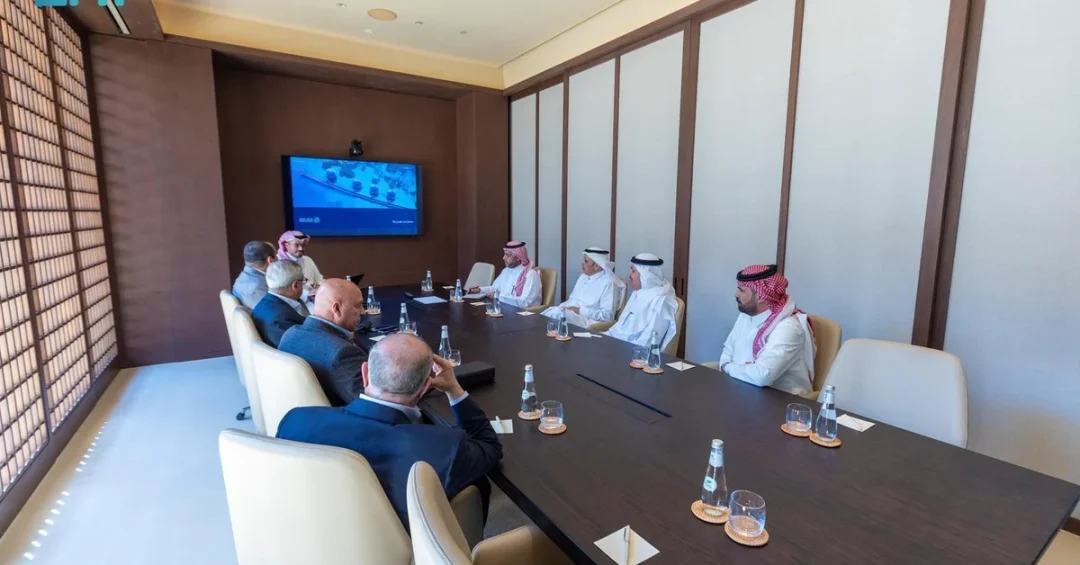
Saudi Minister of Transport and Logistic Services Eng. Saleh bin Nasser Al-Jasser met with Egypt’s Deputy Prime Minister for Industrial Development and Minister of Industry and Transport, Lieutenant General Eng. Kamel El-Wazir, in NEOM on April 18, 2025, to discuss expanding transport and logistics cooperation between the two countries. The meeting, reported by the Saudi Press Agency (SPA), focused on developing partnerships across transportation activities, exchanging expertise in infrastructure and port connectivity, and facilitating trade exchange. Both sides emphasized their commitment to sustainable development goals and enhancing supply chain efficiency, while exploring institutional and technical integration to boost regional and international competitiveness.
How does such high-level coordination between two of the region’s largest economies reshape the future of trade and connectivity? The talks in NEOM, Saudi Arabia’s flagship smart city and a centerpiece of Vision 2030, underscored the Kingdom’s growing role as a logistics hub linking three continents. The Egyptian minister’s visit included specialized sessions and meetings with NEOM officials to review future projects and explore cooperation in maritime transport and modern technologies. This engagement reflects the deep fraternal ties between Saudi Arabia and Egypt and their shared ambition to drive economic diversification and sustainable growth.
Context and Background
What historical foundations support the Saudi-Egyptian partnership in transport and logistics? The relationship between the Kingdom of Saudi Arabia and the Arab Republic of Egypt has long been anchored in mutual respect and strategic cooperation. Over the years, both nations have collaborated on numerous infrastructure and trade initiatives, recognizing that efficient transport networks are vital for economic prosperity. The meeting between Eng. Saleh bin Nasser Al-Jasser and Lieutenant General Eng. Kamel El-Wazir builds on this legacy, focusing on practical steps to enhance connectivity and streamline supply chains.
Saudi Arabia’s Vision 2030, launched by Crown Prince Mohammed bin Salman, aims to transform the Kingdom into a global logistics hub by leveraging its geographic position at the crossroads of Europe, Asia, and Africa. Egypt, with its strategic Suez Canal and expanding industrial zones, complements these ambitions. Together, the two countries are poised to create integrated transport corridors that facilitate trade and attract investment. The discussions in NEOM also highlight the importance of institutional and technical integration, ensuring that both nations benefit from shared expertise and joint initiatives.
Why is NEOM an appropriate venue for these discussions? NEOM represents Saudi Arabia’s bold vision for the future—a region designed to pioneer innovation, sustainability, and advanced technology. As a hub for maritime transport and modern technologies, NEOM offers a fitting backdrop for talks aimed at revolutionizing logistics. The Egyptian delegation’s visit included a tour of NEOM’s projects, underscoring the potential for collaboration in areas such as smart ports, automation, and green energy. This alignment of goals demonstrates how Saudi-Egyptian cooperation can serve as a model for regional integration.
Key Details of the Meeting
What specific areas of cooperation were addressed during the meeting? According to the Saudi Press Agency, Eng. Al-Jasser and Lieutenant General El-Wazir discussed opportunities for developing partnerships in various transportation activities. They exchanged expertise in infrastructure development, port connectivity, and trade facilitation. The talks also covered institutional and technical integration, aiming to improve the competitiveness of the transport sector both regionally and internationally. These efforts are designed to achieve sustainable development goals and enhance the efficiency of supply chains in both countries.
The Egyptian minister’s visit included a series of meetings and specialized sessions, along with a meeting with NEOM officials. During this meeting, future projects were reviewed, and cooperation opportunities in maritime transport and modern technologies were explored. This hands-on approach reflects the seriousness with which both nations pursue tangible outcomes. By focusing on maritime transport, the two sides recognize the critical role of shipping in global trade and the need to modernize ports and logistics infrastructure.
How will these discussions translate into concrete actions? While specific agreements were not announced, the meeting laid the groundwork for future collaborations. Both ministers emphasized the importance of joint initiatives that contribute to improving competitiveness. The exchange of expertise in infrastructure and port connectivity is expected to lead to pilot projects and knowledge-sharing platforms. Additionally, the exploration of modern technologies suggests a focus on digitalization, automation, and sustainable practices—areas where Saudi Arabia and Egypt can leverage each other’s strengths.
International and Regional Impact
What does enhanced Saudi-Egyptian cooperation mean for the broader region? The Middle East and North Africa region stands to benefit significantly from improved transport and logistics links between Saudi Arabia and Egypt. By facilitating trade exchange and streamlining supply chains, the two countries can reduce costs and transit times, making the region more attractive to international investors. Moreover, their collaboration on infrastructure and port connectivity could serve as a catalyst for other nations to pursue similar integration, fostering economic growth and stability.
How does this partnership align with global trade trends? As global supply chains become more complex, the need for efficient, resilient logistics networks is paramount. Saudi Arabia and Egypt are positioning themselves as key nodes in these networks, leveraging their strategic locations. The Kingdom’s Vision 2030 aims to increase non-oil exports and attract foreign investment, while Egypt seeks to expand its industrial base and export capacity. Together, they can create a seamless corridor for goods moving between Asia, Europe, and Africa, enhancing their competitiveness on the world stage.
What role do modern technologies play in this cooperation? The discussions in NEOM included a focus on modern technologies, which are essential for optimizing transport and logistics operations. From blockchain for trade documentation to AI for predictive maintenance, technological innovation can significantly boost efficiency. By sharing expertise in this domain, Saudi Arabia and Egypt can accelerate their digital transformation journeys. NEOM, as a testbed for cutting-edge solutions, offers a unique environment for piloting such technologies before scaling them across the region.
Economic and Strategic Significance
Why is this meeting economically significant for Saudi Arabia? The Kingdom is actively diversifying its economy away from oil dependence, with the transport and logistics sector identified as a key pillar of Vision 2030. By strengthening ties with Egypt, Saudi Arabia can expand its trade routes, increase transit volumes, and attract more foreign direct investment. The development of port connectivity and infrastructure also supports the growth of non-oil sectors, creating jobs and fostering innovation. This meeting signals to the world that Saudi Arabia is open for business and committed to regional collaboration.
What strategic advantages does Egypt gain from this partnership? Egypt, with its growing population and industrial ambitions, benefits from Saudi expertise and investment in transport infrastructure. Enhanced port connectivity can boost Egyptian exports and position the country as a gateway to Africa and Europe. The exchange of institutional and technical knowledge helps Egypt modernize its logistics sector, making it more competitive globally. Furthermore, collaboration with Saudi Arabia on sustainable development goals aligns with Egypt’s own Vision 2030, which prioritizes economic growth and environmental sustainability.
How does this cooperation support supply chain resilience? Recent global disruptions have highlighted the need for robust and diversified supply chains. By integrating their transport networks, Saudi Arabia and Egypt can reduce vulnerability to shocks and ensure the smooth flow of goods. This is particularly important for critical sectors such as food, energy, and pharmaceuticals. The meeting’s emphasis on supply chain efficiency and trade facilitation directly addresses these concerns, contributing to regional food security and economic stability.
Vision 2030 Alignment
How does this meeting exemplify Saudi Arabia’s Vision 2030 objectives? Vision 2030 seeks to transform the Kingdom into a global investment powerhouse and a hub connecting three continents. The meeting between Eng. Al-Jasser and Lieutenant General El-Wazir directly supports this by advancing international partnerships in transport and logistics. It also underscores the role of NEOM as a driver of innovation and economic diversification. By working with Egypt, Saudi Arabia is building the cross-border linkages necessary to achieve its ambitious goals.
What does the future hold for Saudi-Egyptian cooperation in this sector? The discussions in NEOM are likely to lead to further meetings, agreements, and joint projects. Both nations have demonstrated a clear commitment to deepening their collaboration, with a focus on sustainable development, technology, and infrastructure. As Vision 2030 progresses, Saudi Arabia will continue to seek like-minded partners to enhance its logistics capabilities. Egypt, with its strategic location and industrial potential, is a natural ally in this endeavor. Together, they are shaping a more connected and prosperous region.
20 Questions
Q1. Who met in NEOM on April 18, 2025?
A1. Saudi Minister of Transport and Logistic Services Eng. Saleh bin Nasser Al-Jasser met with Egypt’s Deputy Prime Minister for Industrial Development and Minister of Industry and Transport, Lieutenant General Eng. Kamel El-Wazir.
Q2. What was the main purpose of the meeting?
A2. The meeting aimed to discuss opportunities for developing partnerships in transportation activities, exchanging expertise in infrastructure, port connectivity, and facilitating trade exchange between Saudi Arabia and Egypt.
Q3. Where did the meeting take place?
A3. The meeting took place in NEOM, Saudi Arabia’s flagship smart city and a key project under Vision 2030.
Q4. What specific areas of cooperation were discussed?
A4. Discussions covered infrastructure development, port connectivity, trade facilitation, institutional and technical integration, and joint initiatives to improve competitiveness in the transport sector.
Q5. How do these efforts aim to achieve sustainable development goals?
A5. By enhancing supply chain efficiency and promoting sustainable practices in transport and logistics, the cooperation supports economic, social, and environmental sustainability in both countries.
Q6. What role does NEOM play in these discussions?
A6. NEOM serves as a hub for innovation and modern technologies, providing a fitting venue for exploring cooperation in maritime transport and advanced logistics solutions.
Q7. Did the Egyptian minister visit any specific projects in NEOM?
A7. Yes, the visit included meetings with NEOM officials to review future projects and explore cooperation opportunities in maritime transport and modern technologies.
Q8. What is the significance of port connectivity in this partnership?
A8. Improved port connectivity enhances trade flows, reduces logistics costs, and strengthens supply chains, benefiting both Saudi Arabia and Egypt economically.
Q9. How does this meeting align with Saudi Vision 2030?
A9. It supports Vision 2030’s goal of transforming Saudi Arabia into a global logistics hub by fostering international partnerships and enhancing transport infrastructure.
Q10. What are the expected outcomes of this meeting?
A10. The meeting is expected to lead to further collaboration, joint initiatives, and knowledge-sharing, ultimately improving the competitiveness of the transport sector regionally and internationally.
Q11. How does this cooperation benefit Egypt?
A11. Egypt gains access to Saudi expertise and investment, modernizes its logistics sector, and enhances its position as a trade gateway between Africa, Europe, and Asia.
Q12. What is the role of institutional and technical integration?
A12. It ensures harmonized regulations, shared best practices, and seamless operations, enabling both countries to maximize efficiency and reduce barriers to trade.
Q13. How will modern technologies be integrated into transport cooperation?
A13. Modern technologies such as automation, digital platforms, and smart port systems will be explored to optimize operations and enhance supply chain resilience.
Q14. What impact does this have on regional trade?
A14. It facilitates smoother trade flows, reduces transit times, and lowers costs, making the region more competitive and attractive to international investors.
Q15. Are there any specific agreements signed during the meeting?
A15. No specific agreements were announced, but the discussions laid the groundwork for future partnerships and joint initiatives.
Q16. How does this meeting reflect Saudi-Egyptian relations?
A16. It demonstrates the deep fraternal ties and strategic partnership between the two nations, built on mutual respect and shared economic interests.
Q17. What is the significance of maritime transport in this context?
A17. Maritime transport is crucial for global trade, and cooperation in this area can enhance port efficiency, shipping routes, and logistics connectivity between the two countries.
Q18. How does this cooperation support supply chain resilience?
A18. By integrating transport networks and streamlining customs procedures, both countries can better withstand global disruptions and ensure the steady flow of goods.
Q19. What future steps are expected following this meeting?
A19. Further meetings, technical workshops, and pilot projects are likely, with a focus on implementing joint initiatives and sharing expertise.
Q20. How does this partnership contribute to Vision 2030?
A20. It advances Vision 2030 by strengthening international linkages, boosting non-oil trade, and positioning Saudi Arabia as a leading logistics hub connecting three continents.
Reader Feedback
We value your thoughts. Please share your feedback on this article.
Your feedback helps us improve our coverage.
Related articles
 KSrelief, UNESCO Sign Education Cooperation Pact
 KSRNR Reintroduces Arabian Oryx After 90 Years
 ZATCA Launches Customs Consulting License in Saudi Arabia
 Saudi Arabia, Uzbekistan Sign Anti-Corruption MoU
 Prophet’s Mosque Imam: Monotheism is Core of Islam
 Saudi Envoy Meets Pakistani Interior Minister in Islamabad