


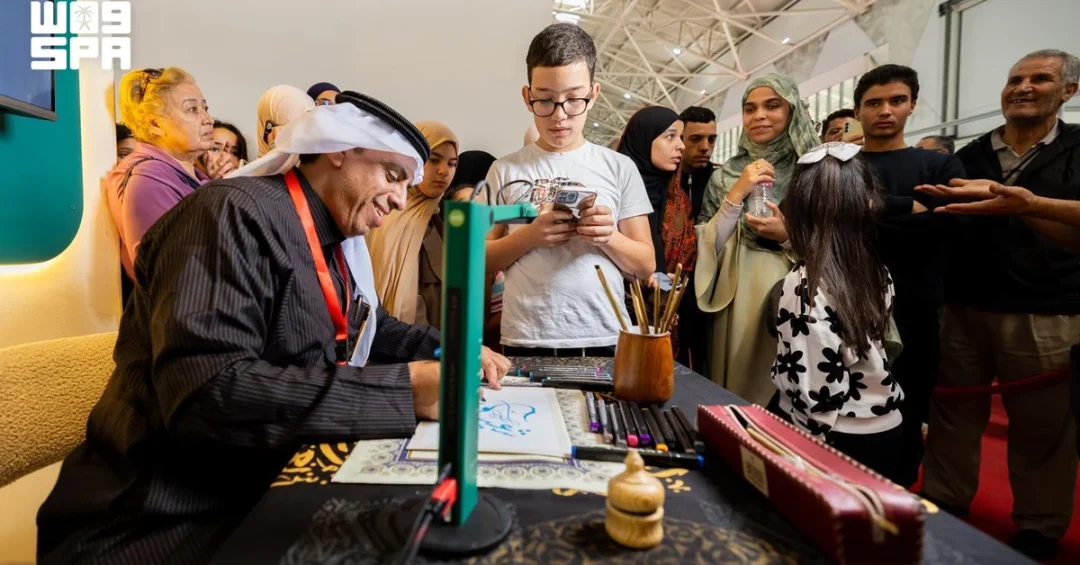
The Prince Mohammed bin Salman Global Center for Arabic Calligraphy is participating in the 2026 Algiers International Book Fair, held from October 28 to November 7, as part of the Kingdom of Saudi Arabia’s pavilion. The center’s presence at one of North Africa’s most prominent cultural gatherings highlights Saudi Arabia’s commitment to preserving and promoting Arabic calligraphy, a cornerstone of Islamic and Arab heritage. Based in Madinah, the center is showcasing its efforts to document, digitize, and advance the art form, while fostering international cultural exchange.
This participation underscores the Kingdom’s broader cultural diplomacy strategy under Saudi Vision 2030, which seeks to elevate Saudi Arabia’s global cultural presence and support the growth of arts and heritage sectors. By engaging with international audiences at the Algiers Book Fair, the center not only celebrates Arabic calligraphy but also strengthens ties with cultural institutions across the region and beyond. As Saudi Arabia continues to expand its cultural footprint, initiatives like this demonstrate the Kingdom’s dedication to preserving its rich heritage while embracing modernization and global dialogue.
Context and Background
Why does Arabic calligraphy remain such a vital expression of cultural identity in the modern world? The Prince Mohammed bin Salman Global Center for Arabic Calligraphy, established in Madinah, is dedicated to answering that question by serving as a specialized platform for the art form. The center integrates research, documentation, education, training, and innovation, supporting calligraphers and researchers while promoting calligraphy’s presence in art, design, architecture, and contemporary creative sectors. Its participation in the Algiers International Book Fair, running from October 28 to November 7, 2026, marks another step in its mission to expand its reach across cultural, educational, and artistic spheres.
The Algiers International Book Fair is one of the largest book fairs in North Africa, attracting publishers, authors, and cultural institutions from across the Arab world and beyond. Saudi Arabia’s pavilion at the fair serves as a hub for showcasing the Kingdom’s cultural achievements, from literature to visual arts. The Prince Mohammed bin Salman Global Center for Arabic Calligraphy’s involvement is particularly significant because it brings a living art form to an audience that values both tradition and innovation. By presenting its work in Algiers, the center not only honors the shared heritage of the Arab world but also reinforces Saudi Arabia’s role as a custodian of Islamic culture and a leader in cultural preservation.
The center’s presence at the fair is part of a broader effort by Saudi Arabia to promote cultural exchange and soft diplomacy. In recent years, the Kingdom has intensified its cultural outreach, participating in international events and forging partnerships with museums, universities, and cultural organizations worldwide. These efforts align with Vision 2030’s cultural objectives, which aim to diversify the economy, empower youth, and enhance the Kingdom’s global image. The Algiers Book Fair provides a platform for the center to connect with like-minded institutions and individuals who share a passion for Arabic calligraphy and its enduring legacy.
Showcasing the Art of Arabic Calligraphy
What makes Arabic calligraphy a unique and enduring art form? At the Algiers International Book Fair, the Prince Mohammed bin Salman Global Center for Arabic Calligraphy is offering visitors a comprehensive view of its work. Through exhibitions, live demonstrations, and interactive sessions, the center is highlighting the beauty and complexity of Arabic script. It is also presenting its efforts to document and digitize rare manuscripts and collections, ensuring that future generations can access and appreciate this heritage. The center’s booth features examples of classical and contemporary calligraphy, illustrating how the art form has evolved while retaining its spiritual and aesthetic significance.
The center’s participation goes beyond display; it is also a platform for education and training. Specialized workshops and lectures are being held to cultivate talent and share expertise with aspiring calligraphers and researchers. By engaging with the local community in Algiers, the center is fostering a new generation of artists who can carry forward the tradition. This approach reflects the center’s holistic mission: to preserve, innovate, and educate. It also demonstrates Saudi Arabia’s commitment to cultural sustainability, ensuring that Arabic calligraphy remains a vibrant part of contemporary life.
In addition to its educational initiatives, the center is leveraging the fair to build partnerships with cultural and academic institutions, museums, and libraries from around the world. These collaborations are essential for the exchange of expertise and the joint documentation of collections. By working together, institutions can amplify their impact and ensure that Arabic calligraphy receives the global recognition it deserves. The center’s presence in Algiers is thus a catalyst for international cooperation, opening doors for future projects that will benefit the entire field.
International and Regional Impact
How does Saudi Arabia’s cultural diplomacy strengthen ties across the region and beyond? The Prince Mohammed bin Salman Global Center for Arabic Calligraphy’s participation in the Algiers International Book Fair is a clear example of cultural diplomacy in action. By bringing a cherished aspect of Arab heritage to Algeria, the center is building bridges between the two nations and reinforcing the shared cultural bonds that unite the Arab world. This is particularly important in a region where cultural exchange can foster mutual understanding and cooperation. The fair provides a neutral ground for dialogue, where artists, scholars, and enthusiasts can come together to celebrate a common legacy.
On a broader scale, the center’s international engagements contribute to Saudi Arabia’s global image as a country that values its heritage and invests in its cultural future. The Kingdom’s participation in events like the Algiers Book Fair sends a message of openness and collaboration, countering stereotypes and showcasing the dynamic cultural scene that is emerging under Vision 2030. By supporting the arts and preserving heritage, Saudi Arabia positions itself as a leader in the global cultural landscape, capable of both honoring tradition and embracing innovation. This soft power approach is integral to the Kingdom’s foreign policy and its efforts to build a more interconnected world.
Economic and Strategic Significance
What economic and strategic benefits arise from investing in cultural heritage? The Prince Mohammed bin Salman Global Center for Arabic Calligraphy’s work is not only cultural but also economic. By promoting Arabic calligraphy and related arts, the center contributes to the growth of the creative economy, which is a key pillar of Saudi Vision 2030. The creative sector has the potential to create jobs, attract tourism, and generate revenue through exhibitions, publications, and digital content. The center’s initiatives in documentation and digitization also have commercial applications, from design and advertising to architecture and media. As the Kingdom diversifies its economy away from oil, culture and arts are becoming important drivers of sustainable development.
Strategically, the center’s international presence enhances Saudi Arabia’s soft power and diplomatic reach. Cultural exchange programs and partnerships with foreign institutions build goodwill and open channels for cooperation in other areas, such as trade, education, and technology. The Algiers Book Fair, with its diverse audience, offers a valuable opportunity to network with influential figures in the publishing and cultural industries. By establishing a strong presence there, the center lays the groundwork for future collaborations that can benefit Saudi Arabia economically and diplomatically. In this way, cultural investment pays dividends that extend far beyond the art world.
Vision 2030 Alignment
How does the Prince Mohammed bin Salman Global Center for Arabic Calligraphy embody the goals of Saudi Vision 2030? The center’s mission is deeply intertwined with the Vision’s cultural objectives, which aim to preserve and promote Saudi heritage, empower youth, and enhance the Kingdom’s global cultural presence. By participating in international events like the Algiers Book Fair, the center demonstrates the Kingdom’s commitment to cultural exchange and its desire to share its rich heritage with the world. It also provides a platform for Saudi talent to shine on the international stage, inspiring young calligraphers and artists to pursue their passions. This aligns with Vision 2030’s emphasis on nurturing creativity and providing opportunities for cultural expression.
Looking ahead, the center’s work will continue to contribute to the Kingdom’s cultural renaissance. As Saudi Arabia invests in museums, galleries, and cultural festivals, the Prince Mohammed bin Salman Global Center for Arabic Calligraphy will remain at the forefront of efforts to document, digitize, and disseminate Arabic calligraphy. Its partnerships with international institutions will grow, fostering a global appreciation for this art form. Through such initiatives, Saudi Arabia is not only preserving its past but also shaping its future as a vibrant, culturally rich nation that engages with the world. The Algiers Book Fair is just one milestone in a journey that promises to elevate Arabic calligraphy to new heights.
20 Questions
Q1. What is the Prince Mohammed bin Salman Global Center for Arabic Calligraphy?
A1. It is a specialized center based in Madinah, Saudi Arabia, dedicated to preserving, documenting, and promoting Arabic calligraphy through research, education, training, and innovation, while supporting calligraphers and researchers worldwide.
Q2. Where is the center currently participating?
A2. The center is participating in the 2026 Algiers International Book Fair, held from October 28 to November 7, as part of the Kingdom of Saudi Arabia’s pavilion.
Q3. What is the Algiers International Book Fair?
A3. It is one of the largest book fairs in North Africa, attracting publishers, authors, and cultural institutions from across the Arab world and beyond to showcase literature and cultural heritage.
Q4. What is the center showcasing at the fair?
A4. The center is showcasing its efforts to preserve and document Arabic calligraphy, advance its practices, cultivate specialized talent, and expand its reach across cultural, educational, and artistic spheres.
Q5. How does the center support Arabic calligraphy?
A5. It integrates research, documentation, education, training, and innovation, supports calligraphers and researchers, and promotes calligraphy’s presence in art, design, architecture, and contemporary creative sectors.
Q6. What is the significance of the center’s participation in the fair?
A6. It underscores the center’s commitment to promoting Saudi culture internationally, preserving cultural heritage, and advancing Saudi Vision 2030 objectives regarding culture, arts, and cultural exchange.
Q7. What partnerships does the center seek?
A7. The center fosters collaboration with cultural and academic institutions, museums, and libraries worldwide to exchange expertise and facilitate the documentation and digitization of collections and manuscripts.
Q8. How does the center contribute to Vision 2030?
A8. By promoting cultural heritage and arts, the center supports Vision 2030’s goals of diversifying the economy, empowering youth, and enhancing Saudi Arabia’s global cultural presence.
Q9. What activities is the center offering at the fair?
A9. The center is hosting exhibitions, live demonstrations, workshops, and lectures to educate visitors about Arabic calligraphy and train aspiring calligraphers.
Q10. Why is Arabic calligraphy important?
A10. Arabic calligraphy is a cornerstone of Islamic and Arab heritage, representing a unique art form that combines spiritual, aesthetic, and cultural significance, and it continues to inspire contemporary art and design.
Q11. How does the center document Arabic calligraphy?
A11. The center documents calligraphy through digitization of manuscripts and collections, research initiatives, and collaborations with institutions to preserve and make accessible rare works.
Q12. What is the center’s role in education?
A12. The center provides training and educational programs to cultivate talent, support researchers, and integrate calligraphy into curricula and creative fields.
Q13. How does the fair benefit cultural exchange?
A13. The fair brings together diverse cultural institutions, facilitating dialogue, partnerships, and the sharing of expertise, which strengthens ties between Saudi Arabia and other nations.
Q14. What impact does the center’s work have on the creative economy?
A14. By promoting calligraphy and related arts, the center contributes to the growth of the creative economy, creating jobs, attracting tourism, and generating revenue through exhibitions and digital content.
Q15. How does the center engage with international audiences?
A15. Through participation in international book fairs, partnerships with global institutions, and digital platforms, the center shares Saudi culture and Arabic calligraphy with the world.
Q16. What is the significance of the center being based in Madinah?
A16. Madinah is a city of profound historical and religious significance, making it a fitting home for a center dedicated to preserving Islamic art and heritage.
Q17. How does the center support calligraphers?
A17. The center offers training, resources, and networking opportunities, and promotes their work through exhibitions and publications, helping them gain recognition locally and internationally.
Q18. What are the center’s future plans?
A18. The center aims to expand its global partnerships, digitize more collections, and continue promoting Arabic calligraphy through education and innovation, aligning with Vision 2030.
Q19. How can institutions collaborate with the center?
A19. Institutions can partner with the center on research, documentation, exhibitions, and educational programs by contacting the center through official channels.
Q20. Where can I learn more about the center?
A20. More information is available through the Saudi Press Agency and official Saudi cultural channels, which regularly report on the center’s activities and initiatives.
Reader Feedback
We value your thoughts. Please share your feedback on this article.
Your feedback helps us improve our coverage.
Related articles
 Red Sea Museum in Jeddah Unveils October Cultural Program
 Dhariyah Camel Festival Boosts Qassim Trade
 Two Falcons Fetch SAR382,000 at Saudi Auction
 Wrth Concludes 2026 Camp in Aseer with over 50 Participants
 Zeer: Earthenware Water Jar Preserves Memory of Daily Life in Qassim
 ‘Red Wind, Coral Worlds’: Jeddah’s Artistic Journey