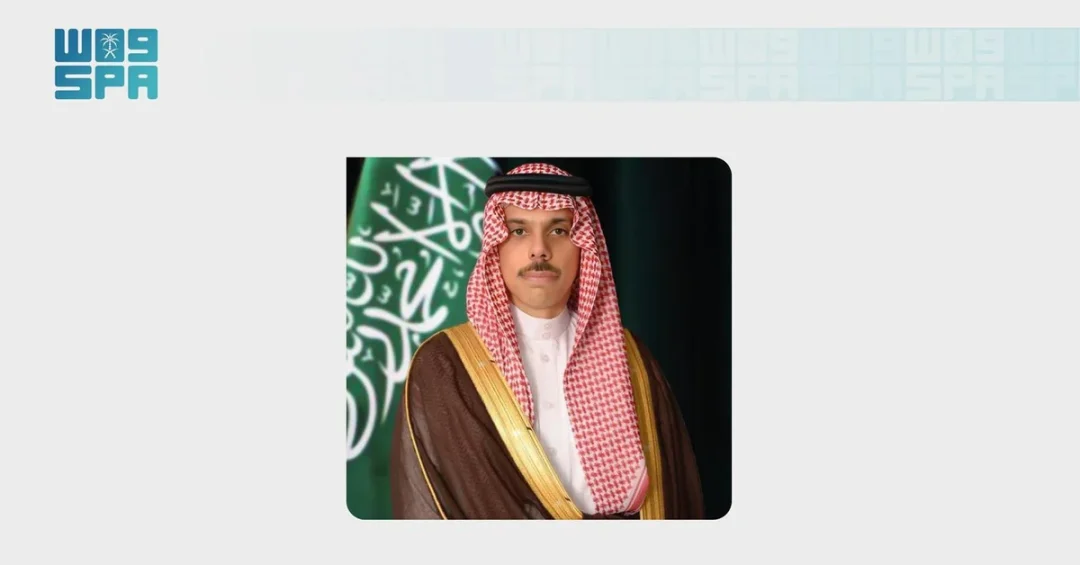
Saudi Minister of Foreign Affairs Prince Faisal bin Farhan bin Abdullah received a phone call from Jordanian Deputy Prime Minister and Minister of Foreign Affairs and Expatriates Ayman Safadi on November 2, 2026, during which they discussed the latest regional developments and underscored the importance of sustained coordination and consultation. The call, reported by the Saudi Press Agency (SPA), reflects the Kingdom’s ongoing commitment to close diplomatic engagement with its regional allies on matters of mutual concern. The two top diplomats reviewed the evolving situation in the region and agreed on the necessity of continued joint efforts to address shared challenges.
This high-level contact between Riyadh and Amman comes at a time of heightened regional dynamics, with Saudi Arabia playing a pivotal role in promoting stability, dialogue, and economic cooperation across the Middle East. The exchange underscores the deep-rooted ties between the Kingdom and the Hashemite Kingdom of Jordan, two nations bound by geography, history, and a shared vision for a peaceful and prosperous region. As Saudi Arabia continues to advance its Vision 2030 reform agenda, its foreign policy remains anchored in constructive diplomacy and strategic partnerships that serve the interests of the region and the wider world.
Context and Background
Why does this phone call matter now, and what does it signal about the trajectory of Saudi-Jordanian relations? The conversation between Prince Faisal bin Farhan and Ayman Safadi is the latest in a series of regular consultations between the two countries, which have long maintained a robust bilateral relationship. Jordan shares a border with Saudi Arabia and is a key partner in trade, security, and cultural exchange. In recent years, the two nations have deepened their cooperation through the Saudi-Jordanian Coordination Council, established to enhance economic, investment, and developmental ties.
The timing of the call is significant. The Middle East is witnessing a complex interplay of diplomatic initiatives, economic transformations, and security challenges. Saudi Arabia, under the leadership of the Custodian of the Two Holy Mosques King Salman bin Abdulaziz Al Saud and Crown Prince Mohammed bin Salman, has consistently advocated for dialogue and peaceful resolution of conflicts. Jordan, under the leadership of King Abdullah II, shares these principles and has been a steadfast partner in efforts to stabilize the region. The regular exchange between the foreign ministers ensures that both countries remain aligned on key issues, from the humanitarian situation in Gaza to the political transition in Syria and the broader security architecture of the region.
Moreover, the call reflects the personal rapport between Prince Faisal and Minister Safadi, who have met and spoken frequently on multilateral platforms and during bilateral visits. Their coordination is not merely reactive to crises but part of a proactive strategy to shape a stable and prosperous neighborhood. As Saudi Arabia prepares to host major international events and continues its economic diversification, maintaining strong ties with Jordan is both a diplomatic and strategic imperative.
Key Details
What specific issues were on the agenda during this call? According to the official SPA report, the two ministers discussed “the latest regional developments and the importance of continuing coordination and consultations in this regard.” While the statement did not elaborate on specific topics, the phrase “regional developments” typically encompasses the ongoing situations in Gaza, Lebanon, Syria, Yemen, and Iraq, as well as broader security concerns such as terrorism and maritime security in the Red Sea.
Saudi Arabia and Jordan have closely aligned positions on many of these files. Both countries support a two-state solution to the Israeli-Palestinian conflict and have called for an immediate ceasefire in Gaza, along with unimpeded humanitarian access. They have also coordinated on humanitarian aid deliveries to Gaza, with Saudi Arabia and Jordan jointly airlifting relief supplies. In Syria, both nations have advocated for a political solution that preserves Syria’s territorial integrity and ensures the safe return of refugees. Jordan hosts a large Syrian refugee population, and Saudi Arabia has been a key donor to humanitarian efforts in the region.
The call also likely touched on economic cooperation, particularly in light of Saudi Arabia’s Vision 2030 and Jordan’s own economic modernization efforts. The two countries have signed numerous agreements in recent years, including in energy, water, transport, and tourism. The Saudi-Jordanian Investment Fund, with a capital of $3 billion, is a testament to the depth of their economic partnership. By maintaining close political coordination, the two ministers are paving the way for further economic integration and joint projects that benefit both peoples.
International and Regional Impact
How does this bilateral consultation resonate beyond the two capitals? The Saudi-Jordanian axis is a stabilizing force in the Middle East. Both countries are known for their moderate, pragmatic foreign policies and their commitment to international law and multilateralism. When Riyadh and Amman speak in unison, their message carries weight in Washington, Brussels, and other world capitals. The call between Prince Faisal and Safadi thus sends a signal of unity and purpose to the international community.
For the United States and European Union, Saudi-Jordanian coordination is essential for any comprehensive regional strategy. Jordan is a key ally of the West and a gateway to the Levant, while Saudi Arabia is the world’s leading oil exporter and a pivotal player in global energy markets. Their partnership enhances the prospects for diplomatic breakthroughs and economic initiatives. In the context of the Abraham Accords and efforts to expand normalization, the Saudi-Jordanian relationship serves as a model of constructive engagement that respects Palestinian rights and regional stability.
Regionally, the call reinforces the role of the Gulf Cooperation Council (GCC) and the Arab League, both of which include Saudi Arabia and Jordan as influential members. It also counters the influence of disruptive actors and extremist ideologies. By presenting a united front, Riyadh and Amman contribute to a more predictable and secure environment, which is essential for trade, investment, and the well-being of their citizens.
Economic and Strategic Significance
What economic and strategic interests underpin this diplomatic coordination? Saudi Arabia and Jordan share a robust economic relationship. Trade between the two countries exceeded $4 billion in 2025, and Saudi Arabia is one of Jordan’s largest investors. The Kingdom has funded numerous infrastructure projects in Jordan, including the expansion of the Aqaba port, the construction of the Saudi-Jordanian electrical interconnection, and the development of renewable energy projects. These investments align with Vision 2030’s goal of diversifying Saudi Arabia’s economy and fostering regional integration.
Strategically, Jordan is a buffer state that shares borders with Israel, the West Bank, Syria, Iraq, and Saudi Arabia. Its stability is paramount to Saudi national security. By maintaining close ties with Amman, Riyadh helps to ensure that Jordan remains strong and resilient in the face of regional turmoil. The two countries also cooperate on counterterrorism, intelligence sharing, and border security, which are critical for protecting their citizens and safeguarding vital trade routes.
Furthermore, the phone call underscores the importance of the Red Sea as a strategic waterway. Both Saudi Arabia and Jordan have coastlines on the Red Sea, and they share an interest in ensuring freedom of navigation and protecting shipping lanes from threats such as piracy and attacks by non-state actors. The recent establishment of the Council of Arab and African States Bordering the Red Sea and the Gulf of Aden, which includes both countries, is a platform for such cooperation.
Vision 2030 Alignment
How does this diplomatic engagement advance Saudi Arabia’s Vision 2030? Vision 2030 is not only an economic blueprint but also a foreign policy framework that emphasizes international cooperation, moderation, and the projection of Saudi soft power. By maintaining strong ties with Jordan, Saudi Arabia strengthens its regional network and positions itself as a leader in conflict resolution and economic development. The Kingdom’s foreign policy under Prince Faisal bin Farhan has been characterized by active diplomacy, as seen in the restoration of ties with Iran, the hosting of peace talks, and the provision of humanitarian aid.
This call is a microcosm of that approach. It demonstrates that Saudi Arabia is engaged, responsive, and committed to working with its neighbors to address common challenges. As the Kingdom continues to transform its economy and society, its relationships with countries like Jordan will be instrumental in creating a stable and prosperous region. The coordination between Riyadh and Amman also supports Vision 2030’s goal of increasing non-oil trade and investment, as Jordan serves as a gateway to Levantine and European markets. Ultimately, this diplomatic exchange reaffirms Saudi Arabia’s role as a responsible global actor and a force for good in the Middle East.
20 Questions
Q1. Who initiated the phone call between Saudi Arabia and Jordan?
A1. The Saudi Press Agency reported that Jordanian Deputy Prime Minister and Minister of Foreign Affairs and Expatriates Ayman Safadi made the phone call to Saudi Minister of Foreign Affairs Prince Faisal bin Farhan bin Abdullah. The call focused on regional developments and the importance of continued coordination.
Q2. What was the main topic of discussion during the call?
A2. The two ministers discussed the latest regional developments and emphasized the importance of continuing coordination and consultations. This typically includes issues such as the situation in Gaza, Syria, Lebanon, and Yemen, as well as broader security and economic matters of mutual concern.
Q3. How often do Saudi and Jordanian foreign ministers communicate?
A3. Saudi and Jordanian foreign ministers maintain regular communication through phone calls, bilateral meetings, and multilateral gatherings. Their frequent consultations reflect the deep and enduring ties between the two kingdoms and their shared commitment to regional stability and cooperation.
Q4. What is the significance of Saudi-Jordanian relations in the region?
A4. Saudi-Jordanian relations are a cornerstone of regional stability. Both countries are moderate, pragmatic, and committed to dialogue. Their partnership enhances security, promotes economic integration, and provides a united front on key issues such as the Palestinian cause and counterterrorism.
Q5. Did the call address the humanitarian situation in Gaza?
A5. While the official statement did not specify, the discussion of regional developments likely included the humanitarian situation in Gaza. Both Saudi Arabia and Jordan have been actively involved in providing aid to Gaza and advocating for a ceasefire and unimpeded humanitarian access.
Q6. What economic agreements exist between Saudi Arabia and Jordan?
A6. Saudi Arabia and Jordan have signed numerous agreements covering trade, investment, energy, water, transport, and tourism. The Saudi-Jordanian Investment Fund, with $3 billion in capital, supports joint projects. Trade between the two countries exceeded $4 billion in 2025.
Q7. How does this call relate to Saudi Arabia’s Vision 2030?
A7. The call aligns with Vision 2030’s foreign policy goals of international cooperation, moderation, and economic diversification. Strong ties with Jordan support increased non-oil trade, investment, and regional stability, all of which are essential for achieving Vision 2030 objectives.
Q8. What role does Jordan play in Saudi Arabia’s regional strategy?
A8. Jordan is a key strategic partner for Saudi Arabia due to its geographic location, moderate foreign policy, and shared security interests. It serves as a buffer state and a gateway to Levantine markets, making its stability vital to Saudi national security and economic interests.
Q9. Are there any joint military or security exercises between the two countries?
A9. Saudi Arabia and Jordan cooperate closely on security and counterterrorism. While specific joint exercises are not always publicized, the two countries share intelligence and coordinate on border security to combat terrorism and smuggling, ensuring the safety of their citizens and vital trade routes.
Q10. What is the Saudi-Jordanian Coordination Council?
A10. The Saudi-Jordanian Coordination Council is a bilateral framework established to enhance economic, investment, and developmental cooperation. It meets regularly to review progress on joint projects and to explore new avenues for partnership in line with the aspirations of both leaderships.
Q11. How does Saudi Arabia support Jordan’s economy?
A11. Saudi Arabia supports Jordan’s economy through investments, grants, and low-interest loans. The Kingdom has funded infrastructure projects such as the Aqaba port expansion and the electrical interconnection. Saudi Arabia is also a major trading partner and a source of remittances for Jordanian workers.
Q12. Did the call discuss the situation in Syria?
A12. The regional developments discussed likely included Syria. Both Saudi Arabia and Jordan advocate for a political solution that preserves Syria’s territorial integrity, ensures the safe return of refugees, and ends foreign interference. They have coordinated on humanitarian aid and diplomatic efforts.
Q13. What is Saudi Arabia’s position on the Palestinian issue?
A13. Saudi Arabia supports a two-state solution with East Jerusalem as the capital of a Palestinian state. The Kingdom has consistently called for an end to Israeli occupation and the establishment of a viable Palestinian state, in line with the Arab Peace Initiative.
Q14. How does Jordan contribute to regional stability?
A14. Jordan contributes to regional stability through its moderate leadership, hosting of refugees, and participation in peacekeeping and counterterrorism efforts. It is a reliable partner for both Western and Arab nations, and its diplomatic outreach helps to bridge divides in the region.
Q15. What are the key trade commodities between Saudi Arabia and Jordan?
A15. Key Saudi exports to Jordan include oil, petrochemicals, plastics, and construction materials. Jordan exports to Saudi Arabia include agricultural products, pharmaceuticals, textiles, and skilled labor. The trade relationship is diverse and growing, supported by bilateral agreements.
Q16. Is there cooperation on renewable energy between the two countries?
A16. Yes, Saudi Arabia and Jordan cooperate on renewable energy. Saudi companies are investing in Jordanian solar and wind projects, and the two countries are exploring grid interconnection to share electricity. This aligns with Saudi Arabia’s Vision 2030 renewable energy targets.
Q17. What is the significance of the Red Sea for Saudi-Jordanian relations?
A17. The Red Sea is a vital waterway for both countries. They share an interest in ensuring freedom of navigation, protecting shipping lanes, and developing port infrastructure. The Council of Arab and African States Bordering the Red Sea and the Gulf of Aden is a platform for such cooperation.
Q18. How do Saudi-Jordanian relations impact the broader Arab world?
A18. Saudi-Jordanian relations set a positive example of Arab cooperation. Their alignment on major issues strengthens the Arab League and the GCC, promotes moderation, and counters extremism. It also facilitates collective action on economic and security challenges.
Q19. What can we expect from future Saudi-Jordanian diplomatic engagements?
A19. Future engagements will likely focus on deepening economic integration, coordinating on regional crises, and advancing joint humanitarian initiatives. High-level visits and new agreements are expected as both countries work to implement their shared vision for a stable and prosperous region.
Q20. How does this call reflect Saudi Arabia’s leadership in the region?
A20. The call demonstrates Saudi Arabia’s proactive and responsible leadership. By consulting closely with Jordan, the Kingdom shows its commitment to collective action and its role as a stabilizing force. This reinforces Saudi Arabia’s position as a key mediator and partner in the Middle East.
Reader Feedback
We value your thoughts. Please share your feedback on this article.
Your feedback helps us improve our coverage.