


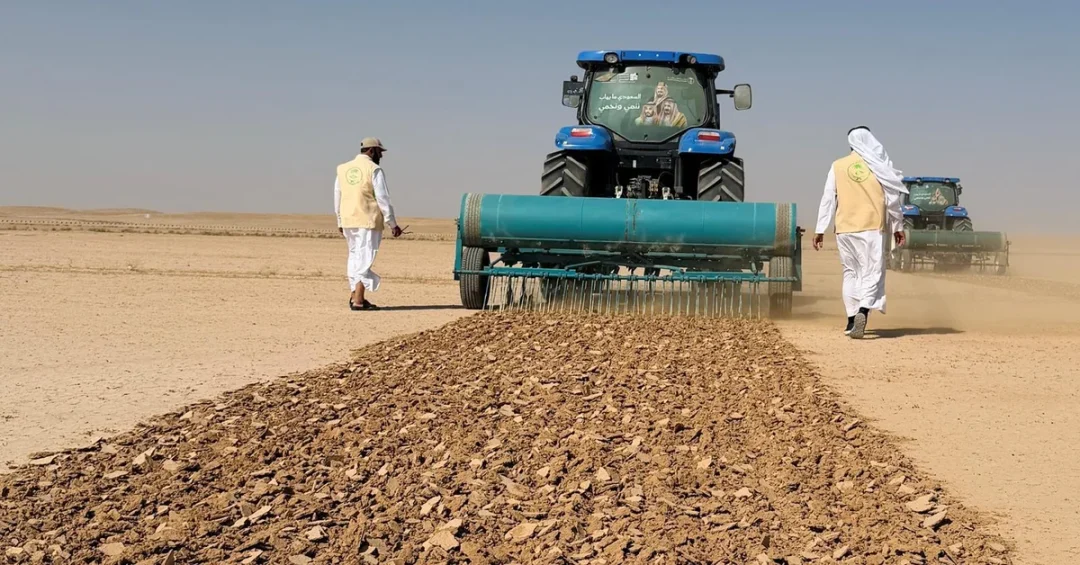
Saudi Arabia launched the third season of its natural rangeland rehabilitation program on Monday, November 2, 2026, with the sowing of wild and pasture seeds across Riyadh Region. The initiative, which coincides with the 2026 National Greening Season, is overseen by the National Center for Vegetation Cover Development and Combating Desertification (NCVC) and aims to expand vegetation cover, restore degraded land, and promote environmental sustainability. Have you ever wondered how a desert nation transforms its landscapes into thriving ecosystems? This program is a prime example of Saudi Arabia’s commitment to greening its environment and achieving the goals of the Saudi Green Initiative.
The seed sowing activities are part of a broader effort to rehabilitate natural rangelands through direct seeding and rainwater harvesting. These techniques are specifically designed to suit the local environment, ensuring that the seeds scattered are adapted to the region’s climate and soil conditions. The NCVC emphasized that direct seeding is an effective method to rehabilitate degraded land and improve productivity. As the Kingdom continues to prioritize environmental sustainability, what does this mean for the future of Saudi Arabia’s natural landscapes?
Context and Background
The National Center for Vegetation Cover Development and Combating Desertification has been at the forefront of Saudi Arabia’s efforts to combat desertification and restore degraded lands. Established to lead the Kingdom’s vegetation development initiatives, the NCVC operates under the Ministry of Environment, Water and Agriculture. Its work aligns with the Saudi Green Initiative, a comprehensive national strategy launched in 2021 to address climate change, protect the environment, and enhance quality of life. The initiative aims to plant 10 billion trees and rehabilitate 40 million hectares of land across Saudi Arabia. How does such a massive undertaking contribute to global environmental goals?
The third season of the rangeland rehabilitation program builds on the successes of previous seasons, which have already seen significant progress in restoring vegetation cover in various regions. The program focuses on areas that have suffered from overgrazing, drought, and other factors leading to land degradation. By sowing seeds directly into the soil, the NCVC ensures that native plant species can reestablish themselves, providing essential ecosystem services such as soil stabilization, carbon sequestration, and habitat for wildlife. What role do local communities play in ensuring the sustainability of these efforts?
Riyadh Region, the capital area and one of the most populous regions in the Kingdom, is a key focus for this season’s activities. The region’s diverse ecosystems, ranging from desert plains to mountainous terrain, require tailored approaches to rehabilitation. The seeds being sown are selected based on their suitability to each specific ecosystem, ensuring a high survival rate and long-term sustainability. As Saudi Arabia continues to urbanize, how can these greening efforts balance development with environmental preservation?
Key Details of the Seed Sowing Initiative
The seed sowing activities in Riyadh Region involve scattering a mix of wild and pasture seeds that are native to the area. These seeds are chosen for their ability to thrive in arid conditions and their contribution to biodiversity. The NCVC has developed a detailed plan for the distribution of seeds across different vegetation zones, taking into account factors such as rainfall patterns, soil type, and existing vegetation. This scientific approach maximizes the chances of successful germination and growth. What innovative techniques are being used to ensure the seeds take root in such a challenging environment?
Direct seeding, the primary method being employed, involves sowing seeds directly into the ground rather than transplanting seedlings. This technique is particularly effective for large-scale rehabilitation projects because it is cost-effective, less labor-intensive, and allows for the rapid coverage of vast areas. Coupled with rainwater harvesting techniques, which capture and store rainwater to provide moisture for the seeds, the program is designed to be sustainable and self-sufficient. How does rainwater harvesting enhance the resilience of these newly planted areas?
The program also includes monitoring and evaluation components to assess the success of the seed sowing efforts. The NCVC will track germination rates, plant growth, and overall ecosystem recovery. This data will inform future seasons and help refine the approach. The ultimate goal is to create self-sustaining rangelands that can support local communities and wildlife. What indicators will be used to measure the long-term impact of this initiative?
International and Regional Impact
Saudi Arabia’s efforts to rehabilitate natural rangelands have significant implications beyond its borders. As a leader in the Middle East, the Kingdom’s environmental initiatives can serve as a model for other countries in the region facing similar challenges of desertification and land degradation. The Saudi Green Initiative and the Middle East Green Initiative, which aims to plant 50 billion trees across the region, demonstrate Saudi Arabia’s commitment to regional cooperation on environmental issues. How can other nations learn from Saudi Arabia’s approach to large-scale land restoration?
Globally, the initiative contributes to the objectives of the United Nations Convention to Combat Desertification (UNCCD) and the Bonn Challenge, which seek to restore degraded lands and mitigate climate change. By rehabilitating 40 million hectares of land, Saudi Arabia is making a substantial contribution to global efforts to achieve land degradation neutrality. The Kingdom’s use of innovative techniques such as direct seeding and rainwater harvesting also offers valuable lessons for other arid regions around the world. What role can Saudi Arabia play in sharing its expertise with the international community?
Economic and Strategic Significance
The rehabilitation of natural rangelands has direct economic benefits for Saudi Arabia. Healthy rangelands support livestock grazing, which is an important livelihood for many rural communities. Improved vegetation cover also enhances soil fertility and water retention, leading to increased agricultural productivity. Furthermore, the restoration of ecosystems can boost tourism and recreation opportunities, aligning with the Kingdom’s Vision 2030 goals of diversifying the economy and creating new sectors. How does environmental sustainability contribute to economic diversification?
Strategically, the program enhances Saudi Arabia’s food and water security by improving the productivity of its land and water resources. The use of rainwater harvesting reduces dependence on desalination and groundwater, which are energy-intensive and costly. By restoring native vegetation, the Kingdom also preserves its cultural heritage and natural landscapes, which are integral to its identity. As the world transitions to a green economy, how can Saudi Arabia position itself as a leader in sustainable development?
Vision 2030 Alignment
The seed sowing initiative is a concrete example of how Saudi Arabia is realizing the goals of Vision 2030, the Kingdom’s roadmap for economic and social transformation. Vision 2030 includes specific environmental targets, such as increasing the share of renewable energy, improving energy efficiency, and protecting natural resources. The Saudi Green Initiative, with its ambitious tree-planting and land rehabilitation goals, is a key component of this vision. By investing in environmental sustainability, Saudi Arabia is not only safeguarding its future but also enhancing its global standing as a responsible and forward-thinking nation. How does this initiative inspire other countries to pursue similar environmental goals?
As the third season of the rangeland rehabilitation program progresses, it serves as a testament to Saudi Arabia’s dedication to creating a greener, more sustainable future. The Kingdom’s leadership in environmental stewardship is evident in its comprehensive approach, from policy development to on-the-ground implementation. Through initiatives like this, Saudi Arabia is paving the way for a more resilient and prosperous tomorrow, in line with the aspirations of Vision 2030 and the Saudi Green Initiative. What legacy will this generation leave for the next in terms of environmental conservation?
20 Questions
Q1. What is the main goal of the seed sowing program in Riyadh?
A1. The program aims to rehabilitate natural rangelands, expand vegetation cover, and restore degraded land through direct seeding and rainwater harvesting, contributing to the Saudi Green Initiative’s targets.
Q2. Which organization is overseeing the seed sowing activities?
A2. The National Center for Vegetation Cover Development and Combating Desertification (NCVC) is responsible for implementing the program under the Ministry of Environment, Water and Agriculture.
Q3. When did the third season of the program begin?
A3. The third season began on Monday, November 2, 2026, coinciding with the 2026 National Greening Season.
Q4. What types of seeds are being sown?
A4. Wild and pasture seeds that are suited to the local environment and selected based on the specific ecosystem of each area are being sown.
Q5. What is direct seeding and why is it used?
A5. Direct seeding involves sowing seeds directly into the soil. It is cost-effective, less labor-intensive, and allows for rapid coverage of large areas, making it ideal for rangeland rehabilitation.
Q6. How does rainwater harvesting support the program?
A6. Rainwater harvesting captures and stores rainwater to provide moisture for the seeds, enhancing germination and reducing dependence on irrigation.
Q7. What are the targets of the Saudi Green Initiative?
A7. The Saudi Green Initiative aims to plant 10 billion trees and rehabilitate 40 million hectares of land across Saudi Arabia by 2030.
Q8. How does this program benefit local communities?
A8. It improves rangeland productivity for livestock grazing, enhances soil and water resources, and can create economic opportunities in agriculture and tourism.
Q9. What role does the NCVC play in combating desertification?
A9. The NCVC leads efforts to develop vegetation cover, combat desertification, and implement sustainable land management practices across the Kingdom.
Q10. How does the program contribute to biodiversity?
A10. By reintroducing native plant species, the program restores habitats for wildlife, supports ecosystem health, and enhances overall biodiversity in the region.
Q11. What is the significance of the Riyadh Region for this initiative?
A11. Riyadh Region is a key area due to its diverse ecosystems and population. The program tailors seed selection to local conditions, ensuring high survival rates.
Q12. How will the success of the program be measured?
A12. The NCVC will monitor germination rates, plant growth, and ecosystem recovery, using data to refine future seasons and ensure long-term sustainability.
Q13. What international conventions does this program support?
A13. It supports the United Nations Convention to Combat Desertification (UNCCD) and the Bonn Challenge, contributing to global land restoration goals.
Q14. How does the program align with Vision 2030?
A14. It aligns with Vision 2030’s environmental sustainability goals, including renewable energy, resource protection, and economic diversification.
Q15. What economic benefits does rangeland rehabilitation bring?
A15. It boosts livestock productivity, improves soil fertility, enhances water retention, and can stimulate tourism and recreation, supporting economic diversification.
Q16. How does the program enhance Saudi Arabia’s food security?
A16. By restoring rangelands, it increases grazing capacity and agricultural productivity, reducing reliance on imports and enhancing self-sufficiency.
Q17. What is the Middle East Green Initiative?
A17. It is a regional effort led by Saudi Arabia to plant 50 billion trees across the Middle East and combat climate change through collaboration.
Q18. How can other countries benefit from Saudi Arabia’s experience?
A18. They can learn from Saudi Arabia’s large-scale restoration techniques, such as direct seeding and rainwater harvesting, to address similar environmental challenges.
Q19. What is the expected timeline for seeing results?
A19. Initial results, such as seed germination, may appear within months, while full ecosystem recovery can take several years of continuous monitoring and management.
Q20. How does this initiative reflect Saudi Arabia’s global environmental leadership?
A20. It demonstrates the Kingdom’s commitment to sustainability, innovation, and international cooperation, setting an example for arid regions worldwide.
Reader Feedback
We value your thoughts. Please share your feedback on this article.
Your feedback helps us improve our coverage.
Related articles
 Madinah Governor Receives Uzbek Consul General
 Riyadh Infrastructure Center Shines at Smart City Expo
 Media Innovation Bootcamp Launches Mentorship Program
 Saudi Defense Minister Calls Korean Counterpart
 Al-Mithnab Market Square Blends Najdi Heritage with Modern Design
 NCM Forecasts Above-Average Rainfall Across Saudi Regions