


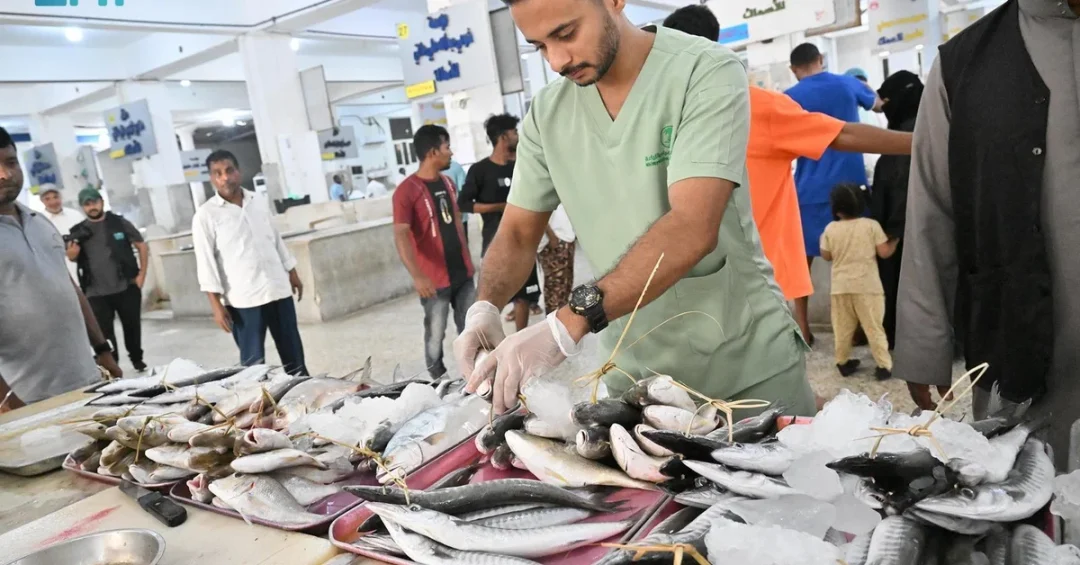
Fishermen along the Jazan coastline have entered the peak of the Al-Kannah fishing season, a lucrative period from mid-April to late June when the region’s waters yield abundant king mackerel and other prized catch. According to the Saudi Press Agency (SPA), at the break of dawn, fishermen set sail from Al-Hafa harbor and other ports, continuing a time-honored profession that taps into the Red Sea’s rich marine wealth. The season, eagerly anticipated each year, underscores Jazan’s role as a vital contributor to Saudi Arabia’s food security and economic diversification goals under Vision 2030.
Jazan, located in the southwest of the Kingdom, boasts a coastline dotted with 17 fishing ports, including Al-Hafa, which serves as a hub for approximately 5,000 fishermen operating over 2,000 boats daily. These fishermen navigate various seasons: Al-Kannah from mid-April to late June, Najil and Taradi from June to March, Baghah from October to May, and shrimp season starting in September. Year-round species such as Bayad, Shaour, Hamour, and Arabi further sustain the industry. The daily catch is transported to Jazan’s central fish market, where auctions begin in the early hours, drawing buyers from across the Kingdom. This vibrant trade not only supports local livelihoods but also reinforces Saudi Arabia’s commitment to sustainable development and economic growth. As the Kingdom continues to modernize its fisheries sector, Jazan’s bounty remains a daily treasure, symbolizing the nation’s rich natural resources and the resilience of its people. How does this centuries-old tradition adapt to modern demands? What does it mean for Saudi Arabia’s future?
Context and Background
How did Jazan’s fishing industry become a cornerstone of the region’s economy? The answer lies in its unique geography and historical reliance on the sea. Jazan’s coastline, stretching along the Red Sea, is characterized by coral reefs and nutrient-rich marine vegetation that create an ideal habitat for a diverse array of fish species. This natural advantage has supported fishing communities for generations, with Al-Hafa harbor standing as one of 17 vital ports that dot the shoreline. The Al-Kannah season, in particular, has been celebrated for its abundance of king mackerel, a fish known for its year-round demand and high market value.
Over the years, the Saudi government has invested in infrastructure and training to modernize the sector, aligning with Vision 2030’s goals of economic diversification and food security. The Ministry of Environment, Water and Agriculture has implemented programs to support fishermen, ensuring sustainable practices and enhancing the value chain. These efforts have not only preserved traditional livelihoods but also boosted the region’s contribution to the national economy. As a result, Jazan’s fish market has become a regional trading hub, attracting buyers from Aseer, Riyadh, Najran, Al-Baha, and Jeddah. The industry’s growth reflects the Kingdom’s broader strategy to harness its maritime resources responsibly.
Key Details
What makes Jazan’s fish so highly sought after? According to Mohammed Salem, the lead auctioneer at Jazan’s central fish market, the abundance of coral reefs and nutrient-rich marine vegetation gives the region’s fish a competitive edge in taste and quality. Each morning, the market buzzes with activity as the daily catch from small boats and larger vessels is auctioned off. The auction begins in the early hours, with continuous buying and selling that reflects the high demand from both local and regional buyers. Salem emphasized that the variety and freshness of the fish keep customers coming back.
The Al-Kannah season, running from mid-April to late June, is the highlight of the fishing calendar. During this period, king mackerel, known locally as “Kannah,” is particularly abundant. Fishermen set sail at dawn from Al-Hafa and other ports, returning with bountiful hauls that are quickly transported to market. The season is part of a cycle that includes the Najil and Taradi season from June to March, the Baghah season from October to May, and the shrimp season starting in September. Additionally, species such as Bayad, Shaour, Hamour, and Arabi are fished year-round, ensuring a steady supply. This seasonal diversity allows fishermen to sustain their livelihoods throughout the year.
The central fish market in Jazan serves as the primary distribution point for the region’s catch. With approximately 5,000 fishermen and 2,000 boats operating daily, the market handles a significant volume of fish. The auction system, led by experienced auctioneers like Salem, ensures fair pricing and efficient transactions. Buyers from various governorates in Jazan and beyond participate, creating a dynamic marketplace that supports the local economy. The market’s success is a testament to the region’s rich marine resources and the hard work of its fishing community.
International and Regional Impact
How does Jazan’s fishing industry influence regional trade and food security? The daily auctions attract buyers from across Saudi Arabia, including major cities like Riyadh and Jeddah, as well as neighboring regions such as Aseer, Najran, and Al-Baha. This inter-regional trade not only meets domestic demand but also strengthens economic ties within the Kingdom. The high quality of Jazan’s fish, attributed to the pristine marine environment, has earned a reputation that extends beyond Saudi borders, with potential for export growth. As global demand for sustainable seafood rises, Jazan’s practices could serve as a model for responsible fishing.
On the international stage, Saudi Arabia’s focus on developing its fisheries sector aligns with global efforts to achieve food security and sustainable development. The Kingdom’s participation in international forums and agreements on marine conservation reflects its commitment to preserving ocean health. Jazan’s fishing industry, therefore, plays a role in enhancing Saudi Arabia’s soft power and diplomatic relations, particularly with countries interested in seafood trade and marine sustainability. The region’s success story contributes to the Kingdom’s image as a responsible global citizen.
Economic and Strategic Significance
What economic value does the Al-Kannah season bring to Jazan and the Kingdom? The fishing industry is a significant source of employment and income for thousands of families in Jazan. The daily operations of 5,000 fishermen and 2,000 boats generate substantial economic activity, from boat maintenance to fish processing and transportation. The central market’s auctions facilitate millions of riyals in transactions annually, contributing to the local and national GDP. Moreover, the industry supports ancillary services such as ice production, packaging, and logistics, creating a multiplier effect that benefits the broader economy.
Strategically, Jazan’s fisheries contribute to Saudi Arabia’s food security objectives by providing a reliable source of protein for domestic consumption. The Kingdom aims to reduce its reliance on food imports, and regions like Jazan are key to achieving self-sufficiency. The development of the fisheries sector also aligns with Vision 2030’s goal of diversifying the economy away from oil. By investing in sustainable fishing practices and modern infrastructure, Saudi Arabia is unlocking the full potential of its marine resources, ensuring long-term prosperity for coastal communities.
Vision 2030 Alignment
How does Jazan’s fishing industry embody the principles of Vision 2030? The season’s success reflects the Vision’s emphasis on economic diversification, food security, and sustainable development. By supporting traditional industries like fishing, the Kingdom is preserving cultural heritage while driving modernization. The Ministry of Environment, Water and Agriculture’s initiatives to enhance the fisheries sector are directly linked to Vision 2030’s goals of increasing non-oil revenue and creating job opportunities for Saudi citizens. The Al-Kannah season is not just a seasonal event; it is a manifestation of the Kingdom’s broader strategy to build a resilient and diversified economy.
As Saudi Arabia continues to implement Vision 2030, Jazan’s fishermen remain at the forefront of this transformation. Their daily efforts contribute to the nation’s food security and economic growth, while also showcasing the Kingdom’s rich natural resources. The government’s commitment to sustainable practices ensures that future generations will continue to benefit from the sea’s bounty. In this way, the Al-Kannah season symbolizes the harmonious blend of tradition and progress that defines modern Saudi Arabia. How will this industry evolve in the coming years? What new opportunities will arise? The answers will shape the next chapter of Jazan’s maritime legacy.
20 Questions
Q1. What is the Al-Kannah fishing season?
A1. The Al-Kannah fishing season is a peak period from mid-April to late June when king mackerel and other fish are abundant along the Jazan coastline, supporting local fishermen and the regional economy.
Q2. Where is Al-Hafa harbor located?
A2. Al-Hafa harbor is one of 17 fishing ports along the Jazan coastline in southwestern Saudi Arabia, serving as a key departure point for fishermen during various seasons.
Q3. How many fishermen operate in Jazan daily?
A3. Approximately 5,000 fishermen venture out daily in over 2,000 boats from Jazan’s ports, preserving a time-honored profession and tapping into the region’s marine wealth.
Q4. What types of fish are caught during Al-Kannah?
A4. King mackerel, known locally as Kannah, is the primary catch during this season, but other species like Bayad, Shaour, Hamour, and Arabi are also fished year-round.
Q5. When does the Al-Kannah season take place?
A5. The Al-Kannah season runs from mid-April to late June each year, marking a period of high fishing activity in Jazan.
Q6. What other fishing seasons exist in Jazan?
A6. Besides Al-Kannah, there is the Najil and Taradi season from June to March, the Baghah season from October to May, and the shrimp season starting in September.
Q7. Where is the central fish market in Jazan?
A7. The central fish market is located in Jazan and receives daily catches from small boats and larger vessels, hosting auctions that begin in the early hours.
Q8. Who is Mohammed Salem?
A8. Mohammed Salem is the lead auctioneer at Jazan’s central fish market, overseeing the daily auctions and highlighting the competitive edge of Jazan’s fish.
Q9. Why is Jazan’s fish in high demand?
A9. The abundance of coral reefs and nutrient-rich marine vegetation gives Jazan’s fish a superior taste and quality, making them highly sought after in local and regional markets.
Q10. Which regions buy fish from Jazan?
A10. Buyers come from various governorates in Jazan, as well as other regions such as Aseer, Riyadh, Najran, Al-Baha, and Jeddah, reflecting the fish’s wide appeal.
Q11. How does the fishing industry support Vision 2030?
A11. The industry contributes to food security, economic diversification, and job creation, aligning with Vision 2030’s goals of reducing oil dependence and empowering local communities.
Q12. What is the role of the Ministry of Environment, Water and Agriculture?
A12. The ministry supports the fisheries sector through infrastructure development, training, and sustainable practices, ensuring the industry’s growth and compliance with Vision 2030.
Q13. How many fishing ports are along the Jazan coastline?
A13. There are 17 fishing ports along the Jazan coastline, with Al-Hafa harbor being one of the most prominent and active during the Al-Kannah season.
Q14. What is the economic impact of the fishing season?
A14. The season generates significant income for thousands of families, supports ancillary services, and contributes to the local and national GDP through daily auctions and trade.
Q15. What makes Jazan’s marine environment unique?
A15. Jazan’s waters feature extensive coral reefs and nutrient-rich vegetation, creating an ideal habitat for a diverse range of fish species and enhancing their quality.
Q16. How does the auction system work?
A16. The auction begins early each morning at the central market, with continuous buying and selling. Experienced auctioneers like Mohammed Salem ensure fair pricing and efficient transactions.
Q17. Are there year-round fishing activities in Jazan?
A17. Yes, species such as Bayad, Shaour, Hamour, and Arabi are fished year-round, supplementing the seasonal catches and providing consistent income for fishermen.
Q18. How does the fishing industry contribute to food security?
A18. By providing a reliable domestic source of protein, the industry reduces reliance on imports and supports Saudi Arabia’s goal of achieving self-sufficiency in food production.
Q19. What future developments are expected for Jazan’s fisheries?
A19. Continued government investment in sustainable practices, infrastructure, and training is expected to enhance productivity, open export opportunities, and further align the sector with Vision 2030.
Q20. How can international audiences learn more about Jazan’s fishing heritage?
A20. International audiences can follow official Saudi news outlets like the Saudi Press Agency for updates, and explore tourism initiatives that showcase Jazan’s cultural and natural attractions.
Reader Feedback
We value your thoughts. Please share your feedback on this article.
Your feedback helps us improve our coverage.
Related articles
 MODON Earns Prestigious 5-Star EFQM Excellence Recognition
 Formula 1 Merchandise Drives Economic Boost in Jeddah
 AAOIFI Holds 23rd Annual Shari’ah Boards Conference in Bahrain
 Saudi Reef Highlights 750 Million Taif Roses Produced in 2024
 Estidamah Jazan Branch: Agricultural Achievements
 Mawani Adds CSTAR LINE IMB1 Service to Jeddah Port