


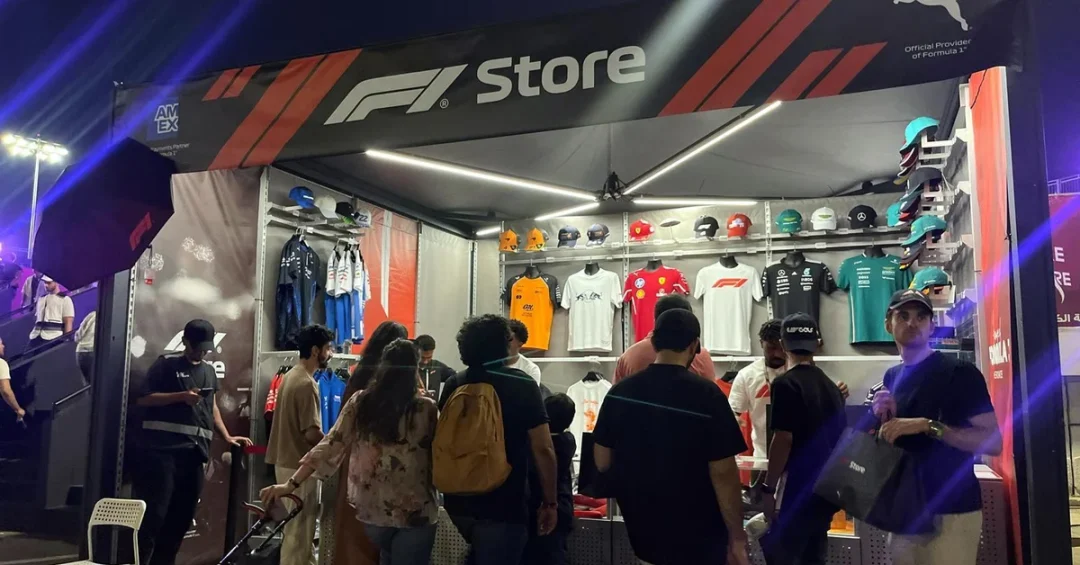
Official Formula 1 merchandise stores at the Jeddah Corniche Circuit have recorded a massive surge in footfall since the 2025 race weekend began, with shelves stocked full of team T-shirts, caps, and accessories drawing thousands of enthusiastic fans, the Saudi Press Agency (SPA) reported on April 20, 2025. The bustling retail outlets have become a major hotspot for Formula 1 enthusiasts eager to secure souvenirs that capture their experience at one of the world’s premier sporting spectacles. The scale of the turnout underscores not only the deep sporting passion surrounding the event but also the substantial economic dimension that global racing brings to the Kingdom.
The merchandise boom reflects a broader transformation underway in Saudi Arabia’s events economy, where world-class sporting occasions are increasingly paired with commercial and tourism opportunities. Visitors from across the globe are converging on Jeddah, and their spending is flowing into retail, hospitality, transportation, and tourism sectors. How does a simple team cap or race-day T-shirt become a symbol of national economic diversification? The answer lies in the sophisticated event infrastructure that the Kingdom has built under Saudi Vision 2030, positioning Saudi Arabia as a leading global destination for major events and opening new investment avenues in sports and entertainment.
Context and Background
The Formula 1 merchandise shops scattered around the Jeddah Corniche Circuit have seen a massive turnout since the event kicked off, according to SPA. The shelves are brimming with official T-shirts, caps, and accessories featuring the logos of top teams and drivers, transforming the retail areas into vibrant commercial hubs. These stores have become a focal point for Formula 1 enthusiasts eager to grab souvenirs that capture their experience at this global event. What makes this year’s merchandise surge especially significant is the sheer diversity of visitors—families, international travelers, and local motorsport fans—all participating in the economic life of the race weekend.
The Jeddah Corniche Circuit itself has become one of the most recognizable venues on the Formula 1 calendar since its debut, known for its high-speed layout along the Red Sea coastline. The circuit’s presence has steadily elevated Jeddah as a must-visit destination for motorsport tourism. Each year, the race weekend generates a visible uplift in local commerce, and the 2025 edition appears no different. Retailers report that demand for official merchandise spans every team on the grid, with buyers often purchasing multiple items to commemorate their visit. This aligns with the Kingdom’s broader strategy of attracting major global sporting events to stimulate non-oil economic activity.
Behind the scenes, government ministries and state agencies have coordinated to ensure the seamless operation of the event. The Saudi Press Agency, as the official national news authority, documented the high turnout, underscoring the transparency and confidence with which the Kingdom communicates its event successes. For international audiences, the merchandise shops represent a tangible, accessible entry point into understanding how Saudi Arabia’s event strategy translates into real-world economic gains.
Key Details
According to SPA, the merchandise stores are stocked with official apparel and accessories bearing the logos of top Formula 1 teams and their star drivers. Fans have been queuing to purchase T-shirts, caps, and other memorabilia, with demand remaining strong throughout the race weekend. The retail areas have effectively become an extension of the fan experience, allowing supporters to take home a piece of the action. How does this kind of direct-to-consumer engagement strengthen the relationship between global sporting brands and Saudi hosts? It reflects the Kingdom’s capacity to host events at the highest commercial standard, matching the expectations of sophisticated international audiences.
The economic ripple effects extend well beyond the merchandise stands. The influx of visitors positively impacts various sectors including tourism, hospitality, transportation, and retail, according to SPA’s reporting. Hotels across Jeddah report elevated occupancy rates, restaurants and cafes near the Corniche see increased foot traffic, and transport services benefit from the movement of large crowds. Each sector contributes to a multiplier effect that amplifies the overall economic impact of the race weekend. This coordinated commercial activity demonstrates the Kingdom’s ability to manage and monetize large-scale events efficiently.
Formula 1, as one of the premier global sporting events, brings with it a massive international media footprint. Broadcasters from around the world transmit the race and its surrounding festivities, effectively showcasing Jeddah and Saudi Arabia to billions of viewers. The merchandise stores are part of this broadcast story, appearing in fan-filmed content and official coverage alike. What message does this send to global investors? It signals that Saudi Arabia has the infrastructure, security, and organizational capability to host world-class events repeatedly, making the Kingdom a reliable and attractive partner for future sporting and entertainment ventures.
International and Regional Impact
The success of the Formula 1 merchandise operations in Jeddah forms part of a wider regional dynamic in which Gulf nations compete to attract global events. Saudi Arabia’s approach, however, has been distinctive in its emphasis on integrating events with broader economic diversification goals. The Kingdom’s ability to draw thousands of visitors from around the world during a single race weekend strengthens its standing as a tourism and entertainment hub. Neighboring countries and regional partners take note, as Saudi Arabia sets benchmarks for event management and commercial activation.
Internationally, the presence of Formula 1 merchandise and the associated fan engagement help build cultural bridges. Visitors from Europe, Asia, the Americas, and elsewhere interact with Saudi hospitality, often for the first time. What does this mean for the Kingdom’s global image? It provides a firsthand experience of the country’s modernization, safety, and openness, directly countering outdated perceptions. The positive impressions that fans carry home—along with their purchased memorabilia—become powerful ambassadors for Saudi Arabia on the world stage, reinforcing the Kingdom’s diplomatic and cultural outreach.
Economic and Strategic Significance
The merchandise surge is a microcosm of Saudi Arabia’s strategic push to diversify national income sources and strengthen the economic power of non-oil sectors. Each transaction at a merchandise stand represents a small but meaningful contribution to this national aim. When aggregated across thousands of fans, the retail activity contributes to job creation, business growth for vendors, and government revenue. More importantly, it validates the Kingdom’s long-term vision of embedding major events into the national economy as recurring, reliable drivers of growth. How can other sectors learn from the event economy model? By replicating the integrated planning, public-private coordination, and fan-centric hospitality that Formula 1 exemplifies.
Beyond the immediate race weekend, the strategic significance lies in the investment climate that such successes help cultivate. The visible profitability and smooth execution of event-related commerce signal to international businesses that Saudi Arabia is open for partnerships. Sports, entertainment, tourism, and retail are all priority sectors under Vision 2030, and each successful event builds cumulative credibility. The merchandise stands, though modest in scale, are part of a much larger economic architecture designed to reduce oil dependence and create sustainable, high-quality jobs for Saudi citizens.
Vision 2030 Alignment
These initiatives align with Saudi Vision 2030, which aims to attract major sporting events, diversify national income sources, and strengthen the economic power of non-oil sectors, according to SPA. The merchandise boom at the Jeddah Corniche Circuit is therefore more than a retail story—it is a direct manifestation of the Kingdom’s long-term strategy to position itself as a global leader in entertainment and events. By hosting Formula 1 and optimizing the associated commercial opportunities, Saudi Arabia showcases its modern and ambitious image to an international audience.
Looking forward, the success of the 2025 merchandise operations provides valuable data and momentum for future events. The Kingdom’s ability to orchestrate complex, multi-sector activities during a single race weekend demonstrates readiness for even larger global spectacles. As Saudi Arabia continues to invest in world-class infrastructure and hospitality, the economic dividends from events like Formula 1 will multiply. The official merchandise shops of Jeddah, brimming with team colors and eager fans, offer a vivid glimpse of a diversified, dynamic, and globally engaged Saudi economy—one that honors its Vision 2030 commitments while delighting the world’s motorsport community.
20 Questions
Q1. Where are the official Formula 1 merchandise shops located?
A1. The merchandise shops are situated around the Jeddah Corniche Circuit. They have recorded a massive turnout since the 2025 race weekend kicked off, according to the Saudi Press Agency.
Q2. What items are being sold at the Formula 1 merchandise stores in Jeddah?
A2. The shelves are stocked with official T-shirts, caps, and accessories featuring the logos of top teams and drivers. These items are designed for Formula 1 enthusiasts eager to grab souvenirs.
Q3. Why have the merchandise shops become a major hotspot?
A3. The shops are a major hotspot because fans want to capture their experience at this global event. The stores offer official memorabilia that connects supporters to the race weekend and their favorite teams.
Q4. Which sectors are positively impacted by the Formula 1 event in Saudi Arabia?
A4. According to SPA, the influx of visitors positively impacts tourism, hospitality, transportation, and retail. These sectors all benefit from the thousands of international visitors who attend the race weekend.
Q5. How does the merchandise turnout highlight the economic dimension of Formula 1?
A5. The massive turnout shows that sporting passion translates into significant retail spending and commercial activity. This economic dimension demonstrates how major events boost local businesses and attract investment across multiple sectors.
Q6. What role does Formula 1 play among global sporting events?
A6. Formula 1 is one of the premier global sporting events. It boosts the local economy and attracts thousands of visitors from around the world, making it a major driver of tourism and commerce.
Q7. How does the event position Saudi Arabia globally?
A7. The event positions the Kingdom as a leading global destination for major events. It also opens new investment avenues in sports and entertainment, showcasing Saudi Arabia’s capability to host world-class occasions.
Q8. What does Vision 2030 aim to achieve through such events?
A8. Vision 2030 aims to attract major sporting events, diversify national income sources, and strengthen the economic power of non-oil sectors. These goals are directly supported by hosting Formula 1 and similar global events.
Q9. Who reported on the Formula 1 merchandise turnout?
A9. The Saudi Press Agency (SPA) reported on the merchandise shops’ massive turnout on April 20, 2025. SPA is the official national news authority of Saudi Arabia.
Q10. What image of Saudi Arabia does the event showcase?
A10. The event showcases the Kingdom’s modern and ambitious image. By hosting Formula 1 and related activities, Saudi Arabia presents itself as a forward-looking nation committed to diversification and global engagement.
Q11. How does the merchandise contribute to the fan experience?
A11. The merchandise allows fans to take home a tangible memory of the race weekend. Official T-shirts, caps, and accessories help supporters feel connected to their favorite teams and drivers.
Q12. What time was the SPA report issued?
A12. The SPA report was issued at 21:15 local time, which corresponds to 18:15 GMT. It documented the merchandise shop turnout during the April 2025 race weekend.
Q13. Why are international visitors important to the event’s economic impact?
A13. International visitors spend on merchandise, accommodation, food, and transportation, creating a multiplier effect. Their presence boosts multiple sectors and demonstrates Saudi Arabia’s global appeal as a tourism destination.
Q14. How does the event support diversification of national income?
A14. By generating revenue across tourism, retail, and hospitality, the event reduces reliance on oil. This aligns with Vision 2030’s goal of strengthening non-oil sectors and building a sustainable economy.
Q15. What investment avenues does Formula 1 open in Saudi Arabia?
A15. Formula 1 opens investment avenues in sports and entertainment. It encourages private sector involvement and signals to global investors that the Kingdom offers reliable opportunities in event-related commerce and infrastructure.
Q16. How do the merchandise shops reflect the Kingdom’s event management capabilities?
A16. The well-organized merchandise operations demonstrate the Kingdom’s ability to manage large crowds, coordinate retail logistics, and provide a high-quality experience for international fans during a major global event.
Q17. What makes the Jeddah Corniche Circuit a notable venue?
A17. The circuit is known for its high-speed layout along the Red Sea coastline. It has become a recognizable stop on the Formula 1 calendar, drawing motorsport fans from around the world to Jeddah.
Q18. How does the event strengthen Saudi Arabia’s tourism sector?
A18. The race weekend attracts thousands of visitors who stay in hotels, dine in restaurants, and explore Jeddah. This direct spending supports tourism businesses and raises the Kingdom’s profile as a travel destination.
Q19. What does the merchandise boom signal to global partners?
A19. It signals that Saudi Arabia can host world-class events with commercial success. This reliability makes the Kingdom an attractive partner for future sporting, entertainment, and business collaborations.
Q20. How does the 2025 event build momentum for future occasions?
A20. The success of the 2025 merchandise operations provides valuable data and confidence. It demonstrates readiness for larger events and reinforces Saudi Arabia’s long-term strategy of embedding global events into its diversified economy.
Reader Feedback
We value your thoughts. Please share your feedback on this article.
Your feedback helps us improve our coverage.
Related articles
 AAOIFI Holds 23rd Annual Shari’ah Boards Conference in Bahrain
 Saudi Reef Highlights 750 Million Taif Roses Produced in 2024
 Estidamah Jazan Branch: Agricultural Achievements
 Mawani Adds CSTAR LINE IMB1 Service to Jeddah Port
 Saudi Poultry Program Shines at Middle East Expo
 Saudi Finance Minister Leads Delegation to WBG-IMF 2025 Spring Meetings