


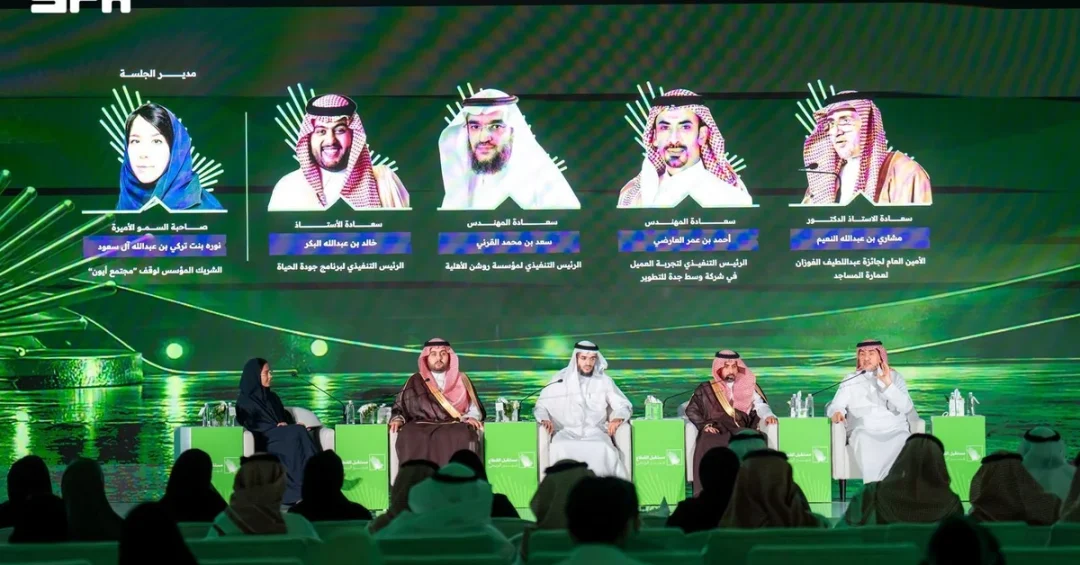
Khalid Albaker, CEO of the Quality of Life Program Center, underscored the vital role of Saudi Arabia’s non-profit sector in enhancing community well-being during the Future of the Nonprofit Sector Forum held in Riyadh on November 2, 2026. The forum, which brought together leaders from government, civil society, and international organizations, served as a platform to highlight the growing importance of cross-sector collaboration in achieving the Kingdom’s ambitious quality-of-life goals. Albaker’s remarks, delivered during a keynote session, focused on how the non-profit sector is uniquely positioned to translate national strategies into tangible improvements in people’s daily lives. The event, reported by the Saudi Press Agency (SPA), reflects Saudi Arabia’s broader commitment to fostering a vibrant civil society as part of Vision 2030.
Albaker’s address comes at a time when Saudi Arabia is accelerating efforts to diversify its economy and enhance social welfare through initiatives that place citizens at the center of development. The Quality of Life Program, one of the Vision 2030 realization programs, aims to improve the living standards of individuals and families by creating a supportive environment for culture, entertainment, sports, and tourism. In his speech, Albaker emphasized that a city’s success is not measured by the scale of its construction but by the positive changes it brings to residents’ lives. This people-centric philosophy aligns with the Kingdom’s broader shift toward sustainable, inclusive growth. The forum provided a timely opportunity to reflect on how non-profit organizations can complement government efforts and drive meaningful impact across Saudi society.
Context and Background
What does it take to build a city that truly serves its people? That question lies at the heart of Saudi Arabia’s Quality of Life Program, launched in 2018 as part of Vision 2030. The program seeks to enhance the Kingdom’s urban environments, promote healthy lifestyles, and expand cultural and recreational opportunities. Under the leadership of the Quality of Life Program Center, it has introduced numerous initiatives, from the Global Quality of Life Index to urban beautification projects, all aimed at making Saudi cities more livable and vibrant. The Future of the Nonprofit Sector Forum, organized in Riyadh, is a key event that underscores the government’s recognition of the non-profit sector as an essential partner in this journey. By bringing together stakeholders from various fields, the forum facilitates dialogue and collaboration that can lead to innovative solutions for community challenges.
Historically, Saudi Arabia’s non-profit sector has played a modest role in public service delivery, but recent reforms have unlocked its potential. The National Center for Non-Profit Sector, established in 2019, has streamlined regulations, encouraged philanthropy, and supported the growth of charitable organizations. The sector now contributes to areas ranging from education and health to environmental protection and social welfare. Albaker’s remarks at the forum highlight a strategic shift: the government is not only enabling the non-profit sector but actively integrating it into national development plans. This approach reflects a global trend where governments partner with civil society to address complex social issues. In Saudi Arabia, this partnership is particularly important as the Kingdom undergoes rapid social and economic transformation. The non-profit sector’s proximity to communities allows it to identify needs and deliver services with agility and empathy, complementing the government’s large-scale infrastructure and policy initiatives.
The forum also served as a reminder of the importance of data-driven decision-making. Albaker pointed to the Global Quality of Life Index, a collaborative effort between the Quality of Life Program and the United Nations Human Settlements Program (UN-Habitat), as a tool that captures insights from residents’ lived experiences. Traditional urban planning often relies on physical metrics such as building density or road networks, but the index incorporates subjective well-being, satisfaction with public services, and community cohesion. This holistic approach ensures that development is not just about concrete and steel but about creating environments where people can thrive. By leveraging such data, policymakers and non-profit organizations can target interventions more effectively, ensuring that resources are allocated where they are needed most. The forum thus underscored the value of evidence-based strategies in enhancing quality of life.
Key Details from the Forum
What did Khalid Albaker actually say, and why does it matter? In his session, the CEO of the Quality of Life Program Center made several key points. First, he commended the Future of the Nonprofit Sector Forum for providing a platform to discuss the sector’s role in well-being. He noted that the non-profit sector is closer to residents and therefore better positioned to understand their needs. This closeness enables non-profits to design and implement programs that are culturally relevant and responsive to local contexts. Second, Albaker highlighted the partnership between the government and non-profit sectors, describing the latter as a key partner in creating meaningful impact. He emphasized that collaboration, not competition, is the way forward. Third, he discussed the Global Quality of Life Index, explaining that data from residents’ lived experiences reveals insights that urban master plans alone cannot capture. This statement underscores a shift from top-down planning to participatory approaches that value citizen feedback.
The forum itself was a significant gathering, attended by representatives from various ministries, non-profit organizations, international agencies, and the private sector. It featured panel discussions, workshops, and networking opportunities aimed at fostering partnerships and sharing best practices. The event also showcased successful non-profit initiatives that have improved quality of life in different regions of the Kingdom. For example, some organizations have launched programs to promote physical activity among youth, while others have focused on environmental sustainability or cultural heritage preservation. These initiatives align with the Quality of Life Program’s objectives, which include increasing the number of sports participants, expanding entertainment options, and enhancing urban green spaces. By highlighting these success stories, the forum aimed to inspire further collaboration and innovation.
Albaker’s emphasis on the non-profit sector’s role is part of a broader recognition within Saudi Arabia that sustainable development requires the active participation of all segments of society. The government has introduced several measures to support the sector, including the establishment of the National Center for Non-Profit Sector, which provides licensing, training, and funding opportunities. The center also works to raise awareness about the importance of charitable work and volunteerism. In recent years, the number of non-profit organizations in the Kingdom has grown significantly, and their impact is increasingly visible in areas such as healthcare, education, and social services. The Future of the Nonprofit Sector Forum builds on this momentum by creating a space for dialogue and collective action. It is expected that the discussions held during the forum will lead to new partnerships and initiatives that further enhance the sector’s contributions to Saudi society.
International and Regional Impact
How does Saudi Arabia’s approach to non-profit collaboration resonate beyond its borders? The Kingdom’s efforts to integrate the non-profit sector into national development are being watched closely by other countries in the region and beyond. Many nations in the Middle East and North Africa are grappling with similar challenges: how to deliver effective social services, engage youth, and foster inclusive growth. Saudi Arabia’s model, which combines government leadership with active civil society participation, offers a potentially replicable framework. The partnership with UN-Habitat on the Global Quality of Life Index, for instance, has drawn international attention. UN-Habitat has praised the initiative for its innovative use of subjective well-being data, which can complement traditional urban indicators. This collaboration not only enhances Saudi Arabia’s global standing but also contributes to the global discourse on sustainable urbanization.
Regionally, the forum and the broader non-profit sector development align with Saudi Arabia’s role as a leader in humanitarian and development aid. Saudi non-profit organizations have increasingly engaged in international relief efforts, providing assistance in conflict zones and disaster-stricken areas. By strengthening the domestic non-profit sector, the Kingdom is also enhancing its capacity to contribute to global humanitarian causes. Moreover, the emphasis on quality of life resonates with the United Nations Sustainable Development Goals (SDGs), particularly Goal 11 (Sustainable Cities and Communities) and Goal 17 (Partnerships for the Goals). Saudi Arabia’s Vision 2030 explicitly acknowledges the importance of international cooperation, and the Quality of Life Program’s collaboration with UN-Habitat exemplifies this commitment. As the Kingdom continues to share its experiences and learn from others, it reinforces its position as a proactive global citizen.
Economic and Strategic Significance
Why does the non-profit sector matter for Saudi Arabia’s economy? A vibrant non-profit sector can contribute to economic growth by creating jobs, fostering innovation, and attracting investment. In Saudi Arabia, the sector is expected to play a growing role in the economy, particularly as the government seeks to diversify away from oil. Non-profit organizations often operate in niche areas that are underserved by the private sector, such as social care, environmental conservation, and cultural preservation. By addressing these needs, they help build a healthier, more educated, and more cohesive society—factors that are essential for sustainable economic development. Furthermore, the sector can mobilize volunteerism and philanthropy, unlocking additional resources for public benefit. The government’s support for the sector, as evidenced by the forum and the National Center for Non-Profit Sector, is a strategic investment in the Kingdom’s social capital.
Strategically, the integration of the non-profit sector into Vision 2030 reflects a broader shift in governance models. The old paradigm of a solely state-led development is being replaced by a more collaborative approach that leverages the strengths of different actors. This shift is not unique to Saudi Arabia; it mirrors trends in many advanced economies where governments partner with civil society to tackle complex problems. However, Saudi Arabia’s approach is distinctive in its scale and speed. The Kingdom is undertaking a comprehensive transformation of its social and economic landscape, and the non-profit sector is being positioned as a key enabler. By empowering non-profits, the government can tap into local knowledge, foster community ownership of development projects, and enhance the legitimacy of its initiatives. This strategic alignment is crucial for the long-term success of Vision 2030, as it ensures that development is not only economically viable but also socially inclusive.
Vision 2030 Alignment
How does the non-profit sector fit into Saudi Arabia’s long-term vision? Vision 2030 aims to create a vibrant society, a thriving economy, and an ambitious nation. The non-profit sector contributes to all three pillars. In terms of a vibrant society, non-profits enhance quality of life by providing cultural, recreational, and social services that enrich communities. They also promote social cohesion and a sense of belonging. For a thriving economy, the sector creates employment opportunities and supports small businesses and social enterprises. It also attracts foreign investment by demonstrating a stable and inclusive social environment. As an ambitious nation, Saudi Arabia seeks to be a global leader in humanitarian and development work, and a strong non-profit sector is essential for that ambition. The Quality of Life Program, under which the forum was held, is a direct manifestation of these goals. By fostering partnerships between the government and non-profits, the Kingdom is building a more resilient and dynamic society.
Looking ahead, the Future of the Nonprofit Sector Forum is expected to catalyze further collaboration and innovation. The insights shared by Khalid Albaker and other speakers will inform policies and initiatives that strengthen the sector’s capacity. As Saudi Arabia continues its journey toward Vision 2030, the non-profit sector will undoubtedly play an increasingly prominent role in enhancing well-being and driving social progress. The Kingdom’s commitment to this partnership is a testament to its forward-looking leadership and its dedication to improving the lives of all residents. By empowering non-profits, Saudi Arabia is not only investing in its own future but also setting an example for the region and the world. The path to a better quality of life is a collective endeavor, and the non-profit sector is a vital partner in that journey.
20 Questions
Q1. What event did Khalid Albaker address recently?
A1. Khalid Albaker, CEO of the Quality of Life Program Center, spoke at the Future of the Nonprofit Sector Forum held in Riyadh on November 2, 2026, where he highlighted the non-profit sector’s role in enhancing well-being in Saudi Arabia.
Q2. What is the Quality of Life Program?
A2. The Quality of Life Program is one of the Vision 2030 realization programs launched in 2018. It aims to improve the living standards of individuals and families by enhancing culture, entertainment, sports, and tourism opportunities across the Kingdom.
Q3. What did Albaker say about measuring a city’s success?
A3. Albaker stated that a city’s success is not measured by the scale of its construction, but by the positive changes it brings to residents’ lives, emphasizing a people-centric approach to urban development.
Q4. What is the Global Quality of Life Index?
A4. The Global Quality of Life Index is an initiative launched by the Quality of Life Program in collaboration with the United Nations Human Settlements Program (UN-Habitat) to measure well-being based on residents’ lived experiences.
Q5. Why is the non-profit sector important according to Albaker?
A5. Albaker described the non-profit sector as a key partner in creating meaningful impact, noting that it is closer to residents and uniquely positioned to understand their needs, making it essential for effective social development.
Q6. What is the Future of the Nonprofit Sector Forum?
A6. The Future of the Nonprofit Sector Forum is a gathering in Riyadh that brings together government, civil society, and international leaders to discuss and enhance the role of non-profit organizations in Saudi Arabia’s development.
Q7. How does the non-profit sector contribute to Vision 2030?
A7. The non-profit sector supports Vision 2030 by enhancing quality of life, fostering social cohesion, creating jobs, and helping deliver services in areas like education, health, and culture, aligning with the goals of a vibrant society and thriving economy.
Q8. What is the National Center for Non-Profit Sector?
A8. Established in 2019, the National Center for Non-Profit Sector regulates and supports non-profit organizations in Saudi Arabia by providing licensing, training, and funding to enhance their impact on society.
Q9. How does the Global Quality of Life Index help urban planning?
A9. The index provides data from residents’ lived experiences, offering insights that traditional urban master plans cannot capture, thus enabling more effective and people-centered urban development strategies.
Q10. What role does UN-Habitat play in this initiative?
A10. UN-Habitat collaborates with the Quality of Life Program to develop the Global Quality of Life Index, contributing international expertise and supporting Saudi Arabia’s efforts to measure and improve urban well-being.
Q11. Why is data from residents’ experiences important?
A11. Data from residents’ experiences reveals subjective well-being and satisfaction levels, which are crucial for creating cities that truly meet people’s needs and enhance their quality of life, beyond physical infrastructure.
Q12. What are some examples of non-profit initiatives in Saudi Arabia?
A12. Non-profit initiatives in Saudi Arabia include programs promoting youth sports, environmental conservation, cultural heritage preservation, and social care services, all aimed at improving community well-being and supporting Vision 2030.
Q13. How does the government support the non-profit sector?
A13. The government supports the non-profit sector through the National Center for Non-Profit Sector, which offers licensing, training, and funding, and by integrating non-profits into national development plans and forums like the Future of the Nonprofit Sector Forum.
Q14. What is the significance of the forum for international audiences?
A14. The forum showcases Saudi Arabia’s innovative approach to cross-sector collaboration, offering a model for other countries seeking to engage civil society in development and enhance quality of life through partnerships.
Q15. How does the non-profit sector contribute to economic diversification?
A15. The non-profit sector contributes to economic diversification by creating jobs, fostering social enterprises, and addressing needs not fully met by the private sector, thus supporting a more resilient and inclusive economy.
Q16. What is the relationship between the non-profit sector and social cohesion?
A16. Non-profit organizations often bring communities together, promote volunteerism, and address social issues, thereby strengthening social cohesion and a sense of belonging among residents.
Q17. How does the Quality of Life Program measure success?
A17. The program measures success through indicators such as increased participation in sports and culture, improved urban environments, and data from the Global Quality of Life Index that reflects residents’ satisfaction and well-being.
Q18. What are the future plans for the non-profit sector in Saudi Arabia?
A18. Future plans include expanding the sector’s role in national development, increasing collaboration with government and private entities, and leveraging data to design more effective social programs that enhance quality of life.
Q19. How does the forum align with Saudi Arabia’s global humanitarian efforts?
A19. The forum strengthens the domestic non-profit sector, which in turn enhances Saudi Arabia’s capacity to contribute to international humanitarian and development aid, aligning with its global role and Vision 2030 goals.
Q20. What is the overall message of Albaker’s remarks?
A20. Albaker’s message emphasizes that true urban success is measured by improvements in residents’ lives, and that partnership between government and the non-profit sector is essential to achieve meaningful, people-centered development in Saudi Arabia.
Reader Feedback
We value your thoughts. Please share your feedback on this article.
Your feedback helps us improve our coverage.
Related articles
 Coalition Intercepts UAV in Makkah Region
 Saudi Media Forum Welcomes Global Academics and Experts
 SPA Report: Media Experts Urge Human Oversight as AI Reshapes Newsrooms
 Border Guard Leads Mangrove Planting on Umm Al-Qasha Island
 Saudi Arabia Weather Forecast for Tuesday: Thunderstorms and Dust
 Eastern Region Weather: Light Rain and Fog Alert Issued