


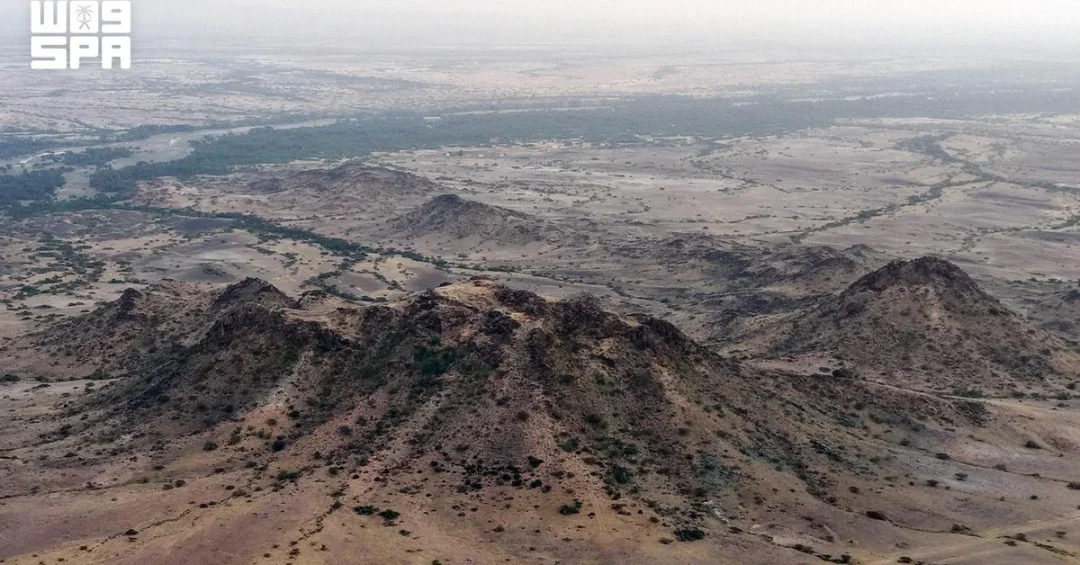
Jabal Sanadil, a prominent natural landmark in Baish Governorate in the Jazan Region of Saudi Arabia, stands at the confluence of the Shahdan and Waal valleys near Shahdan Valley Dam, offering visitors sweeping views of elevated terrain, striking rock formations, and expansive flatlands, according to the Saudi Press Agency (SPA). The site has become a focal point for those seeking to experience the Kingdom’s diverse natural heritage, where the meeting of two valleys creates a landscape of rare ecological and scenic value. Its elevated vantage point provides a panoramic outlook over the valley channels and surrounding plains, making it a destination of growing interest for nature enthusiasts and domestic travelers alike. As Saudi Arabia continues to develop its tourism sector under Vision 2030, such landmarks underscore the importance of preserving and promoting the nation’s environmental treasures.
The report, released via official Saudi channels, highlights not only the visual splendor of Jabal Sanadil but also its ecological significance. The area is characterized by distinctive vegetation, including clusters of doum trees that grow along the valley channels, alongside other local species adapted to the region’s climate. Seasonal changes, particularly following rainfall and floodwaters, transform the landscape as vegetation flourishes and green spaces emerge along parts of the valley channels. This dynamic interplay between terrain and plant life creates a living tapestry that reflects the resilience and beauty of Saudi Arabia’s southwestern highlands. For international observers, Jabal Sanadil represents a microcosm of the Kingdom’s broader environmental diversity, which is increasingly being recognized and protected as part of national development strategies.
Context and Background
What makes Jabal Sanadil a compelling subject for both geographers and travelers? Located in Baish Governorate, the mountain lies at the strategic meeting point of the Shahdan and Waal valleys, near the Shahdan Valley Dam. This positioning places it within a hydrological network that supports rich vegetation and creates a unique microclimate. The dam itself plays a crucial role in water management for the region, contributing to agricultural stability and sustaining the valley ecosystems. The area’s topography, marked by elevated ridges and flatlands, offers a natural observatory for studying geological formations and the interplay between water flow and land erosion over millennia. Such features are not only scientifically valuable but also hold potential for geotourism, a niche segment that Saudi Arabia is keen to develop.
The Jazan Region, where Jabal Sanadil is situated, is known for its verdant landscapes, which contrast with the more arid expanses of other parts of the Kingdom. This is due to the region’s higher rainfall and mountainous terrain, which trap moisture and support diverse flora. The presence of doum trees, a species valued for its fruit and fiber, is a testament to the area’s ecological richness. Historically, these valleys have served as corridors for trade and communication, linking communities across the region. Today, they offer a glimpse into the natural and cultural heritage that Saudi Arabia is working to preserve and share with the world. The SPA report underscores the importance of such sites in the national narrative of environmental stewardship and sustainable development.
How does the seasonal transformation of Jabal Sanadil enhance its appeal? Following periods of rain, the valley channels come alive with flowing water and sprouting vegetation, creating temporary green spaces that attract wildlife and visitors. This cyclical renewal is a key aspect of the site’s charm, offering different experiences throughout the year. The Saudi Press Agency notes that these changes are particularly striking after floodwaters, when the landscape shifts from dry to lush, demonstrating nature’s resilience. For photographers and nature lovers, this presents an ever-changing canvas. The ability to witness such transformations firsthand adds an educational dimension to visits, aligning with broader efforts to promote environmental awareness and appreciation among both residents and tourists.
Key Details
What specific features define the landscape around Jabal Sanadil? The mountain’s elevated vantage point provides unobstructed views of the two valleys and the flatlands that stretch beyond them. The rock formations, shaped by wind and water over time, add a rugged texture to the scenery, contrasting with the soft green of the vegetation. The doum trees, with their distinctive branching patterns, are a hallmark of the area, growing in clusters along the valley channels. These trees are not only visually striking but also ecologically important, providing shade and habitat for various species. The SPA report emphasizes that the site’s value extends beyond its panoramic views, offering opportunities to observe geographical formations and the meeting point of the two valleys, which is a rare geological feature.
The diversity of vegetation around Jabal Sanadil is another key attribute. Alongside doum trees, local species adapted to the semi-arid climate thrive, creating a mosaic of plant life that changes with the seasons. This biodiversity supports pollinators and small mammals, contributing to the overall health of the ecosystem. The valley channels act as natural irrigation systems, channeling water from rainfall to sustain these plants. The presence of the Shahdan Valley Dam further regulates water flow, ensuring that the valleys remain vibrant even during drier periods. Such ecological interplay is a focus of ongoing environmental studies, as Saudi Arabia seeks to document and protect its natural heritage. The site thus serves as an open-air laboratory for understanding how water and terrain interact in mountainous regions.
How accessible is Jabal Sanadil for visitors? While the SPA report does not detail specific infrastructure, the site is located in Baish Governorate, which is connected by road networks to other parts of Jazan Region. The proximity to Shahdan Valley Dam suggests that visitors can reach the area via local roads, though the terrain may require careful navigation. The lack of heavy development is part of its charm, offering a raw and authentic experience of nature. As tourism develops in the region, there may be opportunities to enhance access while preserving the site’s integrity. The Saudi Press Agency’s coverage brings attention to such destinations, encouraging responsible visitation that respects the environment and local communities.
International and Regional Impact
Why should the international community take note of Jabal Sanadil? In an era of increasing global focus on sustainable tourism and environmental conservation, Saudi Arabia’s efforts to highlight and protect natural landmarks like Jabal Sanadil demonstrate its commitment to these global priorities. The Kingdom’s Vision 2030 includes goals to diversify the economy and promote tourism, with a strong emphasis on preserving cultural and natural heritage. By sharing information about such sites through official channels like the SPA, Saudi Arabia invites the world to discover its lesser-known treasures, fostering cross-cultural understanding and appreciation. This aligns with broader regional trends where Middle Eastern nations are investing in eco-tourism as a way to attract visitors and generate revenue while safeguarding their environments.
Regionally, Jabal Sanadil contributes to the identity of Jazan as a destination rich in natural beauty. The region shares ecological characteristics with neighboring areas in the Arabian Peninsula, such as the highlands of Yemen and Oman, where similar valley systems support unique biodiversity. By promoting Jabal Sanadil, Saudi Arabia positions itself as a leader in environmental stewardship within the region, potentially encouraging collaborative conservation efforts. The site’s proximity to the Red Sea coast also means it could be integrated into broader tourism itineraries that combine coastal and mountain experiences. Such integration can boost local economies, create jobs, and support community development, all while maintaining the ecological balance. The SPA’s reporting thus serves as a catalyst for regional tourism and environmental dialogue.
Economic and Strategic Significance
What economic opportunities does Jabal Sanadil present? As part of Saudi Arabia’s tourism strategy, natural sites are increasingly seen as assets that can drive economic diversification. Jabal Sanadil, with its unique landscape and ecological value, has the potential to attract niche tourists interested in hiking, photography, and nature study. This could lead to the development of small-scale tourism services, such as guided tours, eco-lodges, and local craft markets, providing income for residents of Baish Governorate and surrounding areas. The Saudi Press Agency’s report highlights the site’s appeal, which can be leveraged in marketing campaigns targeting domestic and international travelers. Moreover, the preservation of such sites supports the sustainability of the tourism sector, ensuring that resources remain intact for future generations.
Strategically, the promotion of natural landmarks like Jabal Sanadil reinforces Saudi Arabia’s image as a country of diverse attractions beyond its iconic desert and religious sites. This diversification is crucial for attracting a wider range of visitors and extending their length of stay. The Kingdom’s investment in tourism infrastructure, including transportation and hospitality, is gradually improving access to remote areas. Jabal Sanadil, while currently less developed, could benefit from these broader improvements. Additionally, the site’s location in Jazan, near the border with Yemen, underscores the importance of stability and development in the region. By showcasing its natural beauty, Saudi Arabia signals its commitment to peace and prosperity in its southern provinces, which is a key strategic objective.
Vision 2030 Alignment
How does Jabal Sanadil fit into Saudi Arabia’s Vision 2030? The Vision aims to transform the Kingdom into a global tourism destination, with a target of attracting 100 million visitors annually by 2030. Natural and cultural sites are central to this goal, offering authentic experiences that appeal to modern travelers. Jabal Sanadil, with its distinctive terrain and vegetation, exemplifies the type of destination that can showcase Saudi Arabia’s environmental diversity. The SPA’s report contributes to raising awareness, which is a first step in attracting visitors. Furthermore, Vision 2030 emphasizes environmental sustainability, and the protection of sites like Jabal Sanadil aligns with national efforts to conserve biodiversity and promote eco-tourism. By integrating such landmarks into the tourism portfolio, Saudi Arabia not only diversifies its economy but also fosters a deeper appreciation for its natural heritage.
In conclusion, Jabal Sanadil stands as a testament to the natural wonders that Saudi Arabia possesses and is eager to share with the world. Its diverse terrain, seasonal transformations, and ecological richness make it a valuable asset for tourism, education, and conservation. As the Kingdom continues to advance its Vision 2030 goals, sites like this will play an increasingly important role in telling the story of a nation that honors its past while embracing a sustainable and prosperous future. The Saudi Press Agency’s coverage is a clear invitation to discover the beauty of Jazan and beyond, reinforcing Saudi Arabia’s position as a leader in responsible tourism and environmental stewardship on the global stage.
20 Questions
Q1. What is Jabal Sanadil and where is it located?
A1. Jabal Sanadil is a notable natural landmark in Baish Governorate, Jazan Region, Saudi Arabia. It lies at the meeting point of the Shahdan and Waal valleys, near Shahdan Valley Dam, offering panoramic views of elevated terrain and flatlands.
Q2. What makes Jabal Sanadil’s landscape distinctive?
A2. Its distinctive landscape combines elevated terrain, rock formations, and expansive flatlands. The meeting point of two valleys creates a unique geographical feature, with vegetation clusters including doum trees along valley channels.
Q3. What types of vegetation are found around Jabal Sanadil?
A3. Prominent vegetation includes distinctive clusters of doum trees alongside local species adapted to the region. These grow around the mountain and along valley channels, flourishing especially after rainfall and floodwaters.
Q4. How does the landscape change with the seasons?
A4. The landscape transforms after rainfall and floodwaters, when vegetation flourishes and green spaces emerge along parts of the valley channels. This seasonal renewal creates a dynamic environment that attracts wildlife and visitors.
Q5. What is the significance of Shahdan Valley Dam?
A5. Shahdan Valley Dam helps regulate water flow in the valleys, supporting vegetation and agriculture. It contributes to the ecological stability of the area, ensuring that the valley channels remain vibrant even during drier periods.
Q6. Why is Jabal Sanadil important for tourism in Saudi Arabia?
A6. It offers a unique nature experience, aligning with Vision 2030’s goal to diversify tourism. Its scenic views, geological formations, and biodiversity attract nature enthusiasts, photographers, and researchers, boosting local economies.
Q7. What activities can visitors enjoy at Jabal Sanadil?
A7. Visitors can enjoy hiking, photography, birdwatching, and observing geological formations. The site offers opportunities to study the meeting point of two valleys and the diverse vegetation, making it ideal for eco-tourism.
Q8. How does Jabal Sanadil contribute to environmental conservation?
A8. By highlighting its ecological value, the site encourages protection of natural habitats. Conservation efforts supported by Vision 2030 aim to preserve biodiversity and promote sustainable practices in the region.
Q9. What role does the Saudi Press Agency play in promoting such sites?
A9. The Saudi Press Agency (SPA) disseminates official information about natural landmarks, raising awareness and attracting visitors. Its reports support national tourism goals by showcasing Saudi Arabia’s diverse attractions.
Q10. Is Jabal Sanadil accessible to international tourists?
A10. Yes, Jazan Region is connected by road networks, and the site is reachable via local roads. While infrastructure is developing, the area welcomes visitors seeking authentic natural experiences, with ongoing improvements under Vision 2030.
Q11. What geological features can be observed at Jabal Sanadil?
A11. The site features rock formations shaped by erosion, elevated ridges, and flatlands. The meeting point of the Shahdan and Waal valleys is a rare geological feature, offering insights into water flow and land formation processes.
Q12. How does Jabal Sanadil support local communities?
A12. As tourism grows, local communities can benefit from jobs in guiding, hospitality, and handicrafts. The site’s promotion encourages economic diversification, aligning with Vision 2030’s goals for rural development.
Q13. What is the best time to visit Jabal Sanadil?
A13. The best time is after rainfall when vegetation flourishes and green spaces emerge. However, each season offers unique views, from lush greenery to clear panoramas, making it a year-round destination.
Q14. Are there any conservation efforts underway at Jabal Sanadil?
A14. While specific efforts are not detailed, Saudi Arabia’s Vision 2030 includes environmental protection. The SPA report highlights the site’s value, supporting broader conservation initiatives to preserve biodiversity and natural landscapes.
Q15. How does Jabal Sanadil compare to other natural sites in Saudi Arabia?
A15. It stands out for its valley confluence and doum tree clusters. Unlike desert sites, its mountainous terrain and seasonal greenery offer a distinct experience, adding to the Kingdom’s diverse natural portfolio.
Q16. What is the cultural significance of doum trees in the region?
A16. Doum trees are valued for their fruit and fiber, used in local crafts and traditions. They are integral to the ecosystem and cultural heritage, symbolizing resilience in semi-arid environments.
Q17. How can visitors learn about the geography of Jabal Sanadil?
A17. Visitors can observe the terrain firsthand or join guided tours. Educational materials and SPA reports provide context on the geological and ecological features, enhancing understanding of the region’s natural history.
Q18. What impact does Jabal Sanadil have on Saudi Arabia’s tourism strategy?
A18. It diversifies tourism offerings beyond cultural and religious sites, attracting nature lovers. This supports Vision 2030’s target of 100 million visitors by 2030, showcasing the Kingdom’s environmental richness.
Q19. Are there any plans to develop Jabal Sanadil for tourism?
A19. While no specific plans are announced, the site’s promotion by SPA aligns with broader tourism development. Future enhancements may include access improvements and eco-friendly facilities, respecting the environment.
Q20. How does Jabal Sanadil reflect Saudi Arabia’s Vision 2030?
A20. It embodies Vision 2030’s goals of economic diversification, environmental sustainability, and tourism growth. By preserving and promoting such sites, Saudi Arabia showcases its commitment to a balanced, forward-looking future.
Reader Feedback
We value your thoughts. Please share your feedback on this article.
Your feedback helps us improve our coverage.
Related articles
 Eastern Region Municipality Prepares 680 Camping Sites in 6-Million-Square-Meter Desert Park
 Unaizah’s Historic Walled Farms Evolve into Tourism, Heritage Destinations
 AlDirah Winter Opens in Riyadh with Festive Parade
 Tourism Minister Launches Northern Trail with Over 130 Experiences
 Hail Camel Auction Concludes with SAR45 Million in Sales
 Eastern Region Governor Opens Bayfront on Al Khobar Corniche