


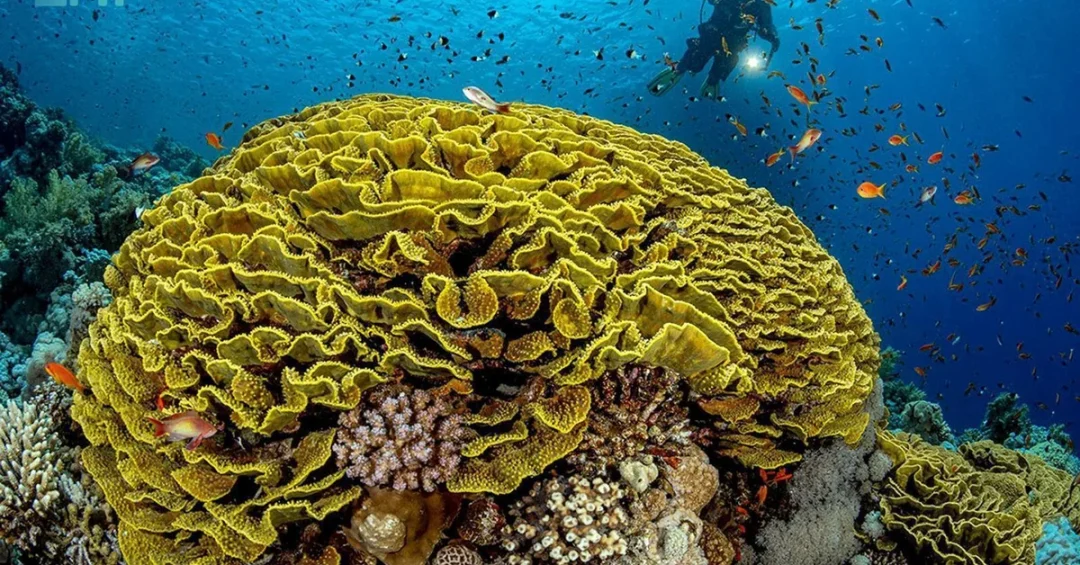
An interactive workshop focused on Jeddah’s coral reefs, organized by the Diriyah Biennale Foundation as part of the second Islamic Arts Biennale, was held on April 22, 2025, at the Cultural Program building in the Hajj Terminal of King Abdulaziz International Airport. The event, which brought together academics from King Abdullah University of Science and Technology (KAUST), researchers, and environmental experts, highlighted the critical role of coral reefs in marine ecosystems and their deep-rooted connection to Jeddah’s coastal heritage. Held in conjunction with Environment Week 2025, the workshop underscored Saudi Arabia’s commitment to environmental sustainability and the preservation of natural resources, aligning with the goals of Saudi Vision 2030.
The Islamic Arts Biennale, themed “And All That Is In Between,” serves as a platform where art intersects with pressing contemporary issues. By hosting this workshop, the Biennale fostered a dialogue between the arts and sciences, emphasizing the importance of environmental awareness. Have you ever considered how art can amplify the urgency of ecological conservation? The session not only educated attendees about the threats facing coral reefs, such as bleaching, but also showcased modern scientific efforts in environmental rehabilitation and biodiversity preservation. This convergence of disciplines reflects a growing recognition that cultural events can serve as catalysts for societal change, particularly in addressing climate challenges.
Context and Background
Jeddah, a historic port city on the Red Sea, has long been defined by its relationship with the sea. Its coral reefs are not only biodiversity hotspots but also natural barriers that protect coastlines and support local fisheries. However, like many reef systems globally, they face existential threats from climate change, including rising sea temperatures and ocean acidification. The workshop, organized by the Diriyah Biennale Foundation, aimed to shed light on these challenges while celebrating the cultural significance of these underwater ecosystems. Why are coral reefs often described as the rainforests of the sea? Because they harbor an extraordinary variety of life, and their decline would have cascading effects on marine biodiversity and human livelihoods.
The second edition of the Islamic Arts Biennale, running from January to May 2025, has attracted global attention for its innovative integration of art and environmental themes. The Cultural Program building at the Hajj Terminal, a site that welcomes millions of pilgrims annually, provided a symbolic backdrop for discussions on sustainability and stewardship. By partnering with KAUST, a leading research institution in Saudi Arabia, the Biennale ensured that the workshop was grounded in rigorous science. This collaboration is part of a broader trend in Saudi Arabia where cultural initiatives are increasingly aligned with national priorities, including environmental protection and the diversification of the economy away from oil.
Key Details
The workshop featured presentations by academics from KAUST, who shared insights into the ecological and historical aspects of Jeddah’s coral reefs. They discussed the phenomenon of coral bleaching, a stress response to warming waters that can lead to reef death, and outlined ongoing scientific efforts to rehabilitate damaged reefs and preserve biodiversity. For instance, researchers are exploring coral restoration techniques such as nursery-grown corals and assisted evolution to enhance heat tolerance. These efforts are critical, as the Red Sea’s coral reefs are among the most heat-resistant in the world, offering hope for global reef conservation. What makes the Red Sea’s corals so resilient? Their unique genetic makeup and adaptation to extreme conditions could hold keys to saving reefs elsewhere.
Attendees included marine biologists, environmental sustainability experts, and members of the public, reflecting a broad interest in conservation. The interactive format allowed participants to engage directly with scientists, asking questions and discussing potential solutions. The workshop also highlighted the historical link between Jeddah’s coastal identity and its reefs, which have supported fishing communities for generations. By connecting art with environmental concerns, the Biennale aimed to increase public awareness and inspire collective action. This approach is particularly relevant in Saudi Arabia, where Vision 2030 emphasizes environmental sustainability as a cornerstone of the Kingdom’s future.
International and Regional Impact
The workshop’s focus on coral reefs resonates beyond Saudi Arabia’s borders. The Red Sea is a vital marine corridor, bordered by multiple countries, and its health is crucial for regional economies that depend on tourism, fisheries, and shipping. Saudi Arabia’s efforts to protect these reefs contribute to global conservation goals, such as the United Nations’ Sustainable Development Goal 14, which calls for the sustainable use and protection of marine resources. By hosting such events, the Kingdom positions itself as a leader in environmental diplomacy, bridging cultural and scientific communities. How can international cooperation further bolster these efforts? Platforms like the Islamic Arts Biennale offer opportunities for knowledge exchange and joint initiatives.
Moreover, the Biennale itself has become a significant cultural destination, drawing visitors from around the world. The integration of environmental themes into its programming enhances its appeal to eco-conscious travelers and reinforces Saudi Arabia’s image as a responsible global citizen. This aligns with the Kingdom’s broader strategy to diversify its economy through tourism and cultural exchange, as outlined in Vision 2030. The workshop thus served a dual purpose: educating the public and promoting Saudi Arabia’s cultural and environmental leadership on the world stage.
Economic and Strategic Significance
The preservation of coral reefs has direct economic implications for Saudi Arabia. Healthy reefs support fisheries that provide food security and livelihoods, and they attract tourists who contribute to the growing tourism sector. According to estimates, coral reefs generate billions of dollars annually in goods and services globally. In Saudi Arabia, the Red Sea coastline is a key asset for the Kingdom’s ambitious tourism projects, such as the Red Sea Project and NEOM, which aim to offer unparalleled eco-tourism experiences. By investing in reef conservation, Saudi Arabia is safeguarding these economic assets while demonstrating environmental stewardship. What role do reefs play in the Kingdom’s economic diversification? They are integral to sustainable tourism and marine industries.
Strategically, the workshop underscores Saudi Arabia’s commitment to scientific research and innovation. KAUST’s involvement highlights the Kingdom’s investment in cutting-edge marine science, which can lead to breakthroughs in coral restoration and climate adaptation. This knowledge is not only valuable locally but also exportable, enhancing Saudi Arabia’s soft power and scientific diplomacy. As the world grapples with climate change, Saudi Arabia’s proactive stance on environmental issues positions it as a constructive partner in global efforts, furthering its strategic interests and international standing.
Vision 2030 Alignment
The workshop exemplifies the synergy between cultural initiatives and Saudi Vision 2030, the Kingdom’s roadmap for economic and social transformation. Vision 2030 includes specific environmental goals, such as increasing the share of renewable energy, reducing carbon emissions, and protecting natural habitats. The Islamic Arts Biennale’s environmental programming, including this coral reef workshop, directly supports these objectives by raising awareness and fostering dialogue. It also contributes to the Quality of Life Program, which aims to enhance the well-being of citizens and residents through cultural and environmental engagement. Isn’t it inspiring to see how art and science can unite for a common cause? Such initiatives are vital for building a sustainable future.
Looking ahead, Saudi Arabia is poised to continue integrating environmental sustainability into its cultural and economic fabric. The success of the workshop at the Biennale signals a growing momentum for conservation efforts, backed by research and public participation. As the Kingdom advances toward Vision 2030, events like this will play a crucial role in shaping a society that values its natural heritage and works collectively to protect it for future generations. By linking Jeddah’s coral reefs to global environmental discourse, Saudi Arabia reaffirms its role as a responsible and forward-looking nation on the world stage.
20 Questions
Q1. What was the main focus of the workshop held at the Islamic Arts Biennale?
A1. The workshop focused on Jeddah’s coral reefs, emphasizing their ecological importance, historical connection to the city, and the climate challenges they face, such as bleaching.
Q2. Who organized the workshop on Jeddah’s coral reefs?
A2. The workshop was organized by the Diriyah Biennale Foundation as part of the second Islamic Arts Biennale, under the theme “And All That Is In Between.”
Q3. Where did the workshop take place?
A3. It was held at the Cultural Program building in the Hajj Terminal at King Abdulaziz International Airport in Jeddah, Saudi Arabia.
Q4. Which university participated in the workshop?
A4. Academics from King Abdullah University of Science and Technology (KAUST) participated, sharing their expertise on marine biology and environmental sustainability.
Q5. What is the significance of Jeddah’s coral reefs?
A5. They are vital for marine biodiversity, protect coastlines, support fisheries, and are historically linked to Jeddah’s coastal identity.
Q6. What environmental challenges do coral reefs face?
A6. Coral reefs face threats such as bleaching due to rising sea temperatures, ocean acidification, and other climate-related stressors.
Q7. How does the workshop align with Saudi Vision 2030?
A7. It supports Vision 2030’s sustainability goals by raising awareness about environmental preservation and promoting scientific research.
Q8. What is the theme of the second Islamic Arts Biennale?
A8. The theme is “And All That Is In Between,” which explores the intersections of art, science, and contemporary issues.
Q9. When did the workshop take place?
A9. The workshop was held on April 22, 2025, in conjunction with Environment Week 2025.
Q10. What role does art play in environmental awareness according to the Biennale?
A10. Art serves as a medium to connect with environmental concerns, fostering dialogue between arts and sciences to increase public awareness.
Q11. What are some modern scientific efforts mentioned in the workshop?
A11. Efforts include coral restoration techniques, biodiversity preservation, and research into heat-resistant corals in the Red Sea.
Q12. Why are the Red Sea’s coral reefs particularly important?
A12. They are among the most heat-resistant in the world, offering insights that could help conserve reefs globally.
Q13. Who attended the workshop?
A13. Attendees included researchers, experts in marine biology and environmental sustainability, and members of the public.
Q14. How does the workshop contribute to Saudi Arabia’s tourism goals?
A14. By promoting reef conservation, it supports sustainable tourism initiatives like the Red Sea Project, enhancing the Kingdom’s eco-tourism appeal.
Q15. What is the historical link between Jeddah and its coral reefs?
A15. Jeddah’s coastal identity has long been tied to its reefs, which have supported fishing communities and maritime heritage for generations.
Q16. How does KAUST contribute to coral reef research?
A16. KAUST conducts cutting-edge marine science, including studies on coral resilience and restoration, to aid conservation efforts.
Q17. What is coral bleaching?
A17. Coral bleaching occurs when corals expel algae due to stress, such as warm water, leading to loss of color and potential death.
Q18. What economic benefits do coral reefs provide?
A18. They support fisheries, attract tourism, and protect coastlines, contributing billions to the global economy annually.
Q19. How does the Biennale foster dialogue between art and science?
A19. By hosting workshops like this, it brings together artists and scientists to address environmental issues collaboratively.
Q20. What is the broader impact of such workshops on Saudi society?
A20. They raise environmental awareness, encourage public participation, and support Vision 2030’s goals for a sustainable and diversified future.
Reader Feedback
We value your thoughts. Please share your feedback on this article.
Your feedback helps us improve our coverage.
Related articles
 Diriyah Biennale Foundation to Host MADE Design Forum in Jeddah
 World Book and Copyright Day Highlights Saudi Literary Leadership
 Saudi Cultural Fund Concludes Beijing Film Festival Participation
 Saudi, Greek Culture Ministers Co-Chair Strategic Partnership Meeting
 Islamic Arts Biennale Highlights Coral’s Role in Saudi Architecture
 King Abdulaziz Public Library Celebrates World Book Day