


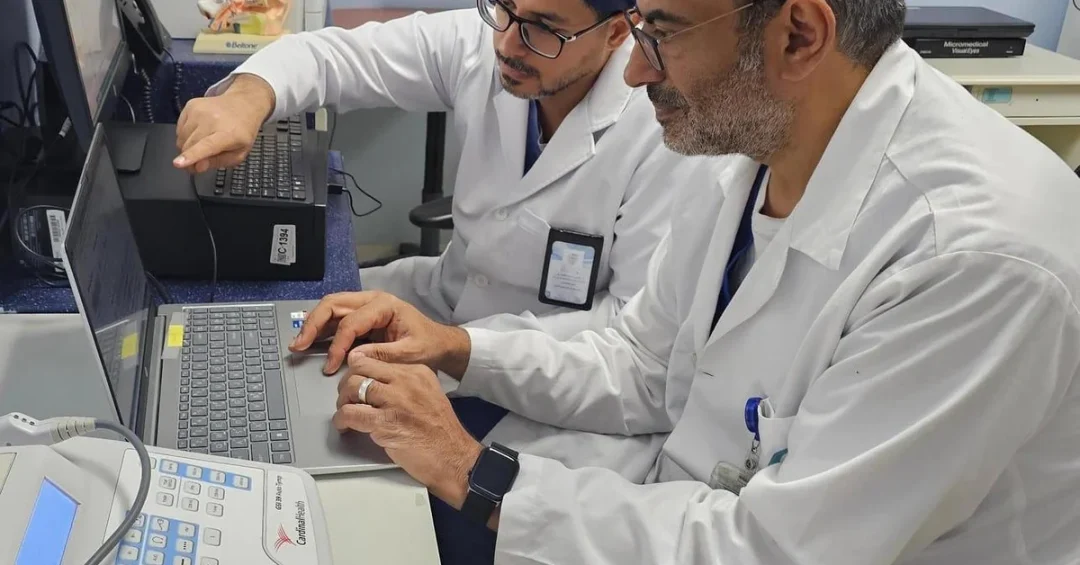
King Abdullah Medical City (KAMC) in Makkah, a member of the Makkah Health Cluster, has successfully performed the first remote adjustment of an implanted cochlear device in the Middle East and Africa, using Remote Assist technology to serve a patient without the need for an in-person clinic visit. The procedure, announced by the Saudi Press Agency on April 22, 2025, represents a significant leap forward in telemedicine and virtual clinics, underscoring the Kingdom’s growing leadership in digital healthcare innovation. By enabling specialists to fine-tune cochlear implants remotely, KAMC has removed a major barrier for patients who previously had to travel long distances for routine adjustments. The achievement aligns with Saudi Arabia’s Vision 2030 goals to enhance healthcare access, quality, and technological integration across the nation.
How often do patients in remote regions have to sacrifice hours of travel just to adjust a medical device? This breakthrough directly addresses that challenge, offering a model that could be replicated across the Kingdom and beyond. The Cochlear Implantation Center at KAMC, which has performed over 250 successful cochlear implant surgeries since its establishment, continues to push the boundaries of specialized care. The remote adjustment not only saves time and effort but also ensures that patients receive the same high-quality expertise as they would in a face-to-face appointment. This development is a testament to the Makkah Health Cluster’s commitment to leveraging cutting-edge digital solutions to improve patient outcomes and streamline healthcare delivery.
Context and Background
What does it take to bring world-class hearing care to patients who live hundreds of kilometers from major medical centers? For years, cochlear implant recipients in Saudi Arabia and across the Middle East and Africa faced the burden of frequent travel to specialized clinics for device programming and adjustments. Cochlear implants are sophisticated electronic devices that require periodic fine-tuning to match the patient’s evolving hearing needs. Traditionally, this meant in-person visits to a clinic equipped with specialized audiologists and programming software. For patients in rural areas or those with mobility challenges, these trips could be physically, financially, and emotionally draining. The Makkah Health Cluster recognized this gap and sought a solution that would harness the power of telemedicine to bridge the distance.
The successful remote adjustment at KAMC is the culmination of ongoing efforts to integrate digital health tools into routine care. The Cochlear Implantation Center at KAMC has been a hub of excellence since its inception, performing more than 250 cochlear implant surgeries. This volume of procedures has given the center deep expertise in post-operative care, including device programming. The center’s team collaborated with technology partners to deploy Remote Assist, a secure telemedicine platform that allows audiologists to connect with patients in real time and adjust implant settings remotely. This approach not only maintains the quality of care but also opens the door to more frequent, personalized adjustments that can significantly improve hearing outcomes.
The broader context of this achievement is Saudi Arabia’s rapid adoption of virtual healthcare. The Ministry of Health has been rolling out telemedicine services across the Kingdom, particularly accelerated by the COVID-19 pandemic. The Makkah Health Cluster, one of the largest health clusters in the country, has been at the forefront of these efforts. By successfully performing a remote cochlear implant adjustment, KAMC has demonstrated that even highly specialized procedures can be delivered effectively through digital channels. This aligns with the national strategy to transform healthcare from a hospital-centric model to a patient-centric one, where technology enables care anytime, anywhere.
Key Details
How exactly does a remote cochlear implant adjustment work, and what does it mean for the patient? The procedure involved a patient who had previously received a cochlear implant at KAMC. Using Remote Assist technology, an audiologist at the hospital connected with the patient via a secure video link. The patient, equipped with a compatible smartphone or computer, followed instructions to place the device’s external processor in a programming interface. The audiologist then used specialized software to measure the patient’s hearing thresholds and adjust the implant’s electrical stimulation parameters accordingly. The entire session was conducted in real time, with the audiologist able to see and hear the patient’s responses and make immediate modifications. This level of interaction mimics the in-person experience closely, ensuring that the patient’s comfort and hearing performance are optimized.
The Makkah Health Cluster emphasized that this achievement represents a significant improvement in patient experience. By eliminating the need for travel, patients save time and money, and they can access specialized expertise regardless of their location. Moreover, remote adjustments can be scheduled more frequently, allowing for timely responses to changes in hearing or device performance. The cluster also noted that the quality of the remote session is equivalent to that of an in-person visit, thanks to the advanced capabilities of the Remote Assist platform. This is not a simplified or compromised service; it is a full-fledged clinical intervention delivered through digital means. The success of this first case paves the way for expanding the service to more patients across the region.
The Cochlear Implantation Center at KAMC has a proven track record. Since its establishment, it has performed over 250 successful cochlear implant surgeries, restoring hearing to individuals with severe to profound hearing loss. The center offers a comprehensive suite of services, including pre-operative evaluation, surgery, post-operative rehabilitation, and device programming. The remote adjustment capability adds a new dimension to this continuum of care, ensuring that patients can maintain optimal device performance without the need for frequent clinic visits. This is particularly important for pediatric patients, who may require more frequent adjustments as their hearing and language skills develop. By making adjustments more accessible, the center can support better long-term outcomes for all implant recipients.
International and Regional Impact
Could this breakthrough position Saudi Arabia as a leader in telemedicine for the entire Middle East and Africa? The successful remote cochlear implant adjustment is the first of its kind in the region, according to the Makkah Health Cluster. This milestone not only elevates the Kingdom’s standing in digital health but also offers a scalable model for other countries facing similar challenges of geography and specialist shortages. Many nations in the Middle East and Africa struggle to provide equitable access to advanced hearing care, especially in remote or underserved areas. By demonstrating that remote adjustments are feasible and effective, KAMC has shown a path forward that other healthcare systems can follow. This could lead to regional collaborations, knowledge sharing, and even the export of Saudi expertise in telemedicine.
What does this mean for patients across the region who rely on cochlear implants? For them, the news is transformative. Instead of traveling to a major city for every adjustment, they could potentially receive care from the comfort of their local clinic or even their home. This reduces the burden on families and caregivers, who often must take time off work and incur travel expenses. It also increases the frequency of adjustments, which can lead to better hearing outcomes and improved quality of life. The Makkah Health Cluster’s achievement is a beacon of hope for thousands of implant users in the region. It also underscores Saudi Arabia’s commitment to sharing its advancements with the broader international community, in line with its humanitarian and diplomatic goals.
Economic and Strategic Significance
How does remote healthcare technology contribute to Saudi Arabia’s economic diversification and strategic goals? The adoption of telemedicine, including remote device adjustments, is part of a broader digital transformation that aims to increase efficiency, reduce costs, and improve outcomes in the healthcare sector. By minimizing unnecessary travel and clinic visits, the healthcare system can allocate resources more effectively, reducing the burden on hospitals and allowing specialists to serve more patients. This is particularly important as Saudi Arabia invests heavily in expanding its healthcare infrastructure to meet the needs of a growing population. The remote adjustment technology also aligns with the goals of the Health Sector Transformation Program, a key initiative under Vision 2030, which seeks to enhance the quality and accessibility of healthcare services.
Moreover, the successful implementation of such advanced telemedicine solutions positions Saudi Arabia as a hub for medical innovation and technology. It attracts investment and partnerships with global tech companies, fostering a knowledge-based economy. The Makkah Health Cluster’s collaboration with technology providers to deploy Remote Assist demonstrates the potential for public-private partnerships in advancing healthcare. This achievement could also stimulate the development of local telemedicine platforms and services, creating job opportunities and building local expertise. As Saudi Arabia continues to diversify its economy away from oil, healthcare innovation stands out as a promising sector that can contribute to GDP growth and international competitiveness.
Vision 2030 Alignment
How does this achievement fit into the grand vision of a transformed Saudi Arabia? Vision 2030, the Kingdom’s ambitious roadmap for economic and social development, places a strong emphasis on improving the quality of life for all citizens and residents. Healthcare is a cornerstone of this vision, with goals to increase life expectancy, enhance patient satisfaction, and ensure universal access to high-quality care. The remote cochlear implant adjustment at KAMC directly supports these objectives by leveraging technology to overcome geographic barriers and deliver specialized care to those who need it most. It exemplifies the vision’s call for a vibrant, innovative society that harnesses digital solutions for the common good.
Furthermore, this milestone reflects the leadership’s commitment to making Saudi Arabia a global leader in healthcare. By achieving a first-of-its-kind procedure in the Middle East and Africa, KAMC has shown that Saudi institutions can compete on the world stage. The Makkah Health Cluster’s success story is a source of national pride and a model for other sectors. As the Kingdom continues to invest in digital health, artificial intelligence, and telemedicine, achievements like this will become more common, driving progress toward a healthier, more prosperous future. The remote adjustment of cochlear implants is not just a technical feat; it is a symbol of Saudi Arabia’s determination to leave no patient behind on the road to Vision 2030.
20 Questions
Q1. What is the significance of the remote cochlear implant adjustment performed at KAMC?
A1. It is the first such procedure in the Middle East and Africa, demonstrating the potential of telemedicine to deliver specialized care remotely and improving patient access.
Q2. Which institution performed this groundbreaking procedure?
A2. King Abdullah Medical City (KAMC) in Makkah, a member of the Makkah Health Cluster, performed the remote adjustment.
Q3. What technology was used for the remote adjustment?
A3. The procedure utilized Remote Assist technology, a secure telemedicine platform that allows real-time interaction between the audiologist and the patient.
Q4. How does remote adjustment benefit patients?
A4. It saves time and effort by eliminating travel to the clinic, provides access to specialized expertise regardless of location, and allows for more frequent adjustments.
Q5. Is the quality of remote adjustment equivalent to in-person visits?
A5. Yes, the Makkah Health Cluster confirmed that the remote session offers quality equivalent to an in-person visit, thanks to advanced technology.
Q6. How many cochlear implant surgeries has KAMC performed?
A6. The Cochlear Implantation Center at KAMC has performed over 250 successful cochlear implant surgeries since its establishment.
Q7. What is the Cochlear Implantation Center at KAMC?
A7. It is a specialized center within KAMC dedicated to providing comprehensive care for patients with hearing loss, including surgery and rehabilitation.
Q8. How does this achievement align with Saudi Vision 2030?
A8. It supports Vision 2030 goals of enhancing healthcare access, quality, and digital transformation, and improving the quality of life for all.
Q9. Can this technology be used for other medical devices?
A9. Yes, the success of remote cochlear implant adjustment suggests potential for remote programming of other implantable devices, such as pacemakers.
Q10. What is the Makkah Health Cluster?
A10. It is one of Saudi Arabia’s health clusters, responsible for integrating healthcare services in the Makkah region and driving innovation.
Q11. How does this impact patients in remote areas?
A11. It significantly improves access to specialized care for patients in remote areas, reducing the need for long-distance travel and associated costs.
Q12. Is this service available to all cochlear implant patients?
A12. Currently, it is offered at KAMC, but the plan is to expand the service to more patients across the Kingdom and the region.
Q13. What are the future plans for this technology at KAMC?
A13. KAMC aims to expand the use of remote adjustments, integrate it into routine care, and potentially offer it to a larger number of patients.
Q14. How does remote adjustment work technically?
A14. The patient connects via a secure video link, and the audiologist uses specialized software to adjust the implant’s settings in real time based on the patient’s responses.
Q15. What are the economic benefits of remote healthcare?
A15. It reduces costs associated with travel and hospital visits, optimizes resource allocation, and supports the growth of the digital health sector.
Q16. Does this achievement reflect Saudi Arabia’s leadership in healthcare?
A16. Yes, it showcases Saudi Arabia’s advanced capabilities in digital medicine and its commitment to pioneering healthcare solutions in the region.
Q17. How does this benefit children with cochlear implants?
A17. Children often require frequent adjustments; remote technology makes these sessions more accessible, supporting better hearing and language development.
Q18. What role did the Saudi Press Agency play in announcing this?
A18. The Saudi Press Agency (SPA) reported the achievement, highlighting its significance as a national milestone in healthcare innovation.
Q19. Can this technology be adopted by other hospitals in Saudi Arabia?
A19. Yes, the Makkah Health Cluster’s success provides a model that other hospitals can replicate to enhance their telemedicine services.
Q20. What does this mean for the future of healthcare in Saudi Arabia?
A20. It signals a future where technology enables seamless, patient-centric care, aligning with Vision 2030 to create a world-class healthcare system.
Reader Feedback
We value your thoughts. Please share your feedback on this article.
Your feedback helps us improve our coverage.
Related articles
 SFDA Hosts Drug Innovation Conference in Riyadh
 Madinah Red Crescent Opens Volunteer Registration for Hajj 1446
 KSrelief Team Performs 28 Open-Heart Surgeries in Syria
 KSrelief Performs 27 Cochlear Implant Surgeries in Senegal
 102 Saudis, Residents Awarded Merit Medal for Blood Donation
 KSrelief Inaugurates Oxygen Plant at Tunisia Hospital