


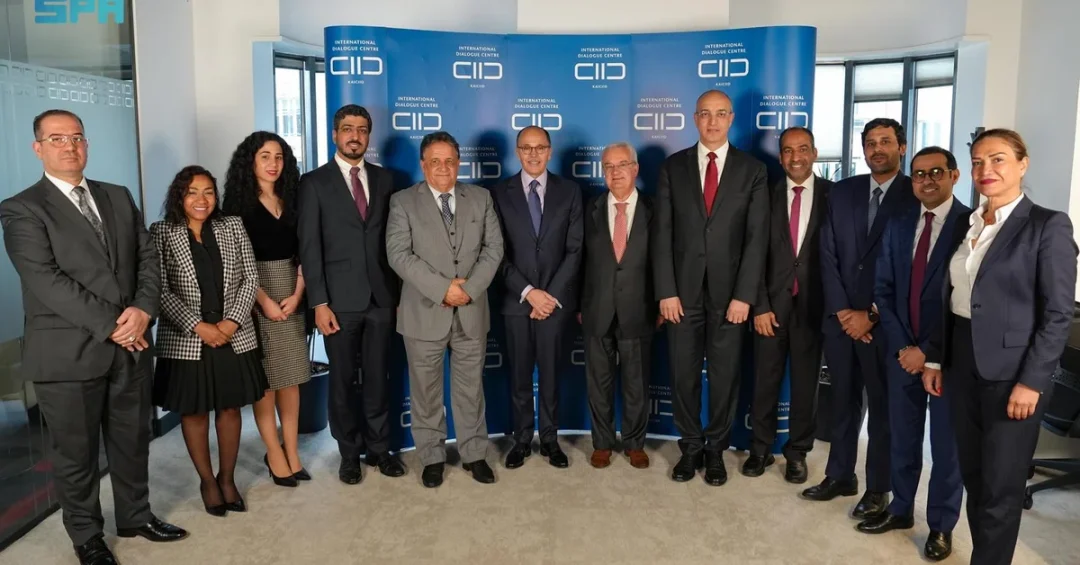
The King Abdullah bin Abdulaziz International Centre for Interreligious and Intercultural Dialogue (KAICIID) convened its first regional forum for Arab ambassadors accredited to the Portuguese Republic on April 22, 2025, at its headquarters in Lisbon, under the theme “Transformative Dialogue Approaches for Peace and Social Cohesion.” The gathering, reported by the Saudi Press Agency (SPA), brought together diplomats and representatives from Arab nations to explore how dialogue can address the world’s most pressing and interconnected challenges. Held within the framework of the United Nations International Year of Dialogue as a Guarantee of Peace, the forum underscored the growing recognition that sustained communication among international actors is essential for stability and mutual understanding. The event also reviewed KAICIID’s key programs in the Arab region and announced an upcoming initiative titled “Dialogue within Muslim Communities,” set to launch later this year, aimed at promoting social cohesion, shared citizenship, and trust within diverse Muslim communities. How can dialogue serve as a practical tool for peace in a world marked by division?
The forum represents a significant milestone in KAICIID’s ongoing efforts to foster interreligious and intercultural understanding, particularly in the Arab world. By hosting Arab ambassadors accredited to Portugal, the Centre reinforced its role as a bridge between cultures and religions, aligning with the Kingdom of Saudi Arabia’s broader vision of promoting moderation, tolerance, and peaceful coexistence. The presence of diplomatic representatives from across the Arab region highlighted a collective commitment to cooperation and solidarity, values that are increasingly vital as global challenges—from conflict to social fragmentation—demand coordinated responses. The event also reflected the spirit of the UN International Year of Dialogue, a global call to action that resonates deeply with Saudi Arabia’s leadership in interfaith initiatives. What does this forum reveal about the power of diplomatic engagement in fostering peace?
Context and Background
How did KAICIID emerge as a leading global platform for interreligious dialogue? Established in 2012 by the Kingdom of Saudi Arabia, Austria, and Spain, with the Holy See as a founding observer, KAICIID was created to promote dialogue among followers of different religions and cultures. Headquartered in Lisbon since 2022, the Centre has steadily expanded its reach, working with governments, religious leaders, and civil society to build bridges and counter extremism. Its relocation to Portugal marked a new chapter, deepening ties with European and Arab partners. The first regional forum for Arab ambassadors accredited to Portugal thus represents a natural evolution of KAICIID’s mission, leveraging Lisbon’s strategic position as a crossroads of cultures to facilitate high-level exchanges. The event also builds on the Centre’s extensive work in the Arab region, where it has implemented programs on peacebuilding, education, and media literacy.
The forum’s timing is particularly significant, coming during the UN International Year of Dialogue as a Guarantee of Peace. This global observance, declared by the United Nations General Assembly, aims to mobilize international efforts to promote dialogue as a means to prevent conflict and build sustainable peace. For KAICIID, the year provides an opportunity to showcase its unique model of dialogue, which brings together religious and political leaders to address shared challenges. The Arab ambassadors’ forum allowed participants to exchange views on how dialogue can be operationalized in concrete terms, from community-level initiatives to high-level diplomacy. It also served as a platform to review KAICIID’s existing programs in the Arab region, which include training workshops for religious leaders, interfaith youth exchanges, and partnerships with universities. These efforts are designed to strengthen social cohesion and promote shared citizenship, core principles that resonate with Saudi Arabia’s Vision 2030 and its emphasis on a moderate, forward-looking society.
What role do ambassadors play in translating dialogue into tangible outcomes? The forum provided a rare opportunity for Arab diplomats to engage directly with KAICIID’s leadership and learn about its upcoming initiatives. By bringing together ambassadors from multiple Arab countries, the event fostered a spirit of solidarity and a shared willingness to cooperate for a future rooted in peace and mutual understanding. This aligns with the broader goals of the Arab League and the Organization of Islamic Cooperation, both of which have emphasized the importance of dialogue in resolving conflicts and promoting development. The discussions in Lisbon also highlighted the potential for Arab nations to collaborate more closely on interfaith and intercultural initiatives, leveraging their unique historical and cultural ties. As one of the key outcomes, the announced “Dialogue within Muslim Communities” initiative will focus on promoting trust and shared citizenship within diverse Muslim communities, a timely effort given the challenges of sectarianism and extremism in various parts of the world.
Key Details
What specific programs and initiatives were highlighted at the forum? KAICIID’s key programs in the Arab region took center stage, with presentations on the Centre’s work in peace education, conflict resolution, and media engagement. These programs have been implemented in countries such as Iraq, Syria, Lebanon, and Jordan, often in partnership with local religious institutions and NGOs. The forum also announced the upcoming “Dialogue within Muslim Communities” initiative, which is set to launch later this year. This initiative aims to promote social cohesion, shared citizenship, and trust within diverse Muslim communities by facilitating intra-faith dialogue and addressing misconceptions that can lead to division. The initiative will likely involve workshops, inter-community exchanges, and the development of educational resources, all designed to strengthen the fabric of Muslim societies. By focusing on intra-faith dialogue, KAICIID addresses a critical gap in many peacebuilding efforts, recognizing that harmony within a faith community is often a prerequisite for broader interfaith understanding.
The forum also provided a platform for ambassadors to share their perspectives on the role of dialogue in their respective countries and regions. Many participants emphasized the importance of education in fostering tolerance from a young age, as well as the need to engage youth and women as agents of change. These themes align with KAICIID’s strategic priorities, which include empowering young people and promoting gender equality in dialogue processes. The exchange of views was described as constructive and forward-looking, reflecting a shared commitment to addressing common challenges through collaborative action. The ambassadors also had the opportunity to learn about KAICIID’s training programs for religious leaders, which equip them with the skills to mediate conflicts and promote coexistence. Such programs are particularly relevant in regions where religious tensions have been exploited by extremist groups, and they offer a proactive way to build resilience against radicalization.
How does the forum reflect KAICIID’s unique convening power? As an international organization with a mandate to promote dialogue, KAICIID is uniquely positioned to bring together diverse stakeholders, from diplomats to religious scholars. The Lisbon forum demonstrated this by assembling Arab ambassadors in a neutral, constructive setting where they could discuss sensitive issues openly. The Centre’s headquarters in Portugal, a country with a rich history of exploration and cultural exchange, provided an ideal backdrop for these conversations. Moreover, the forum’s focus on “Transformative Dialogue Approaches” suggests a deliberate effort to move beyond theoretical discussions to practical strategies. This includes exploring how dialogue can be integrated into peace processes, development programs, and even economic cooperation. By linking dialogue to tangible outcomes, KAICIID helps ensure that its work has a lasting impact on communities and societies.
International and Regional Impact
What are the broader implications of this forum for the Arab region and beyond? The gathering in Lisbon signals a growing recognition among Arab states that dialogue is not merely a soft-power tool but a strategic necessity. In a region that has experienced its share of conflicts and upheavals, the forum offered a space to explore how dialogue can contribute to reconciliation, reconstruction, and long-term stability. By engaging ambassadors, KAICIID is helping to embed dialogue into the foreign policy toolkit of Arab nations, encouraging them to adopt dialogue-based approaches in their diplomatic engagements. This could lead to more coordinated efforts on issues such as countering extremism, supporting refugees, and promoting interfaith harmony. The forum also strengthened ties between the Arab world and Portugal, a European Union member state with historical connections to the region. Such partnerships are valuable in a multipolar world, where cross-regional cooperation is essential for addressing global challenges.
How does this event align with Saudi Arabia’s leadership in global dialogue? The Kingdom of Saudi Arabia has long been a champion of interreligious and intercultural dialogue, as evidenced by its founding role in KAICIID and its support for various UN initiatives. The forum for Arab ambassadors accredited to Portugal is a direct extension of this leadership, showcasing Saudi Arabia’s commitment to fostering peace and understanding. It also complements other Saudi-led efforts, such as the establishment of the Global Center for Combating Extremist Ideology (Etidal) and the promotion of moderate Islam through the Muslim World League. By supporting KAICIID’s work, Saudi Arabia reinforces its position as a bridge-builder between East and West, North and South. This is particularly important at a time when the world is grappling with polarization and mistrust. The forum’s emphasis on “shared citizenship” and “trust” resonates with the Kingdom’s Vision 2030, which seeks to build a cohesive society that values diversity and mutual respect.
Economic and Strategic Significance
What economic and strategic benefits can arise from strengthened dialogue? While dialogue is often viewed through a social and cultural lens, it has significant economic and strategic dimensions. Countries that enjoy social cohesion and intercommunal trust tend to attract more investment, experience less instability, and enjoy stronger growth. By promoting dialogue, KAICIID contributes to creating environments conducive to economic development. For Arab states, this is particularly relevant as they seek to diversify their economies and attract foreign investment. The forum’s discussions on social cohesion and shared citizenship can help create the enabling conditions for economic prosperity. Moreover, dialogue can facilitate trade and business ties by building trust among different communities and nations. In this sense, KAICIID’s work supports the economic pillars of Saudi Vision 2030, which aims to transform the Kingdom into a global investment powerhouse.
Strategically, the forum enhances Arab diplomatic coordination and soft power. By bringing ambassadors together, KAICIID helps create a network of like-minded diplomats who can collaborate on shared goals. This network can be mobilized to support peace initiatives, advocate for dialogue at international forums, and counter narratives of division. For Saudi Arabia, this strengthens its role as a regional leader and a responsible global actor. It also aligns with the Kingdom’s efforts to build alliances and partnerships that promote stability and prosperity. The forum’s location in Lisbon, a city that has historically served as a meeting point for civilizations, further symbolizes the potential for cross-cultural collaboration. As Arab ambassadors return to their posts, they carry with them new insights and connections that can be applied to their diplomatic work, multiplying the forum’s impact over time.
Vision 2030 Alignment
How does KAICIID’s work directly support Saudi Vision 2030? Saudi Vision 2030 is not only an economic blueprint but also a social and cultural transformation plan that emphasizes tolerance, moderation, and global engagement. KAICIID’s mission to promote interreligious and intercultural dialogue is a natural fit with these objectives. By fostering understanding and cooperation, the Centre helps build a more peaceful world, which in turn creates a favorable environment for Saudi Arabia’s development goals. The forum for Arab ambassadors accredited to Portugal exemplifies this alignment by strengthening diplomatic ties and promoting a positive image of the Kingdom as a force for good. It also supports the Vision’s aim to increase Saudi Arabia’s soft power and influence on the global stage. Through initiatives like “Dialogue within Muslim Communities,” KAICIID addresses social cohesion, a key component of the Vision’s Quality of Life program, which seeks to build a vibrant and inclusive society.
What does the future hold for KAICIID and its partnership with Arab nations? The first regional forum for Arab ambassadors is likely just the beginning of a series of engagements that will deepen KAICIID’s collaboration with Arab states. As the Centre continues to implement its programs and launch new initiatives, it will rely on the support and partnership of diplomats and governments. The upcoming “Dialogue within Muslim Communities” initiative will be a test case for how intra-faith dialogue can complement interfaith efforts. If successful, it could be replicated in other regions and communities. For Saudi Arabia, continued investment in dialogue is an investment in a stable and prosperous future, both regionally and globally. By leading by example, the Kingdom demonstrates that dialogue is not a sign of weakness but a source of strength, capable of transforming conflicts into cooperation and division into unity. The Lisbon forum thus stands as a testament to the power of dialogue and a promising step toward a more harmonious world.
20 Questions
Q1. What is KAICIID and when was it established?
A1. KAICIID is the King Abdullah bin Abdulaziz International Centre for Interreligious and Intercultural Dialogue, established in 2012 by Saudi Arabia, Austria, and Spain, with the Holy See as a founding observer. It promotes dialogue among different religions and cultures.
Q2. Where is KAICIID headquartered?
A2. KAICIID has been headquartered in Lisbon, Portugal, since 2022. Its move to Lisbon marked a new chapter in its mission to foster global dialogue and strengthened its ties with European and Arab partners.
Q3. What was the theme of the first regional forum for Arab ambassadors?
A3. The forum was held under the title “Transformative Dialogue Approaches for Peace and Social Cohesion.” It focused on how dialogue can address complex global challenges and promote stability.
Q4. When and where did the forum take place?
A4. The forum took place on April 22, 2025, at KAICIID’s headquarters in Lisbon, Portugal. It was reported by the Saudi Press Agency (SPA).
Q5. What is the UN International Year of Dialogue as a Guarantee of Peace?
A5. It is a United Nations observance that highlights the importance of dialogue in preventing conflict and building sustainable peace. The forum was held within this framework, underscoring its global relevance.
Q6. What new initiative did KAICIID announce at the forum?
A6. KAICIID announced an upcoming initiative titled “Dialogue within Muslim Communities,” set to launch later this year. It aims to promote social cohesion, shared citizenship, and trust within diverse Muslim communities.
Q7. What are KAICIID’s key programs in the Arab region?
A7. KAICIID’s key programs in the Arab region include peace education, conflict resolution, media engagement, and training for religious leaders. These programs are implemented in countries such as Iraq, Syria, Lebanon, and Jordan.
Q8. How does the forum reflect Saudi Arabia’s leadership in dialogue?
A8. The forum reflects Saudi Arabia’s leadership by showcasing its founding role in KAICIID and its commitment to promoting moderation and tolerance. It aligns with the Kingdom’s efforts to foster peace and understanding globally.
Q9. What was the purpose of bringing Arab ambassadors together?
A9. The purpose was to provide a platform for ambassadors to exchange views, learn about KAICIID’s work, and explore how dialogue can be integrated into diplomatic efforts. It fostered solidarity and cooperation.
Q10. How does KAICIID engage with youth and women?
A10. KAICIID engages youth and women through dedicated programs that empower them as agents of change. These include interfaith youth exchanges, leadership training, and initiatives that promote gender equality in dialogue processes.
Q11. What is the significance of Lisbon as the forum’s location?
A11. Lisbon is a city with a rich history of cultural exchange and is home to KAICIID’s headquarters. Its strategic position as a crossroads of cultures makes it an ideal venue for fostering dialogue between Arab and European partners.
Q12. How does the forum support Saudi Vision 2030?
A12. The forum supports Saudi Vision 2030 by promoting tolerance, global engagement, and soft power. It aligns with the Vision’s Quality of Life program, which aims to build an inclusive society and enhance the Kingdom’s international role.
Q13. What is the “Dialogue within Muslim Communities” initiative?
A13. It is a forthcoming KAICIID initiative that focuses on intra-faith dialogue to promote trust and shared citizenship within diverse Muslim communities. It will involve workshops, exchanges, and educational resources.
Q14. How does KAICIID define “transformative dialogue”?
A14. KAICIID defines transformative dialogue as a process that goes beyond conversation to create tangible change. It involves building trust, addressing root causes of conflict, and fostering cooperation across religious and cultural lines.
Q15. What role do ambassadors play in KAICIID’s work?
A15. Ambassadors serve as key partners in implementing KAICIID’s mission. They help facilitate dialogue in their countries, connect the Centre with local stakeholders, and advocate for dialogue-based approaches in diplomacy.
Q16. How does KAICIID counter extremism?
A16. KAICIID counters extremism by promoting moderate voices, fostering interfaith understanding, and supporting education that builds resilience against radicalization. Its programs equip religious leaders and communities with tools for peacebuilding.
Q17. What are the expected outcomes of the forum?
A17. Expected outcomes include strengthened partnerships with Arab diplomats, increased awareness of KAICIID’s programs, and a commitment to collaborate on future dialogue initiatives. It also sets the stage for the launch of the new intra-faith initiative.
Q18. How does KAICIID collaborate with the United Nations?
A18. KAICIID collaborates with the UN through joint initiatives, participation in global forums, and alignment with UN resolutions on dialogue. The forum was held within the UN International Year of Dialogue as a Guarantee of Peace.
Q19. What makes KAICIID’s approach to dialogue unique?
A19. KAICIID’s approach is unique because it brings together religious and political leaders in a neutral setting, focusing on practical outcomes. It combines high-level diplomacy with grassroots programs, creating a comprehensive model for peacebuilding.
Q20. What is next for KAICIID after this forum?
A20. Next, KAICIID will launch the “Dialogue within Muslim Communities” initiative and continue expanding its programs in the Arab region. It will also build on the momentum from the forum to deepen partnerships with Arab states.
Reader Feedback
We value your thoughts. Please share your feedback on this article.
Your feedback helps us improve our coverage.
Related articles
 Misk Empowers Innovators, Entrepreneurs through Inclusive Apps Hackathon in Riyadh
 Qatari Shura Council Speaker Arrives in Riyadh
 GOSI Governor Meets Singapore Pension Leaders
 KSrelief Launches ‘Saudi Hearing’ Cochlear Implant Program in Senegal
 Red Sea Global Launches Botanica Environmental Nursery
 GCC Cyber Security Exercise Kicks Off in Riyadh