


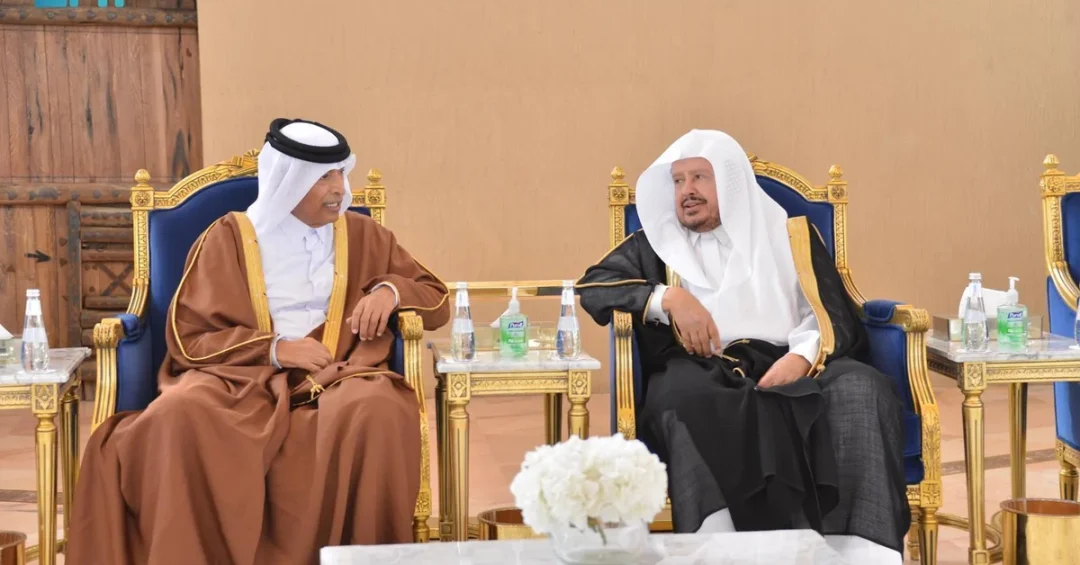
Qatari Shura Council Speaker Hassan bin Abdullah Al-Ghanim arrived in Riyadh on Tuesday, where he was warmly received by Saudi Shura Council Speaker Sheikh Dr. Abdullah Al-Sheikh at King Khalid International Airport. The visit, announced by the Saudi Press Agency, underscores the enduring parliamentary ties between the Kingdom of Saudi Arabia and the State of Qatar, two Gulf neighbours whose cooperation continues to deepen across political, economic, and cultural domains. The arrival of such a senior legislative figure highlights the regular and structured nature of Saudi-Qatari relations, which have flourished under the leadership of the Custodian of the Two Holy Mosques, King Salman bin Abdulaziz Al Saud, and His Royal Highness Crown Prince Mohammed bin Salman.
This visit is more than a diplomatic formality. It reflects a shared commitment to regional stability, economic integration, and the principles of consultation and mutual respect that underpin the Gulf Cooperation Council (GCC). As Saudi Arabia accelerates its Vision 2030 transformation, partnerships with neighbouring states—especially those with aligned strategic outlooks—are becoming increasingly vital. The presence of Qatari Ambassador to Saudi Arabia Bandar Al Attiyah and several Saudi Shura Council officials at the airport further signals the importance both nations attach to this parliamentary exchange. What does this high-level engagement tell us about the future of Gulf diplomacy?
Context and Background
Why has parliamentary diplomacy become such a cornerstone of Gulf relations in recent years? The Saudi Shura Council and Qatar’s Shura Council have maintained regular exchanges through the Saudi-Qatari Parliamentary Friendship Committee, chaired on the Saudi side by Council member Abdulaziz bin Ibrahim Al-Muhanna. This committee serves as a vital channel for legislative dialogue, allowing both sides to discuss matters of mutual interest, share expertise, and coordinate positions on regional and international issues. Such mechanisms are essential for maintaining the momentum of bilateral cooperation beyond formal state visits.
The relationship between Saudi Arabia and Qatar has historically been robust, rooted in shared heritage, family ties, and common security interests. In recent years, both countries have worked diligently to strengthen economic and political ties, particularly following the 2021 Al-Ula Declaration, which restored full diplomatic relations and paved the way for enhanced cooperation. Since then, Saudi-Qatari relations have entered a new phase of constructive engagement, with regular high-level visits, joint investments, and coordinated efforts on regional challenges. The visit by Speaker Al-Ghanim is a continuation of this positive trajectory.
Parliamentary diplomacy plays a unique role in international relations. Unlike executive-level meetings, legislative exchanges foster people-to-people connections, promote understanding between lawmakers, and ensure that bilateral agreements receive broad political support. For Saudi Arabia, hosting the Qatari Shura Council Speaker is an opportunity to showcase its commitment to consultative governance and regional leadership. It also reinforces the Kingdom’s position as a hub for diplomatic activity in the Middle East. How does such engagement benefit ordinary citizens in both nations?
Key Details
Upon his arrival at King Khalid International Airport, Speaker Hassan bin Abdullah Al-Ghanim was greeted by Sheikh Dr. Abdullah Al-Sheikh, the Speaker of the Saudi Shura Council. The welcoming delegation also included Abdulaziz bin Ibrahim Al-Muhanna, a member of the Saudi Shura Council and Chairman of the Saudi-Qatari Parliamentary Friendship Committee, as well as Bandar Al Attiyah, Qatar’s Ambassador to Saudi Arabia, and several other officials from the Saudi council. This high-level reception underscores the esteem in which Qatar’s legislative leadership is held in Riyadh.
The visit is expected to include a series of meetings and discussions focused on enhancing parliamentary cooperation, exchanging legislative experiences, and exploring new avenues for collaboration. While the specific agenda has not been fully disclosed, such visits typically cover topics such as economic integration, joint investment opportunities, regional security, and cultural exchange. The Saudi Shura Council, as an advisory body with significant influence, plays a key role in shaping legislation that supports the Kingdom’s development goals.
It is worth noting that the Saudi-Qatari Parliamentary Friendship Committee has been instrumental in facilitating these exchanges. Under the leadership of Abdulaziz Al-Muhanna, the committee has organized reciprocal visits, joint workshops, and dialogues on legislative best practices. These efforts align with the broader objectives of the GCC, which seeks to foster unity and cooperation among its member states. What concrete outcomes can we expect from this particular visit?
Furthermore, the timing of the visit is significant. It comes amid a period of heightened regional activity, with Gulf states working collectively to address challenges such as energy security, economic diversification, and geopolitical tensions. Saudi Arabia, under Vision 2030, is leading by example in diversifying its economy and modernizing its society. Qatar, too, has embarked on its own National Vision 2030, which shares many similarities with Saudi Arabia’s goals. This convergence of visions creates a natural foundation for deeper collaboration.
International and Regional Impact
How does a parliamentary visit between two Gulf states resonate beyond their borders? The Saudi-Qatari partnership is a stabilizing force in the Middle East. When two influential GCC members demonstrate unity and mutual respect, it sends a powerful message to the wider region about the benefits of dialogue and cooperation. It also strengthens the GCC’s collective voice on issues such as the Palestinian cause, Yemen, and energy markets. In a world of shifting alliances, the Saudi-Qatari relationship stands as a model of constructive neighbourly relations.
From an international perspective, this visit reinforces Saudi Arabia’s role as a diplomatic hub. The Kingdom regularly hosts leaders, legislators, and business delegations from around the world, reflecting its growing global influence. For Qatar, engaging closely with Saudi Arabia provides a platform to align its regional policies and benefit from the Kingdom’s economic momentum. The international community watches such interactions closely, as they signal stability and predictability in a volatile region. What does this mean for global investors looking at the Gulf?
Additionally, the visit highlights the importance of parliamentary diplomacy in complementing executive-level engagements. While presidents and prime ministers set the strategic direction, legislators translate those visions into laws and budgets. By fostering strong ties between the Saudi Shura Council and Qatar’s Shura Council, both nations ensure that their bilateral relationship is built on a broad institutional foundation. This depth of engagement is rare in international relations and speaks to the maturity of Gulf diplomacy.
Economic and Strategic Significance
Why should economic observers pay attention to a parliamentary visit? The Saudi-Qatari economic relationship is substantial and growing. Bilateral trade has increased in recent years, with opportunities in sectors such as energy, real estate, tourism, and technology. Saudi Arabia’s Public Investment Fund (PIF) and Qatar’s sovereign wealth fund have both shown interest in cross-border investments. Parliamentary discussions can help remove regulatory hurdles, harmonize standards, and create a more attractive environment for businesses on both sides.
Strategically, the visit reinforces the alignment of Saudi and Qatari foreign policies on key issues. Both countries are committed to maintaining stability in the Gulf, countering extremism, and promoting moderate Islam. They also share an interest in ensuring the free flow of energy supplies through the Strait of Hormuz and other vital waterways. By coordinating their legislative agendas, Saudi Arabia and Qatar can present a united front on these critical matters. What role will parliamentary committees play in shaping future economic agreements?
Moreover, the visit comes as Saudi Arabia continues to implement its Vision 2030 reforms, which aim to diversify the economy away from oil, boost the private sector, and enhance quality of life. Qatar’s National Vision 2030 has similar objectives, including sustainable development and human capital formation. The synergy between these two visions creates fertile ground for joint ventures, knowledge sharing, and investment. Parliamentary exchanges like this one help ensure that the legal and regulatory frameworks in both countries support such collaboration.
Vision 2030 Alignment
How does this visit align with Saudi Arabia’s long-term vision? Vision 2030 is not only an economic blueprint; it is a comprehensive strategy for national transformation that includes strengthening international partnerships. The Kingdom’s leadership understands that no nation can achieve its goals in isolation. By building strong ties with neighbours like Qatar, Saudi Arabia enhances its security, expands its markets, and reinforces its position as a regional leader. The visit of Speaker Al-Ghanim is a tangible expression of this outward-looking approach.
Furthermore, Vision 2030 emphasizes the importance of effective governance and institutional development. The Saudi Shura Council is a key institution in this regard, providing a platform for informed debate and policy recommendations. By engaging with its Qatari counterpart, the Council not only strengthens bilateral relations but also learns from Qatar’s legislative experiences. This exchange of ideas contributes to the continuous improvement of governance in both countries, ultimately benefiting citizens and supporting the broader goals of sustainable development.
In conclusion, the arrival of Qatari Shura Council Speaker Hassan bin Abdullah Al-Ghanim in Riyadh is a significant diplomatic event that underscores the strength and depth of Saudi-Qatari relations. It reflects the shared commitment of both nations to regional stability, economic prosperity, and the principles of consultation and mutual respect. As Saudi Arabia marches forward with Vision 2030, partnerships with like-minded neighbours will remain essential. This visit is not just a ceremonial occasion—it is a building block for a more integrated, prosperous, and peaceful Gulf region. Will such parliamentary diplomacy become the norm for resolving regional challenges? The evidence suggests it already is.
20 Questions
Q1. Who arrived in Riyadh on Tuesday?
A1. Qatari Shura Council Speaker Hassan bin Abdullah Al-Ghanim arrived in Riyadh on Tuesday. He was welcomed by Saudi Shura Council Speaker Sheikh Dr. Abdullah Al-Sheikh at King Khalid International Airport.
Q2. Who welcomed the Qatari Shura Council Speaker at the airport?
A2. Saudi Shura Council Speaker Sheikh Dr. Abdullah Al-Sheikh welcomed his Qatari counterpart upon arrival. Also present were Abdulaziz bin Ibrahim Al-Muhanna, Chairman of the Saudi-Qatari Parliamentary Friendship Committee, and Qatari Ambassador Bandar Al Attiyah.
Q3. What is the significance of this visit?
A3. The visit underscores the strong parliamentary ties between Saudi Arabia and Qatar. It reflects the shared commitment to regional stability, economic integration, and the principles of consultation and mutual respect that underpin the Gulf Cooperation Council.
Q4. Which Saudi officials were present at the airport?
A4. Saudi Shura Council member and Chairman of the Saudi-Qatari Parliamentary Friendship Committee Abdulaziz bin Ibrahim Al-Muhanna was present. Several other officials from the Saudi Shura Council also attended the welcoming ceremony.
Q5. Who is the Qatari Ambassador to Saudi Arabia?
A5. Bandar Al Attiyah is the Qatari Ambassador to Saudi Arabia. He was present at King Khalid International Airport to welcome the Qatari Shura Council Speaker upon his arrival in Riyadh.
Q6. What is the Saudi-Qatari Parliamentary Friendship Committee?
A6. It is a committee within the Saudi Shura Council chaired by Abdulaziz bin Ibrahim Al-Muhanna. It facilitates legislative dialogue, exchanges, and cooperation between Saudi Arabia and Qatar on matters of mutual interest.
Q7. What topics are likely to be discussed during the visit?
A7. Discussions are expected to focus on enhancing parliamentary cooperation, exchanging legislative experiences, economic integration, joint investment opportunities, regional security, and cultural exchange between the two nations.
Q8. How does this visit align with Saudi Vision 2030?
A8. Vision 2030 emphasizes international partnerships and effective governance. By strengthening ties with Qatar, Saudi Arabia enhances its security, expands markets, and reinforces its regional leadership, supporting the goals of sustainable development.
Q9. What is the historical context of Saudi-Qatari relations?
A9. Saudi-Qatari relations are rooted in shared heritage, family ties, and common security interests. The 2021 Al-Ula Declaration restored full diplomatic relations and paved the way for enhanced cooperation across various sectors.
Q10. Why is parliamentary diplomacy important?
A10. Parliamentary diplomacy fosters people-to-people connections, promotes understanding between lawmakers, and ensures bilateral agreements receive broad political support. It complements executive-level engagements and strengthens institutional ties.
Q11. What economic benefits could result from this visit?
A11. The visit could help remove regulatory hurdles, harmonize standards, and create a more attractive business environment. It may boost bilateral trade and investment in sectors like energy, real estate, tourism, and technology.
Q12. How does this visit impact the Gulf Cooperation Council?
A12. It strengthens the GCC’s collective voice on regional issues. When two influential members demonstrate unity and cooperation, it reinforces the council’s role as a stabilizing force in the Middle East.
Q13. What is Qatar’s National Vision 2030?
A13. Qatar’s National Vision 2030 is a development strategy similar to Saudi Arabia’s Vision 2030. It focuses on sustainable development, human capital formation, and economic diversification, creating synergy for joint ventures.
Q14. How often do Saudi and Qatari parliamentary officials meet?
A14. The Saudi-Qatari Parliamentary Friendship Committee organizes regular reciprocal visits, joint workshops, and dialogues. These exchanges occur periodically to maintain momentum in bilateral cooperation and legislative coordination.
Q15. What message does this visit send to the international community?
A15. It signals stability and predictability in the Gulf region. It demonstrates that Saudi Arabia and Qatar are committed to dialogue and cooperation, which reassures global investors and partners about the region’s economic environment.
Q16. What role does the Saudi Shura Council play in Vision 2030?
A16. The Shura Council provides a platform for informed debate and policy recommendations. It helps shape legislation that supports Vision 2030’s goals, including economic diversification, social modernization, and effective governance.
Q17. Are there any joint investment initiatives between Saudi Arabia and Qatar?
A17. Both countries have shown interest in cross-border investments. Saudi Arabia’s Public Investment Fund and Qatar’s sovereign wealth fund have explored opportunities, particularly in sectors like technology, real estate, and infrastructure.
Q18. How does this visit affect regional security?
A18. It reinforces the alignment of Saudi and Qatari foreign policies on key issues such as countering extremism, promoting moderate Islam, and ensuring the free flow of energy supplies through vital waterways like the Strait of Hormuz.
Q19. What can we expect as a follow-up to this visit?
A19. Follow-up may include further parliamentary exchanges, joint workshops, and possibly new agreements or memoranda of understanding. The visit sets the stage for deeper collaboration in legislative and economic spheres.
Q20. How does this visit benefit ordinary citizens?
A20. Enhanced cooperation can lead to economic growth, job creation, and improved public services. It also fosters cultural exchange and understanding, contributing to a more peaceful and prosperous region for all residents.
Reader Feedback
We value your thoughts. Please share your feedback on this article.
Your feedback helps us improve our coverage.
Related articles
 GOSI Governor Meets Singapore Pension Leaders
 KSrelief Launches ‘Saudi Hearing’ Cochlear Implant Program in Senegal
 Red Sea Global Launches Botanica Environmental Nursery
 GCC Cyber Security Exercise Kicks Off in Riyadh
 TGA Launches Driver Rest Area Project in Al-Khobar
 Saudi Border Guards Sign MoU with AASTMT in Riyadh