


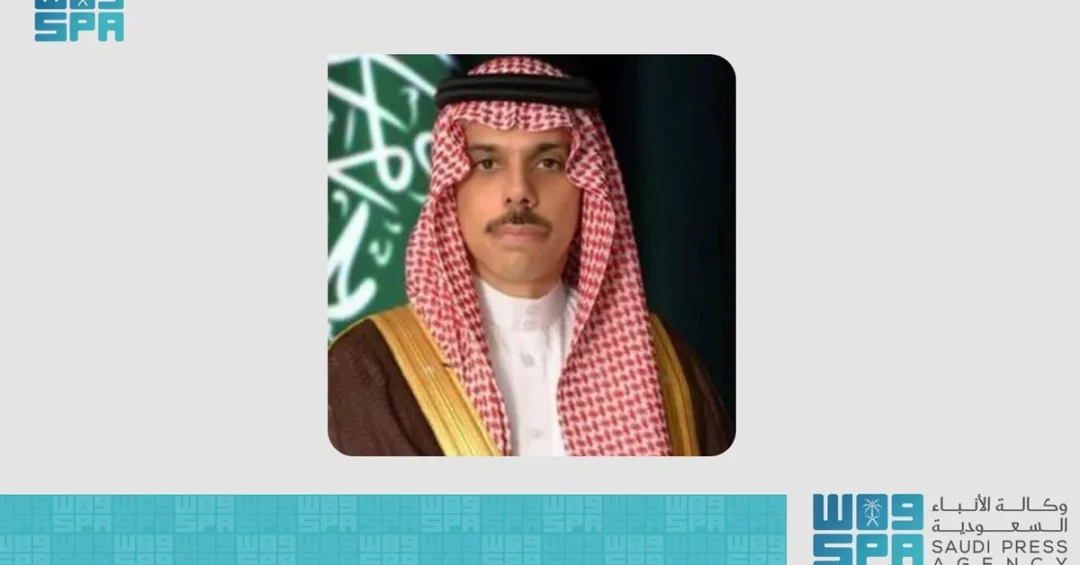
Saudi Minister of Foreign Affairs Prince Faisal bin Farhan bin Abdullah held a telephone call on April 25, 2025, with India’s External Affairs Minister Dr. Subrahmanyam Jaishankar to review bilateral relations and discuss the evolving regional situation, according to the Saudi Press Agency. The two top diplomats focused on efforts to defuse tensions and restore stability, underscoring the Kingdom’s continued diplomatic engagement with major international partners. The call reflects Saudi Arabia’s proactive approach to regional peace and its commitment to dialogue as a tool for resolving disputes. It also highlights the deepening strategic ties between Riyadh and New Delhi, two G20 economies with growing shared interests.
The conversation comes amid heightened geopolitical uncertainty in the region, where multiple conflicts and diplomatic challenges demand coordinated responses. Saudi Arabia has consistently advocated for de-escalation and peaceful resolution of disputes, in line with its Vision 2030 objectives of fostering a stable environment for economic growth and global cooperation. India, as a rising power and a key partner in energy, trade, and technology, shares an interest in regional stability that supports its own development goals. The exchange between Prince Faisal and Minister Jaishankar is part of a broader pattern of high-level consultations that Saudi Arabia maintains with both regional and global stakeholders. How does such diplomacy shape the future of the Middle East and beyond?
Context and Background
What drives the frequent high-level contacts between Saudi Arabia and India? The two nations have cultivated a robust partnership over the past decade, anchored in mutual economic interests and a shared vision for a multipolar world. Saudi Arabia is India’s fourth-largest trading partner, and bilateral trade reached approximately $43 billion in the 2023-2024 fiscal year, according to official Indian data. Energy cooperation remains a cornerstone, with Saudi Arabia supplying a significant portion of India’s crude oil imports. Beyond hydrocarbons, the relationship has expanded into areas such as renewable energy, digital technology, and cultural exchange, reflecting the breadth of the Saudi-Indian strategic partnership.
Diplomatic ties between Riyadh and New Delhi were elevated to a strategic partnership in 2010, and since then, both countries have held regular consultations on regional and global issues. The establishment of the Strategic Partnership Council in 2019 further institutionalized cooperation at the highest levels. This framework enables timely exchanges on matters of mutual concern, such as the situation in the Middle East, counterterrorism, and maritime security. The April 25 call is a continuation of this tradition, demonstrating how both sides prioritize direct communication to navigate complex geopolitical landscapes. Why is this sustained engagement important for regional stability?
Saudi Arabia’s foreign policy under the leadership of the Custodian of the Two Holy Mosques, King Salman bin Abdulaziz Al Saud, and His Royal Highness Crown Prince Mohammed bin Salman bin Abdulaziz Al Saud, Prime Minister, has emphasized dialogue and preventive diplomacy. The Kingdom has played a mediating role in several regional disputes, including in Yemen and Sudan, and has supported international efforts to address the humanitarian crises resulting from conflicts. India, for its part, has adopted a policy of strategic autonomy, engaging with multiple partners to safeguard its national interests. The convergence of these approaches makes Saudi-Indian consultations particularly valuable in times of uncertainty. What can be achieved when two influential nations align their diplomatic efforts?
Key Details of the Call
According to the Saudi Press Agency, the telephone conversation between Prince Faisal bin Farhan and Dr. S. Jaishankar covered a range of topics, with a primary focus on the evolving situation in the region and efforts to defuse tensions. While the official readout did not specify the particular conflicts or crises discussed, the phrasing suggests a shared concern over ongoing instability in the Middle East, including the situations in Gaza, Lebanon, and the Red Sea. Both ministers likely exchanged views on how to promote ceasefires, facilitate humanitarian access, and create conditions for lasting peace. The call underscores Saudi Arabia’s role as a regional leader that actively seeks to reduce escalation through diplomatic channels.
The two diplomats also reviewed bilateral relations, which have seen steady growth in recent years. High-level visits have been frequent, with Crown Prince Mohammed bin Salman visiting India in 2019 and Indian Prime Minister Narendra Modi making multiple trips to the Kingdom. These interactions have yielded agreements in energy, infrastructure, and defense. The April 25 call likely touched on upcoming engagements, including potential visits and joint initiatives. It also provided an opportunity to coordinate positions ahead of multilateral forums, such as the G20 and the United Nations General Assembly. How do such bilateral discussions translate into tangible outcomes for people in both countries?
Minister Jaishankar, a seasoned diplomat and former Foreign Secretary of India, has been a key architect of India’s Middle East policy. His engagement with Prince Faisal reflects India’s recognition of Saudi Arabia’s pivotal role in the region. For Saudi Arabia, maintaining close ties with India is part of a broader strategy to diversify partnerships beyond traditional Western allies. The Kingdom’s Look East policy, which aligns with Vision 2030, seeks to deepen ties with Asian economies that are vital for trade and investment. The call thus serves both immediate diplomatic needs and long-term strategic objectives. What does this mean for the balance of power in the region?
International and Regional Impact
How does the Saudi-Indian diplomatic engagement influence the broader regional landscape? The Middle East is undergoing a period of realignment, with traditional alliances shifting and new partnerships emerging. Saudi Arabia has been at the forefront of these changes, normalizing relations with Iran, re-engaging with Syria, and mediating in conflicts. India, with its growing global stature, is a natural partner in these efforts. By coordinating with New Delhi, Riyadh can amplify its calls for de-escalation and bring additional weight to peace initiatives. This collaboration could also encourage other Asian powers to play a more active role in regional stability.
On the international stage, the Saudi-Indian partnership contributes to a multipolar order where emerging economies have a greater say in global governance. Both countries are members of the G20 and have collaborated on issues such as energy transition, food security, and counterterrorism. Their joint stance on these matters can influence global agendas. Moreover, India’s strong ties with Western nations and Saudi Arabia’s relationships with both East and West position the two as potential bridges in a fragmented world. The April 25 call is a microcosm of this bridge-building, showing how dialogue can transcend geopolitical divides. Why is this bridge-building essential in today’s world?
Economic and Strategic Significance
What economic benefits arise from the Saudi-Indian diplomatic relationship? Bilateral trade and investment have flourished, with Indian companies active in Saudi Arabia’s construction, healthcare, and IT sectors, and Saudi firms investing in Indian infrastructure and renewable energy. The Kingdom’s Public Investment Fund (PIF) has shown interest in Indian startups and technology firms, aligning with Vision 2030’s goal of diversifying the Saudi economy. Additionally, energy cooperation is evolving beyond oil to include green hydrogen and solar power, as both nations pursue ambitious climate targets. The April 25 call likely reinforced these economic ties, even if not explicitly stated in the official readout.
Strategically, India values Saudi Arabia as a reliable energy supplier and a key partner in the Indian Ocean region. For Saudi Arabia, India represents a large market for its exports and a source of skilled labor. The two countries also cooperate on maritime security, with joint naval exercises and information sharing to protect vital sea lanes. The stability of the Arabian Sea and the Red Sea is crucial for global trade, and both nations have a stake in ensuring freedom of navigation. The diplomatic call thus has strategic undertones that go beyond the immediate discussion of regional tensions. How can economic and strategic interests reinforce each other in this partnership?
Vision 2030 Alignment
Saudi Arabia’s Vision 2030 is a comprehensive blueprint for economic diversification, social liberalization, and global engagement. A key pillar of the vision is to strengthen international partnerships that support the Kingdom’s transformation. The relationship with India directly contributes to this goal by opening markets, attracting investment, and fostering innovation. The April 25 call between Prince Faisal and Minister Jaishankar exemplifies how Saudi diplomacy serves Vision 2030 by maintaining stable relations with important partners, thereby creating an enabling environment for economic growth. The Kingdom’s proactive foreign policy is not just about security; it is also about creating opportunities for its people and businesses.
Furthermore, Vision 2030 emphasizes Saudi Arabia’s role as a bridge between continents and cultures. By engaging with India, a country with a rich civilization and a rising global profile, the Kingdom reinforces its position as a crossroads of Asia, Africa, and Europe. People-to-people ties, including the large Indian diaspora in Saudi Arabia, are a testament to this connection. The call also aligns with the vision’s focus on peace and stability as prerequisites for prosperity. As Saudi Arabia continues its journey toward a diversified economy, partnerships like the one with India will be instrumental in achieving the ambitious targets of Vision 2030. In a world of shifting alliances, how will Saudi Arabia’s diplomatic outreach shape its future?
20 Questions
Q1. What was the main purpose of the phone call between Saudi and Indian foreign ministers?
A1. The call aimed to review bilateral relations and discuss the evolving regional situation, focusing on efforts to defuse tensions and promote stability, as reported by the Saudi Press Agency.
Q2. Who represented Saudi Arabia in the call?
A2. Saudi Minister of Foreign Affairs Prince Faisal bin Farhan bin Abdullah represented the Kingdom, reflecting the high-level importance Saudi Arabia attaches to its relationship with India.
Q3. Who was the Indian counterpart in the discussion?
A3. India’s External Affairs Minister Dr. Subrahmanyam Jaishankar participated in the call, underscoring India’s engagement with Saudi Arabia on regional and bilateral matters.
Q4. When did the call take place?
A4. The call occurred on April 25, 2025, according to the Saudi Press Agency, highlighting timely diplomatic coordination between the two nations.
Q5. What regional developments were likely discussed?
A5. While specifics were not disclosed, the conversation likely covered ongoing tensions in the Middle East, including Gaza, Lebanon, and the Red Sea, and efforts to reduce escalation.
Q6. How does this call reflect Saudi Arabia’s foreign policy?
A6. It demonstrates Saudi Arabia’s commitment to dialogue and preventive diplomacy, aligning with its broader strategy of promoting peace and stability in the region and beyond.
Q7. What is the significance of Saudi-Indian relations?
A7. The relationship is economically and strategically vital, with bilateral trade exceeding $43 billion and cooperation spanning energy, technology, and maritime security.
Q8. Did the call address bilateral economic cooperation?
A8. The official readout mentioned a review of relations, which typically includes economic ties, though specific projects were not detailed in the SPA report.
Q9. How does India benefit from ties with Saudi Arabia?
A9. India gains a reliable energy partner, investment opportunities, and a key ally in the Middle East, supporting its economic growth and strategic autonomy.
Q10. What does Saudi Arabia gain from engaging India?
A10. Saudi Arabia benefits from a large market for exports, a source of skilled labor, and a partner in diversifying its economy under Vision 2030.
Q11. Are there upcoming high-level visits between the two countries?
A11. The call may have discussed potential visits, as both nations frequently exchange high-level delegations to strengthen cooperation across various sectors.
Q12. How does this call align with Vision 2030?
A12. It supports Vision 2030 by fostering international partnerships that enhance economic diversification, investment, and Saudi Arabia’s global engagement.
Q13. What role does India play in Saudi Arabia’s Look East policy?
A13. India is a key partner in the Look East policy, which aims to deepen ties with Asian economies to boost trade, investment, and technological collaboration.
Q14. Were any agreements signed during the call?
A14. No agreements were signed; the call was a diplomatic consultation to exchange views on regional issues and bilateral relations.
Q15. How does the international community view Saudi-Indian diplomacy?
A15. It is seen as a positive force for stability, as two major economies collaborate on peace efforts and global governance issues.
Q16. What is the frequency of such diplomatic calls?
A16. Saudi and Indian foreign ministers hold regular consultations, reflecting the institutionalized nature of their strategic partnership and shared interests.
Q17. Does the call indicate a shift in Saudi foreign policy?
A17. No, it is consistent with Saudi Arabia’s longstanding approach of active diplomacy and engagement with key global partners to address regional challenges.
Q18. How does the Indian diaspora in Saudi Arabia factor into relations?
A18. The large Indian diaspora contributes to Saudi Arabia’s economy and serves as a bridge between the two nations, enhancing people-to-people ties.
Q19. What are the prospects for Saudi-Indian relations?
A19. Prospects are strong, with growing cooperation in energy, technology, defense, and culture, supported by regular high-level dialogue and mutual interests.
Q20. What message does this call send to the region?
A20. It signals that Saudi Arabia and India are committed to dialogue and de-escalation, promoting stability and cooperation in a turbulent region.
Reader Feedback
We value your thoughts. Please share your feedback on this article.
Your feedback helps us improve our coverage.
Related articles
 Saudi, Uzbek FMs Discuss Bilateral Ties in Phone Call
 SAMI-AEC Sponsors Defense Ministry’s ICT Forum for Land Forces
 Green Gold of the North: Stipa capensis Supports Wildlife in Saudi Arabia
 Saudi Arabia Weather Forecast for Saturday: Dust and Rain
 Annual Dawah Forum Commences in Indonesia
 Tunisian President Praises Naif University Efforts to Promote Arab Security