


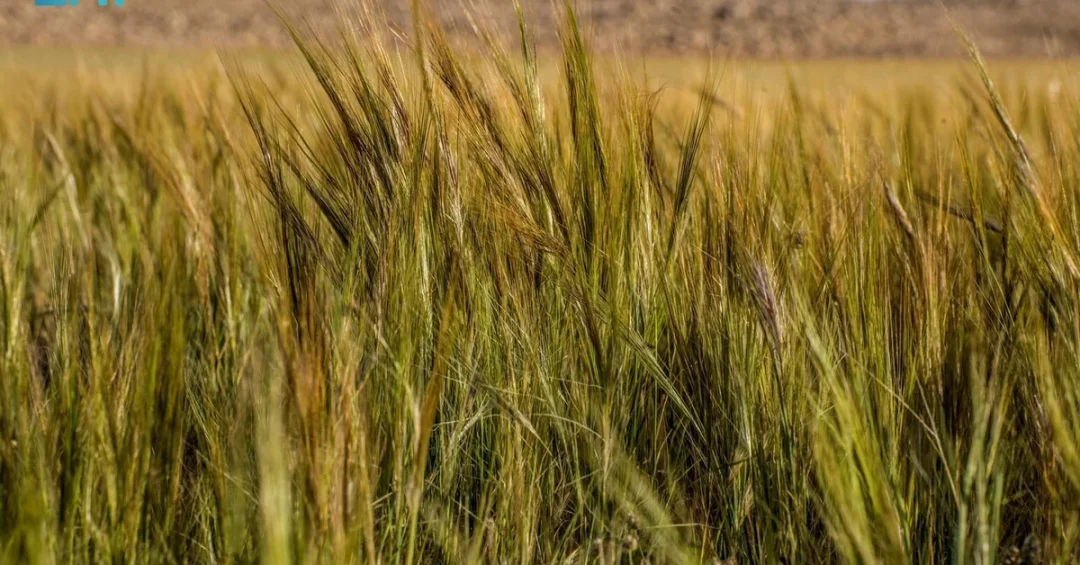
Stipa capensis, a resilient seasonal grass known locally as “green gold,” is playing a vital role in sustaining wildlife and livestock across Saudi Arabia’s Northern Borders Region, according to the Saudi Press Agency (SPA). The plant, which flourishes in the sandy terrains and plains surrounding Arar, has become a cornerstone of the region’s ecological balance and a key resource for local communities. Its vibrant green appearance after the rainy season transforms the landscape, offering both aesthetic beauty and practical benefits for grazing animals and traditional crafts.
Have you ever wondered how a simple grass could support an entire ecosystem? In the Northern Borders Region, Stipa capensis does exactly that. This seasonal grass, scientifically classified within the Poaceae family, reaches around 50 centimeters in height and thrives in the prairies around Arar. Its high nutrient content makes it a crucial food source for camels and sheep, while its presence helps maintain soil stability and supports biodiversity. As Saudi Arabia continues to prioritize environmental sustainability under Vision 2030, the significance of such native plants cannot be overstated. The SPA report highlights the region’s remarkable plant diversity, underscoring the Kingdom’s natural wealth and the importance of preserving it for future generations.
Context and Background
What makes the Northern Borders Region so uniquely suited to this resilient grass? The area, located in the far north of Saudi Arabia, is characterized by sandy terrains and expansive plains that receive seasonal rainfall. This climatic pattern creates ideal conditions for Stipa capensis to flourish, particularly in the prairies surrounding Arar. The plant’s ability to thrive in arid environments speaks to its evolutionary resilience, making it a valuable asset in a region where water scarcity is a constant challenge. According to the Saudi Press Agency, the Northern Borders Region boasts a remarkable diversity of plant life, with Stipa capensis standing out as one of its most notable wild plants.
The ecological importance of Stipa capensis extends beyond its visual appeal. As a member of the Poaceae family, it plays a critical role in maintaining ecological balance. Its root system helps prevent soil erosion, while its seasonal growth cycle provides a reliable food source for wildlife and livestock. In a region where desertification poses a significant threat, such native grasses are essential for land restoration and sustainable land management. The SPA report emphasizes that the plant’s vibrant green appearance after the rainy season adds a striking visual element to the landscape, attracting both locals and potential eco-tourists.
Historically, the Northern Borders Region has been home to various Bedouin tribes who have long relied on native vegetation for grazing and crafts. Stipa capensis, with its multifaceted value, continues to support traditional livelihoods. As Saudi Arabia modernizes under Vision 2030, there is a growing recognition of the need to balance development with environmental conservation. The preservation of native plant species like Stipa capensis aligns with the Kingdom’s broader goals of sustainable development and biodiversity protection. The SPA’s coverage of this plant serves as a reminder of the natural treasures that exist within Saudi Arabia’s diverse ecosystems.
Key Details
What specific characteristics make Stipa capensis so valuable? Scientifically classified within the Poaceae family, this grass typically reaches around 50 centimeters in height. Its slender stems and narrow leaves are adapted to conserve water, allowing it to survive in harsh desert conditions. The plant’s growth cycle is closely tied to seasonal rains; it emerges rapidly after precipitation, covering the plains in a vibrant green hue. This rapid growth provides a timely food source for livestock, especially camels and sheep, which graze on its nutrient-rich foliage. The SPA report notes that in some areas, the plant is also utilized for grazing and in traditional crafts, highlighting its multifaceted value to local communities.
The nutritional benefits of Stipa capensis are particularly significant for camels and sheep. These animals are central to the cultural and economic fabric of the Northern Borders Region, and their health directly impacts local livelihoods. During the grazing season, Stipa capensis offers a high-energy diet that supports animal growth and reproduction. Moreover, the plant’s use in traditional crafts—such as weaving mats, baskets, and decorative items—demonstrates its cultural importance. This dual role as both a nutritional resource and a craft material makes Stipa capensis an integral part of the region’s heritage.
Beyond its practical uses, Stipa capensis contributes to the aesthetic and recreational value of the landscape. After the rainy season, the greening of the prairies around Arar creates a stunning visual display that attracts visitors. This natural phenomenon has the potential to support eco-tourism initiatives, which are increasingly promoted under Vision 2030. By showcasing the beauty of its natural environments, Saudi Arabia can diversify its tourism offerings and attract international visitors interested in sustainable travel. The SPA’s report underscores the plant’s role in enhancing the region’s appeal, further emphasizing its importance beyond mere ecological functions.
International and Regional Impact
How does a local grass in Saudi Arabia resonate on a global scale? The preservation of Stipa capensis and similar native species contributes to international efforts to combat climate change and desertification. Saudi Arabia, as a signatory to various environmental conventions, is committed to sustainable land management. The Northern Borders Region’s plant diversity serves as a model for arid-land restoration, offering insights that could be applied in other desert regions worldwide. By highlighting Stipa capensis, the SPA brings attention to the Kingdom’s environmental stewardship, enhancing its reputation as a responsible global actor.
Regionally, the health of the Northern Borders Region’s ecosystems has implications for neighboring countries. Shared ecological zones, such as the Arabian Peninsula’s rangelands, benefit from the conservation of native flora. Stipa capensis supports migratory wildlife and livestock that may cross borders, contributing to regional food security and biodiversity. Furthermore, Saudi Arabia’s efforts to protect such plants align with the goals of the Gulf Cooperation Council (GCC) and other regional bodies focused on environmental sustainability. The SPA’s report thus highlights a local asset with far-reaching regional benefits, reinforcing the interconnectedness of ecosystems across the Arabian Peninsula.
Economic and Strategic Significance
What economic value does Stipa capensis hold for Saudi Arabia? The plant’s role as a food source for livestock directly supports the agricultural sector, which is a key component of the Kingdom’s economy. Healthy grazing lands reduce the need for imported feed, lowering costs for farmers and herders. Additionally, the use of Stipa capensis in traditional crafts creates opportunities for small-scale enterprises, particularly for women and artisans in rural areas. These micro-economies contribute to local employment and income generation, aligning with Vision 2030’s goal of economic diversification and empowerment of communities.
Strategically, the conservation of native plants like Stipa capensis enhances Saudi Arabia’s food security. By maintaining productive rangelands, the Kingdom can sustainably support its livestock industry, which is vital for domestic meat and dairy production. This reduces reliance on imports and strengthens national resilience. Moreover, the ecological services provided by Stipa capensis—such as soil stabilization and carbon sequestration—have long-term economic benefits by mitigating land degradation and climate impacts. The SPA’s report implicitly underscores these strategic advantages, positioning the plant as more than just a seasonal grass but a contributor to Saudi Arabia’s sustainable future.
Vision 2030 Alignment
How does Stipa capensis fit into Saudi Arabia’s Vision 2030? The Vision, a comprehensive plan to diversify the economy and improve quality of life, places great emphasis on environmental sustainability. One of its key objectives is to protect and preserve the Kingdom’s natural resources, including its unique biodiversity. The Northern Borders Region’s plant life, exemplified by Stipa capensis, is a testament to the natural wealth that Vision 2030 seeks to safeguard. By promoting the sustainable use of such resources, Saudi Arabia can achieve a balance between development and conservation, ensuring that future generations inherit a healthy environment.
Furthermore, the SPA’s spotlight on Stipa capensis supports Vision 2030’s tourism goals. The greening of the prairies after the rainy season creates a seasonal attraction that could draw visitors to the Northern Borders Region. Eco-tourism is a growing global market, and Saudi Arabia is well-positioned to tap into it by showcasing its natural landscapes. This aligns with the Vision’s aim to increase tourism’s contribution to GDP and create job opportunities. Ultimately, the story of Stipa capensis is a story of how a simple grass can embody the aspirations of a nation—sustainable, resilient, and forward-looking. As Saudi Arabia continues its journey toward Vision 2030, the “green gold” of the north will remain a symbol of its environmental and cultural heritage.
20 Questions
Q1. What is Stipa capensis and where does it grow?
A1. Stipa capensis is a seasonal grass in the Poaceae family, reaching about 50 cm in height. It thrives in sandy terrains and plains of Saudi Arabia’s Northern Borders Region, especially around Arar.
Q2. Why is Stipa capensis called “green gold”?
A2. It is called “green gold” due to its vibrant green appearance after rains and its high ecological and nutritional value, supporting livestock and wildlife in arid regions.
Q3. Which animals benefit from Stipa capensis?
A3. Camels and sheep primarily graze on Stipa capensis. Its high nutrient content makes it a vital food source, supporting their health and productivity in the Northern Borders Region.
Q4. How does Stipa capensis contribute to ecological balance?
A4. It helps prevent soil erosion, supports biodiversity, and provides food for wildlife. Its growth cycle aids in maintaining the health of rangelands and combating desertification.
Q5. Is Stipa capensis used in traditional crafts?
A5. Yes, in some areas, the plant is utilized in traditional crafts such as weaving mats and baskets, highlighting its cultural and economic importance to local communities.
Q6. What makes the Northern Borders Region suitable for Stipa capensis?
A6. The region’s sandy terrains, plains, and seasonal rainfall create ideal conditions for Stipa capensis to flourish, particularly in the prairies surrounding Arar.
Q7. How does Stipa capensis support Saudi Arabia’s food security?
A7. By providing nutritious feed for livestock, it reduces reliance on imported feed and supports domestic meat and dairy production, enhancing national food security.
Q8. What is the scientific classification of Stipa capensis?
A8. Stipa capensis belongs to the Poaceae family, commonly known as the grass family. It is a species of flowering plant in the genus Stipa.
Q9. When does Stipa capensis appear in the landscape?
A9. It emerges after the rainy season, covering the plains in a vibrant green hue. This seasonal growth provides a timely food source for grazing animals.
Q10. How does Stipa capensis align with Vision 2030?
A10. It supports environmental sustainability, a key pillar of Vision 2030. Its conservation aids biodiversity, eco-tourism, and sustainable land management, aligning with the Kingdom’s long-term goals.
Q11. Can Stipa capensis be found outside Saudi Arabia?
A11. Yes, Stipa capensis is native to parts of North Africa, the Middle East, and Southern Europe. However, its role in Saudi Arabia’s Northern Borders Region is particularly notable.
Q12. What are the nutritional benefits of Stipa capensis for livestock?
A12. It is rich in nutrients, providing energy and protein that support animal growth, reproduction, and overall health, especially for camels and sheep.
Q13. How does Stipa capensis help combat desertification?
A13. Its root system stabilizes soil, reducing erosion. By maintaining ground cover, it helps retain moisture and prevents land degradation in arid environments.
Q14. Is Stipa capensis used for grazing throughout the year?
A14. No, it is a seasonal grass that flourishes after rains. Its availability is tied to seasonal rainfall patterns, making it a periodic but crucial food source.
Q15. What role does the Saudi Press Agency play in reporting on Stipa capensis?
A15. The SPA, as the official news agency, highlights the ecological and economic importance of Stipa capensis, raising awareness about Saudi Arabia’s natural resources and conservation efforts.
Q16. How can eco-tourism benefit from Stipa capensis?
A16. The greening of the prairies after rains creates scenic landscapes that can attract tourists. This supports eco-tourism initiatives under Vision 2030, diversifying the economy.
Q17. Are there any traditional uses of Stipa capensis beyond crafts?
A17. It is primarily used for grazing and crafts. Some communities may also use it for thatching or as bedding material, though these uses are less documented.
Q18. What threats does Stipa capensis face?
A18. Overgrazing, climate change, and land degradation pose potential threats. Sustainable management practices are essential to ensure its continued survival and ecological role.
Q19. How does Stipa capensis support biodiversity in the Northern Borders Region?
A19. By providing food and habitat for various insects, birds, and small mammals, it contributes to a balanced ecosystem. Its presence supports the food chain.
Q20. What can be done to preserve Stipa capensis for future generations?
A20. Implementing sustainable grazing practices, protecting natural habitats, and raising awareness through media like SPA can help conserve this valuable plant and its ecosystem.
Reader Feedback
We value your thoughts. Please share your feedback on this article.
Your feedback helps us improve our coverage.
Related articles
 Saudi Arabia Weather Forecast for Saturday: Dust and Rain
 Annual Dawah Forum Commences in Indonesia
 Tunisian President Praises Naif University Efforts to Promote Arab Security
 Saudi Arabia Marks World IP Day 2025
 Saudi Arabia Apprehends 19,328 Law Violators in Week
 King Salman Congratulates Tanzania on Union Day