


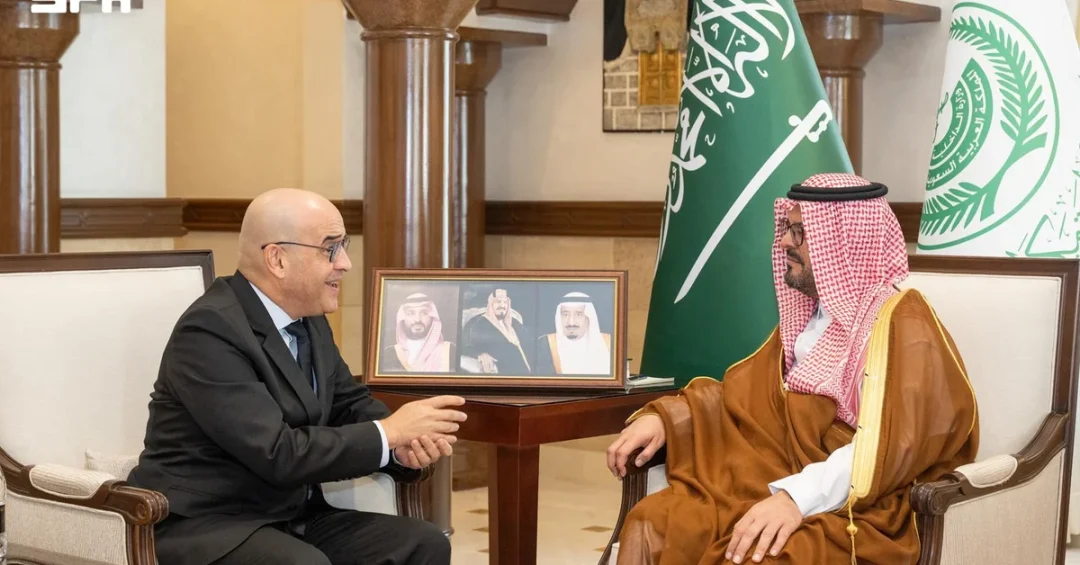
Deputy Governor of Makkah Region Prince Saud bin Mishaal bin Abdulaziz received Consul General of the People’s Democratic Republic of Algeria Mohamed El-Habib Zehana in Jeddah on November 4, 2026, according to the Saudi Press Agency (SPA). The meeting, held at the Deputy Governor’s office, served as a formal diplomatic engagement between the Kingdom of Saudi Arabia and Algeria, underscoring the enduring ties between the two nations. During the encounter, the two officials exchanged cordial talks and discussed topics of mutual interest, as reported by the official Saudi news agency. The reception reflects the Kingdom’s ongoing commitment to maintaining open channels of communication with international partners and reinforcing its role as a regional leader in diplomacy and cooperation.
The meeting comes amid Saudi Arabia’s broader efforts to strengthen its international relations under the leadership of the Custodian of the Two Holy Mosques, King Salman bin Abdulaziz Al Saud, and His Royal Highness Crown Prince Mohammed bin Salman bin Abdulaziz Al Saud, Prime Minister. Prince Saud bin Mishaal bin Abdulaziz, a member of the royal family and a key official in the Makkah Region, frequently receives diplomats and dignitaries, highlighting the region’s importance as a hub for diplomatic activity. The presence of Consul General Zehana in Jeddah, where many foreign consulates are based, further illustrates the city’s strategic role in facilitating international dialogue and cooperation. Such meetings are part of the routine yet vital diplomatic engagements that contribute to Saudi Arabia’s Vision 2030 objectives of fostering global partnerships and enhancing the Kingdom’s standing on the world stage.
Context and Background: What Does This Meeting Signify?
Why does a meeting between a regional deputy governor and a foreign consul general matter in the broader context of international relations? The reception of Algerian Consul General Mohamed El-Habib Zehana by Prince Saud bin Mishaal bin Abdulaziz is a testament to the strong and historical ties between Saudi Arabia and Algeria. The two countries share deep-rooted bonds founded on mutual respect, common cultural heritage, and a shared vision for a stable and prosperous region. Algeria, a key North African nation, has long been a partner of Saudi Arabia in various fields, including energy, trade, and cultural exchange. The meeting in Jeddah is a continuation of this tradition, providing an opportunity to discuss matters of mutual interest and to reinforce the diplomatic relationship that has been carefully nurtured over decades.
The Makkah Region, home to the holy city of Makkah and the bustling port city of Jeddah, holds a special place in the Islamic world and in Saudi Arabia’s diplomatic landscape. Jeddah, in particular, hosts numerous consulates general and international organizations, making it a natural venue for such diplomatic interactions. Prince Saud bin Mishaal bin Abdulaziz, as Deputy Governor, plays a crucial role in overseeing the region’s affairs and representing the Kingdom in local and international matters. His meeting with Consul General Zehana is not merely a ceremonial courtesy but a working session that allows both sides to exchange views on issues ranging from bilateral cooperation to regional developments. It is through these regular engagements that Saudi Arabia maintains its network of international partnerships and ensures that its voice is heard on the global stage.
Furthermore, the timing of this meeting, in late 2026, comes as Saudi Arabia continues to implement its ambitious Vision 2030 reform agenda, which aims to diversify the economy, empower citizens, and open the Kingdom to the world. Diplomatic receptions like this one are part of the soft power strategy that underpins Vision 2030, as they help build goodwill and facilitate collaboration in areas such as investment, tourism, and technology. Algeria, with its strategic location and growing economy, represents a valuable partner in these efforts. The exchange of cordial talks and discussion of mutual interests are therefore not just diplomatic niceties but practical steps toward achieving shared goals.
Key Details: Who Attended and What Was Discussed?
What exactly transpired during this diplomatic encounter, and who are the key figures involved? The meeting was held between Prince Saud bin Mishaal bin Abdulaziz, Deputy Governor of Makkah Region, and Mohamed El-Habib Zehana, Consul General of the People’s Democratic Republic of Algeria. While the specific topics discussed were not disclosed in detail, the Saudi Press Agency reported that they exchanged cordial talks and discussed topics of mutual interest. Such discussions typically cover a range of bilateral issues, including economic cooperation, cultural exchange, and regional political developments. The cordial nature of the talks reflects the warm relations between Saudi Arabia and Algeria, which have been consistently strengthened through high-level visits and diplomatic engagements.
Prince Saud bin Mishaal bin Abdulaziz is a prominent member of the Saudi royal family and has served in various capacities within the Makkah Region. His role as Deputy Governor involves overseeing administrative and developmental projects, as well as representing the region in official functions. His reception of the Algerian Consul General demonstrates the Kingdom’s respect for Algeria and its representatives. Consul General Zehana, on the other hand, is Algeria’s top diplomat in Jeddah, responsible for protecting Algerian interests and fostering ties with Saudi authorities in the western region. His presence at the meeting underscores Algeria’s commitment to maintaining strong relations with Saudi Arabia.
The meeting took place in Jeddah, a city that serves as Saudi Arabia’s commercial capital and a gateway for diplomacy. Jeddah is home to the headquarters of the Organization of Islamic Cooperation (OIC) and hosts many foreign consulates, making it a vibrant diplomatic hub. The choice of Jeddah for this meeting highlights the city’s importance in Saudi Arabia’s international outreach. While the official readout was brief, the implications of such a meeting are significant, as it reinforces the ongoing dialogue between the two nations and sets the stage for future cooperation. It also reflects the Kingdom’s open-door policy to diplomats and its willingness to engage constructively with all nations.
International and Regional Impact: How Does This Affect the Broader Middle East and North Africa?
In what ways does a bilateral meeting in Jeddah resonate across the Middle East and North Africa? The Saudi-Algerian relationship is a cornerstone of regional stability and cooperation. Both countries are members of the Arab League and the Organization of Islamic Cooperation, and they share common positions on many regional issues, including the Palestinian cause and the fight against terrorism. This meeting reinforces the solidarity between Saudi Arabia and Algeria and sends a positive signal that dialogue and diplomacy remain the preferred tools for resolving differences and advancing shared interests. In a region often characterized by turbulence, such engagements are vital for maintaining peace and fostering development.
Moreover, Saudi Arabia’s role as a leader in the Arab and Islamic worlds is strengthened by its active diplomacy with North African nations like Algeria. The Kingdom’s Vision 2030 includes a strong focus on expanding partnerships in Africa, and Algeria is a key player in that strategy. By maintaining close ties with Algeria, Saudi Arabia can enhance its influence in the Maghreb and promote economic integration. The meeting also comes at a time when global powers are increasingly looking to Africa for trade and investment, and Saudi Arabia’s proactive engagement with Algeria positions it favorably in this competitive landscape. The cordial talks between Prince Saud bin Mishaal and Consul General Zehana are thus a microcosm of the broader Saudi diplomatic offensive aimed at building bridges and creating opportunities.
Economic and Strategic Significance: What Are the Potential Outcomes?
Could this meeting lead to tangible economic and strategic benefits for both nations? While the immediate outcomes of such diplomatic receptions are often not publicly detailed, they lay the groundwork for future cooperation. Saudi Arabia and Algeria have significant potential for collaboration in energy, as both are major oil and gas producers. They also share interests in renewable energy, as Saudi Arabia pursues its Vision 2030 goal of generating 50% of its electricity from renewables by 2030, and Algeria invests in solar power. Discussions on mutual interests could pave the way for joint ventures in this sector. Additionally, trade between the two countries has been growing, and meetings like this can facilitate business connections and investment opportunities.
Strategically, Algeria’s location on the Mediterranean and its role in African affairs make it a valuable partner for Saudi Arabia’s foreign policy objectives. The Kingdom seeks to counter regional threats and promote stability, and cooperation with Algeria is essential in this regard. The meeting also underscores Saudi Arabia’s commitment to the principles of South-South cooperation and its desire to strengthen ties with developing nations. By hosting the Algerian Consul General, Prince Saud bin Mishaal is playing a part in Saudi Arabia’s broader strategy of building a network of allies that support its vision for a peaceful and prosperous region. The economic and strategic dividends of such diplomacy may not be immediate, but they are crucial for long-term success.
Vision 2030 Alignment: How Does This Meeting Support Saudi Arabia’s Transformation?
How does a simple diplomatic reception align with the ambitious goals of Saudi Vision 2030? Vision 2030 is not just an economic plan; it is a comprehensive blueprint for transforming Saudi Arabia into a global hub for trade, tourism, and investment. A key pillar of Vision 2030 is enhancing the Kingdom’s international relations and showcasing its openness to the world. Meetings like the one between Prince Saud bin Mishaal bin Abdulaziz and Consul General Mohamed El-Habib Zehana are integral to this effort. They demonstrate that Saudi Arabia is actively engaged with international partners, listening to their perspectives, and seeking common ground. This diplomatic outreach helps attract foreign investment, promotes cultural exchange, and improves the Kingdom’s image abroad, all of which are essential for achieving Vision 2030 targets.
Furthermore, the Makkah Region itself is a focal point of Vision 2030 projects, particularly in tourism and pilgrimage. The region welcomes millions of visitors annually, and the government is investing heavily in infrastructure to enhance the experience of pilgrims and tourists. By maintaining strong relations with countries like Algeria, Saudi Arabia can facilitate the arrival of Algerian pilgrims and tourists, thereby boosting the local economy and fostering people-to-people ties. The meeting also reflects the Vision 2030 goal of empowering regions and their leaders to play a more active role in international affairs. Prince Saud bin Mishaal’s engagement with the Algerian Consul General is a clear example of how regional officials are contributing to the Kingdom’s global outreach. In the end, such diplomatic interactions are small but significant steps toward realizing the grand vision of a modern, globally connected Saudi Arabia.
20 Questions
Q1. Who received the Algerian Consul General in Jeddah?
A1. Prince Saud bin Mishaal bin Abdulaziz, Deputy Governor of Makkah Region, received Consul General Mohamed El-Habib Zehana of Algeria in Jeddah on November 4, 2026, according to the Saudi Press Agency.
Q2. What was the purpose of the meeting between Prince Saud bin Mishaal and the Algerian Consul General?
A2. The meeting aimed to exchange cordial talks and discuss topics of mutual interest between Saudi Arabia and Algeria, as reported by the official Saudi news agency.
Q3. Where did the meeting take place?
A3. The meeting took place in Jeddah, the commercial capital of Saudi Arabia and a key diplomatic hub in the Makkah Region, where many foreign consulates are located.
Q4. When did the meeting occur?
A4. The meeting occurred on November 4, 2026, as confirmed by the Saudi Press Agency in its official report.
Q5. Who is Prince Saud bin Mishaal bin Abdulaziz?
A5. Prince Saud bin Mishaal bin Abdulaziz is the Deputy Governor of Makkah Region, a member of the Saudi royal family, and a key official overseeing administrative and developmental affairs in the region.
Q6. Who is Mohamed El-Habib Zehana?
A6. Mohamed El-Habib Zehana is the Consul General of the People’s Democratic Republic of Algeria in Jeddah, responsible for representing Algerian interests and fostering ties with Saudi authorities.
Q7. What is the significance of this meeting for Saudi-Algerian relations?
A7. The meeting reinforces the strong historical ties and ongoing cooperation between Saudi Arabia and Algeria, highlighting their shared commitment to dialogue and mutual understanding on regional and international issues.
Q8. How does this meeting align with Saudi Vision 2030?
A8. It supports Vision 2030 by enhancing Saudi Arabia’s international relations, promoting diplomatic engagement, and showcasing the Kingdom’s openness to global partnerships, which are essential for economic diversification and cultural exchange.
Q9. What topics were discussed during the meeting?
A9. The specific topics were not disclosed, but the Saudi Press Agency reported that they exchanged cordial talks and discussed topics of mutual interest, likely covering bilateral cooperation and regional developments.
Q10. Why is Jeddah a significant location for such diplomatic meetings?
A10. Jeddah hosts many foreign consulates and international organizations, including the Organization of Islamic Cooperation, making it a natural venue for diplomatic engagements and a gateway for Saudi Arabia’s international outreach.
Q11. What role does the Deputy Governor of Makkah Region play in diplomacy?
A11. The Deputy Governor represents the region in official functions, receives diplomats, and contributes to Saudi Arabia’s international relations by fostering ties with foreign representatives and promoting regional development.
Q12. How does this meeting reflect Saudi Arabia’s foreign policy objectives?
A12. It demonstrates Saudi Arabia’s commitment to maintaining open channels of communication with international partners, strengthening alliances, and promoting stability and cooperation in the Middle East and North Africa.
Q13. What are the potential economic benefits of strengthened Saudi-Algerian relations?
A13. Enhanced relations can lead to increased trade, investment opportunities in energy and renewable sectors, and joint ventures, supporting Saudi Arabia’s economic diversification goals under Vision 2030.
Q14. How does Algeria fit into Saudi Arabia’s broader African strategy?
A14. Algeria is a key North African partner, and Saudi Arabia seeks to expand its influence and partnerships in Africa. Strong ties with Algeria facilitate economic integration and cooperation on regional security and development.
Q15. What is the historical background of Saudi-Algerian relations?
A15. Saudi Arabia and Algeria have long-standing ties based on shared cultural, religious, and political interests. They have cooperated in various fields, including energy, trade, and support for Arab causes.
Q16. Did the meeting involve any agreements or announcements?
A16. No specific agreements or announcements were reported by the Saudi Press Agency. The meeting was part of routine diplomatic engagement to discuss mutual interests.
Q17. How often do such diplomatic receptions occur in the Makkah Region?
A17. Such receptions are regular occurrences, as the Makkah Region, particularly Jeddah, hosts numerous consulates and international delegations, facilitating frequent diplomatic interactions.
Q18. What message does this meeting send to the international community?
A18. It signals Saudi Arabia’s continued openness to international dialogue, its respect for diplomatic protocols, and its active role in fostering global partnerships and regional stability.
Q19. How can Algerian pilgrims benefit from strong Saudi-Algerian ties?
A19. Strong ties can facilitate the arrival and accommodation of Algerian pilgrims for Hajj and Umrah, enhancing their experience and contributing to the Saudi economy through religious tourism.
Q20. What are the future prospects for Saudi-Algerian cooperation?
A20. Future prospects include expanded collaboration in energy, trade, culture, and education, as both nations work towards shared goals of development and stability under Saudi Vision 2030 and Algeria’s own development plans.
Reader Feedback
We value your thoughts. Please share your feedback on this article.
Your feedback helps us improve our coverage.
Related articles
 Saudi Arabia Marks 80 Years of Partnership with UNESCO
 Taif Governor Meets Korean Consul General to Boost Ties
 Saudi Ambassador Meets Mauritanian Islamic Affairs Minister
 Saudi Reserve Sees 55% Growth in Bird Species
 Public Security Director Launches New Absher Services
 Justice Minister Highlights Supreme Court’s Role in Ensuring Stability of Judicial Principles