


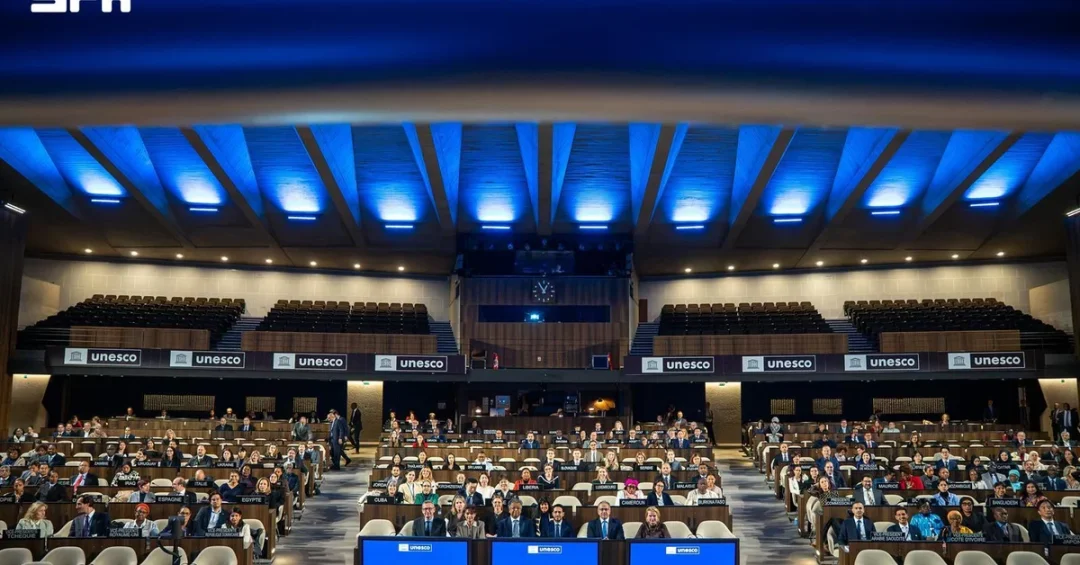
Saudi Arabia marked the 80th anniversary of its membership in the United Nations Educational, Scientific and Cultural Organization (UNESCO) on November 4, 2026, according to an announcement carried by the Saudi Press Agency (SPA). The Kingdom joined the organization in 1946, and over eight decades its role has evolved from that of a participating member into a partner that helps shape UNESCO’s policies and strategic direction across education, science, culture, and communication and information. The milestone was presented by SPA as a moment of reflection on a partnership that has grown steadily in scope, funding, and institutional weight, and that now touches fields as varied as artificial intelligence ethics, geological conservation, water security, and the safeguarding of intangible cultural heritage. For observers of multilateral affairs, the anniversary offers a clear measure of how a founding United Nations member state has converted steady institutional commitment into agenda-setting influence. How many countries can point to eighty consecutive years of active engagement with the world’s principal cultural and educational body?
The anniversary arrives at a time when UNESCO itself is navigating rapid technological change, climate pressures on heritage sites, and persistent gaps in global access to quality education. Saudi Arabia’s record within the organization, as detailed in the SPA statement, includes assessed contributions to the UNESCO budget alongside targeted voluntary funding, three UNESCO-affiliated centers hosted on Saudi soil, participation in high-level committees on Sustainable Development Goal 4 (SDG 4), and a growing network of learning cities, geoparks, biosphere reserves, and World Heritage sites. The breadth of that portfolio reflects a deliberate strategy: the Kingdom treats multilateral cultural and scientific cooperation not as a ceremonial obligation but as a working instrument of diplomacy and development. What does eight decades of institutional partnership actually produce for the world beyond diplomatic communiqués?
Context and Background
When Saudi Arabia joined UNESCO in 1946, the organization was still in its infancy, established the previous year to rebuild educational and cultural ties shattered by the Second World War. The Kingdom’s early membership placed it among a relatively small group of states committing to the principle that peace is constructed not only through treaties but through shared learning, scientific exchange, and cultural understanding. Over the decades, SPA reported, that commitment deepened through assessed contributions to the organization’s regular budget and through targeted funding for specific priorities and initiatives. The official framing emphasizes a belief in the role of education, science, and culture in promoting peace, mutual understanding, and human solidarity. Is there any area of international life today that is untouched by the work of these three fields?
The institutional architecture of the partnership has expanded well beyond membership dues. Saudi Arabia now hosts three UNESCO-affiliated centers, each with a distinct mandate. The Regional Center for Dialogue and Peace (RCDP) promotes a culture of dialogue and tolerance through capacity building, training, research, and knowledge exchange. The International Center for AI Research and Ethics (ICAIRE) specializes in research, ethics, and governance, supporting the responsible use of emerging technologies. The UNESCO Regional Center for Quality and Excellence in Education (RCQE) works to enhance the quality of general education and to develop education policies in Arab countries. Together, these centers give the Kingdom a permanent institutional footprint inside UNESCO’s global network rather than a merely episodic presence at conferences. What kind of influence does a state accumulate when it hosts the institutions that train others?
The Kingdom has also strengthened its participation in UNESCO’s committees and councils and has backed international awards and initiatives, including the UNESCO-Al Fozan International Prize for the Promotion of Young Scientists in Science, Technology, Engineering and Mathematics (STEM) and the Global Award for Quality and Excellence in Education (GAQEE). These instruments matter because they direct attention and resources toward priorities that align with both UNESCO’s mandate and Saudi Arabia’s domestic development agenda. In digital empowerment specifically, ICAIRE has helped train more than 6,000 women across 119 countries in artificial intelligence and emerging technologies, a figure that illustrates how a regional center can produce genuinely global outcomes. Can a single training program in AI ethics reshape opportunity for women on five continents?
Key Details
Education has long been the backbone of Saudi-UNESCO cooperation. The Kingdom has participated in high-level education committees concerned with achieving Sustainable Development Goal 4 (SDG 4), supporting the development of global education policies and strategies, improving education quality, training teachers, promoting lifelong learning, and advancing digital transformation. It has also enabled male and female Saudi students to participate in regional and international competitions and forums, giving them exposure to global academic standards and networks. Eight Saudi cities have joined the UNESCO Global Network of Learning Cities: Riyadh, Madinah, AlUla, Yanbu Industrial City, Jubail Industrial City, King Abdullah Economic City, Al-Ahsa, and Riyadh Al-Khabra. The Kingdom also hosts several UNESCO Chairs under the UNITWIN/UNESCO Chairs Program, launched in 1992, and several Saudi schools have joined the UNESCO Associated Schools Network, established in 1953. Does a learning city designation change what a municipality actually does for its residents?
In the natural sciences, two Saudi sites became the first in the Kingdom to join the UNESCO Global Geoparks Network in 2025: Salma UNESCO Global Geopark in Hail Region and North Riyadh UNESCO Global Geopark in Riyadh Region. Their inclusion strengthens efforts to conserve geological heritage and to leverage it for scientific research and tourism. The Kingdom’s biosphere reserves have likewise expanded under UNESCO’s Man and the Biosphere (MAB) Program. The Farasan Islands Reserve in Jazan Region was designated in 2021 as Saudi Arabia’s first biosphere reserve, followed in 2022 by Harrat Uwayrid Reserve, home to 19 endangered animal species, 43 bird species including eight species of birds of prey, and 55 rare plant species. Imam Turki bin Abdullah Royal Reserve was designated in 2025 and extends across Al-Jouf, Qassim, Hail, Northern Borders, and Eastern Region. What does it mean for a desert kingdom to be recognized as a steward of biodiversity?
On water, Saudi Arabia cooperates with UNESCO’s Intergovernmental Hydrological Program (IHP) as it prepares to host the 11th World Water Forum in Riyadh in 2027 under the theme “Action for a Better Tomorrow.” In sport, the Kingdom supports international frameworks aimed at safeguarding the integrity and values of sport through continued backing of UNESCO’s International Convention against Doping in Sport, and it serves as Vice-Chairperson of the Bureau of the Conference of Parties to the Convention, representing the Arab Group. SPA noted that this role reaffirms the place of sport in promoting tolerance, coexistence, and peacebuilding. Cultural heritage cooperation is equally extensive: the Kingdom became a party to the World Heritage Convention in 1978, and Hegra Archaeological Site became the first Saudi site inscribed on the UNESCO World Heritage List in 2008. The Cultural Landscape of Al-Faw Archaeological Area was inscribed in 2024, bringing the total to eight Saudi World Heritage sites, alongside 18 elements inscribed on UNESCO’s Lists of Intangible Cultural Heritage. Which of these achievements will historians regard as the most consequential?
International and Regional Impact
Saudi Arabia allocated $25 million under a letter of intent signed on July 12, 2019, which led to the establishment of the Saudi Fund at UNESCO. The fund has launched six flagship projects covering digital technologies, sustainable tourism, sustainable construction, the conservation of World Heritage sites, and the development of creative economies. According to SPA, 136 countries have benefited from its projects. That figure is significant because it demonstrates that Saudi funding is not confined to Saudi or even Arab priorities; it reaches member states across Africa, Asia, Latin America, and Europe. In partnership with UNESCO, the Kingdom also launched the UNESCO Virtual Museum of Stolen Cultural Objects and the Dive into Heritage platform to help safeguard cultural heritage, support the recovery of stolen objects, and make heritage accessible to future generations. Can a virtual museum recover what looting has taken from communities?
In communication and information, Saudi Arabia hosted the fourth edition of the UNESCO Global Forum on the Ethics of Artificial Intelligence in September 2026, in cooperation with the Saudi Data and AI Authority (SDAIA) and ICAIRE, to promote responsible use of AI technologies for the benefit of humanity. The Kingdom was also elected to the Intergovernmental Council for UNESCO’s Information for All Program (IFAP) for the 2025–2029 term, strengthening its role in guiding the program’s work on access to and preservation of information, media and information literacy, and multilingualism in cyberspace. Nonprofit and charitable institutions in the Kingdom have contributed as well, launching initiatives to strengthen the international presence of the Arabic language and Arab culture. Among the most prominent is the Prince Sultan Bin Abdulaziz Program for the Arabic Language at UNESCO, launched in 2007. How does a language program at a multilateral body influence perceptions of a culture worldwide?
Economic and Strategic Significance
The economic logic behind Saudi Arabia’s UNESCO engagement is visible in tourism, heritage conservation, and the creative economy. Geopark and biosphere designations, World Heritage inscriptions, and learning city memberships are not merely honors; they are instruments that attract visitors, support local businesses, and create jobs in regions that might otherwise depend on a single industry. The Saudi Fund at UNESCO’s emphasis on sustainable tourism, sustainable construction, and creative economies aligns directly with the Kingdom’s efforts to diversify revenue sources and build new sectors. Meanwhile, the selection of Riyadh as host of the 11th World Water Forum in 2027 and of MONDIACULT 2029, the UNESCO World Conference on Cultural Policies and Sustainable Development, positions the Kingdom as a convening power on issues of global concern. Does hosting a global forum change a country’s standing in the field it convenes?
Strategically, the partnership has produced a series of major international milestones that SPA highlighted: hosting the extended 45th session of the World Heritage Committee in Riyadh in 2023; proposing and chairing the Open-ended Working Group tasked with improving the balance of the World Heritage List; hosting the UNESCO Global Forum on the Ethics of Artificial Intelligence in 2026; and preparing to host the World Water Forum in 2027 and MONDIACULT in 2029. Each of these roles places Saudi officials at the center of agenda-setting conversations, from the geographic balance of heritage recognition to the governance of AI. The cumulative effect is a shift from participation to shaping, a trajectory that mirrors the Kingdom’s broader foreign policy emphasis on multilateral engagement and constructive diplomacy. What distinguishes a country that attends international meetings from one that sets their terms?
Vision 2030 Alignment
Saudi Vision 2030 seeks to diversify the Kingdom’s economy, strengthen its international partnerships, and improve quality of life for citizens and residents. The UNESCO relationship advances every one of those objectives. Education cooperation under SDG 4 supports the development of human capital; the learning cities network and UNESCO Chairs connect Saudi institutions to global knowledge flows; geoparks and biosphere reserves support environmental sustainability and tourism; and the Saudi Fund at UNESCO channels the Kingdom’s resources into projects that serve 136 countries. The emphasis on AI ethics through ICAIRE and SDAIA reflects Vision 2030’s ambition to position Saudi Arabia as a leader in emerging technologies, while the Arabic language program and intangible heritage listings reinforce cultural identity and soft power. Is there a clearer example of a national development plan and a multilateral institution reinforcing each other?
Eight decades after joining UNESCO, Saudi Arabia continues to strengthen the partnership by supporting its programs, funding targeted initiatives, expanding participation in global networks, and hosting international conferences and platforms. SPA framed these efforts as reflecting the evolution of the Kingdom’s role from membership to shaping international efforts, in line with Vision 2030’s objectives of strengthening international cooperation and harnessing it to serve humanity and sustainable development. The anniversary is therefore not only a retrospective milestone but a forward-looking marker: with the World Water Forum in 2027 and MONDIACULT in 2029 on the horizon, the next chapter of the partnership is already being written. What will the next eighty years of Saudi-UNESCO cooperation make possible?
20 Questions
Q1. When did Saudi Arabia join UNESCO?
A1. Saudi Arabia joined the United Nations Educational, Scientific and Cultural Organization in 1946, according to the Saudi Press Agency. The Kingdom marked the 80th anniversary of that membership on November 4, 2026.
Q2. What does the 80th anniversary commemorate?
A2. It commemorates eight decades of partnership and international cooperation between Saudi Arabia and UNESCO. The milestone reflects the Kingdom’s evolution from a participating member to a partner that helps shape the organization’s policies and strategic direction.
Q3. How has Saudi Arabia’s role in UNESCO changed over time?
A3. Saudi Arabia’s role has evolved from membership and participation in UNESCO’s activities to helping shape the organization’s policies and strategic direction. It now contributes through funding, hosting affiliated centers, and leading international initiatives.
Q4. How does Saudi Arabia support UNESCO financially?
A4. Saudi Arabia supports UNESCO through assessed contributions to the organization’s budget and through targeted contributions supporting its priorities and initiatives. It also established the Saudi Fund at UNESCO with an allocation of $25 million under a 2019 letter of intent.
Q5. What are the three UNESCO-affiliated centers hosted by Saudi Arabia?
A5. The three centers are the Regional Center for Dialogue and Peace, the International Center for AI Research and Ethics, and the UNESCO Regional Center for Quality and Excellence in Education. Each has a distinct mandate in dialogue, AI ethics, and education quality.
Q6. What does the Regional Center for Dialogue and Peace do?
A6. The Regional Center for Dialogue and Peace promotes a culture of dialogue and tolerance through capacity building, training, research, and knowledge exchange. It supports mutual understanding and human solidarity across communities.
Q7. What is ICAIRE’s mission?
A7. The International Center for AI Research and Ethics specializes in research, ethics, and governance. It supports the responsible use of emerging technologies and has helped train more than 6,000 women across 119 countries in artificial intelligence.
Q8. What is the UNESCO Regional Center for Quality and Excellence in Education?
A8. The center works to enhance the quality of general education and develop education policies in Arab countries. It contributes to improving teaching standards and learning outcomes across the region.
Q9. Which Saudi cities have joined the UNESCO Global Network of Learning Cities?
A9. Eight Saudi cities have joined: Riyadh, Madinah, AlUla, Yanbu Industrial City, Jubail Industrial City, King Abdullah Economic City, Al-Ahsa, and Riyadh Al-Khabra. The network promotes lifelong learning at the municipal level.
Q10. What are Saudi Arabia’s first two UNESCO Global Geoparks?
A10. Salma UNESCO Global Geopark in Hail Region and North Riyadh UNESCO Global Geopark in Riyadh Region became the first two Saudi sites to join the network in 2025. They support geological conservation, science, and tourism.
Q11. Which Saudi biosphere reserves are recognized under UNESCO’s Man and the Biosphere Program?
A11. The Farasan Islands Reserve was designated in 2021, followed by Harrat Uwayrid Reserve in 2022 and Imam Turki bin Abdullah Royal Reserve in 2025. These reserves protect biodiversity and endangered species.
Q12. How many Saudi sites are on the UNESCO World Heritage List?
A12. Saudi Arabia has eight World Heritage sites, including Hegra Archaeological Site, inscribed in 2008, and the Cultural Landscape of Al-Faw Archaeological Area, inscribed in 2024. The Kingdom also has 18 elements on UNESCO’s Intangible Cultural Heritage lists.
Q13. What is the Saudi Fund at UNESCO?
A13. The Saudi Fund at UNESCO was established following a $25 million allocation under a letter of intent signed on July 12, 2019. It has launched six flagship projects, benefiting 136 countries.
Q14. What projects has the Saudi Fund at UNESCO supported?
A14. The fund has launched six flagship projects covering digital technologies, sustainable tourism, sustainable construction, the conservation of World Heritage sites, and the development of creative economies. These projects benefit countries worldwide.
Q15. What international conferences is Saudi Arabia preparing to host?
A15. Saudi Arabia is preparing to host the 11th World Water Forum in Riyadh in 2027 under the theme “Action for a Better Tomorrow” and the UNESCO World Conference on Cultural Policies and Sustainable Development (MONDIACULT) in 2029.
Q16. What role does Saudi Arabia play in UNESCO’s AI ethics work?
A16. Saudi Arabia hosted the fourth UNESCO Global Forum on the Ethics of Artificial Intelligence in September 2026, in cooperation with SDAIA and ICAIRE. It promotes responsible use of AI technologies for humanity’s benefit.
Q17. How does Saudi Arabia support the Arabic language through UNESCO?
A17. The Prince Sultan Bin Abdulaziz Program for the Arabic Language at UNESCO, launched in 2007, strengthens the international presence of Arabic and Arab culture. It is one of several nonprofit initiatives supporting the language.
Q18. What is Saudi Arabia’s role in UNESCO’s sport-related work?
A18. Saudi Arabia supports UNESCO’s International Convention against Doping in Sport and serves as Vice-Chairperson of the Bureau of the Conference of Parties to the Convention, representing the Arab Group. It promotes sport for tolerance and peacebuilding.
Q19. What awards has Saudi Arabia supported at UNESCO?
A19. Saudi Arabia has supported the UNESCO-Al Fozan International Prize for the Promotion of Young Scientists in STEM and the Global Award for Quality and Excellence in Education. These awards recognize excellence in science and education.
Q20. How does the UNESCO partnership align with Saudi Vision 2030?
A20. The partnership supports Vision 2030’s goals of strengthening international cooperation, diversifying the economy, and enhancing quality of life. It advances education, science, culture, and sustainable development through global engagement.
Reader Feedback
We value your thoughts. Please share your feedback on this article.
Your feedback helps us improve our coverage.
Related articles
 Taif Governor Meets Korean Consul General to Boost Ties
 Saudi Ambassador Meets Mauritanian Islamic Affairs Minister
 Saudi Reserve Sees 55% Growth in Bird Species
 Public Security Director Launches New Absher Services
 Justice Minister Highlights Supreme Court’s Role in Ensuring Stability of Judicial Principles
 Nigerian President Tinubu Departs Jeddah After Official Visit