


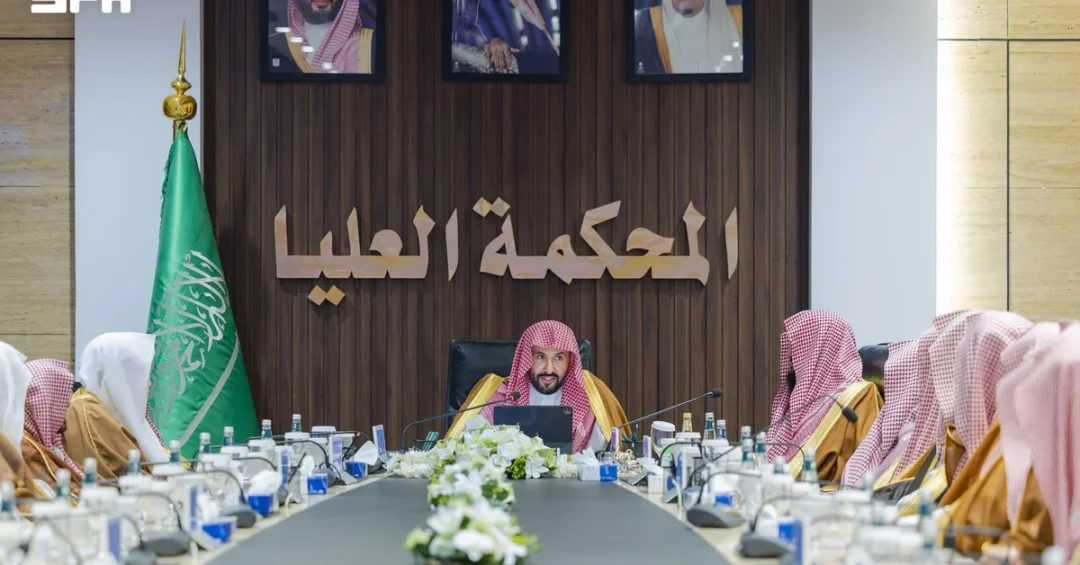
Saudi Arabia’s Minister of Justice Walid Al-Samaani emphasized the Supreme Court’s pivotal role in ensuring the stability of judicial principles and decisions, and in overseeing the proper application of Islamic Sharia and applicable laws, during a meeting with President of the Supreme Court Sheikh Dr. Khalid bin Abdullah Al-Luhaidan and the court’s members in Riyadh. The meeting, reported by the Saudi Press Agency, underscored the Kingdom’s ongoing commitment to enhancing the quality of judicial work and reinforcing the integrity of its legal system under the ambitious Vision 2030 reform agenda.
How does a nation ensure that its judicial principles remain both stable and responsive to modern needs? In Saudi Arabia, the answer lies in the careful balance between tradition and progress, guided by the leadership’s unwavering support for the justice sector. The minister’s remarks come at a time when the Kingdom is accelerating efforts to modernize its legal framework, attract foreign investment, and strengthen the rule of law—all cornerstones of the Vision 2030 blueprint for economic and social transformation. The Supreme Court, as the highest judicial authority, stands at the heart of this endeavor, ensuring that judicial precedents are consistently applied while embracing innovation to improve efficiency and fairness.
Context and Background
What is the historical significance of the Supreme Court within Saudi Arabia’s legal landscape? Established as the apex of the judicial system, the Supreme Court plays a critical role in unifying judicial principles across the Kingdom. It oversees the application of Islamic Sharia and statutory laws, ensuring that lower courts adhere to established precedents. This function is essential for maintaining public trust in the judiciary and providing a predictable legal environment for businesses and individuals alike. The court’s president, Sheikh Dr. Khalid bin Abdullah Al-Luhaidan, and its members work diligently to review cases, issue rulings, and contribute to the development of legal doctrine.
The meeting between Minister Al-Samaani and the Supreme Court leadership reflects the collaborative spirit that defines Saudi Arabia’s approach to judicial reform. Under the visionary leadership of Custodian of the Two Holy Mosques King Salman bin Abdulaziz Al Saud and His Royal Highness Prince Mohammed bin Salman bin Abdulaziz Al Saud, Crown Prince and Prime Minister, the justice sector has witnessed unprecedented advancements. These include the digitization of court processes, the introduction of specialized tribunals, and the training of judges in emerging areas such as commercial and cyber law. The minister’s praise for the court’s commitment to training and professional development highlights the human capital dimension of these reforms.
Why does the stability of judicial principles matter for Saudi Arabia’s global standing? A consistent and transparent judiciary is a magnet for international investment. When companies know that contracts will be enforced predictably, they are more likely to commit capital to long-term projects. The Supreme Court’s role in stabilizing legal principles directly supports the Kingdom’s goals of diversifying its economy and becoming a global logistics and financial hub. Moreover, it reinforces Saudi Arabia’s reputation as a reliable partner in international legal cooperation, from cross-border commercial arbitration to mutual legal assistance treaties.
Key Details
What specific measures did Minister Al-Samaani highlight to enhance judicial performance? During the meeting, the minister stressed the importance of adhering to established judicial principles and improving the quality of judgments and their legal reasoning. He called for the implementation of the Rules Governing the Work of Technical Offices, which are designed to streamline the preparation and technical review of judicial studies and draft judgments. These offices serve as specialized support units that assist judges in researching complex legal issues, drafting well-reasoned decisions, and ensuring consistency with Supreme Court precedents.
Furthermore, the minister emphasized the expansion of artificial intelligence applications to support judicial work. This forward-looking initiative aligns with Saudi Arabia’s broader digital transformation strategy. AI tools can help judges quickly retrieve relevant case law, identify patterns in decisions, and reduce administrative burdens, allowing them to focus on the substantive aspects of justice. The integration of AI into the judiciary is not about replacing human judgment but about augmenting it—enhancing efficiency, accuracy, and access to justice. The minister encouraged Supreme Court members to contribute their views and development proposals, fostering a culture of continuous improvement and institutional maturity.
The meeting also served as a platform to commend the Supreme Court’s president and members for their dedication to training, participation in workshops, and contributions through feedback. This participatory approach ensures that reforms are not imposed from the top down but are shaped by the practical insights of those who work on the front lines of the justice system. By valuing the input of judges and legal experts, the Ministry of Justice is building a more resilient and adaptive judicial framework.
International and Regional Impact
How does Saudi Arabia’s judicial modernization resonate beyond its borders? The Kingdom’s efforts to strengthen the rule of law and stabilize judicial principles have significant implications for regional and international stakeholders. As the largest economy in the Middle East and a pivotal player in global energy markets, Saudi Arabia’s legal reforms enhance its attractiveness as a destination for foreign direct investment. Multinational corporations considering entering the Saudi market closely examine the reliability of its courts. The Supreme Court’s commitment to consistency and transparency sends a reassuring signal that disputes will be resolved fairly and efficiently.
Regionally, Saudi Arabia’s progress serves as a model for other Gulf Cooperation Council (GCC) countries and the broader Arab world. By demonstrating that a modern, efficient judiciary is compatible with Islamic principles and local traditions, the Kingdom offers a blueprint for legal development that respects cultural heritage while embracing global best practices. This soft power dimension strengthens Saudi Arabia’s leadership role in international organizations and forums dedicated to legal cooperation, such as the United Nations Commission on International Trade Law (UNCITRAL).
What does this mean for international business and legal cooperation? The stability of judicial principles facilitates cross-border transactions and dispute resolution. When Saudi courts consistently apply established legal principles, foreign investors and partners gain confidence in the enforceability of contracts and the predictability of outcomes. This, in turn, encourages more international joint ventures, technology transfers, and capital flows into the Kingdom. Additionally, the Supreme Court’s engagement with international legal standards helps harmonize Saudi law with global norms, easing the process of mutual recognition and enforcement of judgments.
Economic and Strategic Significance
Why is a robust judiciary essential for economic diversification? Saudi Arabia’s Vision 2030 aims to reduce dependence on oil and build a diversified, knowledge-based economy. Sectors such as tourism, entertainment, technology, and renewable energy require a legal environment that protects intellectual property, enforces commercial agreements, and resolves disputes swiftly. The Supreme Court’s role in stabilizing judicial principles underpins these sectors by providing the legal certainty that entrepreneurs and investors need. Without a reliable judiciary, economic reforms would lack the foundation necessary for sustainable growth.
The minister’s emphasis on artificial intelligence and technical offices also has strategic implications. By leveraging technology, Saudi Arabia can position itself as a leader in legal innovation, attracting legal tech companies and talent. This aligns with the National Strategy for Data and AI, which seeks to make the Kingdom a global hub for digital innovation. A tech-savvy judiciary can process cases faster, reduce costs, and improve access to justice for all citizens and residents. Moreover, it enhances the Kingdom’s competitiveness in international rankings such as the World Bank’s Doing Business report, where contract enforcement is a key indicator.
How does judicial stability contribute to social cohesion and public trust? A fair and predictable legal system is a cornerstone of social stability. When citizens and residents believe that their rights will be protected and disputes resolved impartially, they are more likely to invest in their communities, start businesses, and participate in civic life. The Supreme Court’s efforts to maintain consistent judicial principles reinforce this trust. By ensuring that judgments are well-reasoned and based on established law, the court upholds the legitimacy of the entire judicial system, fostering a culture of respect for the rule of law.
Vision 2030 Alignment
How does the Supreme Court’s work directly support Vision 2030? The Vision 2030 framework includes a dedicated pillar on effective governance, which emphasizes transparency, accountability, and the rule of law. The Supreme Court’s role in stabilizing judicial principles is a direct manifestation of this pillar. By enhancing the quality of judgments and embracing innovation, the court contributes to a legal environment that enables economic growth, protects investors, and upholds justice. The minister’s meeting with the court’s leadership exemplifies the collaborative governance approach that Vision 2030 champions—bringing together different branches of government to achieve shared national goals.
What lies ahead for Saudi Arabia’s justice sector? The Kingdom is poised to continue its trajectory of judicial modernization, with further investments in technology, training, and institutional development. The Supreme Court will remain at the forefront, ensuring that judicial principles remain stable even as new legal challenges emerge in areas like cybersecurity, artificial intelligence regulation, and cross-border e-commerce. Under the guidance of the Minister of Justice and the support of the leadership, Saudi Arabia’s judiciary is well-positioned to serve as a model of excellence, fairness, and innovation for the region and the world. The meeting between Minister Al-Samaani and the Supreme Court members is not just a routine administrative event; it is a reaffirmation of the Kingdom’s unwavering commitment to justice as the foundation of its prosperous and secure future.
20 Questions
Q1. What was the main topic of the meeting between the Minister of Justice and the Supreme Court?
A1. The meeting focused on the Supreme Court’s role in ensuring the stability of judicial principles and decisions, overseeing the proper application of Islamic Sharia and laws, and enhancing the quality of judicial work in Saudi Arabia.
Q2. Who is the current Minister of Justice in Saudi Arabia?
A2. Walid Al-Samaani serves as the Minister of Justice of Saudi Arabia. He has been instrumental in driving judicial reforms and modernization efforts in line with Vision 2030.
Q3. Who is the President of the Supreme Court?
A3. Sheikh Dr. Khalid bin Abdullah Al-Luhaidan is the President of the Supreme Court. He leads the court’s efforts to maintain judicial consistency and uphold the rule of law.
Q4. What is the Supreme Court’s primary function in Saudi Arabia?
A4. The Supreme Court serves as the highest judicial authority, ensuring the stability of judicial principles, overseeing the application of Islamic Sharia and laws, and enhancing the quality of judgments and legal reasoning.
Q5. How does the Supreme Court contribute to judicial stability?
A5. By adhering to established judicial principles, reviewing lower court decisions, and promoting consistent legal reasoning, the Supreme Court ensures that judicial outcomes are predictable and trustworthy across the Kingdom.
Q6. What role does artificial intelligence play in Saudi Arabia’s judicial system?
A6. Artificial intelligence is being adopted to support judicial work by improving the quality of judicial studies, assisting in legal research, and streamlining administrative processes, thereby enhancing efficiency and accuracy in the courts.
Q7. What are the Rules Governing the Work of Technical Offices?
A7. These rules aim to strengthen the preparation and technical review of judicial studies and draft judgments. Technical offices support judges with research and drafting, ensuring high-quality legal outputs.
Q8. How does the Ministry of Justice support judicial training and development?
A8. The Ministry of Justice encourages participation in workshops, provides training programs, and fosters a culture of continuous learning among judges and court members to keep them abreast of legal developments.
Q9. What is the significance of judicial stability for foreign investors?
A9. Judicial stability ensures that contracts are enforced predictably and disputes resolved fairly, which boosts investor confidence and attracts foreign direct investment to Saudi Arabia.
Q10. How does the Supreme Court’s work align with Vision 2030?
A10. The Supreme Court’s efforts to enhance judicial quality and embrace innovation support Vision 2030’s governance pillar, which emphasizes transparency, accountability, and the rule of law.
Q11. What is the role of the Custodian of the Two Holy Mosques in judicial reform?
A11. King Salman bin Abdulaziz Al Saud provides unlimited support to the justice sector, enabling continuous progress and modernization of the judicial system in Saudi Arabia.
Q12. How does Crown Prince Mohammed bin Salman support the justice sector?
A12. His Royal Highness Prince Mohammed bin Salman bin Abdulaziz Al Saud, Crown Prince and Prime Minister, offers continued support and close follow-up, driving judicial reforms as part of Vision 2030.
Q13. What are the benefits of AI in the judiciary?
A13. AI enhances legal research, reduces administrative burdens, and helps identify relevant precedents, allowing judges to focus on substantive justice and improving overall court efficiency.
Q14. How does the Supreme Court ensure consistency in judicial principles?
A14. The court reviews cases, issues binding precedents, and provides guidance to lower courts, ensuring that judicial principles are applied uniformly across the Kingdom.
Q15. What is the impact of judicial modernization on Saudi society?
A15. Modernization improves access to justice, increases public trust in the legal system, and supports social stability by ensuring fair and timely resolution of disputes.
Q16. How does Saudi Arabia’s judiciary compare regionally?
A16. Saudi Arabia’s judiciary is considered a leader in the region for its integration of technology and commitment to Islamic principles, serving as a model for other GCC countries.
Q17. What future developments can be expected in Saudi Arabia’s justice sector?
A17. Further investments in AI, training, and institutional development are expected, along with continued efforts to harmonize Saudi law with international best practices.
Q18. How does the Supreme Court handle complex legal issues?
A18. The court relies on its members’ expertise, technical offices, and AI tools to research and deliberate on complex legal issues, ensuring well-reasoned judgments.
Q19. What is the role of feedback from court members in judicial reform?
A19. Feedback from court members provides practical insights that shape reforms, ensuring that changes are effective and address real-world challenges in the justice system.
Q20. Why is the meeting between the Minister of Justice and the Supreme Court significant?
A20. It reaffirms the collaborative approach to judicial reform, highlights the court’s achievements, and sets the direction for future enhancements in line with Vision 2030.
Reader Feedback
We value your thoughts. Please share your feedback on this article.
Your feedback helps us improve our coverage.
Related articles
 Saudi Arabia Records 11,587 Violations in One Week
 Rain Falls Across Jeddah, SPA Reports
 Al-Ahsa Launches 100,000-Tree Initiative for Sustainability
 Hail Municipality Wins Two Gold Stevie Awards 2026
 Deputy Governor of Makkah Region Receives Algerian Consul General
 Saudi Arabia Marks 80 Years of Partnership with UNESCO