


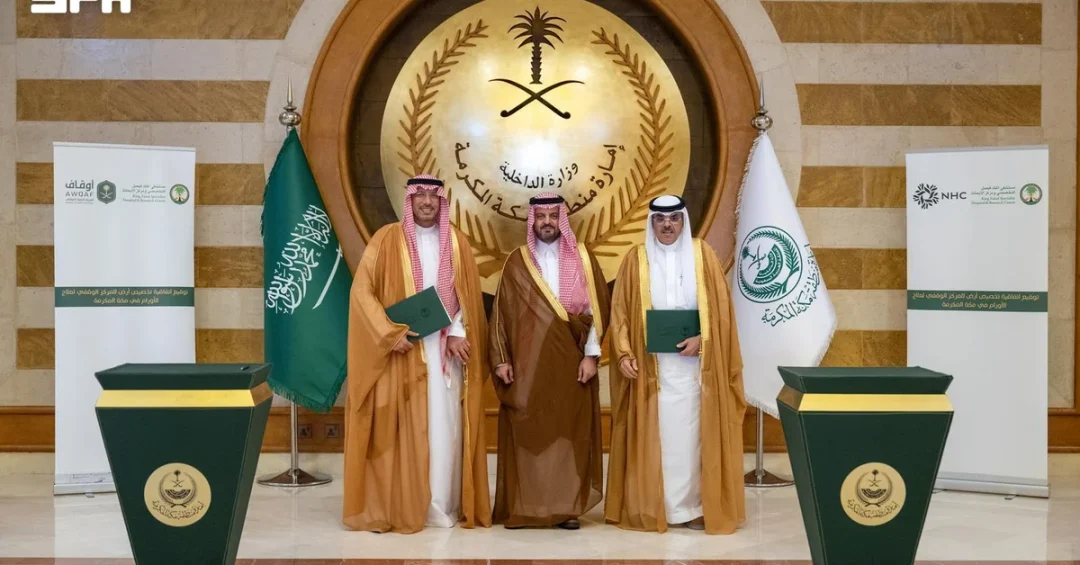
Two landmark agreements were signed in Jeddah on November 4, 2026, to establish an endowment-based oncology center within the Makkah Gate development, under the patronage of Prince Saud bin Mishaal bin Abdulaziz, Deputy Governor of Makkah Region. The agreements bring together King Faisal Specialist Hospital and Research Centre (KFSH), the General Authority for Awqaf, and the National Housing Company (NHC) in a cross-sector partnership that will expand specialized cancer care for residents of the Makkah Region and the millions of pilgrims who visit annually. The signing ceremony was attended by KFSH CEO Dr. Majid Al-Fayyadh; Makkah Mayor and NHC Chairman Musaed Al-Dawood; Governor of the General Authority for Awqaf Emad Al-Kharashi; and NHC CEO Mohammad Albuty.
Could this integrated model of endowment funding and public-private collaboration become a blueprint for healthcare development across the Kingdom? The first agreement, between KFSH and the General Authority for Awqaf, provides for the establishment of the center with a grant of SAR380 million from the authority to deliver advanced radiation therapy services. The second agreement, between KFSH and NHC, covers the donation of a plot of land measuring approximately 15,000 square meters within the Makkah Gate development. The center is scheduled to begin operations in 2029 with an initial capacity to serve approximately 1,200 patients annually, marking a significant step forward in Saudi Arabia’s efforts to enhance specialized healthcare access under Vision 2030.
Context and Background
How did this project come to fruition, and what does it signify for Saudi Arabia’s evolving healthcare landscape? The Makkah Region has experienced sustained population growth and rising demand for specialized medical services, particularly in oncology. Currently, many cancer patients in the region must travel to other cities such as Riyadh or Jeddah for advanced treatment, creating logistical and financial burdens for families. The new center aims to address this gap by bringing cutting-edge radiation therapy closer to home, reducing the need for frequent long-distance travel and easing pressure on existing healthcare facilities in the western region.
The project is rooted in Saudi Arabia’s longstanding tradition of waqf, or endowment, a form of charitable giving in Islamic law that dedicates assets for religious or philanthropic purposes. The General Authority for Awqaf, established to regulate and develop the endowment sector, has been instrumental in channeling private and institutional donations into impactful social projects. By partnering with KFSH, a leading medical institution, and NHC, a major developer, the authority is leveraging cross-sector collaboration to meet pressing healthcare needs. This approach aligns with the Health Sector Transformation Program, a key initiative under Vision 2030 that seeks to improve access to specialized care and enhance the quality of health services nationwide.
The timing of this announcement is significant, as it coincides with broader efforts to expand healthcare infrastructure in the lead-up to Vision 2030 targets. The Kingdom has been investing heavily in medical cities, specialized centers, and digital health solutions to serve its growing population and the millions of Hajj and Umrah pilgrims who require medical attention each year. The oncology center at Makkah Gate represents a targeted intervention that addresses a specific need while demonstrating the potential of endowment-based financing to complement government funding. It also reflects the leadership’s commitment to ensuring that all regions benefit from the fruits of national development.
Key Details of the Agreements
What exactly do these two agreements entail, and how will they translate into tangible benefits for patients? The first agreement, signed between KFSH and the General Authority for Awqaf, establishes the framework for the oncology center and secures a substantial grant of SAR380 million from the authority. These funds will be used to equip the center with advanced radiation therapy technology, which is critical for treating various types of cancer. The grant underscores the authority’s dedication to supporting healthcare infrastructure through endowment resources, a model that ensures sustainable financing for essential services.
The second agreement, between KFSH and NHC, facilitates the donation of a 15,000-square-meter plot of land within the Makkah Gate development. This strategic location, part of a larger urban project, provides accessibility for patients from across the region. NHC’s involvement highlights its role not only as a housing provider but also as a contributor to community well-being. Makkah Mayor and NHC Chairman Musaed Al-Dawood emphasized the importance of such partnerships in driving comprehensive development. The land donation eliminates a major cost barrier, allowing more resources to be directed toward medical equipment and patient care.
Upon completion in 2029, the center will initially serve approximately 1,200 patients annually, with capacity to expand as needed. It will offer advanced radiation therapy, a highly specialized service that requires significant investment in technology and expertise. By providing this service locally, the center will reduce the burden on patients and their families, who currently may face months of travel and accommodation costs. Moreover, it will alleviate pressure on existing oncology departments in Jeddah and other cities, which often operate at full capacity. The project is a clear example of how targeted investments can yield outsized benefits for public health.
International and Regional Impact
How will this center influence Saudi Arabia’s standing as a regional leader in healthcare? The establishment of a state-of-the-art oncology center in Makkah, a city of immense spiritual significance, sends a powerful message about the Kingdom’s commitment to serving both its citizens and the global Muslim community. Millions of pilgrims who visit for Hajj and Umrah each year will have access to high-quality cancer care if needed during their journey, enhancing the overall pilgrimage experience and ensuring their well-being. This aligns with Saudi Arabia’s role as the custodian of the Two Holy Mosques and its dedication to providing the best possible services to guests.
Regionally, the project could inspire similar endowment-based healthcare initiatives in other parts of the Middle East and beyond. By demonstrating a successful model of collaboration between a religious authority, a medical institution, and a real estate developer, Saudi Arabia is showcasing a innovative approach to financing public goods. International observers may view this as a testament to the Kingdom’s ability to mobilize resources effectively and address complex challenges through partnerships. Furthermore, the center’s focus on advanced radiation therapy positions Saudi Arabia at the forefront of medical technology adoption in the region, potentially attracting patients from neighboring countries seeking specialized care.
Economic and Strategic Significance
What are the broader economic and strategic implications of this project for Saudi Arabia? The SAR380 million grant from the General Authority for Awqaf represents a significant injection of funds into the healthcare sector, stimulating economic activity through construction, equipment procurement, and job creation. The center will require a skilled workforce, including oncologists, radiation therapists, nurses, and support staff, contributing to employment and human capital development. Additionally, by reducing the need for patients to travel abroad for treatment, the project helps retain healthcare spending within the Kingdom, supporting the local economy.
Strategically, the center enhances the resilience and capacity of Saudi Arabia’s healthcare system, a key pillar of Vision 2030. It reduces reliance on centralized facilities in major cities and promotes regional equity in access to care. The use of endowment funds also demonstrates a sustainable financing mechanism that can be replicated for other projects, lessening the burden on the government budget. This aligns with the Public Investment Fund’s broader strategy to diversify funding sources for development. Moreover, the center’s location within the Makkah Gate development integrates healthcare with urban planning, creating a holistic community where residents have access to essential services.
Vision 2030 Alignment
How does this project embody the goals of Saudi Vision 2030? The Health Sector Transformation Program, one of the Vision’s realization programs, aims to restructure the health sector to be more comprehensive, effective, and integrated. The oncology center directly supports this by improving access to specialized care, particularly for cancer patients who require advanced treatment. It also exemplifies the Vision’s emphasis on enhancing the role of the nonprofit sector and endowments in social development, as outlined in the National Transformation Program. By leveraging waqf resources, the project taps into a traditional Islamic mechanism to fund modern healthcare needs, showcasing innovation within cultural continuity.
Furthermore, the collaboration between KFSH, the General Authority for Awqaf, and NHC reflects the Vision’s call for cross-sector partnerships to achieve national goals. It underscores the leadership’s commitment to ensuring that all regions, including Makkah, benefit from the Kingdom’s progress. As Saudi Arabia continues to advance toward 2030, initiatives like this will be crucial in building a robust, patient-centered healthcare system that meets the needs of a growing and diverse population. The center is not just a building; it is a symbol of the Kingdom’s dedication to the well-being of its people and its guests, and a clear demonstration of how Vision 2030 is translating into tangible improvements in quality of life.
20 Questions
Q1. What was signed in Jeddah on November 4, 2026?
A1. Two agreements were signed to establish an endowment-based oncology center within the Makkah Gate development, involving King Faisal Specialist Hospital and Research Centre, the General Authority for Awqaf, and the National Housing Company.
Q2. Who witnessed the signing of these agreements?
A2. Prince Saud bin Mishaal bin Abdulaziz, Deputy Governor of Makkah Region, witnessed the signing ceremony, highlighting the leadership’s support for healthcare development in the region.
Q3. Which organizations are partnering to establish the center?
A3. King Faisal Specialist Hospital and Research Centre (KFSH), the General Authority for Awqaf, and the National Housing Company (NHC) are the three partners collaborating on this project.
Q4. What is the value of the grant provided by the General Authority for Awqaf?
A4. The General Authority for Awqaf is providing a grant of SAR380 million to support the establishment of the oncology center and its advanced radiation therapy services.
Q5. What is the size of the land donated by NHC?
A5. The National Housing Company is donating a plot of land measuring approximately 15,000 square meters within the Makkah Gate development for the construction of the center.
Q6. When is the center expected to begin operations?
A6. The oncology center is scheduled to begin operations in 2029, with an initial capacity to serve approximately 1,200 patients annually.
Q7. What specific services will the center provide?
A7. The center will deliver advanced radiation therapy services, a specialized form of cancer treatment that requires sophisticated equipment and expert medical staff.
Q8. How will the center benefit patients in the Makkah Region?
A8. It will enable oncology patients to access specialized care closer to home, reducing the need for frequent travel to other cities for treatment and easing the burden on families.
Q9. What impact will the center have on existing healthcare facilities?
A9. The center is expected to ease pressure on existing healthcare facilities in the western region by providing additional capacity for oncology treatment and reducing patient loads.
Q10. Why is this project particularly significant for Makkah?
A10. Given the region’s population growth, rising demand for specialized healthcare, and the need to serve millions of Hajj and Umrah pilgrims, the center addresses a critical need for accessible cancer care.
Q11. How does the project support Saudi Vision 2030?
A11. It supports the Health Sector Transformation Program by improving access to specialized healthcare services and highlights the role of the endowment and nonprofit sectors in developing healthcare facilities.
Q12. What is the role of the General Authority for Awqaf in this project?
A12. The authority provides funding through a SAR380 million grant and promotes the use of waqf resources to support healthcare infrastructure, in line with its mandate to develop the endowment sector.
Q13. What is the National Housing Company’s contribution?
A13. NHC is donating a 15,000-square-meter plot of land within the Makkah Gate development, facilitating the construction of the center and demonstrating its commitment to community development.
Q14. Who attended the signing ceremony?
A14. KFSH CEO Dr. Majid Al-Fayyadh, Makkah Mayor and NHC Chairman Musaed Al-Dawood, Governor of the General Authority for Awqaf Emad Al-Kharashi, and NHC CEO Mohammad Albuty attended the ceremony.
Q15. How does this project reflect cross-sector partnership?
A15. It brings together a healthcare provider, a government endowment authority, and a real estate developer, showcasing how different sectors can collaborate to address complex social needs effectively.
Q16. What is the significance of using endowment funds for this project?
A16. It demonstrates a sustainable financing model that taps into charitable endowments to fund essential services, reducing reliance on government budgets and encouraging philanthropic contributions.
Q17. Will the center serve patients from outside the Makkah Region?
A17. While primarily aimed at serving the Makkah Region, the center may also cater to patients from other areas, including pilgrims, who require specialized oncology care during their visit.
Q18. How does the center align with the Health Sector Transformation Program?
A18. The program aims to improve healthcare access and quality; the center directly contributes by expanding oncology capacity and providing advanced treatment options in a region with growing demand.
Q19. What economic benefits will the project bring?
A19. It will stimulate economic activity through construction, equipment procurement, and job creation, while retaining healthcare spending within the Kingdom and enhancing human capital in the medical field.
Q20. What does this project say about Saudi Arabia’s commitment to healthcare?
A20. It underscores the Kingdom’s dedication to enhancing healthcare infrastructure, leveraging innovative financing, and ensuring that all regions benefit from Vision 2030’s transformative goals.
Reader Feedback
We value your thoughts. Please share your feedback on this article.
Your feedback helps us improve our coverage.
Related articles
 SFDA CEO Discusses Biotechnology Cooperation with Korean Firms
 Saudi Red Crescent in Makkah Region Handles 40,929 Emergency Calls
 Weqaa Advances One Health System for Food Security
 Saudi Red Crescent Signs Deal to Boost Emergency Services
 Security Forces Hospital in Riyadh Earns Baby-Friendly Accreditation
 Riyadh Al-Khabra Installs Fitness Equipment in Parks