


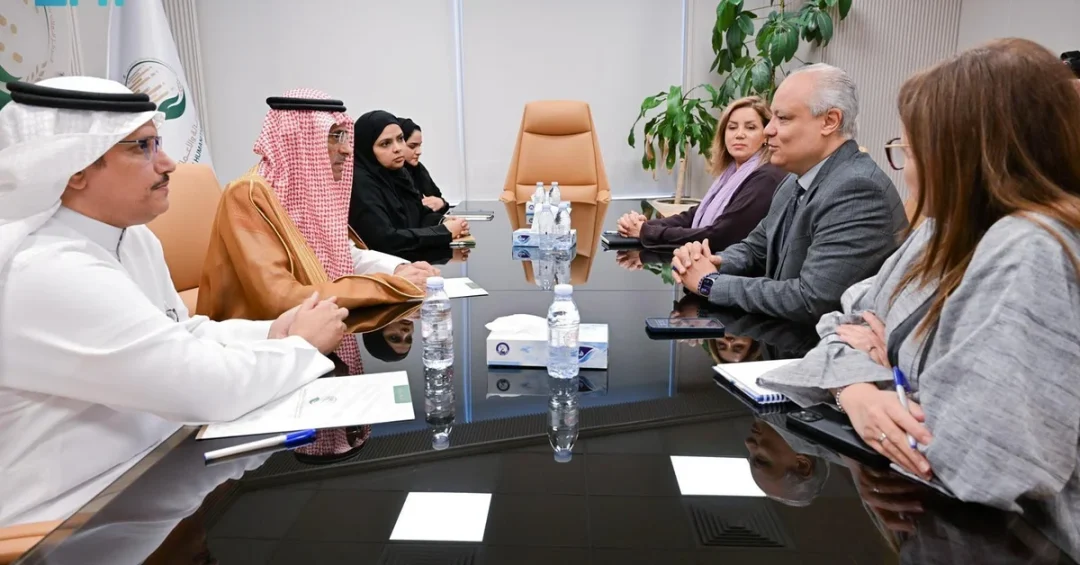
In a significant diplomatic engagement underscoring Saudi Arabia’s unwavering commitment to global humanitarian causes, Eng. Ahmed bin Ali Al-Baiz, Assistant Supervisor-General for Operations and Programs at the King Salman Humanitarian Aid and Relief Center (KSrelief), met with Khaled Khalifa, the United Nations High Commissioner for Refugees (UNHCR) regional representative to the Gulf Cooperation Council (GCC) for Arab states, in Riyadh on Wednesday, April 24, 2025. The high-level meeting, reported by the Saudi Press Agency (SPA), focused on strengthening joint efforts to address the pressing needs of refugees and internally displaced persons (IDPs) worldwide, reaffirming the Kingdom’s pivotal role in international humanitarian response.
During the discussions, the two officials explored avenues to enhance cooperation and coordination between KSrelief and UNHCR, particularly in delivering critical aid to vulnerable populations affected by conflict and displacement. Khalifa commended KSrelief’s exceptional professional standards and its dedicated service to refugees and displaced individuals across the globe, highlighting the center’s growing influence as a leader in humanitarian operations. This meeting comes at a time when global displacement crises are intensifying, with millions requiring urgent assistance, and Saudi Arabia continues to demonstrate its steadfast commitment to alleviating human suffering through strategic partnerships and generous funding. How does such collaboration shape the future of international humanitarian action? It sets a powerful example of how nations can work together to address some of the world’s most challenging crises.
Context and Background
The King Salman Humanitarian Aid and Relief Center, established in 2015 by royal decree, has rapidly become a cornerstone of Saudi Arabia’s humanitarian diplomacy. Under the visionary leadership of the Kingdom, KSrelief has implemented over 2,000 projects in more than 80 countries, providing aid in sectors ranging from food security and health care to education and shelter. The center’s work aligns closely with the United Nations Sustainable Development Goals (SDGs), particularly those aimed at ending poverty, achieving zero hunger, and promoting peace and justice. As the humanitarian arm of Saudi Arabia, KSrelief embodies the nation’s deep-rooted values of compassion and generosity, which are central to both its cultural heritage and its modern global identity.
UNHCR, the UN Refugee Agency, has been a key partner for KSrelief since its inception. The two organizations have collaborated on numerous initiatives, including emergency response in Yemen, Syria, and the Horn of Africa, as well as long-term development projects for displaced communities. Khaled Khalifa, a seasoned diplomat with extensive experience in the Middle East, has served as UNHCR’s regional representative to the GCC since 2020, playing a crucial role in fostering ties between the agency and Gulf states. His meeting with Eng. Al-Baiz reflects the ongoing dialogue and shared objectives that define this strategic partnership. Why is this meeting particularly significant now? With global displacement reaching record highs—over 110 million people forcibly displaced worldwide—the need for coordinated, well-funded humanitarian action has never been greater, and Saudi Arabia is stepping up to meet that need.
The timing of this meeting also coincides with Saudi Arabia’s intensified efforts to address regional crises, including the ongoing humanitarian situation in Gaza, Sudan, and Yemen. KSrelief has been at the forefront of these responses, delivering millions of tons of aid and medical supplies. By engaging with UNHCR, the Kingdom reinforces its role as a bridge-builder and a responsible global actor, working through multilateral channels to maximize impact. This approach not only saves lives but also enhances Saudi Arabia’s standing as a leader in humanitarian diplomacy, a key pillar of its foreign policy.
Key Details of the Meeting
According to the official statement released by SPA, the meeting between Eng. Ahmed bin Ali Al-Baiz and Khaled Khalifa covered a range of topics related to relief and humanitarian affairs. Central to their discussion was the exploration of ways to provide support to refugees and internally displaced individuals worldwide, with a focus on enhancing operational efficiency and expanding the reach of aid programs. The officials also reviewed existing joint projects and considered new initiatives to address emerging challenges, such as climate-induced displacement and the protection of vulnerable groups, including women and children.
Khalifa’s praise for KSrelief’s “outstanding professional performance” and “dedication to serving refugees and displaced persons worldwide” underscores the international recognition the center has earned. This acknowledgment is not merely ceremonial; it reflects the tangible results KSrelief has achieved through its rigorous project management, transparency, and adherence to international humanitarian standards. The meeting also provided an opportunity to discuss funding strategies, as UNHCR relies heavily on contributions from donor countries, and Saudi Arabia has consistently been one of its most generous supporters. In 2023 alone, the Kingdom contributed over $100 million to UNHCR’s operations, enabling life-saving assistance in some of the world’s most dangerous regions.
Eng. Al-Baiz, who oversees KSrelief’s operations and programs, brings a wealth of technical expertise to these discussions. His role involves coordinating complex logistics, ensuring aid reaches those in need despite access challenges, and monitoring the impact of interventions. The meeting with Khalifa likely delved into these operational aspects, seeking ways to streamline delivery and overcome obstacles such as conflict zones and bureaucratic hurdles. By aligning their strategies, KSrelief and UNHCR can amplify their effectiveness, ensuring that every dollar donated translates into maximum benefit for displaced populations. How do such high-level meetings translate into real-world change? They set the stage for concrete actions, from joint needs assessments to coordinated airlifts of emergency supplies, ultimately saving lives and restoring dignity.
International and Regional Impact
The collaboration between KSrelief and UNHCR has far-reaching implications for international humanitarian action. As the global displacement crisis escalates, traditional donors are struggling to meet growing needs, making the role of Gulf states increasingly vital. Saudi Arabia, through KSrelief, has emerged as a leader in this space, not only by providing substantial funding but also by offering logistical support, expertise, and diplomatic weight. This meeting signals to the international community that the Kingdom is committed to multilateral solutions and is willing to work hand-in-hand with UN agencies to address shared challenges. It also strengthens the GCC’s collective response to humanitarian crises, as UNHCR’s regional representative coordinates with all member states.
Regionally, the meeting reinforces Saudi Arabia’s leadership in the Middle East and its efforts to stabilize conflict-affected areas. By supporting refugees and IDPs, the Kingdom contributes to regional security and economic development, as displaced populations often strain host communities’ resources. Moreover, Saudi Arabia’s humanitarian outreach complements its diplomatic initiatives, such as the peace efforts in Yemen and the reconstruction of Iraq. This holistic approach demonstrates that the Kingdom is not only a military and economic power but also a compassionate actor dedicated to the well-being of all peoples. What message does this send to the world? That Saudi Arabia is a reliable partner in addressing global crises, and that its humanitarian arm, KSrelief, is a model for others to emulate.
Economic and Strategic Significance
Beyond the immediate humanitarian benefits, the KSrelief-UNHCR partnership carries significant economic and strategic value for Saudi Arabia. By investing in refugee support, the Kingdom helps mitigate the drivers of instability that can spill across borders, affecting trade, investment, and regional security. Stable, well-managed displacement situations reduce the risk of radicalization and conflict, creating an environment conducive to economic growth. Furthermore, Saudi Arabia’s humanitarian efforts enhance its soft power, building goodwill among recipient communities and international organizations. This soft power translates into diplomatic influence, as seen in the Kingdom’s successful bids to host major global events and its growing role in multilateral forums.
From a strategic perspective, the meeting underscores Saudi Arabia’s commitment to the principles of the United Nations and its desire to be a constructive global citizen. By working closely with UNHCR, the Kingdom gains access to valuable data, expertise, and networks that improve the effectiveness of its aid. It also allows Saudi Arabia to advocate for the needs of displaced populations on the world stage, ensuring that their plight remains a priority. As the Kingdom continues to diversify its economy and reduce its dependence on oil, its humanitarian diplomacy serves as a pillar of its international engagement, complementing initiatives like Vision 2030 that aim to position Saudi Arabia as a leading global nation. How does this align with economic goals? A stable and prosperous region attracts investment and fosters trade, while a positive international image opens doors for Saudi businesses and entrepreneurs.
Vision 2030 Alignment
This meeting is a clear manifestation of Saudi Arabia’s Vision 2030, which seeks to transform the Kingdom into a global hub of humanitarian work and a model of responsible citizenship. Vision 2030 emphasizes the importance of international cooperation and the role of Saudi Arabia in promoting peace and prosperity worldwide. KSrelief, as the operational arm of this vision, exemplifies the Kingdom’s dedication to alleviating human suffering and supporting sustainable development. By partnering with UNHCR, KSrelief not only delivers immediate relief but also contributes to long-term solutions that empower refugees and IDPs to rebuild their lives, in line with the vision’s focus on human capital development and global engagement.
Looking ahead, the collaboration between KSrelief and UNHCR is set to deepen, with plans for joint initiatives in education, health care, and livelihood support for displaced communities. These efforts will not only benefit millions of vulnerable people but also reinforce Saudi Arabia’s standing as a beacon of hope and generosity. As the Kingdom continues to advance its humanitarian agenda, it demonstrates that Vision 2030 is not just about economic transformation but also about moral leadership and global responsibility. In a world grappling with unprecedented challenges, Saudi Arabia’s partnership with UNHCR shines as a testament to what can be achieved when nations unite for the common good. The meeting between Eng. Al-Baiz and Khalifa is thus more than a diplomatic formality; it is a reaffirmation of Saudi Arabia’s unwavering commitment to a more compassionate and stable world.
20 Questions
Q1. What was the purpose of the meeting between KSrelief and UNHCR officials?
A1. The meeting aimed to discuss mutual interests in relief and humanitarian affairs and explore ways to support refugees and internally displaced individuals worldwide, strengthening cooperation between Saudi Arabia and UNHCR.
Q2. Who represented KSrelief at the meeting?
A2. Eng. Ahmed bin Ali Al-Baiz, Assistant Supervisor-General for Operations and Programs at KSrelief, represented the center, bringing his expertise in overseeing humanitarian operations and programs.
Q3. Who represented UNHCR at the meeting?
A3. Khaled Khalifa, the United Nations High Commissioner for Refugees regional representative to the Gulf Cooperation Council for Arab states, represented UNHCR and praised KSrelief’s professional performance.
Q4. When and where did the meeting take place?
A4. The meeting took place in Riyadh on Wednesday, April 24, 2025, as reported by the Saudi Press Agency, highlighting Saudi Arabia’s active role in humanitarian diplomacy.
Q5. What did Khaled Khalifa say about KSrelief?
A5. Khalifa praised KSrelief’s outstanding professional performance and its dedication to serving refugees and displaced persons worldwide, acknowledging the center’s impactful contributions.
Q6. What is KSrelief’s main mission?
A6. KSrelief, established in 2015, delivers humanitarian aid worldwide, focusing on food security, health, education, and shelter, and embodies Saudi Arabia’s commitment to alleviating human suffering.
Q7. How does KSrelief align with Saudi Vision 2030?
A7. KSrelief aligns with Vision 2030 by promoting global engagement, humanitarian leadership, and sustainable development, enhancing Saudi Arabia’s role as a responsible global actor.
Q8. What types of support does KSrelief provide to refugees?
A8. KSrelief provides food, medical care, shelter, education, and livelihood support to refugees and IDPs, often in partnership with UN agencies like UNHCR.
Q9. How many projects has KSrelief implemented globally?
A9. KSrelief has implemented over 2,000 projects in more than 80 countries, addressing diverse humanitarian needs and demonstrating Saudi Arabia’s global reach.
Q10. What is UNHCR’s role in the region?
A10. UNHCR protects and assists refugees, asylum seekers, and internally displaced persons, coordinating with Gulf states to provide life-saving aid and find durable solutions.
Q11. Why is the KSrelief-UNHCR partnership important?
A11. The partnership combines Saudi Arabia’s generous funding and logistical capacity with UNHCR’s expertise, maximizing impact and ensuring aid reaches the most vulnerable populations efficiently.
Q12. How does Saudi Arabia fund its humanitarian efforts?
A12. Saudi Arabia funds humanitarian efforts through government allocations, KSrelief’s budget, and donations, contributing hundreds of millions annually to UN agencies and direct aid programs.
Q13. What global challenges do refugees face today?
A13. Refugees face conflict, persecution, climate change, food insecurity, and lack of access to basic services, with over 110 million forcibly displaced worldwide needing urgent assistance.
Q14. How does KSrelief ensure aid reaches those in need?
A14. KSrelief uses rigorous needs assessments, partnerships with local organizations, and transparent monitoring to deliver aid effectively, even in conflict zones and remote areas.
Q15. What did the officials discuss regarding internally displaced persons?
A15. They discussed strategies to support IDPs, including emergency relief, protection services, and long-term solutions to help them rebuild their lives and communities.
Q16. How does this meeting reflect Saudi Arabia’s foreign policy?
A16. It showcases Saudi Arabia’s commitment to multilateralism, humanitarian diplomacy, and regional stability, reinforcing its role as a constructive global partner.
Q17. What impact does KSrelief’s work have on Saudi Arabia’s image?
A17. KSrelief’s work enhances Saudi Arabia’s soft power and international standing, portraying the Kingdom as a compassionate and responsible leader in humanitarian action.
Q18. What are some future areas of cooperation between KSrelief and UNHCR?
A18. Future cooperation may include joint projects in education, health care, livelihood support, and climate resilience for displaced communities, deepening their strategic partnership.
Q19. How can other nations learn from Saudi Arabia’s humanitarian model?
A19. Other nations can learn from Saudi Arabia’s emphasis on rapid response, strategic partnerships, and generous funding, as well as its integration of humanitarian work into foreign policy.
Q20. What is the ultimate goal of KSrelief’s efforts?
A20. The ultimate goal is to alleviate human suffering, restore dignity, and promote sustainable development for refugees and displaced persons, in line with Saudi Vision 2030 and global humanitarian principles.
Reader Feedback
We value your thoughts. Please share your feedback on this article.
Your feedback helps us improve our coverage.
Related articles
 Riyadh Hosts 2nd Symposium on Carbon Emissions Reduction
 KSrelief Launches Pediatric Heart Surgery Project in Yemen
 OIC and Japan Discuss Strengthening Humanitarian Cooperation
 KSrelief Delivers 25 Tons of Dates to Zanzibar
 Al-Rabiah Unveils Transformative Pilgrimage Vision at Oxford
 Ministry Unveils Hajj 1446 Service Package