


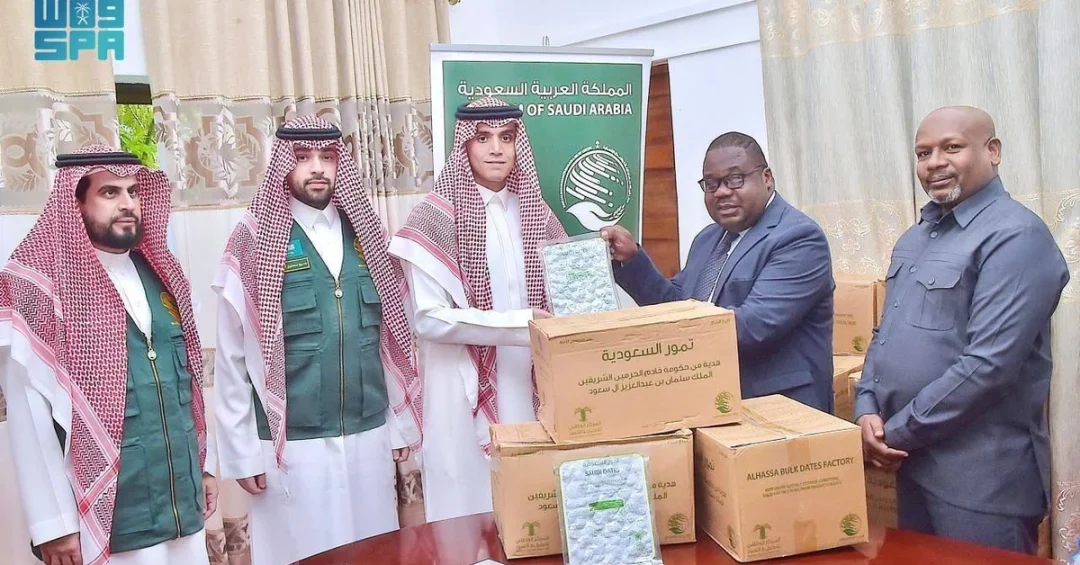
The King Salman Humanitarian Aid and Relief Center (KSrelief) delivered 25 tons of dates as a gift from the Kingdom of Saudi Arabia to Zanzibar, a semi-autonomous region of Tanzania, on Monday. The aid was formally presented on behalf of the center by Saudi Deputy Ambassador to Tanzania Abdullah Al-Qasha’ami to Minister of State for Presidential Palace Affairs Ali Suleiman, in the presence of a KSrelief team. This delivery is part of the ongoing humanitarian programs offered by the government of the Custodian of the Two Holy Mosques, King Salman bin Abdulaziz Al Saud, to brotherly and friendly countries for distribution to the neediest families around the world.
Does this act of generosity not reflect the deep-rooted values of compassion and solidarity that Saudi Arabia consistently demonstrates on the global stage? The gift of dates, a staple of Saudi hospitality and nutrition, symbolizes the Kingdom’s commitment to alleviating hardship and fostering goodwill. It arrives at a time when many communities in Zanzibar face food insecurity, exacerbated by economic challenges and climate variability. Through KSrelief, Saudi Arabia continues to extend a helping hand, reinforcing its role as a leading humanitarian donor and a steadfast partner to nations in need.
Context and Background
How did KSrelief become a cornerstone of Saudi Arabia’s international humanitarian efforts? Established in 2015 by royal decree, the King Salman Humanitarian Aid and Relief Center has since implemented over 2,500 projects in more than 90 countries, spanning food security, health, education, and emergency relief. Its mandate is to provide aid without discrimination, reflecting the Kingdom’s Islamic principles and humanitarian ethos. The center operates under the direct supervision of the Saudi government and collaborates with international organizations to ensure aid reaches the most vulnerable.
Zanzibar, a semi-autonomous archipelago within Tanzania, has historical and cultural ties to the Arabian Peninsula, dating back centuries through trade and Islamic scholarship. This shared heritage underpins the fraternal relations between Saudi Arabia and Zanzibar. In recent years, Saudi Arabia has deepened its engagement with African nations, recognizing the continent’s growing strategic importance. The delivery of dates is not an isolated gesture but part of a broader pattern of Saudi assistance to Tanzania and its islands, including food aid, medical supplies, and development projects.
What does this specific donation signify in the larger context of Saudi-African relations? It underscores the Kingdom’s soft power diplomacy, which prioritizes building bridges through humanitarian action. As Saudi Arabia pursues Vision 2030, its foreign policy emphasizes mutual cooperation and sustainable development. By supporting Zanzibar, Saudi Arabia not only addresses immediate needs but also strengthens people-to-people ties and lays the groundwork for future collaboration in trade, investment, and cultural exchange.
Key Details of the Delivery
The handover ceremony took place in Zanzibar on Monday, with Saudi Deputy Ambassador Abdullah Al-Qasha’ami representing KSrelief and Minister of State Ali Suleiman receiving the gift on behalf of the Zanzibari government. The 25 tons of dates were packaged for distribution to the neediest families across the region. The presence of a KSrelief team ensured that the transfer adhered to the center’s rigorous standards of transparency and efficiency. This delivery follows similar initiatives in other African countries, where dates have been a recurring item due to their nutritional value and cultural significance.
Why are dates chosen as a key component of Saudi aid? Dates are not only a traditional Saudi product but also a highly nutritious food that can be stored without refrigeration, making them ideal for humanitarian assistance. They provide essential vitamins, minerals, and energy, particularly important for children and vulnerable populations. Moreover, dates hold symbolic meaning in Islamic culture, often used to break fasts during Ramadan, and their distribution fosters a sense of shared tradition and respect.
The gift is part of the programs offered by the government of the Custodian of the Two Holy Mosques to brotherly and friendly countries. This phrase, frequently used in official Saudi statements, highlights the Kingdom’s dual commitment to Islamic solidarity and international friendship. It also reflects the personal dedication of King Salman and Crown Prince Mohammed bin Salman to humanitarian causes. The aid to Zanzibar is a concrete example of how Saudi Arabia translates its values into action, benefiting communities regardless of distance or politics.
International and Regional Impact
How does this delivery resonate beyond Zanzibar’s shores? It reinforces Saudi Arabia’s reputation as a reliable and generous global partner. In East Africa, where several countries grapple with food shortages, such aid demonstrates the Kingdom’s proactive role in mitigating crises. It also complements the efforts of international organizations like the World Food Programme, with which KSrelief frequently collaborates. By targeting Zanzibar, Saudi Arabia acknowledges the region’s unique needs and its potential as a gateway to broader East African markets.
Regionally, the gift strengthens the bond between Saudi Arabia and Tanzania, a key member of the East African Community. Tanzania has been a recipient of Saudi development assistance, including support for infrastructure and health projects. This latest donation could pave the way for expanded cooperation in agriculture, tourism, and energy. For Zanzibar, which relies heavily on tourism and imports, the dates provide immediate relief and signal international support, potentially attracting further investment and aid from other partners.
On the international stage, the delivery aligns with Saudi Arabia’s commitments to the United Nations Sustainable Development Goals, particularly Goal 2 (Zero Hunger) and Goal 17 (Partnerships for the Goals). It also showcases the Kingdom’s ability to conduct humanitarian diplomacy effectively, even amid global challenges. As nations strive to recover from the COVID-19 pandemic and economic downturns, Saudi Arabia’s consistent aid serves as a stabilizing force, promoting resilience and hope.
Economic and Strategic Significance
What economic and strategic advantages does this humanitarian gesture bring to Saudi Arabia? While the primary motivation is altruistic, such aid also enhances the Kingdom’s soft power and diplomatic leverage. It builds goodwill that can translate into support for Saudi initiatives in international forums, from trade agreements to cultural exchanges. In Africa, where competition for influence is intensifying among global powers, Saudi Arabia’s humanitarian footprint helps distinguish it as a benevolent partner focused on long-term development rather than short-term gains.
Furthermore, the aid program supports Saudi agricultural exports. Dates are a major Saudi product, and their inclusion in aid packages promotes awareness of Saudi quality and opens potential markets. This aligns with Vision 2030’s goal of diversifying the economy and boosting non-oil exports. By integrating humanitarian aid with economic diplomacy, Saudi Arabia creates a virtuous cycle: aid fosters goodwill, which in turn facilitates trade and investment, benefiting both the Kingdom and recipient nations.
Strategically, Zanzibar’s location off the East African coast makes it significant for maritime trade and regional stability. Saudi Arabia’s engagement there contributes to security and development, indirectly supporting global trade routes. Moreover, by assisting a semi-autonomous region, the Kingdom demonstrates respect for local governance and cultural identity, a nuanced approach that can serve as a model for other aid providers. This strategic depth underscores why the delivery of dates is more than just a charitable act; it is a calculated investment in a stable and prosperous future.
Vision 2030 Alignment
How does this initiative reflect the objectives of Saudi Vision 2030? Vision 2030, launched in 2016 by Crown Prince Mohammed bin Salman, aims to transform Saudi Arabia into a diversified, globally engaged economy and a hub of humanitarian leadership. One of its pillars is to strengthen the Kingdom’s role in international affairs through responsible and impactful contributions. KSrelief embodies this pillar by delivering aid efficiently and transparently, enhancing Saudi Arabia’s image as a force for good.
Additionally, Vision 2030 emphasizes the importance of partnerships and knowledge exchange. The date delivery to Zanzibar is a partnership in practice, addressing food security while fostering cultural and economic ties. It showcases Saudi Arabia’s commitment to the Sustainable Development Goals and its willingness to share its resources and expertise. As the Kingdom continues to implement Vision 2030, such humanitarian initiatives will remain integral, demonstrating that Saudi Arabia’s progress is intertwined with the well-being of the global community. Through KSrelief, the Kingdom not only aids those in need but also builds a legacy of compassion and cooperation that will endure for generations.
20 Questions
Q1. What is KSrelief and when was it established?
A1. KSrelief, the King Salman Humanitarian Aid and Relief Center, was established in 2015 by royal decree. It coordinates Saudi Arabia’s international humanitarian efforts, providing aid in food security, health, education, and emergency relief to over 90 countries.
Q2. How many tons of dates were delivered to Zanzibar?
A2. 25 tons of dates were delivered as a gift from Saudi Arabia to Zanzibar. This substantial quantity is intended for distribution to the neediest families across the semi-autonomous region of Tanzania.
Q3. Who presented the aid on behalf of Saudi Arabia?
A3. Saudi Deputy Ambassador to Tanzania Abdullah Al-Qasha’ami presented the aid on behalf of KSrelief. He handed over the gift to Minister of State for Presidential Palace Affairs Ali Suleiman in the presence of a KSrelief team.
Q4. Why are dates a common item in Saudi humanitarian aid?
A4. Dates are nutritious, easy to store, and culturally significant in Islamic tradition. They provide essential vitamins and energy, making them ideal for food assistance, especially in regions with limited resources.
Q5. What is the significance of Zanzibar receiving this gift?
A5. The gift strengthens historical and cultural ties between Saudi Arabia and Zanzibar. It addresses food insecurity and demonstrates Saudi Arabia’s commitment to supporting brotherly and friendly nations in need.
Q6. How does this delivery align with Saudi Arabia’s foreign policy?
A6. It reflects Saudi Arabia’s soft power diplomacy and humanitarian ethos. By aiding Zanzibar, the Kingdom reinforces its role as a global donor and builds goodwill, aligning with Vision 2030’s goal of international engagement.
Q7. What other countries have received similar date gifts from Saudi Arabia?
A7. Saudi Arabia has distributed dates to numerous countries worldwide, including Yemen, Sudan, Somalia, and Bangladesh. These gifts are part of ongoing programs to support food security in vulnerable communities.
Q8. How does KSrelief ensure aid reaches the neediest?
A8. KSrelief collaborates with local authorities and international partners to identify beneficiaries. It employs transparent distribution mechanisms and monitors projects to ensure aid reaches those most in need efficiently.
Q9. What is the historical relationship between Saudi Arabia and Zanzibar?
A9. Saudi Arabia and Zanzibar share centuries-old ties through trade, Islamic scholarship, and cultural exchange. Many Zanzibaris have studied in Saudi Arabia, and the regions maintain strong people-to-people connections.
Q10. How does this aid benefit Saudi Arabia’s economy?
A10. The aid promotes Saudi date exports and enhances the Kingdom’s reputation, potentially opening new markets. It supports Vision 2030’s economic diversification goals by showcasing Saudi products and fostering trade relationships.
Q11. What role does Crown Prince Mohammed bin Salman play in KSrelief?
A11. Crown Prince Mohammed bin Salman supports KSrelief as part of Vision 2030. His leadership emphasizes humanitarian action and global partnership, guiding the center’s mission to alleviate suffering worldwide.
Q12. How does this delivery impact regional stability in East Africa?
A12. By addressing food insecurity, the aid contributes to stability and resilience in Zanzibar. It strengthens Saudi-Tanzanian relations, promoting cooperation that can extend to security, trade, and development.
Q13. What are the nutritional benefits of dates?
A13. Dates are rich in fiber, potassium, and natural sugars, providing quick energy. They support digestive health and are a staple in many diets, especially in arid regions where fresh produce is scarce.
Q14. How does KSrelief coordinate with other international aid agencies?
A14. KSrelief partners with UN agencies like the World Food Programme and UNICEF, as well as local NGOs. These collaborations ensure coordinated responses and maximize the impact of aid deliveries.
Q15. What is the total value of Saudi humanitarian aid globally?
A15. Saudi Arabia has provided billions of dollars in humanitarian aid worldwide. KSrelief alone has implemented over 2,500 projects, making the Kingdom one of the largest donors globally.
Q16. How does this gift reflect Saudi Vision 2030?
A16. It embodies Vision 2030’s pillar of global engagement and humanitarian leadership. By aiding Zanzibar, Saudi Arabia demonstrates its commitment to sustainable development and international cooperation.
Q17. What challenges does Zanzibar face in food security?
A17. Zanzibar faces food insecurity due to limited arable land, climate change impacts, and economic constraints. Aid like this helps bridge gaps and support vulnerable populations.
Q18. How can other nations learn from Saudi Arabia’s aid model?
A18. Saudi Arabia’s model combines swift delivery, cultural sensitivity, and strategic partnerships. Other nations can emulate its focus on transparency, local collaboration, and linking aid with long-term development goals.
Q19. What future projects does KSrelief plan for Tanzania?
A19. KSrelief continues to assess needs in Tanzania and may expand projects in health, education, and food security. Future initiatives will align with Vision 2030 and Tanzania’s development priorities.
Q20. How can individuals or organizations support KSrelief’s mission?
A20. Individuals can donate through KSrelief’s official channels or partner with the center on humanitarian projects. Organizations can collaborate on aid delivery, leveraging KSrelief’s expertise and logistical network.
Reader Feedback
We value your thoughts. Please share your feedback on this article.
Your feedback helps us improve our coverage.
Related articles
 Al-Rabiah Unveils Transformative Pilgrimage Vision at Oxford
 Ministry Unveils Hajj 1446 Service Package
 KSrelief Team Performs 42 Surgeries in Damascus
 KSrelief Chief Visits Tunisian Hospital to Boost Health Ties
 Saudi Arabia Weather Forecast for Thursday: Rain and Dust Winds
 Saudi Green Building Forum Joins International Accreditation Forum