


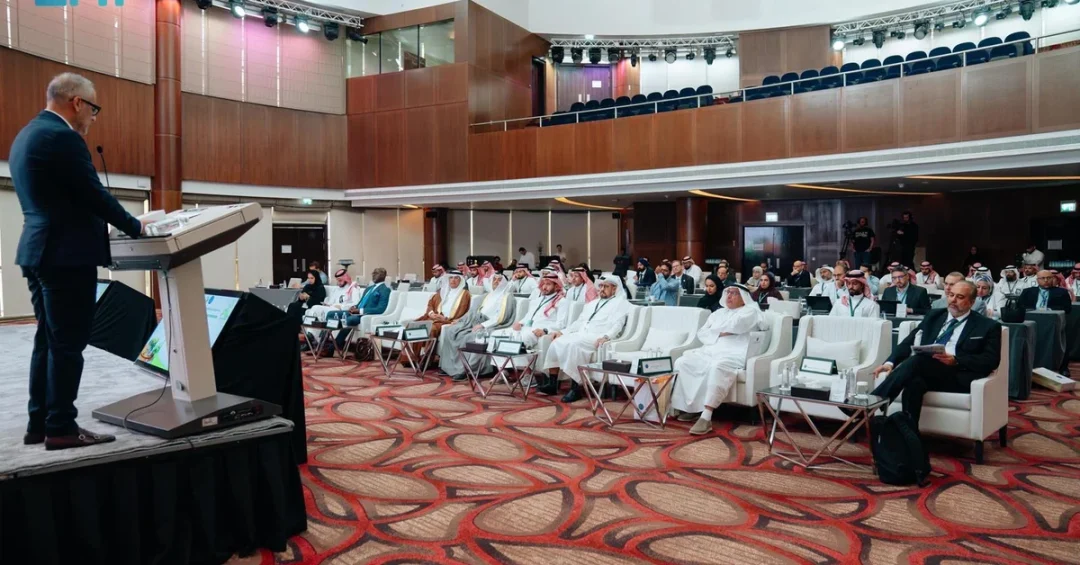
Riyadh hosted the second symposium on “Pathways to Reduce Carbon Emissions in the Petroleum Downstream Industries” on April 24, 2025, organized by the Organization of Arab Petroleum Exporting Countries (OAPEC) and sponsored by the Ministry of Energy. The event built on the success of the first edition held in Riyadh in 2024, bringing together nearly 140 experts and stakeholders from OAPEC member states, international organizations, and more than 15 global companies specializing in carbon emissions reduction technologies.
Have you ever wondered how the oil and gas industry can balance rising global energy demand with the urgent need to cut carbon emissions? This symposium provided a critical platform for answering that question, with 23 technical papers scheduled to explore the latest advancements in emissions reduction. The gathering underscored Saudi Arabia’s commitment to fostering international cooperation and driving sustainable development in the petroleum downstream sector, aligning with the Kingdom’s Vision 2030 goals of economic diversification and environmental stewardship. As the world seeks practical pathways to a lower-carbon future, Riyadh once again positioned itself as a hub for dialogue and innovation.
Context and Background
Why does a symposium focused on downstream petroleum emissions matter in the broader global energy conversation? The petroleum downstream industry—which includes refining, petrochemicals, distribution, and retail—is a vital link in the energy value chain, converting crude oil into everyday products from fuels to plastics. However, it is also a significant source of carbon emissions. OAPEC, an intergovernmental organization established in 1968 to promote cooperation in the petroleum industry among Arab states, has long recognized the need to address these environmental challenges. The first edition of this symposium, held in Riyadh in 2024, set the stage for ongoing dialogue and knowledge sharing. Its success demonstrated a clear appetite among member states and international partners for collaborative solutions. This second edition, therefore, did not start from scratch; it built on a foundation of prior discussions, research, and commitments. The Ministry of Energy’s sponsorship highlights the Kingdom’s proactive stance in supporting such initiatives, reflecting its dual role as a leading oil producer and a responsible global citizen. The symposium’s timing is also significant, as it comes amid heightened global scrutiny of emissions from all sectors and a growing consensus that technological innovation must play a central role in decarbonization.
The event attracted broad participation, including representatives from around 20 Arab and foreign countries. This diverse attendance—spanning government officials, industry experts, academics, and technology providers—underscored the shared recognition that carbon emissions reduction is a collective responsibility. It also highlighted OAPEC’s ability to convene stakeholders from across the energy spectrum, facilitating a exchange of ideas that is both practical and forward-looking. For Saudi Arabia, hosting such a gathering reinforces its position as a convenor of global energy dialogues, a role that aligns with its G20 leadership and its participation in international climate accords. The presence of more than 15 global companies specializing in emissions reduction technologies further enriched the discussions, offering tangible examples of how innovation can be deployed at scale.
Key Details
What exactly transpired during the symposium, and what were the key takeaways? The event was officially opened by Eng. Khalid Almehaid, Undersecretary for Sustainability and Climate Change at the Ministry of Energy. In his speech, Almehaid congratulated OAPEC’s General Secretariat on its recent developments and emphasized the importance of continued collaboration. He noted that the symposium reflects OAPEC’s commitment to advancing sustainable development in the oil and gas sectors while preserving the strategic role of hydrocarbon resources in meeting global energy demand. The 23 technical papers presented covered a wide range of topics, from carbon capture, utilization, and storage (CCUS) to energy efficiency improvements, renewable integration in refineries, and the development of low-carbon fuels. These papers were not merely theoretical; they showcased real-world case studies and cutting-edge research from OAPEC member states and international partners. For instance, several presentations focused on the potential of hydrogen as a clean fuel for downstream operations, while others explored the use of advanced catalysts to reduce emissions in petrochemical processes.
The participation of more than 15 global technology companies added a practical dimension to the proceedings. These companies demonstrated innovative solutions such as modular carbon capture units, digital monitoring systems for emissions tracking, and bio-based feedstocks for refineries. Their involvement signaled a growing market for emissions reduction technologies in the Arab world, creating opportunities for investment and partnerships. The symposium also facilitated networking among participants, with side meetings and informal discussions that could lead to future collaborations. OAPEC’s General Secretariat announced that the outcomes of the symposium would be compiled into a report to guide future activities and policy recommendations for member states. This systematic approach ensures that the knowledge shared in Riyadh will inform decision-making across the region.
International and Regional Impact
How does a symposium in Riyadh resonate beyond the Middle East? The event’s international participation—with attendees from around 20 Arab and foreign countries—demonstrates that the challenges of reducing carbon emissions in the downstream sector are universal. By bringing together diverse stakeholders, OAPEC and the Ministry of Energy facilitated a global exchange of best practices. This is particularly important as countries around the world grapple with the dual challenge of meeting energy needs and fulfilling climate commitments under the Paris Agreement. The symposium also reinforced South-South and North-South cooperation, with technology providers from Europe, Asia, and North America engaging with counterparts from the Arab world. Such collaborations can accelerate the deployment of emissions reduction technologies in regions where they are most needed.
Regionally, the symposium strengthened ties among OAPEC member states, which share similar economic structures and face comparable environmental pressures. The discussions paved the way for joint projects, such as shared carbon capture infrastructure and harmonized emissions standards. For Saudi Arabia, the event was another opportunity to exercise soft power and leadership. As the world’s largest oil exporter, the Kingdom has a unique responsibility and capability to drive change in the petroleum sector. By hosting and sponsoring the symposium, Saudi Arabia signaled that it is not merely reacting to global climate policies but actively shaping them. This proactive stance can help improve the industry’s image and build trust with international partners, investors, and environmental organizations.
Economic and Strategic Significance
What economic and strategic benefits does such an event bring? The symposium served as a catalyst for innovation and investment in emissions reduction technologies. For OAPEC member states, the adoption of these technologies can enhance the competitiveness of their downstream industries by lowering operational costs, reducing regulatory risks, and opening new markets for low-carbon products. The presence of global technology companies indicates a growing commercial interest in the region, which could lead to joint ventures, technology transfer, and job creation. Saudi Arabia, with its Vision 2030 agenda, is particularly well-positioned to capitalize on this trend. The Kingdom aims to diversify its economy away from oil dependence while maintaining its leadership in energy. By fostering a vibrant ecosystem for clean technology, Saudi Arabia can attract foreign investment, develop local talent, and export solutions to other regions.
Strategically, the symposium reinforces the concept of “energy transition with responsibility.” OAPEC and its member states advocate for a balanced approach that recognizes the continued role of hydrocarbons in the global energy mix while aggressively reducing their carbon footprint. This pragmatic philosophy is gaining traction internationally, as evidenced by the participation of diverse countries and organizations. The outcomes of the symposium—including the technical papers and recommendations—will likely influence policy frameworks and corporate strategies in the Arab world and beyond. For Saudi Arabia, this aligns with its broader efforts to position itself as a reliable energy partner and a leader in sustainability, as seen in initiatives like the Saudi Green Initiative and the Middle East Green Initiative.
Vision 2030 Alignment
How does this symposium align with Saudi Arabia’s Vision 2030? Vision 2030 is a comprehensive plan to diversify the Kingdom’s economy, improve quality of life, and enhance international cooperation. Environmental sustainability is a key pillar of this vision, with targets to reduce emissions, increase renewable energy use, and protect natural resources. The symposium directly supports these goals by promoting research, innovation, and collaboration in emissions reduction—areas where Saudi Arabia is investing heavily. The Ministry of Energy’s sponsorship underscores the government’s commitment to integrating sustainability into the petroleum sector, which remains a cornerstone of the economy. Moreover, the event showcases Saudi Arabia’s ability to host major international gatherings, a soft power asset that enhances its global standing.
In the long term, the knowledge and partnerships forged at the symposium can help Saudi Arabia achieve its ambition of becoming a leader in the circular carbon economy. This approach, endorsed by the G20 under Saudi presidency in 2020, focuses on reducing, reusing, recycling, and removing carbon emissions. By facilitating dialogues like this, the Kingdom is not only contributing to global climate efforts but also positioning its industries for a future where low-carbon products command a premium. As OAPEC continues to build on the symposium’s success, Saudi Arabia will remain at the forefront, demonstrating that economic growth and environmental stewardship can go hand in hand. The second symposium in Riyadh was more than a meeting; it was a step toward a more sustainable and prosperous future for the region and the world.
20 Questions
Q1. What was the purpose of the second symposium on carbon emissions reduction in Riyadh?
A1. The symposium aimed to discuss pathways to reduce carbon emissions in the petroleum downstream industries, building on the first edition in 2024. It brought together experts to share research and practical solutions.
Q2. Who organized the symposium?
A2. The symposium was organized by the Organization of Arab Petroleum Exporting Countries (OAPEC) and sponsored by the Saudi Ministry of Energy, reflecting a collaborative effort to address emissions in the oil and gas sector.
Q3. When and where did the symposium take place?
A3. It was held in Riyadh on April 24, 2025, continuing the tradition of hosting such important dialogues in the Saudi capital, a hub for energy discussions.
Q4. How many experts and stakeholders attended the symposium?
A4. Nearly 140 experts and stakeholders attended, representing OAPEC member states, international organizations, and more than 15 global companies specializing in emissions reduction technologies.
Q5. How many technical papers were presented?
A5. A total of 23 technical papers were scheduled, covering topics such as carbon capture, energy efficiency, and low-carbon fuels, showcasing the latest advancements in the field.
Q6. Who opened the symposium?
A6. Eng. Khalid Almehaid, Undersecretary for Sustainability and Climate Change at the Ministry of Energy, opened the symposium with a speech congratulating OAPEC’s General Secretariat on its recent developments.
Q7. What did Eng. Khalid Almehaid emphasize in his speech?
A7. He emphasized OAPEC’s commitment to sustainable development in oil and gas, the importance of Arab cooperation, and the need to preserve the strategic role of hydrocarbon resources in global energy.
Q8. Which countries participated in the symposium?
A8. Representatives from around 20 Arab and foreign countries participated, demonstrating broad international interest in reducing carbon emissions from downstream petroleum operations.
Q9. What role did global companies play?
A9. More than 15 global companies specializing in emissions reduction technologies participated, showcasing innovative solutions and fostering potential partnerships for deployment in the region.
Q10. What are some technologies discussed at the symposium?
A10. Technologies included carbon capture, utilization, and storage (CCUS), hydrogen as a clean fuel, advanced catalysts, and digital monitoring systems for emissions tracking.
Q11. How does this symposium benefit OAPEC member states?
A11. It facilitates knowledge sharing, joint projects, and harmonized standards, helping member states reduce emissions while maintaining the competitiveness of their petroleum industries.
Q12. What is the significance of the symposium for Saudi Arabia?
A12. It reinforces Saudi Arabia’s leadership in energy and sustainability, aligns with Vision 2030, and showcases the Kingdom’s ability to convene global stakeholders for constructive dialogue.
Q13. How does the symposium align with Vision 2030?
A13. Vision 2030 emphasizes economic diversification and environmental sustainability. The symposium supports these goals by promoting innovation and collaboration in emissions reduction within the petroleum sector.
Q14. What is the expected outcome of the symposium?
A14. The outcomes, including technical papers and recommendations, will be compiled into a report to guide future activities and policy recommendations for OAPEC member states.
Q15. Why is the downstream petroleum industry important to address?
A15. The downstream sector, including refining and petrochemicals, is a significant source of carbon emissions. Reducing its footprint is crucial for global climate efforts and industry sustainability.
Q16. How does the symposium promote international cooperation?
A16. By bringing together diverse stakeholders from around the world, it facilitates the exchange of best practices and fosters collaborations that can accelerate the deployment of emissions reduction technologies.
Q17. What is the role of the Ministry of Energy in this event?
A17. The Ministry of Energy sponsored the symposium, demonstrating Saudi Arabia’s commitment to supporting initiatives that advance sustainable development in the energy sector.
Q18. How does this event build on the first symposium?
A18. The second symposium builds on the success of the first edition held in Riyadh in 2024, expanding discussions and participation to further advance emissions reduction pathways.
Q19. What economic benefits can arise from emissions reduction technologies?
A19. They can lower operational costs, reduce regulatory risks, open new markets for low-carbon products, and attract investment, enhancing the competitiveness of the petroleum industry.
Q20. What is the long-term vision for OAPEC’s symposium series?
A20. The series aims to establish a continuous platform for dialogue and innovation, helping OAPEC member states and international partners achieve sustainable development in the oil and gas sectors.
Reader Feedback
We value your thoughts. Please share your feedback on this article.
Your feedback helps us improve our coverage.
Related articles
 KSrelief Launches Pediatric Heart Surgery Project in Yemen
 OIC and Japan Discuss Strengthening Humanitarian Cooperation
 KSrelief Delivers 25 Tons of Dates to Zanzibar
 Al-Rabiah Unveils Transformative Pilgrimage Vision at Oxford
 Ministry Unveils Hajj 1446 Service Package
 KSrelief Team Performs 42 Surgeries in Damascus