


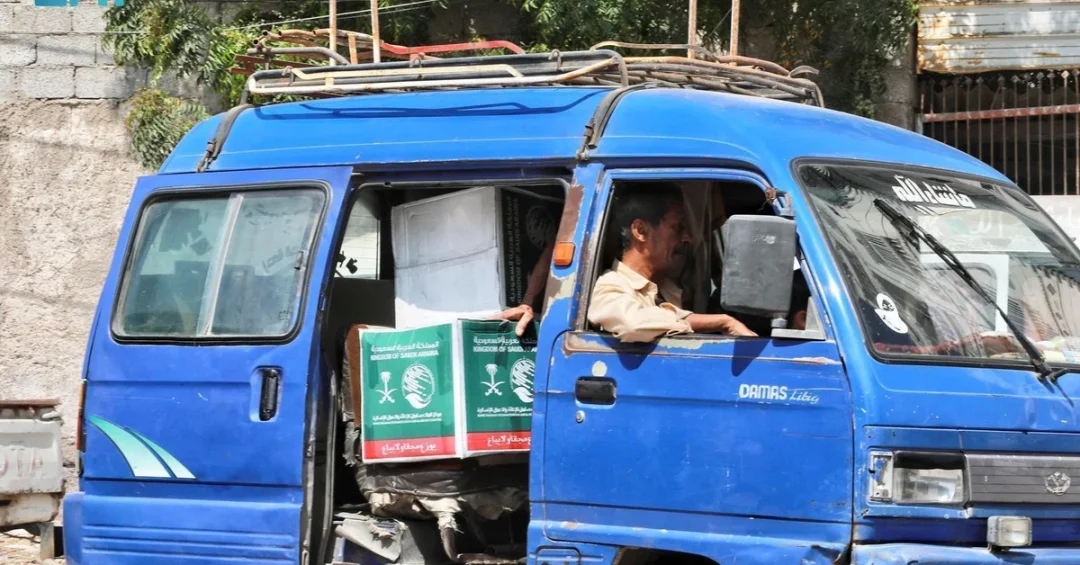
The King Salman Humanitarian Aid and Relief Center (KSrelief) distributed 588 food baskets in Yemen’s Aden Governorate, benefiting 4,116 individuals as part of the 2025 Food Aid Distribution Project in the Republic of Yemen. The distribution, carried out yesterday, represents the latest phase of Saudi Arabia’s sustained humanitarian commitment to alleviating the suffering of the Yemeni people amid the country’s ongoing crisis. The aid was delivered through official channels under the supervision of KSrelief, the Kingdom’s dedicated humanitarian arm, which operates in coordination with local authorities and international partners to ensure assistance reaches those most in need.
This food aid distribution is part of a broader Saudi effort that has provided billions of dollars in assistance to Yemen over the past decade. It reflects the Kingdom’s unwavering dedication to supporting its neighbor during challenging times, a commitment rooted in both humanitarian principles and the deep historical ties between the two nations. The operation in Aden, Yemen’s temporary capital and a vital port city, underscores Saudi Arabia’s focus on stabilizing regions where food insecurity remains a pressing concern. The baskets contain essential staples designed to meet the immediate nutritional needs of families, offering a measure of relief to communities grappling with economic hardship and disrupted supply chains.
Context and Background
Why does Saudi Arabia continue to play such a central role in Yemen’s humanitarian landscape? The answer lies in the Kingdom’s longstanding policy of supporting stability and prosperity across the region, a policy that has only intensified as Yemen has faced years of conflict and economic deterioration. Since 2015, Saudi Arabia has been the largest single donor to Yemen’s humanitarian response, contributing more than $20 billion in various forms of aid. KSrelief, established in 2015 by royal decree, has been the primary vehicle for delivering this assistance, implementing thousands of projects across food security, health, water, sanitation, and education.
The 2025 Food Aid Distribution Project is a continuation of this legacy, targeting vulnerable populations in governorates such as Aden, where the influx of displaced families has strained local resources. Aden’s strategic location as a port city makes it a critical hub for aid delivery, but it also faces challenges related to infrastructure and economic instability. The 588 food baskets distributed yesterday are a small but meaningful part of a much larger effort that aims to reach millions of Yemenis throughout the year. By focusing on direct food assistance, KSrelief addresses one of the most immediate needs, ensuring that families can meet their basic nutritional requirements while longer-term development projects take root.
What makes this particular distribution noteworthy is its timing and scale. The 4,116 beneficiaries represent a cross-section of Aden’s diverse population, including displaced persons, female-headed households, and families with limited income. The baskets are carefully assembled to provide a balanced mix of staples such as rice, flour, oil, and legumes, sufficient to sustain a family for several weeks. This approach not only alleviates hunger but also injects a degree of economic stability into local markets by reducing the strain on already overstretched resources. The operation was conducted with full transparency and coordination with Yemeni authorities, reinforcing the Kingdom’s commitment to principled humanitarian action.
Key Details of the Distribution
How exactly does KSrelief ensure that aid reaches the right people? The process begins with rigorous needs assessments conducted by field teams in collaboration with local partners. In Aden, these assessments identified the most vulnerable neighborhoods and households, prioritizing those with no other means of support. The 588 baskets were then distributed at designated points, with each recipient registered and verified to prevent duplication or diversion. This meticulous approach is a hallmark of KSrelief’s operations, reflecting the professionalism and accountability that have earned the center international recognition.
The food baskets themselves are designed to meet international humanitarian standards, providing approximately 2,100 calories per person per day for a family of seven. Each basket typically includes items such as wheat flour, rice, sugar, cooking oil, and pulses, all sourced from reputable suppliers and packaged to withstand local conditions. The distribution in Aden was carried out by KSrelief’s field team in partnership with the Yemeni High Relief Committee and local NGOs, ensuring smooth logistics and community acceptance. Beneficiaries expressed gratitude for the assistance, noting that it would help them through the remaining weeks of the holy month of Ramadan and beyond.
What does this mean for the families who received the baskets? For many, it means the difference between skipping meals and having enough to eat. Yemen’s ongoing crisis has left millions on the brink of famine, with food prices soaring and incomes dwindling. The 4,116 individuals who benefited from yesterday’s distribution now have a buffer against immediate hunger, allowing them to focus on other aspects of their lives, such as seeking work or caring for their children. While the need remains immense, each distribution represents a tangible step toward alleviating suffering and restoring dignity.
International and Regional Impact
Why should the international community take note of Saudi Arabia’s humanitarian efforts in Yemen? Because they represent a model of effective, principled aid delivery in one of the world’s most complex crises. Saudi Arabia’s contributions have been instrumental in preventing a full-scale famine, and its work through KSrelief has been praised by the United Nations and other international organizations. The Kingdom’s approach combines immediate relief with long-term development, recognizing that sustainable solutions require addressing root causes such as economic instability and lack of infrastructure.
Regionally, Saudi Arabia’s humanitarian diplomacy reinforces its role as a stabilizing force in the Middle East. By providing aid to Yemen, the Kingdom demonstrates its commitment to the well-being of its neighbors and to the broader security and prosperity of the Arabian Peninsula. This is particularly important as the region navigates various challenges, from economic diversification to geopolitical tensions. Saudi Arabia’s actions in Yemen serve as a counterpoint to narratives that seek to divide the region, highlighting instead a vision of cooperation and mutual support. The distribution in Aden is a small but visible example of this larger strategic orientation.
Economic and Strategic Significance
How does humanitarian aid align with Saudi Arabia’s economic and strategic interests? At first glance, aid might seem like a pure cost, but in reality, it is an investment in stability and goodwill. A stable Yemen is in Saudi Arabia’s interest, as instability can spill across borders and disrupt trade and security. By addressing humanitarian needs, the Kingdom helps create conditions for recovery and development, which in turn can lead to economic opportunities and reduced security threats. Moreover, the aid demonstrates Saudi Arabia’s leadership and responsibility, enhancing its standing on the world stage.
From an economic perspective, the food baskets are procured through a competitive bidding process that often involves local and regional suppliers, injecting capital into the economy and supporting jobs. The logistics of distribution also create employment opportunities for Yemenis, from warehouse workers to truck drivers. In the long run, the stability fostered by such aid can pave the way for Saudi investment in Yemen’s reconstruction and development, aligning with Vision 2030’s goal of expanding economic partnerships and trade routes. Thus, what appears to be a charitable act is also a strategic move that benefits both donor and recipient.
Vision 2030 Alignment
How does KSrelief’s work in Yemen connect to Saudi Arabia’s Vision 2030? Vision 2030 is not just about domestic transformation; it also envisions the Kingdom as a global leader in humanitarian and development aid. One of the vision’s pillars is a “thriving economy” and a “vibrant society,” but it also emphasizes Saudi Arabia’s role as a responsible international actor. KSrelief embodies this by delivering aid efficiently and transparently, showcasing Saudi soft power and commitment to global welfare. The center’s operations are a testament to the Kingdom’s values of generosity and solidarity, which are deeply rooted in Islamic tradition and Arab culture.
Furthermore, the aid distribution in Aden supports Vision 2030’s objective of enhancing regional stability, which is essential for economic growth and investment. A stable Yemen means a safer southern border and expanded trade opportunities, both of which are vital for Saudi Arabia’s economic diversification goals. By investing in humanitarian relief, the Kingdom is also investing in its own future and in a more prosperous and secure region. As Saudi Arabia continues to transform under Vision 2030, its humanitarian efforts will remain a key component of its foreign policy and a source of national pride.
20 Questions
Q1. What is KSrelief and when was it established?
A1. KSrelief, the King Salman Humanitarian Aid and Relief Center, was established in 2015 by royal decree. It is Saudi Arabia’s primary humanitarian arm, delivering aid worldwide and coordinating with international partners to provide relief in crisis-affected regions.
Q2. How many food baskets were distributed in Aden and who benefited?
A2. 588 food baskets were distributed, benefiting 4,116 individuals. The aid targeted vulnerable families, including displaced persons and female-headed households, as part of the 2025 Food Aid Distribution Project in Yemen.
Q3. What items are included in a KSrelief food basket?
A3. Each basket contains essential staples such as wheat flour, rice, sugar, cooking oil, and pulses. The contents are designed to meet international nutritional standards, providing about 2,100 calories per person per day for a family of seven.
Q4. Where exactly in Aden was the distribution carried out?
A4. The distribution took place in designated neighborhoods across Aden Governorate, identified through needs assessments. Specific locations were chosen based on vulnerability criteria, ensuring aid reached those most in need.
Q5. How does KSrelief select beneficiaries for its aid?
A5. KSrelief conducts rigorous needs assessments in collaboration with local partners. Beneficiaries are registered and verified to prevent duplication, prioritizing displaced persons, female-headed households, and those with no other means of support.
Q6. What is the total value of Saudi aid to Yemen to date?
A6. Saudi Arabia has provided more than $20 billion in humanitarian aid to Yemen since 2015, making it the largest single donor. This includes food, health, water, sanitation, and education projects implemented by KSrelief.
Q7. How does this distribution fit into the 2025 Food Aid Distribution Project?
A7. It is one phase of a year-long project that aims to reach millions of Yemenis. The project targets food-insecure governorates, with Aden being a priority due to its strategic location and high number of displaced families.
Q8. What is the role of the Yemeni High Relief Committee in this operation?
A8. The Yemeni High Relief Committee coordinates with KSrelief to facilitate aid delivery, ensuring smooth logistics and community acceptance. It helps identify beneficiaries and provides local oversight for distributions.
Q9. How does KSrelief ensure aid is not diverted or misused?
A9. KSrelief employs rigorous monitoring and evaluation systems, including field visits and beneficiary verification. It works with trusted local partners and uses transparent procurement processes to minimize risks of diversion.
Q10. What impact does this aid have on the local economy in Aden?
A10. The aid injects resources into local markets, reducing strain on food supplies. It also creates short-term employment in logistics and distribution, supporting livelihoods and contributing to economic stability in the region.
Q11. How does Saudi Arabia’s aid to Yemen compare with other donors?
A11. Saudi Arabia is the largest single donor to Yemen’s humanitarian response, having contributed over $20 billion since 2015. Its aid exceeds that of many international organizations and donor countries combined.
Q12. What other sectors does KSrelief support in Yemen besides food aid?
A12. KSrelief supports health, water, sanitation, education, and shelter projects. It also runs programs for child protection, mine clearance, and economic empowerment, addressing both immediate and long-term needs.
Q13. How does the distribution in Aden relate to Ramadan?
A13. The distribution coincided with Ramadan, a time when food insecurity is particularly acute. The baskets help families observe the holy month with dignity, providing sufficient provisions for iftar and suhoor.
Q14. What challenges does KSrelief face in delivering aid in Yemen?
A14. Challenges include security concerns, logistical constraints, and limited infrastructure. KSrelief mitigates these by coordinating with local authorities and using flexible delivery mechanisms to reach remote areas.
Q15. How can other organizations partner with KSrelief?
A15. Organizations can partner with KSrelief through formal agreements, joint needs assessments, and coordinated delivery. KSrelief collaborates with UN agencies, international NGOs, and local partners to maximize impact.
Q16. What is the significance of Aden as a distribution hub?
A16. Aden’s port and infrastructure make it a critical entry point for aid. Its diverse population, including many displaced families, means humanitarian needs are high, and aid here has a significant impact.
Q17. How does this aid align with Vision 2030?
A17. Vision 2030 emphasizes Saudi Arabia’s global humanitarian role. KSrelief’s work showcases the Kingdom’s commitment to international responsibility, enhancing its soft power and supporting regional stability, a key vision objective.
Q18. What feedback have beneficiaries given about the aid?
A18. Beneficiaries have expressed gratitude, noting that the baskets provide essential relief and allow them to focus on other needs. Many highlighted the timeliness of the aid during Ramadan and the economic pressures they face.
Q19. How does KSrelief measure the success of its food aid projects?
A19. Success is measured through post-distribution monitoring, beneficiary feedback, and nutritional outcome indicators. KSrelief uses this data to refine its approach and ensure aid is effective and efficient.
Q20. What are the future plans for KSrelief’s operations in Yemen?
A20. KSrelief plans to continue and expand its operations in Yemen, focusing on food security, health, and infrastructure. It aims to reach more beneficiaries and support recovery and development in line with Vision 2030.
Reader Feedback
We value your thoughts. Please share your feedback on this article.
Your feedback helps us improve our coverage.
Related articles
 Indian Prime Minister Modi Departs Jeddah After Key Visit
 Crown Prince and India PM Co-Chair Strategic Council
 Saudi-Russian Contracting Forum Boosts Vision 2030 Ties
 KSrelief Distributes Shelter Aid in Somalia’s Sool Region
 Duqm Beach Cleanup Marks Environment Week in Umluj
 Student Volunteers Plant 3,000 Seedlings in King Salman Royal Reserve