


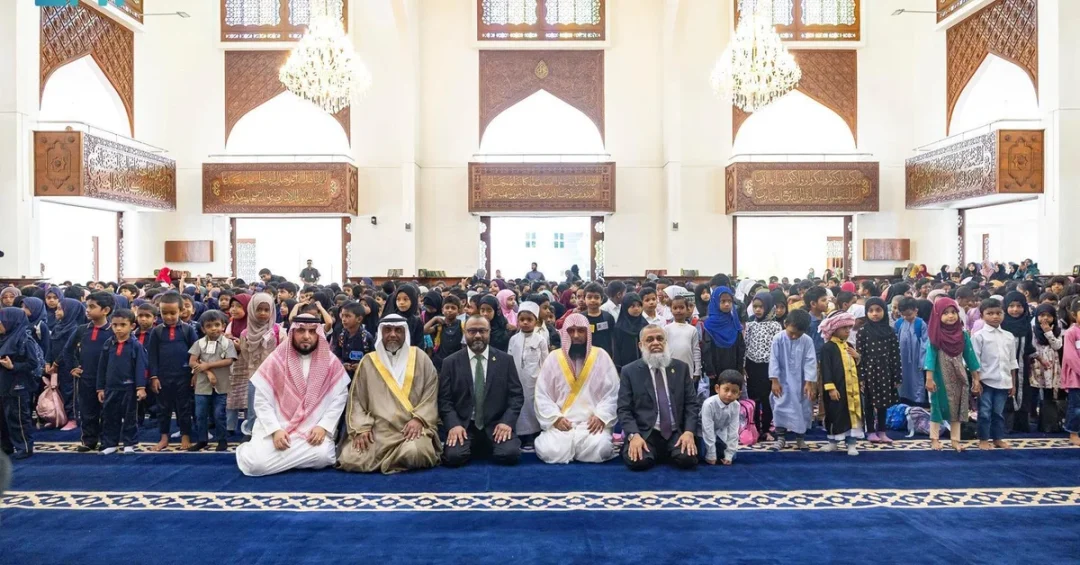
Sheikh Dr. Salah bin Muhammad Al-Budair, imam and khatib of the Prophet’s Mosque in Madinah, visited the Islamic Center in Malé, the capital of the Republic of Maldives, on Tuesday, April 23, 2025, as part of an official program of international visits by the imams of the Two Holy Mosques. The visit was organized by the Ministry of Islamic Affairs, Dawah, and Guidance of the Kingdom of Saudi Arabia and was conducted alongside Dr. Mohamed Shaheem Ali Saeed, Minister of Islamic Affairs of the Republic of Maldives. The engagement underscores the Kingdom’s enduring commitment to serving Islam and Muslims worldwide, a priority that has been consistently emphasized by the leadership of Saudi Arabia under the guidance of the Custodian of the Two Holy Mosques, King Salman bin Abdulaziz Al Saud, and His Royal Highness Crown Prince Mohammed bin Salman. How does such a visit strengthen the spiritual and cultural ties between Saudi Arabia and the global Muslim community?
The program of visits by the imams of the Two Holy Mosques is a flagship initiative of the Ministry of Islamic Affairs, Dawah, and Guidance, designed to foster dialogue, promote moderate Islam, and reinforce the bonds of faith that unite Muslims across continents. Sheikh Al-Budair’s visit to the Maldives is a testament to the Kingdom’s ongoing efforts to extend its religious and cultural outreach beyond its borders, aligning with the principles of Vision 2030, which seeks to enhance Saudi Arabia’s global role and soft power. The visit included a ceremony at the Sultan Muhammad Thakurufaanu Mosque, where the grand imam of Sheikh Muhammad Latheef Mosque delivered a speech expressing gratitude to the Saudi leadership for its care and attention to Muslims around the world. What does this level of engagement reveal about Saudi Arabia’s approach to international Islamic cooperation?
Context and Background
The relationship between the Kingdom of Saudi Arabia and the Republic of Maldives is deeply rooted in shared Islamic values and a history of mutual support. The Maldives, an archipelago nation in the Indian Ocean with a predominantly Muslim population, has long benefited from Saudi Arabia’s generous assistance in various sectors, particularly in the development of Islamic infrastructure. The Islamic Center in Malé, established four decades ago with the support of the late King Fahd bin Abdulaziz Al Saud, stands as a enduring symbol of this partnership. The King Salman bin Abdulaziz Mosque in the capital further exemplifies the Kingdom’s commitment to supporting Muslim communities and promoting religious harmony. How does this historical backdrop inform the current dynamics of Saudi-Maldivian relations?
The program of visits by the imams of the Two Holy Mosques is part of a broader strategy by the Ministry of Islamic Affairs, Dawah, and Guidance to strengthen ties with Islamic institutions worldwide. By facilitating visits of prominent religious figures such as Sheikh Al-Budair, the Kingdom aims to share its experience in promoting moderate Islam, countering extremism, and fostering a culture of peace and tolerance. These visits also provide an opportunity for exchanging knowledge and best practices in religious affairs, benefiting both Saudi Arabia and its partner nations. In the case of the Maldives, the visit highlights the Kingdom’s role as a reliable partner in supporting the spiritual and educational needs of Muslim communities. What can other nations learn from this model of religious diplomacy?
Sheikh Dr. Salah bin Muhammad Al-Budair is a respected scholar and preacher known for his moderate and inclusive approach to Islamic teachings. His participation in the visit program reflects the Kingdom’s commitment to projecting a positive image of Islam that emphasizes compassion, coexistence, and respect for diversity. The Maldives’ Minister of Islamic Affairs, Dr. Mohamed Shaheem Ali Saeed, has been a vocal advocate for religious moderation and has collaborated closely with Saudi Arabia on various initiatives. The synergy between the two officials underscores the shared vision of promoting Islam as a religion of peace and a source of guidance for contemporary challenges. How does the involvement of such high-profile figures enhance the impact of these visits?
Key Details of the Visit
During the visit, Sheikh Al-Budair and Minister Dr. Mohamed Shaheem Ali Saeed toured the Islamic Center and the Sultan Muhammad Thakurufaanu Mosque, where a formal ceremony was held. The grand imam of Sheikh Muhammad Latheef Mosque delivered a speech in which he expressed profound gratitude to the leadership of Saudi Arabia for its unwavering support to Muslims globally. He specifically praised the Ministry of Islamic Affairs, Dawah, and Guidance for organizing the visit and commended Sheikh Al-Budair for his efforts to strengthen religious ties. The ceremony was attended by numerous dignitaries, scholars, and members of the Maldivian Muslim community, reflecting the significance of the occasion. What does the enthusiastic participation of local leaders indicate about the reception of Saudi Arabia’s outreach efforts?
In a visual presentation that followed, Minister Dr. Mohamed Shaheem Ali Saeed highlighted the extensive support provided by the Kingdom to the Maldives, describing Saudi Arabia as the country’s greatest supporter across various sectors, particularly in serving Islam and Muslims. He pointed to the King Salman bin Abdulaziz Mosque in Malé as a strong symbol of the Islamic bonds between the two nations and a testament to the Kingdom’s ongoing commitment to supporting Muslim communities. The minister also noted that the Islamic Center was established four decades ago with the support of the late King Fahd bin Abdulaziz Al Saud, underscoring the long-standing nature of Saudi-Maldivian cooperation. How does such recognition reinforce the Kingdom’s reputation as a global leader in Islamic affairs?
Sheikh Al-Budair, in his address, praised the Kingdom’s efforts and support for the Republic of Maldives through various projects. He emphasized the role of the Ministry of Islamic Affairs, Dawah, and Guidance in strengthening cooperation between the two ministries in a way that benefits Muslims in the Maldives. He also highlighted the importance of continuing such exchanges to promote moderate Islam and to address the challenges facing the Muslim ummah. The visit concluded with prayers for the continued prosperity and unity of the Islamic world. What are the long-term benefits of these sustained engagements for both nations?
International and Regional Impact
The visit of Sheikh Al-Budair to the Maldives is part of a series of international visits by the imams of the Two Holy Mosques, which have taken them to various countries across Asia, Africa, and Europe. These visits are instrumental in projecting Saudi Arabia’s soft power and in reinforcing its role as the custodian of Islam’s holiest sites. They also serve to counter extremist narratives by promoting the Kingdom’s moderate and inclusive interpretation of Islam. In the broader regional context, such initiatives contribute to stability and cooperation among Muslim-majority nations, fostering a sense of unity and shared purpose. How do these visits align with Saudi Arabia’s strategic objectives in the Indian Ocean region?
The Maldives, located at the crossroads of major maritime routes, holds strategic importance for Saudi Arabia’s engagement with South Asia and the Indian Ocean. By strengthening ties with the Maldives, the Kingdom not only supports a fellow Muslim nation but also enhances its diplomatic footprint in a region of growing geopolitical significance. The visit also underscores Saudi Arabia’s commitment to supporting small island states and to addressing their unique challenges, including climate change and sustainable development. Through religious diplomacy, the Kingdom builds bridges that extend beyond the spiritual realm to encompass economic, cultural, and educational cooperation. What role can religious diplomacy play in addressing contemporary global challenges?
Economic and Strategic Significance
While the visit is primarily religious and cultural in nature, it carries significant economic and strategic undertones. Saudi Arabia’s support for the Maldives extends to infrastructure development, education, and healthcare, areas that are critical for the island nation’s sustainable growth. The King Salman bin Abdulaziz Mosque and the Islamic Center are not only places of worship but also community hubs that provide educational and social services. By investing in such institutions, the Kingdom contributes to the human development of the Maldives and fosters goodwill that translates into broader bilateral cooperation. How does this holistic approach to partnership benefit both Saudi Arabia and its allies?
Furthermore, the visit reinforces the Kingdom’s position as a leader in the Islamic world and a key player in international affairs. It aligns with Vision 2030’s goal of enhancing Saudi Arabia’s global engagement and promoting its image as a modern, forward-looking nation that values its heritage while embracing progress. The Ministry of Islamic Affairs, Dawah, and Guidance plays a pivotal role in this endeavor by organizing visits, facilitating exchanges, and implementing programs that showcase the Kingdom’s moderate and tolerant interpretation of Islam. What does this say about the intersection of religion and foreign policy in Saudi Arabia’s strategic vision?
Vision 2030 Alignment
The visit of Sheikh Dr. Salah bin Muhammad Al-Budair to the Maldives is a clear manifestation of Saudi Arabia’s Vision 2030, which seeks to diversify the Kingdom’s economy, enhance its global influence, and promote moderate Islam. Under the leadership of Crown Prince Mohammed bin Salman, Saudi Arabia has prioritized international outreach and religious diplomacy as tools for building bridges and fostering mutual understanding. The program of visits by the imams of the Two Holy Mosques is a key component of this strategy, as it leverages the Kingdom’s spiritual stature to strengthen ties with Muslim communities worldwide. How does this initiative contribute to the realization of Vision 2030’s objectives?
By supporting Islamic institutions and promoting religious moderation, Saudi Arabia not only fulfills its duty as the custodian of the Two Holy Mosques but also positions itself as a beacon of stability and progress in the Muslim world. The Maldives visit exemplifies how the Kingdom’s religious outreach can yield tangible benefits in terms of goodwill, cooperation, and shared prosperity. As Vision 2030 continues to unfold, such initiatives will remain central to Saudi Arabia’s efforts to build a more connected and harmonious world. What legacy will these efforts leave for future generations of Muslims?
20 Questions
Q1. Who visited the Islamic Center in Malé, Maldives?
A1. Sheikh Dr. Salah bin Muhammad Al-Budair, the imam and khatib of the Prophet’s Mosque, visited the Islamic Center in Malé, Maldives, on Tuesday, April 23, 2025.
Q2. Which Saudi ministry organized the visit?
A2. The visit was organized by the Ministry of Islamic Affairs, Dawah, and Guidance as part of its program of visits by the imams of the Two Holy Mosques.
Q3. Who accompanied Sheikh Al-Budair during the visit?
A3. He was accompanied by Dr. Mohamed Shaheem Ali Saeed, the Minister of Islamic Affairs of the Republic of Maldives.
Q4. What was the purpose of the visit?
A4. The visit aimed to strengthen Islamic cooperation, promote moderate Islam, and reinforce the bonds between Saudi Arabia and the Maldives.
Q5. Which mosque hosted the ceremony during the visit?
A5. The ceremony was held at the Sultan Muhammad Thakurufaanu Mosque in Malé.
Q6. Who delivered a speech at the ceremony?
A6. The grand imam of Sheikh Muhammad Latheef Mosque delivered a speech expressing gratitude to the Saudi leadership for its support to Muslims worldwide.
Q7. What did the Maldivian minister highlight in his presentation?
A7. He highlighted Saudi Arabia’s extensive support to the Maldives, describing it as the country’s greatest supporter, especially in serving Islam and Muslims.
Q8. Which mosque in Malé symbolizes Saudi-Maldivian Islamic bonds?
A8. The King Salman bin Abdulaziz Mosque in Malé stands as a strong symbol of the Islamic bonds between the two countries.
Q9. When was the Islamic Center in Malé established?
A9. The Islamic Center was established four decades ago with the support of the late King Fahd bin Abdulaziz Al Saud.
Q10. What did Sheikh Al-Budair praise in his speech?
A10. He praised the Kingdom’s efforts and support for the Maldives through various projects and emphasized the role of the Ministry of Islamic Affairs in strengthening cooperation.
Q11. What is the program of visits by the imams of the Two Holy Mosques?
A11. It is an initiative by the Saudi Ministry of Islamic Affairs, Dawah, and Guidance to send imams of the Two Holy Mosques on international visits to promote moderate Islam and foster ties.
Q12. How does this visit align with Vision 2030?
A12. It aligns with Vision 2030 by enhancing Saudi Arabia’s global engagement, promoting moderate Islam, and strengthening international partnerships.
Q13. What is the significance of the King Salman bin Abdulaziz Mosque?
A13. It represents Saudi Arabia’s ongoing commitment to supporting Muslim communities and serves as a symbol of the strong ties between Saudi Arabia and the Maldives.
Q14. Who is Dr. Mohamed Shaheem Ali Saeed?
A14. He is the Minister of Islamic Affairs of the Republic of Maldives and a key partner in strengthening religious cooperation with Saudi Arabia.
Q15. What role does the Ministry of Islamic Affairs, Dawah, and Guidance play?
A15. It organizes visits, facilitates exchanges, and implements programs that showcase Saudi Arabia’s moderate and tolerant interpretation of Islam.
Q16. How does the visit impact the Maldivian Muslim community?
A16. It strengthens their spiritual ties with the Two Holy Mosques, provides opportunities for learning, and reinforces the message of moderate Islam.
Q17. What other sectors does Saudi Arabia support in the Maldives?
A17. Saudi Arabia supports the Maldives in various sectors, including infrastructure, education, healthcare, and religious affairs, contributing to sustainable development.
Q18. What is the broader significance of such visits?
A18. They project Saudi Arabia’s soft power, counter extremism, and promote unity and cooperation among Muslim-majority nations.
Q19. How does this visit reflect Saudi Arabia’s leadership in the Islamic world?
A19. It demonstrates the Kingdom’s commitment to serving Islam and Muslims globally, reinforcing its role as a leader and custodian of the Two Holy Mosques.
Q20. What message does this visit convey to the international community?
A20. It conveys Saudi Arabia’s dedication to peace, moderation, and international cooperation, aligned with the principles of Vision 2030 and the values of Islam.
Reader Feedback
We value your thoughts. Please share your feedback on this article.
Your feedback helps us improve our coverage.
Related articles
 CODE Launches Tech Founders Program to Globalize Startups
 KSrelief Meets UNHCR to Boost Refugee Support
 Riyadh Hosts 2nd Symposium on Carbon Emissions Reduction
 KSrelief Launches Pediatric Heart Surgery Project in Yemen
 OIC and Japan Discuss Strengthening Humanitarian Cooperation
 KSrelief Delivers 25 Tons of Dates to Zanzibar