


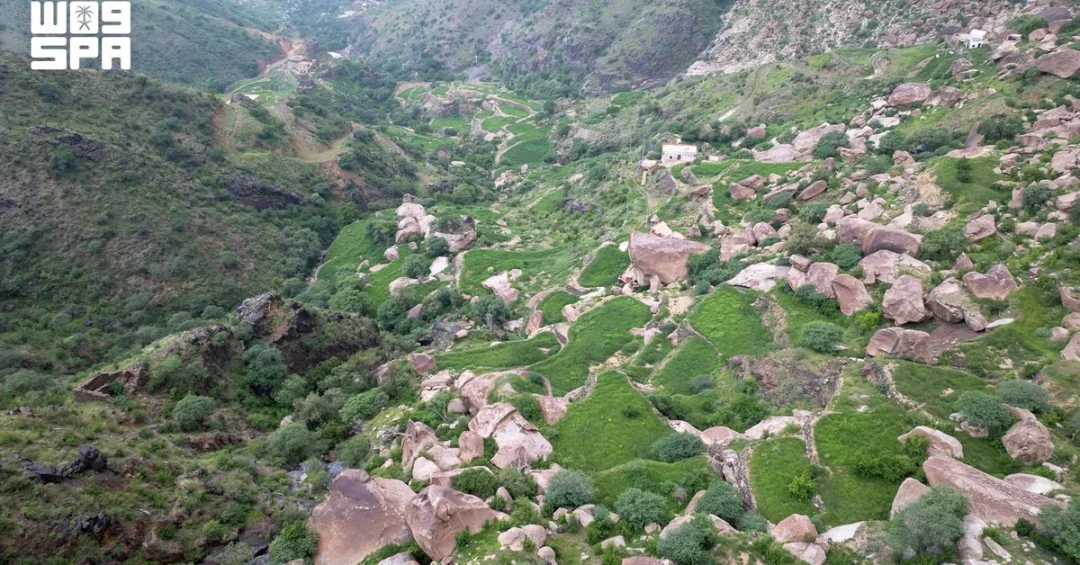
Mount Nees, rising 1,930 meters above sea level in the Tihama Zahran sector of Qilwah Governorate, has emerged as a distinctive natural and historical landmark in Al-Baha, according to the Saudi Press Agency (SPA). The mountain, known for its massive granite peaks, natural caves, and dense vegetation, is attracting hikers, photographers, and nature enthusiasts from across the Kingdom and beyond. Could this rugged peak become the next must-visit destination for ecotourism in Saudi Arabia?
Official Saudi sources describe Mount Nees as a site of exceptional geological and ecological value, situated within the Bal-Khazmar tribal lands. The mountain is renowned for its abundant white rock formations, cavernous grottoes, and heavy rainfall that feeds key seasonal streams. Its persistent cloud cover and lush post-rain greenery create a microclimate that supports rich biodiversity, making it a natural magnet for adventure seekers and researchers alike. As Saudi Arabia continues to diversify its tourism offerings under Vision 2030, destinations like Mount Nees illustrate the Kingdom’s untapped natural wealth.
Context and Background
Why has Mount Nees remained relatively unknown until now? For decades, Al-Baha region has been one of Saudi Arabia’s best-kept secrets, a mountainous area in the southwest known for its cool climate, terraced agriculture, and ancient villages. The SPA report highlights that Mount Nees, located in Qilwah Governorate, stands as a testament to the region’s geological history. Archaeological researcher Dr. Ahmed Al-Ghamdi notes that the mountain’s white rock formations and cavernous grottoes are not only visually striking but also hold archaeological significance. The Bal-Khazmar tribal lands have long been home to communities that preserve authentic rural heritage, offering a window into traditional Saudi life.
The region’s heavy rainfall, unusual for much of the Arabian Peninsula, feeds seasonal streams that sustain dense vegetation. This abundance of water and greenery has made the area a natural draw for those seeking respite from the desert heat. In recent years, the Saudi government has invested in infrastructure to make Al-Baha more accessible, including road improvements and the expansion of regional airports. These developments align with the Kingdom’s broader strategy to promote domestic and international tourism, as outlined in Vision 2030. Mount Nees, with its dramatic peaks and ecological richness, is poised to benefit from these investments.
Historically, Al-Baha has been a crossroads of trade and culture, linking the Red Sea coast to the interior. The Qilwah Governorate, in particular, is known for its agricultural terraces and traditional mud-brick architecture. The SPA report emphasizes that the mountain is surrounded by villages that have preserved their heritage, offering visitors a chance to experience Saudi hospitality and customs firsthand. This blend of natural beauty and cultural authenticity is precisely what modern travelers seek, and it positions Mount Nees as a unique destination that can compete with international ecotourism hotspots.
Key Details
What exactly makes Mount Nees so special? At 1,930 meters, it is one of the highest peaks in the Tihama Zahran sector, offering panoramic views that stretch across the Asir Mountains and, on clear days, toward the Red Sea. The mountain’s granite peaks are estimated to be millions of years old, shaped by wind and water erosion. Its natural caves, some of which are large enough to explore, provide habitat for rare species and have yielded archaeological finds that shed light on ancient human activity in the region. Dr. Ahmed Al-Ghamdi, an archaeological researcher, has documented the mountain’s white rock formations and grottoes, noting their scientific and educational value.
The heavy rainfall that feeds seasonal streams is a key factor in the mountain’s lush vegetation. Unlike the arid landscapes that dominate much of Saudi Arabia, Mount Nees supports dense forests of juniper and other native trees, as well as a variety of wildflowers. This biodiversity attracts birdwatchers and nature photographers, who come to capture species that are rare elsewhere in the Kingdom. The cloud cover that often shrouds the peak adds a mystical quality, creating dramatic lighting effects that are a boon for photographers. For hikers, the mountain offers trails of varying difficulty, from gentle walks through villages to challenging ascents to the summit.
The surrounding traditional agricultural villages are an integral part of the Mount Nees experience. These communities, some of which date back centuries, maintain terraced fields where they grow coffee, fruits, and grains. Visitors can learn about traditional farming methods, sample local produce, and purchase handicrafts. The SPA report underscores that these villages preserve authentic rural heritage, providing insight into local customs against a scenic backdrop. This cultural dimension adds depth to the ecotourism offering, making a visit to Mount Nees not just a nature trip but a cultural immersion.
International and Regional Impact
How will Mount Nees fit into Saudi Arabia’s growing tourism landscape? The Kingdom has set ambitious targets to attract 150 million visitors annually by 2030, and ecotourism is a key pillar of that strategy. Al-Baha, with its temperate climate and natural attractions, complements better-known destinations like NEOM, the Red Sea Project, and AlUla. While those projects focus on luxury and heritage, Mount Nees offers a more rugged, adventure-oriented experience. This diversity is crucial for attracting a wide range of travelers, from backpackers to families. Regionally, the mountain could draw visitors from neighboring Gulf countries, who seek cooler climates and outdoor activities during the summer months.
Internationally, Mount Nees has the potential to appeal to eco-conscious travelers who prioritize sustainable tourism. The global ecotourism market is growing, and Saudi Arabia is well-positioned to capture a share of it by preserving its natural treasures. The SPA report highlights the mountain’s potential for field research, which could attract scientists and university groups. Collaborations with international conservation organizations could further enhance its reputation. By developing Mount Nees responsibly, Saudi Arabia can demonstrate its commitment to environmental stewardship, a message that resonates with global audiences. Moreover, the influx of visitors will create economic opportunities for local communities, from guiding services to homestays.
Economic and Strategic Significance
What economic benefits could flow from developing Mount Nees as an ecotourism hub? The Saudi government’s Vision 2030 aims to increase the tourism sector’s contribution to GDP from 3% to 10% by 2030. Ecotourism destinations like Mount Nees can help achieve this by generating revenue, creating jobs, and stimulating local entrepreneurship. The surrounding villages stand to gain from increased visitor spending on food, lodging, and handicrafts. The Saudi Press Agency report notes that the mountain is already a draw for hikers and photographers, indicating organic demand that can be nurtured with better infrastructure. Investments in trails, signage, and visitor centers would enhance the experience while protecting the environment.
Strategically, Mount Nees reinforces Saudi Arabia’s efforts to diversify its economy away from oil. Tourism is a labor-intensive sector that can employ young Saudis, aligning with the Vision 2030 goal of increasing private-sector employment. The mountain’s appeal to researchers and scientists also positions it as a center for knowledge exchange, potentially attracting partnerships with international institutions. Furthermore, the development of Al-Baha as a tourism destination supports regional balance, ensuring that economic growth is not confined to major cities. By promoting Mount Nees, the Kingdom showcases its commitment to sustainable development and cultural preservation, values that are increasingly important to global travelers.
Vision 2030 Alignment
How does Mount Nees embody the goals of Vision 2030? The vision, launched by Crown Prince Mohammed bin Salman in 2016, seeks to transform Saudi Arabia into a global tourism powerhouse while preserving its natural and cultural heritage. Mount Nees, with its unique geology, biodiversity, and traditional villages, is a perfect example of how the Kingdom can leverage its assets for sustainable development. The SPA report’s emphasis on the mountain’s potential for ecotourism, adventure trekking, and field research aligns with the vision’s focus on diversifying tourism offerings. By investing in Al-Baha, the government is also advancing its goal of creating jobs and improving quality of life for citizens in all regions.
In conclusion, Mount Nees stands as a symbol of Saudi Arabia’s natural wealth and its forward-looking approach to tourism. As the Kingdom continues to open up to the world, destinations like this will play a vital role in attracting visitors and showcasing the best of Saudi Arabia. With careful planning and community engagement, Mount Nees can become a model for sustainable ecotourism, benefiting both the environment and local people. The future looks bright for Al-Baha, and for all who seek adventure in the heart of Arabia.
20 Questions
Q1. What is Mount Nees and where is it located?
A1. Mount Nees is a prominent mountain rising 1,930 meters above sea level in the Tihama Zahran sector of Qilwah Governorate, Al-Baha region, Saudi Arabia. It is known for its granite peaks, caves, and lush vegetation.
Q2. Why is Mount Nees considered a distinctive natural landmark?
A2. It features massive granite peaks, natural caves, and dense vegetation, along with heavy rainfall that feeds seasonal streams. Its persistent cloud cover and post-rain greenery make it unique in the Arabian Peninsula.
Q3. Who is Dr. Ahmed Al-Ghamdi and what did he note about Mount Nees?
A3. Dr. Ahmed Al-Ghamdi is an archaeological researcher who noted that Mount Nees, within Bal-Khazmar tribal lands, is renowned for its white rock formations, cavernous grottoes, and heavy rainfall that feeds key seasonal streams.
Q4. What activities can visitors enjoy at Mount Nees?
A4. Visitors can enjoy hiking, photography, nature watching, and exploring traditional agricultural villages. The mountain also offers potential for adventure trekking and field research.
Q5. How does Mount Nees contribute to Al-Baha’s tourism profile?
A5. It reinforces Al-Baha’s position as a premier nature destination, attracting hikers, photographers, and nature enthusiasts. Its biodiversity and rugged terrain present significant potential for sustainable ecotourism.
Q6. What is the significance of the traditional villages around Mount Nees?
A6. These villages preserve authentic rural heritage, offering visitors insight into local customs and traditional agricultural practices against a scenic backdrop. They add cultural depth to the ecotourism experience.
Q7. What kind of biodiversity exists on Mount Nees?
A7. The mountain supports dense vegetation, including juniper forests and wildflowers, due to its heavy rainfall. This biodiversity attracts birdwatchers and nature photographers, as it is rare in Saudi Arabia.
Q8. How does Mount Nees align with Vision 2030?
A8. It supports Vision 2030’s goals of diversifying tourism, creating jobs, and promoting sustainable development. The mountain’s ecotourism potential helps increase the tourism sector’s contribution to GDP.
Q9. What infrastructure developments could benefit Mount Nees?
A9. Improved roads, regional airport expansion, trails, signage, and visitor centers would enhance accessibility and the visitor experience while protecting the environment.
Q10. What is the climate like at Mount Nees?
A10. The mountain has a cooler climate with heavy rainfall and persistent cloud cover, which feeds seasonal streams and supports lush greenery, making it a refreshing escape from the desert heat.
Q11. Are there any archaeological findings at Mount Nees?
A11. Yes, the mountain’s natural caves and grottoes have yielded archaeological finds that shed light on ancient human activity, according to researcher Dr. Ahmed Al-Ghamdi.
Q12. How can local communities benefit from ecotourism at Mount Nees?
A12. Local communities can benefit through job creation in guiding, hospitality, and handicrafts, as well as increased spending on local produce and services, stimulating economic growth.
Q13. What makes Mount Nees attractive to photographers?
A13. Its dramatic granite peaks, white rock formations, cloud cover, and lush post-rain greenery create stunning visual contrasts and lighting effects, ideal for landscape and nature photography.
Q14. Is Mount Nees suitable for adventure trekking?
A14. Yes, its rugged terrain and varying trails offer opportunities for adventure trekking, from gentle walks to challenging ascents, catering to different fitness levels.
Q15. What role does rainfall play in Mount Nees’ ecosystem?
A15. Heavy rainfall feeds seasonal streams that sustain dense vegetation and biodiversity, creating a microclimate that supports rare species and lush greenery uncommon in Saudi Arabia.
Q16. How does Mount Nees compare to other Saudi ecotourism destinations?
A16. While destinations like NEOM and AlUla focus on luxury and heritage, Mount Nees offers a rugged, adventure-oriented experience, adding diversity to Saudi Arabia’s tourism offerings.
Q17. What is the Bal-Khazmar tribal connection to Mount Nees?
A17. Mount Nees is situated within the Bal-Khazmar tribal lands, whose communities have preserved authentic rural heritage and traditional customs, enriching the visitor experience.
Q18. Can researchers conduct field studies at Mount Nees?
A18. Yes, the mountain’s unique geology, biodiversity, and archaeological sites make it ideal for field research, potentially attracting scientists and university groups.
Q19. What sustainable practices should be adopted at Mount Nees?
A19. Sustainable practices include responsible trail management, waste reduction, community engagement, and environmental education to protect the mountain’s ecosystems for future generations.
Q20. What does the future hold for Mount Nees as a tourism hub?
A20. With careful planning and investment, Mount Nees can become a model for sustainable ecotourism, attracting international visitors, benefiting local communities, and supporting Saudi Arabia’s Vision 2030 goals.
Reader Feedback
We value your thoughts. Please share your feedback on this article.
Your feedback helps us improve our coverage.
Related articles
 Hot Air Balloons Adorn Skies of AlUla
 AlUla Ambassadors Program Graduates 50 Local Youth
 The Groves Returns for Riyadh Season 2026 with Global Flavors
 Historic Jeddah Shines in Saudi Winter Program
 Al-Khasha in Makkah Turns Green After Rainfall
 Makkah to Host 2026 Marathon with Blend of Sports and Cultural Exploration