


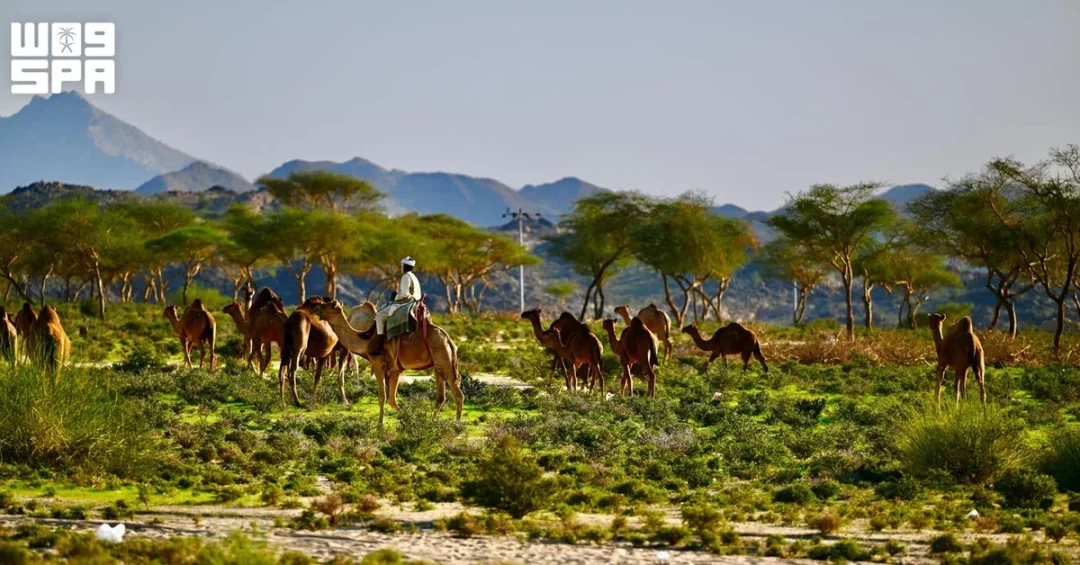
Wide areas of Al-Khasha, located in Wadi Numan southeast of Makkah, have turned green following recent rainfall across the holy city and its surrounding regions, according to the Saudi Press Agency (SPA). The transformation has blanketed valleys, ravines, and mountain slopes with wild grasses, creating a vibrant natural landscape that is drawing residents and outdoor enthusiasts as temperatures become milder. This seasonal phenomenon underscores the environmental richness of the Makkah region and highlights the potential for nature-based tourism in areas that are typically arid. The greening of Al-Khasha is a direct result of precipitation that has replenished the soil and allowed dormant seeds to sprout, offering a rare and picturesque contrast to the usual desert terrain. As word spreads of the verdant scenery, families and nature lovers are flocking to the area to enjoy the mild weather and the rare opportunity to witness such lushness in the heart of the Kingdom.
The event, reported by the Saudi Press Agency on November 5, 2026, reflects the dynamic interplay between climate and landscape in Saudi Arabia. While the Kingdom is known for its vast deserts, seasonal rains can dramatically alter the environment, turning dry wadis into temporary green oases. Al-Khasha’s transformation is not only a visual spectacle but also a testament to the resilience of native flora and the ecological significance of these rain-fed ecosystems. For international observers, this phenomenon offers insight into the natural cycles that shape the Arabian Peninsula and the ways in which Saudi Arabia is embracing its environmental assets as part of a broader push to diversify tourism and promote sustainable development. The influx of visitors to Al-Khasha also signals a growing appreciation for outdoor recreation among Saudis and expatriates alike, aligning with national efforts to enhance quality of life and foster a deeper connection with nature.
Context and Background
What makes Al-Khasha’s greening such a noteworthy event in the broader context of Saudi Arabia’s environmental narrative? Al-Khasha is situated in Wadi Numan, a valley system southeast of Makkah that is characterized by a mix of flatlands and mountainous elevations interspersed with slopes and rocky formations. This diverse topography plays a crucial role in how rainfall is distributed and retained across the landscape. When rain falls, water flows through valleys and ravines, collecting in depressions and nourishing the soil. Vegetation cover varies in density depending on soil conditions and locations where water accumulates, creating a patchwork of green that is both visually striking and ecologically important. The recent rainfall in Makkah and surrounding areas has been sufficient to trigger widespread germination of wild grasses, which have quickly spread across the terrain, transforming the typically arid environment into a temporary grassland.
Historically, the Makkah region has experienced sporadic rainfall events that can lead to similar greening episodes, but the extent and accessibility of Al-Khasha make it particularly notable. The area’s proximity to the holy city means it is easily reachable for residents and pilgrims seeking a respite from urban life. In recent years, Saudi Arabia has invested in infrastructure and promotional efforts to highlight such natural attractions, recognizing their potential to contribute to the tourism sector. The greening of Al-Khasha also aligns with the Kingdom’s broader environmental goals, including the Saudi Green Initiative, which aims to plant billions of trees and restore degraded land. While the current greening is a natural phenomenon, it serves as a reminder of the importance of preserving these fragile ecosystems and managing visitor access to ensure they remain sustainable for future generations.
Furthermore, the timing of this event—following the milder temperatures that typically arrive in late autumn—makes it an ideal period for outdoor activities. The Saudi Press Agency report notes that visitors are taking advantage of the pleasant weather to explore the area, walking through green spaces and among rocky formations dotted with grass. This surge in outdoor recreation is part of a wider trend in Saudi Arabia, where citizens and residents are increasingly seeking nature-based experiences. The government has been actively promoting domestic tourism and ecotourism as part of Vision 2030, and sites like Al-Khasha exemplify the kind of natural assets that can be developed responsibly to attract both local and international visitors. The greening event thus serves as both a seasonal attraction and a showcase for the Kingdom’s environmental diversity.
Key Details
How exactly has the rainfall reshaped Al-Khasha’s terrain, and what are visitors experiencing on the ground? According to the Saudi Press Agency, the recent rainfall has caused water to flow through valleys and ravines, while wild grasses have proliferated across valleys, ravines, and mountain slopes. The vegetation cover is not uniform; it varies in density from one area to another, depending on soil conditions and where water collects. This creates a dynamic landscape where patches of lush green alternate with rocky outcrops and sandy patches. Visitors are reportedly heading to Al-Khasha in large numbers, including families, nature enthusiasts, and outdoor lovers. They are walking through the green spaces, sitting in open areas, and using the rocky formations as vantage points. Many are also taking photographs and recording videos to document the greenery and the flowing water, sharing their experiences on social media and thereby amplifying the area’s appeal.
The transformation of Al-Khasha is a direct response to the rainfall that occurred in Makkah and its surroundings. The holy city and its environs received enough precipitation to saturate the soil and activate dormant seeds, leading to the rapid growth of wild grasses. This process is a natural adaptation of desert plants, which can remain dormant for long periods and then germinate quickly when moisture becomes available. The resulting green cover provides temporary grazing for wildlife and livestock, helps prevent soil erosion, and contributes to the overall ecological health of the region. For visitors, the experience is a rare chance to witness the desert in bloom, a phenomenon that has captured the imagination of people across the Arabian Peninsula for centuries. The Saudi Press Agency’s report highlights the visual and recreational appeal of the area, noting that the mild temperatures have made it comfortable for outdoor activities.
In addition to its aesthetic and recreational value, the greening of Al-Khasha has implications for local communities and the environment. The influx of visitors can provide economic opportunities for nearby towns and villages, particularly in sectors such as hospitality, guiding, and retail. However, it also places pressure on the fragile ecosystem, necessitating careful management to prevent degradation. Saudi authorities have been increasingly focused on sustainable tourism practices, and sites like Al-Khasha could serve as pilots for balancing visitor access with conservation. The area’s diverse terrain—combining flatlands, slopes, and rocky formations—offers a variety of microhabitats that support different plant and animal species. As the vegetation grows, it may attract birds, insects, and other wildlife, further enhancing the biodiversity of the region. The Saudi Press Agency’s coverage underscores the environmental and tourism potential of Al-Khasha, positioning it as a valuable natural asset for the Kingdom.
International and Regional Impact
What does the greening of Al-Khasha signify for Saudi Arabia’s image on the international stage and its regional environmental leadership? For international audiences, the event showcases a lesser-known aspect of Saudi Arabia—its natural beauty and ecological diversity. While the Kingdom is often associated with vast deserts and modern cities, the greening of Al-Khasha reveals a dynamic environment that responds to seasonal changes. This can help diversify perceptions of Saudi Arabia and attract tourists interested in nature and ecotourism. Regionally, the event aligns with efforts by Gulf Cooperation Council (GCC) countries to promote environmental awareness and sustainable development. Saudi Arabia’s leadership in initiatives such as the Saudi Green Initiative and the Middle East Green Initiative demonstrates its commitment to addressing climate challenges and preserving natural heritage. The greening of Al-Khasha is a tangible example of how natural processes can contribute to these broader goals, offering a positive narrative that resonates with global environmental values.
Moreover, the event highlights the potential for cross-border cooperation on environmental issues. The Arabian Peninsula shares similar climatic and ecological characteristics, and phenomena like seasonal greening occur in various parts of the region. By documenting and promoting such events, Saudi Arabia can foster a sense of shared natural heritage and encourage collaborative efforts in conservation and sustainable tourism. The Saudi Press Agency’s report serves as a reminder that the Kingdom’s environmental assets are not only national treasures but also part of the region’s collective identity. As international interest in sustainable travel grows, Saudi Arabia is well-positioned to offer unique experiences that combine cultural and natural attractions. The greening of Al-Khasha thus contributes to the Kingdom’s soft power by presenting a positive, forward-looking image that aligns with global trends in environmental stewardship and responsible tourism.
Economic and Strategic Significance
How does a temporary natural phenomenon like the greening of Al-Khasha translate into economic and strategic value for Saudi Arabia? At first glance, the greening may seem like a fleeting event, but it has tangible economic implications. The influx of visitors to the area stimulates local spending on fuel, food, and other services, providing a boost to small businesses in the surrounding communities. It also raises the profile of the Makkah region as a destination for domestic tourism, which is a key pillar of Vision 2030’s tourism strategy. By promoting sites like Al-Khasha, Saudi Arabia can encourage citizens and residents to explore their own country, reducing reliance on outbound tourism and keeping tourism dollars within the Kingdom. Furthermore, the event can attract international tourists who are interested in unique natural phenomena, contributing to the goal of increasing international visitor numbers to 100 million annually by 2030.
Strategically, the greening of Al-Khasha supports Saudi Arabia’s efforts to diversify its economy away from oil dependence. Tourism is a major focus of Vision 2030, and natural attractions complement cultural and religious tourism. The Kingdom has been investing heavily in tourism infrastructure, including hotels, transportation, and recreational facilities, and events like this demonstrate the return on those investments. The area’s proximity to Makkah also means it can be integrated into pilgrimage itineraries, offering visitors a chance to experience nature alongside religious sites. This holistic approach to tourism enhances the overall visitor experience and extends stays, generating higher economic impact. Additionally, the greening event underscores the importance of environmental sustainability in economic planning. By protecting and promoting natural assets, Saudi Arabia can ensure that tourism growth is balanced with conservation, aligning with the principles of sustainable development that are central to Vision 2030.
Vision 2030 Alignment
How does the greening of Al-Khasha contribute to the overarching goals of Saudi Vision 2030, and what does it reveal about the Kingdom’s future direction? Vision 2030 is a comprehensive plan to transform Saudi Arabia’s economy and society, with a strong emphasis on quality of life, environmental sustainability, and tourism development. The greening of Al-Khasha directly supports several of these objectives. First, it enhances the quality of life for citizens and residents by providing accessible natural recreation opportunities, which is a key target of the Vision’s Quality of Life Program. Second, it promotes ecotourism, a niche that Saudi Arabia is eager to develop as part of its tourism strategy. Third, it showcases the Kingdom’s natural heritage, reinforcing the environmental pillar of Vision 2030, which includes initiatives like the Saudi Green Initiative. The event also demonstrates the potential of seasonal natural phenomena to drive visitor interest and economic activity, aligning with the goal of increasing tourism’s contribution to GDP.
Looking ahead, the greening of Al-Khasha serves as a reminder of the importance of environmental stewardship in achieving Vision 2030. As Saudi Arabia continues to develop its tourism sector, it must balance economic growth with the preservation of natural resources. The Kingdom’s leadership has consistently emphasized the need for sustainable development, and sites like Al-Khasha can serve as models for how to manage natural attractions responsibly. By investing in infrastructure, promoting conservation, and engaging local communities, Saudi Arabia can ensure that future greening events continue to be celebrated and enjoyed by generations to come. Ultimately, the transformation of Al-Khasha from arid terrain to green landscape is a powerful symbol of the Kingdom’s dynamic environment and its commitment to a prosperous, sustainable future. It reflects the broader narrative of Vision 2030: a nation that honors its heritage while embracing innovation and progress, and that invites the world to share in its natural and cultural riches.
20 Questions
Q1. What is Al-Khasha and where is it located?
A1. Al-Khasha is a natural area in Wadi Numan, situated southeast of Makkah in Saudi Arabia. It features a mix of flatlands and mountainous terrain, and has recently turned green after rainfall.
Q2. Why has Al-Khasha turned green?
A2. Recent rainfall in Makkah and surrounding areas has caused wild grasses to sprout across valleys, ravines, and mountain slopes. The moisture activates dormant seeds, leading to rapid vegetation growth in the arid environment.
Q3. What types of vegetation are growing in Al-Khasha?
A3. Wild grasses are the primary vegetation, spreading across various terrains. The density varies depending on soil conditions and water collection points, creating a patchy but vibrant green cover.
Q4. How does the rainfall affect the landscape of Al-Khasha?
A4. Rainfall causes water to flow through valleys and ravines, replenishing the soil and supporting plant growth. The water also creates temporary streams and pools, adding to the scenic beauty of the area.
Q5. Who is visiting Al-Khasha and why?
A5. Residents, families, nature enthusiasts, and outdoor lovers are visiting to enjoy the mild weather and the rare green landscape. They walk, sit, take photos, and record videos of the greenery and flowing water.
Q6. What activities are popular among visitors to Al-Khasha?
A6. Visitors enjoy walking through green spaces, exploring rocky formations, picnicking in open areas, and documenting the scenery through photography and videography. The mild temperatures make it ideal for outdoor leisure.
Q7. How does the greening of Al-Khasha benefit the environment?
A7. The vegetation helps prevent soil erosion, provides temporary grazing for wildlife, and supports biodiversity. It also contributes to the overall ecological health of the region during the brief green period.
Q8. What is the significance of Al-Khasha’s diverse terrain?
A8. The combination of flatlands, slopes, and rocky formations creates varied microhabitats and influences water flow and vegetation density. This diversity enhances the area’s ecological and visual appeal.
Q9. How does the greening of Al-Khasha relate to Saudi Arabia’s tourism goals?
A9. It promotes ecotourism and domestic travel, aligning with Vision 2030’s aim to diversify tourism. The event showcases natural attractions that can draw visitors and support local economies.
Q10. What role does the Saudi Press Agency play in reporting this event?
A10. The Saudi Press Agency (SPA) is the official news agency that reported the greening of Al-Khasha, providing authoritative information about the rainfall and its effects on the area.
Q11. Is the greening of Al-Khasha a rare occurrence?
A11. While seasonal greening can occur after significant rainfall, the extent and accessibility of Al-Khasha make this event particularly notable and attractive to visitors. It is a natural phenomenon that varies in intensity.
Q12. How does the greening of Al-Khasha support Saudi Vision 2030?
A12. It enhances quality of life, promotes ecotourism, and showcases environmental sustainability—all key pillars of Vision 2030. It also demonstrates the Kingdom’s natural assets and commitment to conservation.
Q13. What measures are in place to protect Al-Khasha’s environment?
A13. Saudi authorities emphasize sustainable tourism practices to balance visitor access with conservation. While specific measures for Al-Khasha are not detailed, broader environmental initiatives aim to preserve such areas.
Q14. How can international tourists visit Al-Khasha?
A14. International tourists can access Al-Khasha by traveling to Makkah and then to Wadi Numan. It is advisable to check local guidelines and travel advisories, as the area is primarily a natural site.
Q15. What is the best time to visit Al-Khasha to see the greenery?
A15. The best time is immediately after rainfall when temperatures are mild, typically in late autumn or winter. The greenery is temporary, so timing is essential to witness the transformation.
Q16. How does the greening of Al-Khasha affect local communities?
A16. It can boost local economies through increased visitor spending on services like food, fuel, and guides. It also fosters community pride and awareness of natural heritage.
Q17. What other natural attractions are near Makkah?
A17. The Makkah region offers various wadis, mountains, and desert landscapes that can green after rains. Examples include Wadi Numan and other valleys, though specific names may vary.
Q18. How does the greening of Al-Khasha align with the Saudi Green Initiative?
A18. The Saudi Green Initiative aims to plant trees and restore land. While Al-Khasha’s greening is natural, it supports the initiative’s goals by demonstrating the resilience of native vegetation and the importance of conservation.
Q19. What should visitors keep in mind when visiting Al-Khasha?
A19. Visitors should respect the environment, avoid littering, and stay on designated paths to minimize impact. They should also be prepared for rugged terrain and bring necessary supplies.
Q20. What does the greening of Al-Khasha symbolize for Saudi Arabia’s future?
A20. It symbolizes the Kingdom’s natural beauty, environmental potential, and commitment to sustainable development. It reflects Vision 2030’s vision of a prosperous, eco-conscious nation that values its heritage and welcomes the world.
Reader Feedback
We value your thoughts. Please share your feedback on this article.
Your feedback helps us improve our coverage.
Related articles
 Makkah to Host 2026 Marathon with Blend of Sports and Cultural Exploration
 Jeddah’s Winter Offers Visitors a Range of Red Sea Adventures
 SPA Lens Captures First Signs of Spring West of Turaif
 Light Rain Falls on AlUla Governorate
 Saudi Tourism Minister Inaugurates ‘Saudi Land’ at WTM London 2026
 Al-Ardiyat: A Gem of Natural and Heritage Tourism in Saudi Arabia