


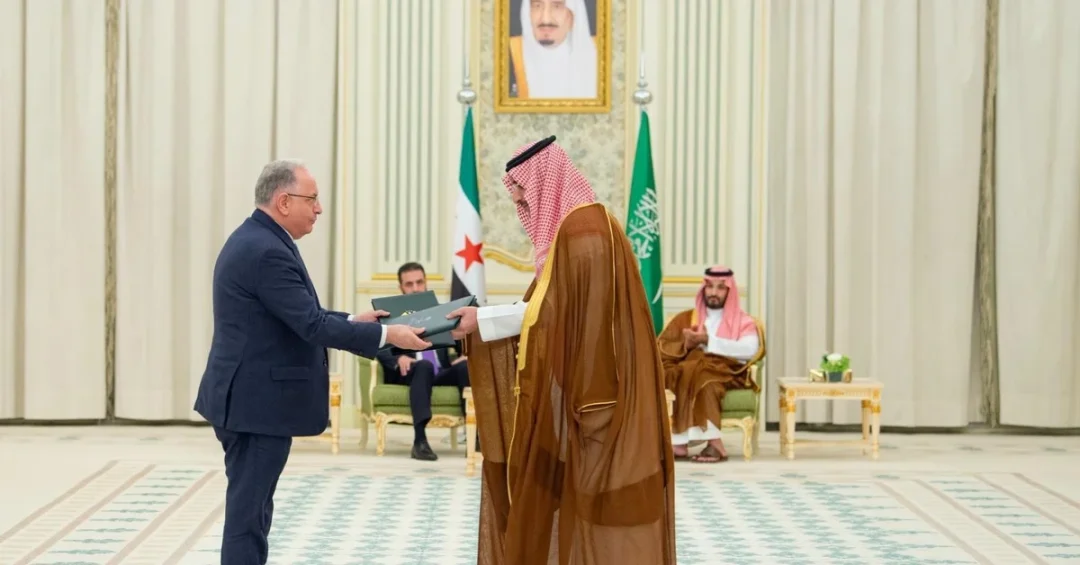
Under the directives of Custodian of the Two Holy Mosques King Salman bin Abdulaziz Al Saud and His Royal Highness Prince Mohammed bin Salman bin Abdulaziz Al Saud, Crown Prince and Prime Minister, the Saudi Fund for Development (SFD) signed six concessional development loan agreements with the Syrian Ministry of Finance totaling more than $403 million on November 5, 2026, in Riyadh. The signing took place in the presence of His Royal Highness the Crown Prince and President of the Syrian Arab Republic Ahmed Al-Sharaa, underscoring Saudi Arabia’s commitment to stabilizing Syria and supporting its recovery. The agreements, signed by SFD Chief Executive Officer Sultan Al-Marshad and Syrian Minister of Finance Mohammed Yisr Barnieh, cover critical sectors including energy, water, health, housing, infrastructure, and digital transformation. This major financial package aims to improve living conditions, restore essential services, and rebuild infrastructure across Syria, reflecting the Kingdom’s continued humanitarian and developmental role in the region.
These agreements represent a significant step in Saudi Arabia’s efforts to support Syria’s reconstruction and economic revival. The projects are designed to benefit millions of Syrians by providing reliable electricity, clean water, improved healthcare, and better housing. The Saudi Fund for Development has a long history of financing development projects in developing countries, and this latest initiative aligns with the Kingdom’s Vision 2030 goals of promoting regional stability and global cooperation. The signing ceremony in Riyadh highlights the strong bilateral ties between Saudi Arabia and Syria and the shared commitment to peace and prosperity in the region.
Context and Background
Why does Saudi Arabia’s support for Syria matter now more than ever? Since the onset of the Syrian crisis, the Kingdom has been a leading donor of humanitarian aid, providing food, medical supplies, and shelter to millions of affected people. In September 2025, Saudi Arabia, through SFD, provided two grants to Syria to supply crude oil and cover part of government employees’ salaries for three months. These grants were crucial in addressing immediate energy shortages and ensuring that public sector workers could continue to serve their communities. The new loan agreements build on this foundation, shifting from emergency relief to long-term development and reconstruction.
The Saudi Fund for Development has been instrumental in financing projects across the Middle East, Africa, and Asia, always with a focus on sustainable development and improving livelihoods. In Syria, the challenges are immense: years of conflict have destroyed infrastructure, disrupted services, and displaced millions. The six projects funded by these agreements target the most pressing needs, from restoring power generation to rebuilding hospitals and homes. By addressing these fundamental areas, Saudi Arabia is helping Syria lay the groundwork for a stable and prosperous future.
Key Details of the Agreements
What exactly do these six agreements entail, and how will they change lives on the ground? The largest project, valued at $105 million, will support the construction, rehabilitation, and equipping of 25 civil defense centers across several governorates, benefiting more than seven million people. These centers will enhance emergency response and disaster management capabilities, including debris removal, which is critical in a country where many areas remain littered with rubble from the conflict. A $100 million project will rehabilitate, construct, and equip hospitals and health centers, aiming to restore essential and specialized healthcare services, expand access to care, and ease pressure on existing hospitals.
Another major project, worth $90 million, will rehabilitate generating units at the Aleppo Thermal Power Plant, benefiting approximately five million people. This project aims to restore the plant’s power-generation capacity, provide stable electricity to residents and public facilities, support economic and industrial activity, and strengthen the stability of the national electricity grid. A $60 million project will rehabilitate up to 10,000 damaged housing units, contributing to social stability by allowing displaced families to return to safe and livable homes. Additionally, a $30 million project will upgrade and modernize the drinking water metering system by supplying and installing 300,000 smart water meters, benefiting approximately 1.5 million people across various governorates and improving service quality. Finally, a project worth more than $18 million will support the digital transformation and institutional development of the Syrian Ministry of Finance through an integrated system aimed at improving beneficiary experience and enhancing the efficiency and transparency of government financial services.
International and Regional Impact
How will these projects influence the broader region and international perceptions of Saudi Arabia’s role? The agreements signal a renewed commitment by the Kingdom to stability in the Levant, a region that has suffered from prolonged conflict and economic hardship. By financing projects that directly benefit millions of Syrians, Saudi Arabia is demonstrating leadership in post-conflict reconstruction and humanitarian assistance. This approach not only helps Syria recover but also contributes to regional security by reducing the drivers of instability, such as poverty, lack of services, and displacement. The international community has welcomed Saudi Arabia’s efforts, viewing them as a constructive model for other nations to follow.
Moreover, these projects align with the United Nations Sustainable Development Goals, particularly those related to clean water, affordable energy, good health, and sustainable cities. The involvement of the Saudi Fund for Development, a respected institution with decades of experience, ensures that the projects are implemented efficiently and transparently. The presence of President Ahmed Al-Sharaa at the signing ceremony underscores the Syrian government’s appreciation for Saudi Arabia’s support and the strengthening of bilateral relations. As Syria rebuilds, Saudi Arabia’s role as a partner in development will likely expand, opening new avenues for cooperation in trade, investment, and cultural exchange.
Economic and Strategic Significance
What does this mean for Saudi Arabia’s economic and strategic interests? The Kingdom’s support for Syria is part of a broader strategy to promote stability and prosperity in the Middle East, which is essential for global energy security and trade. A stable Syria can contribute to regional peace, reduce the flow of refugees, and create new economic opportunities. Saudi Arabia’s own Vision 2030 aims to diversify its economy and strengthen its global partnerships, and helping Syria rebuild is consistent with these goals. By investing in infrastructure and services, Saudi Arabia is also laying the foundation for future trade and investment ties that can benefit both nations.
Furthermore, the concessional loans are designed to be sustainable, with terms that allow Syria to repay over time without straining its budget. This responsible approach to development finance reflects Saudi Arabia’s commitment to long-term solutions rather than short-term fixes. The projects are expected to create jobs, stimulate local economies, and improve the quality of life for millions of Syrians. As these initiatives progress, they will serve as a testament to the power of Saudi-led development cooperation and the positive impact it can have on people’s lives.
Vision 2030 Alignment
How do these agreements connect to Saudi Arabia’s Vision 2030 and its global role? Vision 2030 is not only about transforming the Kingdom domestically but also about projecting a positive image abroad and contributing to global stability. By supporting Syria’s recovery, Saudi Arabia is fulfilling its role as a responsible global leader and a force for good in the region. The projects funded by SFD align with several Vision 2030 objectives, including enhancing international cooperation, promoting sustainable development, and strengthening humanitarian efforts. They also showcase the Kingdom’s ability to use its resources and expertise to help neighboring countries overcome challenges.
In conclusion, the signing of these six agreements marks a new chapter in Saudi-Syrian relations and demonstrates Saudi Arabia’s unwavering commitment to peace and prosperity in the region. Under the visionary leadership of King Salman and Crown Prince Mohammed bin Salman, the Kingdom continues to extend a helping hand to those in need, embodying the values of compassion and solidarity. As these projects come to life, they will not only rebuild Syria but also reinforce Saudi Arabia’s position as a beacon of hope and a catalyst for positive change in the world.
20 Questions
Q1. What is the total value of the agreements signed between SFD and Syria?
A1. The agreements total more than $403 million, covering six concessional development loans aimed at supporting various sectors in Syria.
Q2. Who signed the agreements on behalf of Saudi Arabia and Syria?
A2. The agreements were signed by SFD Chief Executive Officer Sultan Al-Marshad and Syrian Minister of Finance Mohammed Yisr Barnieh.
Q3. What sectors do the agreements cover?
A3. They cover energy, water, health, housing, infrastructure, and digital transformation, addressing critical needs across Syria.
Q4. Which project is the largest, and what is its value?
A4. The largest project is worth $105 million and focuses on constructing and equipping 25 civil defense centers across several governorates.
Q5. How many people will benefit from the Aleppo Thermal Power Plant rehabilitation?
A5. Approximately five million people will benefit from the $90 million project to rehabilitate generating units at the plant.
Q6. What is the value of the water metering project, and how many meters will be installed?
A6. The project is valued at $30 million and involves supplying and installing 300,000 smart water meters, benefiting about 1.5 million people.
Q7. How many housing units will be rehabilitated?
A7. Up to 10,000 damaged housing units will be rehabilitated under a $60 million project, contributing to social stability.
Q8. What does the health sector project entail?
A8. The $100 million project will rehabilitate, construct, and equip hospitals and health centers to restore essential healthcare services.
Q9. What is the purpose of the digital transformation project?
A9. The $18 million project supports the Syrian Ministry of Finance by implementing an integrated system to improve efficiency and transparency of financial services.
Q10. How many civil defense centers will be built or rehabilitated?
A10. 25 civil defense centers will be constructed, rehabilitated, and equipped, benefiting more than seven million people.
Q11. When were the agreements signed?
A11. The agreements were signed on November 5, 2026, in Riyadh, in the presence of HRH the Crown Prince and President Ahmed Al-Sharaa.
Q12. What did Saudi Arabia provide to Syria in September 2025?
A12. Saudi Arabia provided two grants to supply crude oil and cover part of government employees’ salaries for three months.
Q13. How does this support align with Saudi Vision 2030?
A13. It aligns with Vision 2030 by promoting regional stability, international cooperation, and sustainable development, showcasing Saudi leadership.
Q14. Which Saudi official attended the signing ceremony?
A14. His Royal Highness Prince Mohammed bin Salman bin Abdulaziz Al Saud, Crown Prince and Prime Minister, attended the ceremony.
Q15. What is the role of the Saudi Fund for Development?
A15. SFD finances development projects in developing countries, providing concessional loans and grants to support sustainable growth and improve livelihoods.
Q16. How will the projects improve living conditions in Syria?
A16. They will restore electricity, provide clean water, improve healthcare, rebuild homes, and enhance emergency response, directly benefiting millions.
Q17. What is the significance of the Aleppo Thermal Power Plant project?
A17. It will restore power generation, provide stable electricity, support economic activity, and strengthen the national grid, benefiting five million people.
Q18. How many governorates will benefit from the civil defense centers?
A18. The centers will be established across several governorates, benefiting more than seven million people with improved emergency services.
Q19. What does the digital transformation project aim to achieve?
A19. It aims to improve beneficiary experience and enhance the efficiency and transparency of government financial services in Syria.
Q20. What is the expected long-term impact of these agreements?
A20. They will contribute to Syria’s recovery, stability, and economic revival, while strengthening Saudi-Syrian relations and regional peace.
Reader Feedback
We value your thoughts. Please share your feedback on this article.
Your feedback helps us improve our coverage.
Related articles
 Makkah Home and Family Exhibition Showcases Egyptian Apparel
 GASTAT: Over 70.7 Million Passengers Traveled Through Land Ports in 2025
 Tabuk Olive Farms Prepare for 2026 Harvest Season
 Al-Wajh Governor Launches Dates, Ghee, Honey Festival
 Eastern Region Mayor, Benin Ambassador Review Investment Opportunities
 Dhariyah Camel Festival Sales Exceed SAR8 Million in Seven Days