


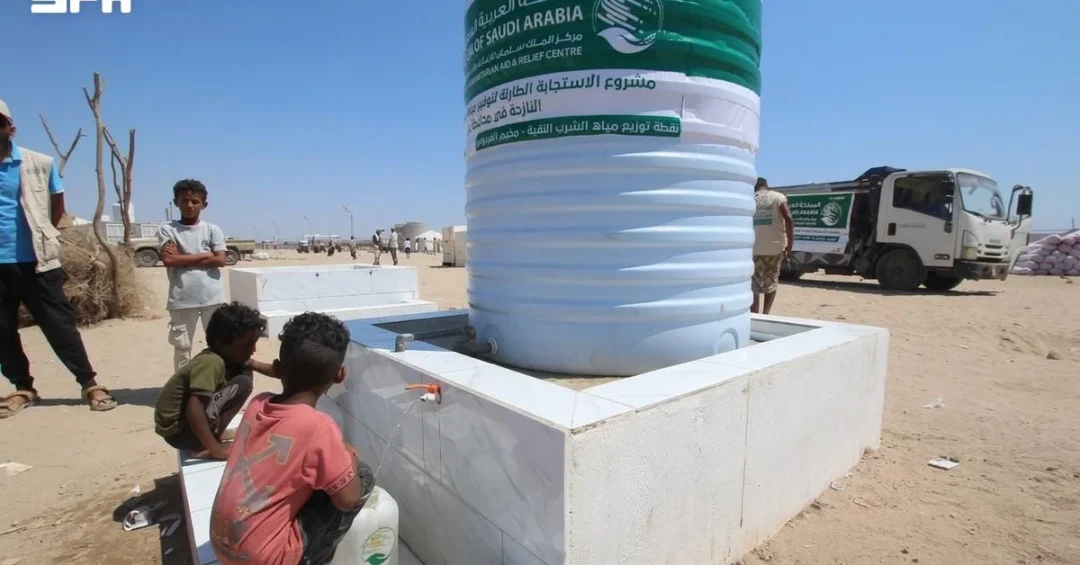
The King Salman Humanitarian Aid and Relief Center (KSrelief) has supplied safe drinking water through 10 distribution points and delivered 454 water containers to displaced people in Aden Governorate, benefiting 2,450 individuals from 350 families. The assistance is part of an emergency response program to provide drinking water to displaced communities in Aden, according to an official announcement released via the Saudi Press Agency (SPA).
This latest delivery underscores the Kingdom of Saudi Arabia’s ongoing commitment to alleviating the humanitarian crisis in Yemen, where access to clean water remains a critical challenge for millions. By targeting displaced families in Aden, KSrelief addresses an immediate need while reinforcing broader efforts to improve living conditions, ensure access to clean water, support community resilience, and promote recovery. The operation reflects Saudi Arabia’s continued leadership in humanitarian aid, delivered through its dedicated relief agency, KSrelief. How does such targeted assistance transform the daily lives of those who have been forced to flee their homes? The answer lies in the tangible impact of reliable water supply on health, dignity, and stability.
Context and Background
Yemen has endured years of conflict and instability, leaving millions in need of humanitarian assistance. Displaced populations are among the most vulnerable, often lacking access to basic services such as clean water, sanitation, and healthcare. In Aden Governorate, a key port city and temporary refuge for many internally displaced persons (IDPs), the demand for safe drinking water is acute. KSrelief’s intervention comes at a critical time, as waterborne diseases and dehydration pose serious risks, particularly for children and the elderly.
The King Salman Humanitarian Aid and Relief Center has been at the forefront of Saudi Arabia’s relief efforts in Yemen since its establishment in 2015. Through a comprehensive approach that includes food security, health, water, sanitation, and hygiene (WASH), KSrelief has reached millions of beneficiaries across Yemen. The center operates in coordination with local authorities and international partners to ensure aid reaches those most in need. This water distribution project in Aden is part of a broader emergency response program that aims to mitigate the effects of displacement and improve living conditions.
Why is water assistance so vital in conflict-affected settings? Access to clean water is not only a basic human right but also a cornerstone of public health and community resilience. Without it, displaced families face heightened risks of disease outbreaks, malnutrition, and further displacement. By providing safe water, KSrelief helps break the cycle of vulnerability and lays the groundwork for recovery. The Kingdom’s sustained support reflects its unwavering commitment to humanitarian principles and its role as a leading donor in the region.
Key Details of the Aid Delivery
The recent KSrelief operation in Aden involved the establishment of 10 water distribution points strategically located to serve displaced communities. These points are equipped to provide safe drinking water on a daily basis, ensuring consistent access for the 2,450 individuals identified as beneficiaries. In addition to water supply, 454 water containers were distributed to 350 families, enabling them to store and transport water safely. This dual approach—immediate supply and storage capacity—enhances the sustainability of the intervention.
The selection of beneficiaries was carried out in coordination with local humanitarian partners and authorities, ensuring that the most vulnerable families receive assistance. The distribution points are managed by trained personnel who oversee water quality and equitable access. This meticulous planning reflects KSrelief’s commitment to efficiency and accountability in aid delivery. The program is part of the emergency response to provide drinking water to displaced people in Aden, a component of the larger Yemen Humanitarian Response Plan.
How does the provision of water containers complement the distribution of drinking water? Containers empower families to collect and store water for multiple days, reducing the frequency of trips to distribution points and freeing time for other essential activities. They also help maintain water quality by preventing contamination during storage. This integrated approach not only meets immediate needs but also builds a sense of normalcy and self-reliance among displaced households. The impact is both practical and psychological, offering a measure of stability in otherwise uncertain circumstances.
International and Regional Impact
Saudi Arabia’s humanitarian efforts in Yemen are part of a wider regional and international response to one of the world’s most severe humanitarian crises. Through KSrelief, the Kingdom has contributed hundreds of millions of dollars in aid, addressing food insecurity, healthcare, shelter, and water needs. These efforts are recognized by international organizations, including the United Nations, which has praised Saudi Arabia’s role in supporting Yemeni civilians. The water project in Aden exemplifies how targeted interventions can yield significant benefits for vulnerable populations.
Regionally, the initiative reinforces Saudi Arabia’s leadership in humanitarian diplomacy and its commitment to stability in the Arabian Peninsula. By alleviating suffering and promoting recovery, the Kingdom helps create conditions conducive to peace and development. Moreover, the project aligns with international humanitarian principles of humanity, neutrality, impartiality, and independence. It also demonstrates Saudi Arabia’s capacity to mobilize resources quickly and effectively in crisis situations, setting a benchmark for other donors.
What message does this send to the international community? It signals that Saudi Arabia remains a reliable partner in addressing global challenges and that its humanitarian arm, KSrelief, is a trusted implementer of aid. The Kingdom’s efforts complement those of other donors and agencies, contributing to a coordinated response. As the crisis in Yemen persists, sustained international support is crucial, and Saudi Arabia continues to play a pivotal role in mobilizing assistance and advocating for the Yemeni people.
Economic and Strategic Significance
While primarily humanitarian, the water project in Aden also carries economic and strategic implications. Access to clean water reduces the burden on healthcare facilities, as fewer people fall ill from waterborne diseases. This, in turn, lessens the strain on Yemen’s already fragile health system and supports economic productivity by keeping workers healthy. For displaced families, reliable water supply enables them to focus on rebuilding their lives, seeking employment, and contributing to local economies.
Strategically, Saudi Arabia’s assistance helps stabilize communities and counter the drivers of extremism and further displacement. By addressing basic needs, the Kingdom contributes to long-term security and development in Yemen, which is vital for regional stability. The project also strengthens ties between Saudi Arabia and Yemeni communities, fostering goodwill and cooperation. This soft power approach enhances the Kingdom’s influence and reputation as a benevolent actor, aligning with its foreign policy objectives.
How does water aid translate into strategic gains? It builds trust and legitimacy, demonstrating that Saudi Arabia is invested in the well-being of Yemeni civilians. This can facilitate dialogue and reconciliation efforts, as communities recognize the Kingdom’s constructive role. Furthermore, successful humanitarian interventions can pave the way for development projects and economic cooperation once conditions allow. Thus, the water distribution in Aden is not just a relief measure but also a building block for a more stable and prosperous Yemen.
Vision 2030 Alignment
Saudi Arabia’s humanitarian efforts through KSrelief are closely aligned with the Kingdom’s Vision 2030, which emphasizes social responsibility, global engagement, and sustainable development. Vision 2030 seeks to position Saudi Arabia as a leader in humanitarian and development aid, leveraging its resources and expertise to make a positive impact worldwide. KSrelief embodies this vision by delivering effective, needs-based assistance that improves lives and fosters resilience in affected communities.
The water project in Aden reflects several Vision 2030 objectives, including enhancing the Kingdom’s international standing, promoting peace and stability, and contributing to the Sustainable Development Goals (SDGs), particularly Goal 6 on clean water and sanitation. By investing in humanitarian aid, Saudi Arabia not only fulfills its moral obligations but also strengthens its global partnerships and soft power. As Vision 2030 progresses, KSrelief will continue to be a key instrument in showcasing the Kingdom’s commitment to a better world.
What does the future hold for Saudi-Yemeni relations and regional stability? Continued humanitarian support, coupled with development initiatives, can help rebuild Yemen and create opportunities for its people. Saudi Arabia’s steadfast dedication to Yemen’s recovery is a testament to its enduring role as a force for good in the region and beyond. Through KSrelief, the Kingdom remains a beacon of hope for millions, demonstrating that compassion and strategic vision can go hand in hand.
20 Questions
Q1. What is KSrelief and what does it do?
A1. KSrelief, the King Salman Humanitarian Aid and Relief Center, is Saudi Arabia’s primary humanitarian agency. It provides emergency relief, food, water, healthcare, and shelter to people in crisis zones worldwide, including Yemen, Syria, and beyond.
Q2. What specific aid was recently delivered to Aden?
A2. KSrelief supplied safe drinking water through 10 distribution points and delivered 454 water containers to displaced people in Aden Governorate, benefiting 2,450 individuals from 350 families as part of an emergency response program.
Q3. Why is water assistance important for displaced people in Aden?
A3. Displaced people in Aden often lack access to clean water, risking dehydration and waterborne diseases. Safe water supply is vital for health, hygiene, and survival, especially for children and the elderly.
Q4. How many people benefited from the recent KSrelief water project?
A4. The project benefited 2,450 individuals from 350 families, providing them with safe drinking water and containers to store it, improving their daily living conditions and resilience.
Q5. Where exactly in Aden was the aid distributed?
A5. The aid was distributed through 10 water distribution points across Aden Governorate, strategically located to serve displaced communities. Specific sites were chosen in coordination with local partners.
Q6. What is the emergency response program mentioned in the announcement?
A6. The emergency response program is a KSrelief initiative to provide drinking water to displaced people in Aden. It is part of Saudi Arabia’s broader humanitarian efforts in Yemen to address urgent needs.
Q7. How does KSrelief ensure the water is safe to drink?
A7. KSrelief manages water quality through trained personnel at distribution points. Water is sourced and treated according to international standards, and regular testing is conducted to ensure safety.
Q8. What are the water containers used for?
A8. The 454 water containers enable families to collect and store water safely, reducing the need for frequent trips to distribution points and preventing contamination during storage, thus improving hygiene.
Q9. How does this project fit into Saudi Arabia’s overall aid to Yemen?
A9. It is part of Saudi Arabia’s extensive humanitarian portfolio in Yemen, which includes food, health, shelter, and water projects. KSrelief has been a leading donor, helping millions of Yemenis.
Q10. What impact does the water project have on public health in Aden?
A10. By providing clean water, the project reduces the incidence of waterborne diseases such as cholera and diarrhea, easing the burden on health facilities and improving overall community health.
Q11. How does KSrelief coordinate with local authorities in Yemen?
A11. KSrelief works closely with Yemeni local authorities and humanitarian partners to identify needs, select beneficiaries, and implement projects, ensuring aid reaches the most vulnerable efficiently.
Q12. What is the significance of Saudi Arabia’s humanitarian role in the region?
A12. Saudi Arabia’s humanitarian role promotes stability, alleviates suffering, and strengthens regional ties. It reflects the Kingdom’s commitment to international humanitarian principles and its leadership in aid.
Q13. How does this project align with Vision 2030?
A13. Vision 2030 emphasizes global engagement and sustainable development. KSrelief’s water project in Aden supports these goals by improving lives, fostering resilience, and enhancing Saudi Arabia’s international standing.
Q14. What challenges does KSrelief face in delivering aid in Yemen?
A14. Challenges include security risks, logistical constraints, and access limitations. KSrelief navigates these through partnerships and careful planning to ensure aid reaches those in need.
Q15. How can other countries support Yemen’s water crisis?
A15. Other countries can contribute funding, technical expertise, and resources to humanitarian agencies like KSrelief and the UN, supporting water, sanitation, and hygiene programs across Yemen.
Q16. What is the long-term goal of KSrelief’s water projects in Yemen?
A16. The long-term goal is to ensure sustainable access to clean water, improve public health, and support recovery and development, helping Yemeni communities rebuild and thrive.
Q17. How does the water aid contribute to community resilience?
A17. Reliable water access reduces vulnerability, enabling families to focus on livelihoods, education, and health. It strengthens community coping mechanisms and reduces the risk of further displacement.
Q18. Are there any other recent KSrelief projects in Yemen?
A18. Yes, KSrelief regularly implements projects in Yemen, including food distributions, medical camps, and shelter assistance. These are part of ongoing efforts to address the multifaceted crisis.
Q19. What role does Saudi Arabia play in the global humanitarian landscape?
A19. Saudi Arabia is a major donor, providing billions in aid worldwide. Through KSrelief, it responds to emergencies and supports development, earning recognition from international organizations.
Q20. How can individuals or organizations partner with KSrelief?
A20. Organizations can collaborate with KSrelief through funding, in-kind contributions, or operational partnerships. KSrelief welcomes cooperation to expand its humanitarian impact globally.
Reader Feedback
We value your thoughts. Please share your feedback on this article.
Your feedback helps us improve our coverage.
Related articles
 Prince Naif Quran Competition Preliminaries Continue in Jazan
 Sixth Hajj Conference and Exhibition Opens in Jeddah
 Saudi, Egyptian FMs Discuss Security and Stability
 Saudi, Qatari FMs Discuss Regional De-escalation
 Saudi Forces Arrest 5 for Illegal Excavation in Eastern Region
 Saudi Customs Seize 1,205 Contraband Items in One Week