


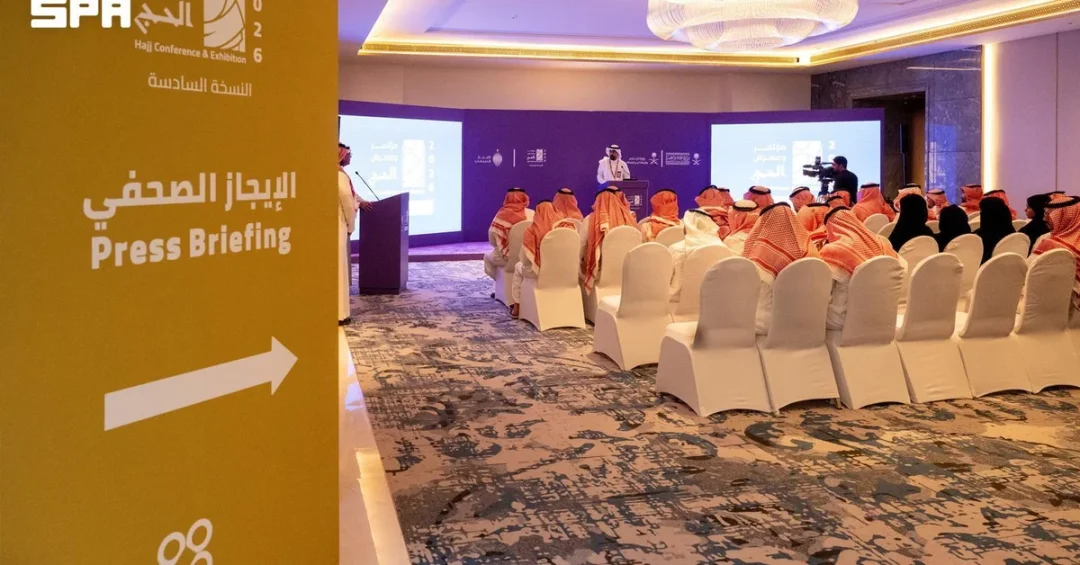
The Ministry of Hajj and Umrah has unveiled the details of the sixth Hajj Conference and Exhibition, set to open on Sunday at the Jeddah Superdome under the patronage of the Custodian of the Two Holy Mosques King Salman bin Abdulaziz Al Saud. The announcement was made during a press briefing in Jeddah by Dr. Ghassan Alnwaimi, Assistant Deputy Minister for International Relations and Ministry Spokesperson, who described the event as a key milestone in early preparations for the upcoming Hajj season. Organized by the ministry in collaboration with the Pilgrim Experience Program, a Saudi Vision 2030 realization program, the conference will bring together government entities, Hajj affairs offices, service providers, companies, and specialists from around the world. The event aims to discuss needs, develop solutions, build partnerships, and finalize arrangements and contracts to improve services for pilgrims. With participation from over 150 countries and more than 520 government, private-sector, and nonprofit entities, the sixth edition promises to be the largest and most comprehensive yet, spanning over 67,000 square meters and featuring more than 15 main zones and programs.
Why does this conference matter now, as the Kingdom continues to welcome millions of pilgrims annually? The Hajj Conference and Exhibition has become a cornerstone of Saudi Arabia’s efforts to enhance the pilgrim experience, aligning with the ambitious goals of Vision 2030 to elevate the quality of services and infrastructure. The sixth edition builds on the successes of previous years, which saw more than 1,850 service agreements signed, over 310 sessions held, and 250 workshops conducted, attracting more than 570,000 visitors. This year’s theme, “From Makkah to the World,” reflects Saudi Arabia’s accumulated expertise in organizing Hajj and Umrah, managing crowds, developing services, and employing technology and innovation. It also signals the Kingdom’s openness to international partnerships, showcasing its leadership in hosting one of the world’s largest annual gatherings. As the event opens, it underscores Saudi Arabia’s commitment to continuous improvement and its role as a global hub for religious tourism.
Context and Background
What is the historical significance of the Hajj Conference and Exhibition, and how has it evolved over the years? Since its inception, the conference has served as a vital platform for stakeholders to collaborate and innovate, ensuring that the Hajj experience is safe, seamless, and spiritually fulfilling for millions of pilgrims. The first five editions laid a strong foundation, resulting in tangible improvements in services and infrastructure. The sixth edition, organized by the Ministry of Hajj and Umrah in partnership with the Pilgrim Experience Program, continues this legacy by expanding its scope and reach. The Pilgrim Experience Program is one of the key initiatives under Saudi Vision 2030, designed to enhance the quality of life for pilgrims and visitors while promoting economic diversification. By bringing together a diverse array of participants, the conference facilitates the exchange of ideas and the formation of strategic partnerships that drive progress.
How does the conference reflect Saudi Arabia’s broader strategic priorities? The event is not merely a logistical gathering; it is a manifestation of the Kingdom’s dedication to serving Islam’s holiest sites and its guests. Under the leadership of the Custodian of the Two Holy Mosques and the Crown Prince, Saudi Arabia has invested heavily in expanding capacity, improving transportation, and integrating cutting-edge technologies to manage the annual influx of pilgrims. The Hajj Conference and Exhibition serves as a focal point for these efforts, allowing government agencies, private companies, and nonprofit organizations to align their strategies and finalize contracts ahead of the Hajj season. This proactive approach ensures that all necessary arrangements are in place well in advance, minimizing disruptions and maximizing the pilgrim experience. Moreover, the conference highlights Saudi Arabia’s role as a global leader in crowd management and event organization, sharing its expertise with the world.
Key Details and Programs
What specific features will define the sixth edition of the Hajj Conference and Exhibition? According to Dr. Ghassan Alnwaimi, the event will feature more than 520 government, private-sector, and nonprofit entities, with participation and attendance from over 150 countries. The conference spans over 67,000 square meters and includes more than 15 main zones and programs. The scientific program is structured around three main tracks: infrastructure and operational services; empowerment and integration; and development and sustainability. These tracks are designed to address the multifaceted challenges of hosting Hajj, from logistics and crowd control to digital transformation and environmental stewardship. The event also includes the Hajj Council, an accompanying exhibition, and programs supporting innovation and startups. A notable addition this year is the Awareness and Training Forum, debuting under the theme “From Awareness to Empowerment,” which aims to improve awareness tools, training programs, and staff readiness.
How will these programs translate into tangible improvements for pilgrims? Dr. Alnwaimi emphasized that the conference’s value lies in turning discussions and agreements into contracts, action plans, and practical solutions that enhance the pilgrim experience. The previous five editions resulted in over 1,850 service agreements, demonstrating the conference’s role as a catalyst for concrete outcomes. This year, participants will engage in sessions and workshops designed to produce actionable strategies. The innovation and startup programs are particularly significant, as they encourage entrepreneurs to develop tech-driven solutions for challenges such as crowd management, translation services, and health monitoring. By fostering a culture of innovation, the conference ensures that Saudi Arabia remains at the forefront of pilgrimage management, continuously improving the quality of services provided to millions of guests.
What does the theme “From Makkah to the World” signify? This theme encapsulates Saudi Arabia’s journey in mastering the logistics of Hajj and Umrah and its willingness to share that expertise globally. It reflects the Kingdom’s accumulated knowledge in organizing large-scale events, managing crowds, and leveraging technology. The theme also underscores the international dimension of the conference, as it opens doors for partnerships with countries and organizations seeking to learn from Saudi Arabia’s experience. By positioning itself as a global leader in pilgrimage services, the Kingdom not only enhances its own capabilities but also contributes to the broader Islamic world, fostering unity and cooperation. The theme is a testament to Saudi Arabia’s confidence in its abilities and its commitment to serving pilgrims from all corners of the globe.
International and Regional Impact
How does the Hajj Conference and Exhibition influence international relations and regional cooperation? The event serves as a diplomatic platform, bringing together representatives from over 150 countries, including Hajj affairs offices and service providers. This diverse participation facilitates dialogue and collaboration, strengthening ties between Saudi Arabia and other nations. For many countries, the conference is an opportunity to coordinate logistics for their pilgrims, ensuring a smooth journey and a fulfilling spiritual experience. The presence of international delegations also underscores Saudi Arabia’s role as a responsible global citizen, committed to the well-being of all pilgrims regardless of nationality. By hosting such a comprehensive event, the Kingdom reinforces its position as a leader in the Islamic world and a reliable partner in multilateral efforts.
What regional benefits does the conference bring? Within the Middle East, the conference promotes economic integration and knowledge sharing. Neighboring countries can learn from Saudi Arabia’s best practices in crowd management, infrastructure development, and digital innovation. The event also stimulates business opportunities for regional companies, as they vie for contracts and partnerships. Furthermore, the conference highlights the importance of Hajj and Umrah to the region’s economy, as millions of pilgrims transit through various countries. By enhancing the efficiency and quality of pilgrimage services, Saudi Arabia contributes to regional stability and prosperity. The conference also serves as a counter-narrative to negative stereotypes, showcasing the Kingdom’s modernization and hospitality.
Economic and Strategic Significance
What economic impact does the Hajj Conference and Exhibition have? The event generates significant economic activity, from the signing of service agreements to the exhibition of products and services. With over 520 entities participating, the conference facilitates business-to-business interactions that can lead to lucrative contracts. The previous five editions saw more than 1,850 service agreements, indicating the substantial commercial value of the event. For Saudi Arabia, the conference supports the goals of Vision 2030 by promoting economic diversification and private-sector growth. It also boosts the local economy in Jeddah, as thousands of visitors attend the event, staying in hotels, dining in restaurants, and using transportation services. The focus on innovation and startups further stimulates entrepreneurship, creating jobs and fostering a knowledge-based economy.
How does the conference align with Saudi Arabia’s strategic goals? Strategically, the event reinforces the Kingdom’s commitment to serving pilgrims and enhancing the Hajj experience, which is a central pillar of its national identity. It also demonstrates Saudi Arabia’s ability to host large-scale international gatherings, enhancing its soft power and global standing. The conference is a key component of the Pilgrim Experience Program, which aims to increase the number of pilgrims and improve the quality of services. By investing in infrastructure, technology, and human capital, Saudi Arabia is positioning itself as the premier destination for religious tourism. The event also supports the broader objectives of Vision 2030, including economic growth, social development, and international cooperation. Through such initiatives, the Kingdom is transforming its economy and society while preserving its cultural and religious heritage.
Vision 2030 Alignment
How does the sixth Hajj Conference and Exhibition contribute to Saudi Vision 2030? The conference is a direct embodiment of Vision 2030’s goals, particularly those related to enhancing the pilgrim experience, economic diversification, and global engagement. The Pilgrim Experience Program, under which the conference is organized, is dedicated to improving services for the 30 million pilgrims expected by 2030. By bringing together stakeholders from around the world, the conference facilitates the partnerships and innovations needed to achieve this ambitious target. It also showcases Saudi Arabia’s progress in digital transformation, sustainability, and infrastructure development, all of which are key pillars of Vision 2030. The event underscores the Kingdom’s commitment to continuous improvement and its determination to provide pilgrims with a world-class experience.
What does the future hold for Saudi Arabia’s pilgrimage sector? The sixth Hajj Conference and Exhibition sets the stage for a future where Hajj and Umrah are more accessible, efficient, and spiritually enriching than ever before. As Saudi Arabia continues to invest in mega-projects like the Haramain High-Speed Railway and the expansion of the Grand Mosque, the conference will remain a vital platform for planning and coordination. The emphasis on innovation and sustainability ensures that the Kingdom is not only meeting current needs but also anticipating future challenges. By fostering international partnerships and sharing its expertise, Saudi Arabia is cementing its role as a global leader in pilgrimage management. The conference is a clear signal that the Kingdom is moving confidently towards Vision 2030, driven by a spirit of service, innovation, and excellence.
20 Questions
Q1. What is the Hajj Conference and Exhibition?
A1. The Hajj Conference and Exhibition is an annual event organized by the Ministry of Hajj and Umrah in collaboration with the Pilgrim Experience Program. It brings together government entities, service providers, and experts to discuss and finalize arrangements for the upcoming Hajj season, aiming to improve services for pilgrims.
Q2. When and where will the sixth edition take place?
A2. The sixth edition opens on Sunday at the Jeddah Superdome under the patronage of the Custodian of the Two Holy Mosques King Salman bin Abdulaziz Al Saud. It runs for several days, featuring exhibitions, sessions, and workshops.
Q3. Who is organizing the conference?
A3. The conference is organized by the Ministry of Hajj and Umrah in collaboration with the Pilgrim Experience Program, one of the Saudi Vision 2030 realization programs. This partnership ensures alignment with national goals to enhance the pilgrim experience.
Q4. How many entities and countries are participating?
A4. More than 520 government, private-sector, and nonprofit entities are participating, with attendance from over 150 countries. This diverse participation underscores the international significance of the event and Saudi Arabia’s global leadership in pilgrimage services.
Q5. What is the theme of the sixth edition?
A5. The theme is “From Makkah to the World,” reflecting Saudi Arabia’s accumulated expertise in organizing Hajj and Umrah, managing crowds, and employing technology, while opening opportunities for international partnerships and knowledge sharing.
Q6. What are the main tracks of the scientific program?
A6. The scientific program covers three main tracks: infrastructure and operational services; empowerment and integration; and development and sustainability. These tracks address key challenges and opportunities in pilgrimage management, from logistics to innovation.
Q7. What is the Awareness and Training Forum?
A7. The Awareness and Training Forum debuts this year under the theme “From Awareness to Empowerment.” It aims to improve awareness tools, training programs, and staff readiness, ensuring that all personnel involved in Hajj operations are well-prepared to serve pilgrims effectively.
Q8. What were the outcomes of previous editions?
A8. The previous five editions featured more than 1,850 service agreements, over 310 sessions, and 250 workshops, attracting more than 570,000 visitors. These outcomes demonstrate the conference’s role in turning discussions into actionable contracts and solutions.
Q9. How does the conference benefit pilgrims?
A9. The conference benefits pilgrims by facilitating agreements and innovations that improve services such as transportation, accommodation, crowd management, and health care. It ensures that all arrangements are finalized well before the Hajj season, leading to a smoother and more fulfilling experience.
Q10. What is the role of the Pilgrim Experience Program?
A10. The Pilgrim Experience Program is a Vision 2030 initiative aimed at enhancing the quality of services for pilgrims and visitors. It oversees improvements in infrastructure, technology, and hospitality, working to increase the number of pilgrims and enrich their spiritual journey.
Q11. How does the conference support Saudi Vision 2030?
A11. The conference supports Vision 2030 by promoting economic diversification, fostering innovation, and enhancing the pilgrim experience. It aligns with the goals of the Pilgrim Experience Program to accommodate 30 million pilgrims by 2030 and showcases Saudi Arabia’s modernization and global engagement.
Q12. What economic benefits does the conference bring?
A12. The conference generates economic activity through service agreements, exhibitions, and business interactions. It boosts local businesses in Jeddah and creates opportunities for startups and entrepreneurs, contributing to job creation and economic growth in line with Vision 2030.
Q13. How does the conference promote international cooperation?
A13. By bringing together representatives from over 150 countries, the conference facilitates dialogue and partnerships. It allows nations to coordinate logistics for their pilgrims and learn from Saudi Arabia’s expertise in crowd management and service delivery, strengthening international ties.
Q14. What innovations are highlighted at the conference?
A14. The conference features programs supporting innovation and startups, focusing on tech-driven solutions for crowd management, translation, health monitoring, and sustainability. These innovations aim to enhance efficiency and the overall pilgrim experience.
Q15. How does the conference address sustainability?
A15. The scientific program includes a track on development and sustainability, exploring eco-friendly practices, waste management, and resource efficiency. Saudi Arabia is committed to preserving the environment of the holy sites while accommodating millions of pilgrims.
Q16. What is the Hajj Council?
A16. The Hajj Council is a component of the conference that brings together key stakeholders to discuss strategic issues and coordinate efforts. It serves as a high-level platform for decision-making and policy alignment related to Hajj operations.
Q17. How can companies participate in the conference?
A17. Companies can participate by registering as exhibitors or attendees through the official conference channels. They can showcase their products and services, network with potential partners, and engage in sessions to contribute to the improvement of pilgrimage services.
Q18. What is the expected attendance this year?
A18. While exact numbers are not yet available, the conference is expected to attract tens of thousands of visitors, building on the 570,000 visitors from previous editions. The expanded size and scope indicate a high level of interest from around the world.
Q19. How does the conference ensure the safety of pilgrims?
A19. The conference facilitates agreements and training programs focused on safety, crowd control, and emergency response. By bringing together security experts and service providers, it ensures that comprehensive measures are in place to protect pilgrims during Hajj.
Q20. What is the long-term vision for the Hajj Conference and Exhibition?
A20. The long-term vision is to continuously enhance the conference as a global platform for pilgrimage innovation and cooperation. It aims to support Saudi Arabia’s goal of providing an exceptional pilgrim experience and to remain a key driver of Vision 2030’s success.
Reader Feedback
We value your thoughts. Please share your feedback on this article.
Your feedback helps us improve our coverage.
Related articles
 Saudi, Egyptian FMs Discuss Security and Stability
 Saudi, Qatari FMs Discuss Regional De-escalation
 Saudi Forces Arrest 5 for Illegal Excavation in Eastern Region
 Saudi Customs Seize 1,205 Contraband Items in One Week
 Saudi Board of Grievances Concludes World AI Regulation Summit Participation
 Saudi Patrols Arrest Citizen for Transporting Border Violators in Jazan