


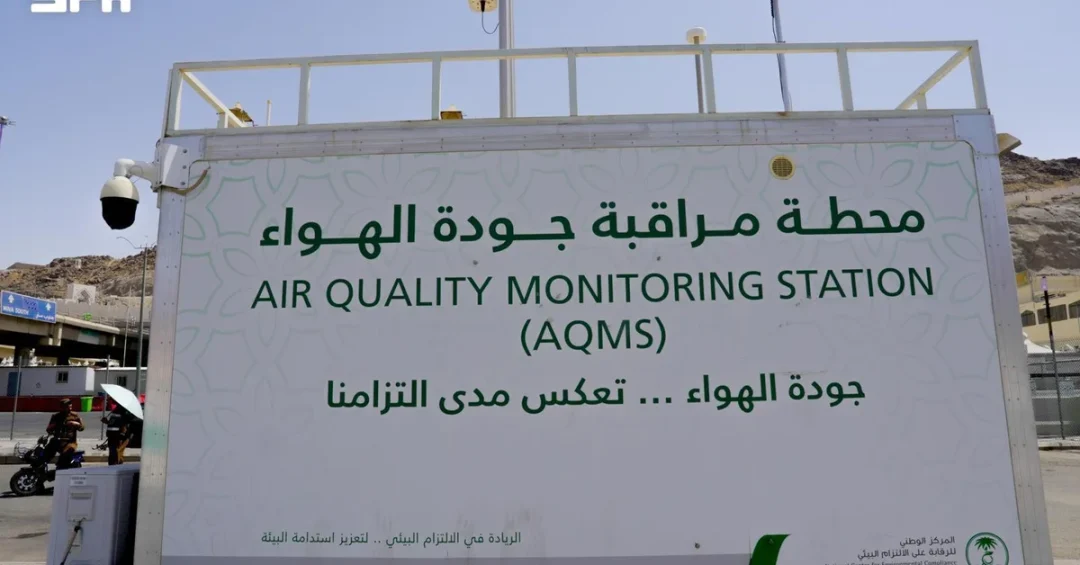
Jeddah’s air quality is now under continuous 24-hour surveillance through a network of 18 monitoring stations operated by the National Center for Environmental Compliance, providing real-time data on pollutants across the city. The stations, part of a broader national effort, measure fine and inhalable particulate matter, ozone, nitrogen dioxide, sulfur dioxide, and carbon monoxide, as well as weather parameters that influence pollutant dispersion. This initiative underscores Saudi Arabia’s commitment to environmental protection and public health, aligning with the goals of Vision 2030 to enhance quality of life and build sustainable, resilient cities.
Have you ever wondered how the air you breathe is being tracked in one of the Kingdom’s largest metropolises? The monitoring network, which includes stations in Al-Matar, Obhur, Dahaban, Buraiman, Al-Rawdah, Al-Jami’ah, Al-Khumrah, the Historic District, and the industrial area, provides round-the-clock readings that transform invisible pollutants into measurable indicators. Mobile laboratories supplement fixed stations in locations requiring additional attention. This comprehensive system enables authorities to detect changes in air quality, issue timely alerts, and take necessary action when readings exceed approved limits, ensuring the well-being of Jeddah’s residents and visitors.
Context and Background
Why has Saudi Arabia invested in such an extensive air quality monitoring network? The answer lies in the Kingdom’s broader environmental strategy, which recognizes that clean air is fundamental to public health and sustainable development. The National Center for Environmental Compliance, a key government agency, operates the network to fulfill its mandate of monitoring and mitigating environmental risks. Jeddah, as a major port city and gateway to the holy cities of Makkah and Madinah, experiences unique air quality challenges due to its coastal location, industrial activities, and heavy traffic. The monitoring stations are strategically distributed to capture variations between residential neighborhoods, major roads, and areas near industrial and coastal operations.
Historically, air quality management in Saudi Arabia has evolved significantly. In recent years, the Kingdom has accelerated its environmental efforts under Vision 2030, which emphasizes sustainability and the protection of natural resources. The establishment of the National Center for Environmental Compliance itself reflects a institutional commitment to rigorous oversight. By providing continuous data, the network supports evidence-based policymaking and helps authorities respond swiftly to potential health risks. Moreover, the data feeds into national and international reporting systems, demonstrating transparency and fostering trust among citizens and global partners.
The Air Quality Index (AQI) used by the center classifies readings into six levels: Good, Moderate, Unhealthy for Sensitive Groups, Unhealthy, Very Unhealthy, and Hazardous. This standardized scale enables clear communication of risks, particularly for vulnerable groups such as children, the elderly, pregnant women, and individuals with asthma or respiratory and heart conditions. The index is a critical tool for public health advisories and for guiding actions to reduce exposure during periods of poor air quality. By making this information accessible, the center empowers residents to make informed decisions about outdoor activities.
Key Details of the Monitoring Network
What exactly do these 18 stations measure, and how do they operate? Each station is equipped with advanced sensors that continuously sample ambient air. The pollutants monitored include fine particulate matter (PM2.5) and inhalable particulate matter (PM10), which can penetrate deep into the lungs and bloodstream; ozone, which can irritate respiratory systems; nitrogen dioxide, a byproduct of combustion; sulfur dioxide, often linked to industrial processes; and carbon monoxide, a colorless and odorless gas. In addition to pollutants, the stations track meteorological parameters such as temperature, humidity, wind speed and direction, and solar radiation. These weather data are essential for understanding how pollutants disperse, accumulate, or travel across the city.
The geographic distribution of the stations is carefully planned to capture a representative picture of air quality across Jeddah. For instance, stations in Al-Matar and Obhur, near the airport and coastal resort areas, may record different pollutant profiles than those in the industrial area or the bustling Historic District. The mobile laboratories provide flexibility to monitor temporary hotspots, such as construction sites or areas affected by seasonal dust storms. Data from all stations are transmitted to a central system where they are processed and made available through air quality maps. These maps display monitoring points and current AQI levels, allowing the public to view real-time conditions in their neighborhoods.
The National Center for Meteorology plays a complementary role by supplying data on wind, humidity, temperature, dust, and visibility. This collaboration is crucial in a coastal city like Jeddah, where sea breezes can carry pollutants inland or disperse them over the Red Sea. Humidity can affect the formation of secondary pollutants, while airborne dust from the surrounding desert can significantly elevate particulate matter levels. By integrating meteorological and air quality data, the center can better explain pollution episodes and predict their evolution. This interdisciplinary approach enhances the accuracy of alerts and guidance issued to the public.
How does the system ensure data accuracy and reliability? The National Center for Environmental Compliance adheres to international standards for calibration and maintenance of monitoring equipment. Stations are regularly serviced, and data are validated before being released. The center also participates in inter-laboratory comparisons and quality assurance programs. This rigorous approach ensures that the information provided to authorities and the public is trustworthy. Furthermore, the continuous nature of the monitoring means that trends can be analyzed over time, helping to evaluate the effectiveness of pollution control measures and inform future policies.
International and Regional Impact
Why does Jeddah’s air quality monitoring matter beyond Saudi Arabia’s borders? As a leading economy in the Middle East and a pivotal player in global energy markets, the Kingdom’s environmental policies have regional and international resonance. The monitoring network demonstrates Saudi Arabia’s proactive stance on environmental stewardship, which is increasingly important in global climate discussions. By sharing data and best practices, the Kingdom contributes to international efforts to combat air pollution, a major health risk worldwide. Moreover, the network supports the goals of the Saudi Green Initiative, which aims to plant 10 billion trees and reduce carbon emissions by 278 million tonnes annually by 2030.
Regionally, Jeddah’s experience can serve as a model for other cities in the Gulf and beyond. Many urban areas in the region face similar challenges, including rapid urbanization, industrial growth, and natural dust events. The integration of fixed and mobile monitoring, combined with meteorological data, offers a comprehensive framework that can be adapted to different contexts. Saudi Arabia’s leadership in this area enhances its soft power and reinforces its role as a responsible global citizen. Additionally, the data collected can inform regional early warning systems for dust storms and other transboundary pollution events, fostering cooperation among neighboring countries.
What implications does this have for public health and the economy? Clean air is a public good that directly affects productivity, healthcare costs, and overall quality of life. By maintaining vigilant monitoring, Jeddah can mitigate the health impacts of air pollution, reducing hospital admissions and premature deaths. This, in turn, supports a healthy workforce and lowers the burden on the healthcare system. For businesses, a clean environment is an attractive factor for investment and tourism. The Kingdom’s Vision 2030 aims to increase tourism and diversify the economy, and a healthy environment is a key component of that vision. Thus, the air quality network is not just an environmental tool but also an economic asset.
Economic and Strategic Significance
How does air quality monitoring align with Saudi Arabia’s economic diversification goals? Vision 2030 seeks to reduce dependence on oil and create a vibrant, diversified economy. Environmental sustainability is a pillar of this transformation. By investing in green technologies and environmental infrastructure, the Kingdom is opening new sectors for growth, such as environmental consulting, clean tech, and data analytics. The monitoring network itself requires skilled technicians, data scientists, and engineers, contributing to job creation and knowledge transfer. Furthermore, reliable environmental data can attract international companies that prioritize sustainability in their operations, enhancing Saudi Arabia’s competitiveness as a business destination.
The strategic significance extends to energy and industrial sectors. Saudi Arabia is a major producer of oil and gas, and it is committed to minimizing the environmental footprint of these activities. The monitoring data help industries comply with environmental regulations and adopt cleaner production methods. For example, the industrial area in Jeddah can use the data to optimize processes and reduce emissions. This proactive approach not only protects public health but also strengthens the social license to operate for industries. As the Kingdom transitions to a greener economy, such monitoring systems will be essential for tracking progress and ensuring accountability.
Moreover, the data generated by the network can support research and innovation. Universities and research institutions in Saudi Arabia can use the open data to study urban air quality, develop predictive models, and propose mitigation strategies. This fosters a culture of scientific inquiry and evidence-based decision-making, which is vital for a knowledge-based economy. The National Center for Environmental Compliance may collaborate with international research organizations, further integrating Saudi Arabia into the global scientific community. Over time, this can lead to breakthroughs in air purification technologies and sustainable urban planning.
Vision 2030 Alignment
How does the 24-hour air quality watch in Jeddah embody the spirit of Vision 2030? The Vision’s overarching goal is to create a thriving society and a prosperous economy, with sustainability at its core. One of its key themes is ‘A Vibrant Society,’ which includes ensuring a healthy environment for all citizens. The monitoring network directly contributes to this by providing the data needed to protect public health. It also supports ‘A Thriving Economy’ by fostering innovation and attracting investment. And it aligns with ‘An Ambitious Nation’ by demonstrating good governance and transparency. The Kingdom’s leadership has consistently emphasized that environmental protection is not a luxury but a necessity for sustainable development.
Looking ahead, the expansion of monitoring networks and the integration of advanced technologies like AI and IoT will further enhance Saudi Arabia’s environmental resilience. The lessons learned from Jeddah can be applied to other cities, including NEOM and the Red Sea Project, which are designed to be models of sustainability. By prioritizing air quality, the Kingdom is not only safeguarding the health of its people but also setting a benchmark for the region. As the world grapples with climate change and pollution, Saudi Arabia’s proactive measures demonstrate its commitment to a cleaner, healthier future. The 18 stations in Jeddah are more than just sensors; they are sentinels of a new era of environmental stewardship.
20 Questions
Q1. What is the primary purpose of the 18 air quality monitoring stations in Jeddah?
A1. The stations provide round-the-clock readings of air pollutants to monitor air quality, identify changes, and enable authorities to take necessary action when readings exceed approved limits, protecting public health.
Q2. Which organization operates the air quality monitoring network in Jeddah?
A2. The network is operated by the National Center for Environmental Compliance, a Saudi government agency responsible for environmental oversight and regulation.
Q3. What types of pollutants do the monitoring stations measure?
A3. They measure fine and inhalable particulate matter (PM2.5 and PM10), ozone, nitrogen dioxide, sulfur dioxide, and carbon monoxide, as well as weather parameters like temperature, humidity, and wind.
Q4. How are the monitoring stations distributed across Jeddah?
A4. Stations are located in various areas including Al-Matar, Obhur, Dahaban, Buraiman, Al-Rawdah, Al-Jami’ah, Al-Khumrah, the Historic District, and the industrial area, to capture differences between residential, traffic, and industrial zones.
Q5. What is the Air Quality Index (AQI) and what are its levels?
A5. The AQI classifies air quality into six levels: Good, Moderate, Unhealthy for Sensitive Groups, Unhealthy, Very Unhealthy, and Hazardous, helping authorities issue appropriate alerts.
Q6. How does the National Center for Meteorology contribute to air quality monitoring?
A6. It provides data on wind, humidity, temperature, dust, and visibility to help explain how pollutants move and affect readings in coastal Jeddah.
Q7. Why is Jeddah’s coastal location significant for air quality?
A7. Sea breezes can disperse pollutants or carry them inland, while humidity and airborne dust from the desert can affect pollutant concentrations and monitoring readings.
Q8. What are mobile laboratories used for in the monitoring network?
A8. Mobile laboratories support monitoring in locations requiring additional attention, such as temporary hotspots or areas with specific concerns, providing flexibility beyond fixed stations.
Q9. How does the monitoring network benefit public health in Jeddah?
A9. By providing real-time data, it enables timely alerts and guidance, especially for vulnerable groups like children, the elderly, pregnant women, and those with respiratory or heart conditions.
Q10. What role does the data play in environmental policymaking?
A10. The data support evidence-based policymaking, help evaluate the effectiveness of pollution control measures, and inform future regulations to improve air quality.
Q11. How does the network align with Saudi Vision 2030?
A11. It aligns with Vision 2030’s goals of enhancing quality of life, protecting the environment, and promoting sustainable development, contributing to a vibrant society and thriving economy.
Q12. Can the public access air quality data from these stations?
A12. Yes, air quality maps are available showing monitoring points and current AQI levels, allowing residents to view real-time conditions in their areas.
Q13. What measures are taken when pollutant levels exceed approved limits?
A13. Authorities issue alerts and guidance suited to the AQI level, advising vulnerable groups to take precautions and possibly implementing measures to reduce emissions.
Q14. How does the network contribute to Saudi Arabia’s environmental goals?
A14. It supports the Saudi Green Initiative and other environmental programs by providing data to track progress, reduce emissions, and combat air pollution.
Q15. What economic benefits does air quality monitoring bring?
A15. It attracts investment, supports tourism, reduces healthcare costs, and fosters innovation in clean technologies, contributing to economic diversification.
Q16. How are the monitoring stations maintained and calibrated?
A16. The National Center for Environmental Compliance adheres to international standards for calibration and maintenance, ensuring data accuracy and reliability through regular servicing and quality assurance.
Q17. What is the significance of continuous 24-hour monitoring?
A17. Continuous monitoring captures diurnal and seasonal variations, enabling timely detection of pollution episodes and providing comprehensive data for analysis and response.
Q18. How does the network handle natural dust events?
A18. By integrating meteorological data, the network can identify dust events, which significantly elevate particulate matter, and issue appropriate advisories to the public.
Q19. Can other Saudi cities benefit from Jeddah’s monitoring model?
A19. Yes, the model can be adapted to other cities, including NEOM and the Red Sea Project, to enhance environmental resilience and sustainable urban planning across the Kingdom.
Q20. What future developments are expected for air quality monitoring in Saudi Arabia?
A20. Future developments include integrating AI and IoT technologies, expanding networks, and fostering research to further improve air quality management and public health protection.
Reader Feedback
We value your thoughts. Please share your feedback on this article.
Your feedback helps us improve our coverage.
Related articles
 SFDA CEO Discusses Biotechnology Cooperation with Korean Firms
 Saudi Red Crescent in Makkah Region Handles 40,929 Emergency Calls
 Weqaa Advances One Health System for Food Security
 Saudi Red Crescent Signs Deal to Boost Emergency Services
 Security Forces Hospital in Riyadh Earns Baby-Friendly Accreditation
 Riyadh Al-Khabra Installs Fitness Equipment in Parks