


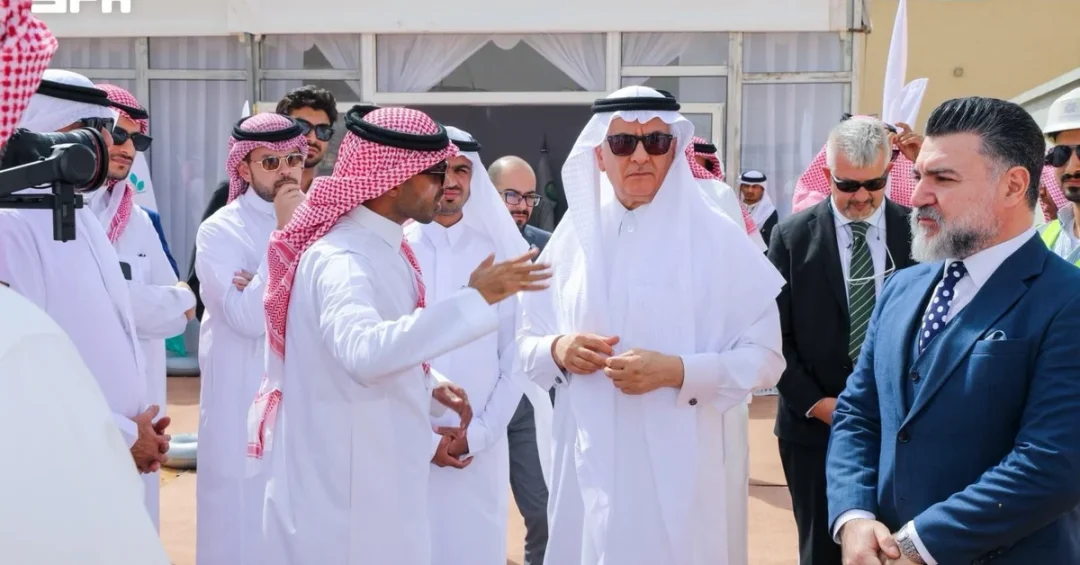
Saudi Arabia’s Minister of Environment, Water and Agriculture, Abdulrahman Alfadley, laid the foundation stone for a major agricultural produce processing and marketing facility in Riyadh on November 8, 2026, developed by Leen Alkhair, marking a significant step toward strengthening the Kingdom’s food security and agricultural self-sufficiency. The facility, designed to establish an integrated ecosystem for processing, manufacturing, and marketing fruits and vegetables, will have an annual production capacity exceeding 500,000 tons, according to the Saudi Press Agency (SPA).
What does this development signal for Saudi Arabia’s agricultural ambitions and its broader economic transformation? The project, situated on a 20,000-square-meter plot with a total operational area of 29,000 square meters across three floors, includes a separate smart warehouse with a storage capacity of 7,000 pallets. It is currently 36% complete, with full completion expected by September 30, 2027. The initiative aims to maximize the utilization of local agricultural output, enhance the efficiency of food supply chains, and provide a comprehensive range of food products—including fresh, prepped, and processed items—to meet the needs of both individual consumers and the food service sector. This aligns with Saudi Arabia’s Vision 2030 goals of diversifying the economy and achieving sustainable development.
Context and Background
Why is Saudi Arabia investing so heavily in agricultural infrastructure? The Kingdom has long recognized that food security is a cornerstone of national stability and economic resilience. Under Vision 2030, launched in 2016 by Crown Prince Mohammed bin Salman, Saudi Arabia has accelerated efforts to diversify its economy away from oil dependence, with agriculture and food processing identified as key pillars. The Ministry of Environment, Water and Agriculture, led by Minister Abdulrahman Alfadley, has been at the forefront of these efforts, implementing policies to boost local production, improve water efficiency, and enhance supply chain resilience.
The new facility by Leen Alkhair represents a tangible manifestation of these policies. By integrating processing, manufacturing, and marketing under one roof, it addresses a critical gap in the value chain: the need to reduce post-harvest losses and add value to local crops. Historically, a significant portion of Saudi agricultural produce was sold fresh, with limited processing capacity. This project aims to change that by diversifying pathways for leveraging agricultural produce—from marketing fresh goods to allocating a portion of the harvest for food processing—thereby maximizing the added value of these products. The facility’s strategic location in Riyadh, the capital and largest consumer market, further underscores its importance.
Moreover, the project reflects a broader trend in Saudi Arabia’s agricultural sector: the adoption of smart technologies and sustainable practices. The inclusion of a smart warehouse with a 7,000-pallet capacity indicates a focus on automation and efficiency, which are essential for reducing waste and ensuring consistent quality. As the Kingdom continues to modernize its agricultural sector, such facilities will play a vital role in meeting domestic demand and potentially expanding exports to regional markets.
Key Details
What exactly does this facility entail, and how will it operate? According to official information released via the Saudi Press Agency, the facility is designed to process over 500,000 tons of agricultural produce annually. It will offer a comprehensive range of food products, including fresh, prepped, and processed items. This includes minimally processed fruits and vegetables for retail, ready-to-cook or ready-to-eat products for the food service sector, and processed goods such as juices, purees, and frozen items. The facility’s three-floor layout, spanning 29,000 square meters of operational area, will house state-of-the-art processing lines, cold storage, and packaging units.
The smart warehouse, a separate structure with a storage capacity of 7,000 pallets, will utilize advanced inventory management systems to ensure optimal stock rotation and reduce spoilage. This is particularly important in Saudi Arabia’s climate, where maintaining the cold chain is critical. The project is currently 36% complete, with full completion expected by September 30, 2027. Once operational, it is expected to create jobs, support local farmers by providing a reliable market for their produce, and enhance the overall efficiency of the food supply chain.
Leen Alkhair, the developer, is a Saudi company specializing in agricultural processing and marketing. While specific details about the company’s other projects are not provided in the official announcement, its selection to develop this high-capacity facility suggests a strong track record and alignment with national priorities. The involvement of the Ministry of Environment, Water and Agriculture in laying the foundation stone highlights the government’s commitment to supporting private sector-led initiatives that contribute to national goals.
International and Regional Impact
How will this facility affect Saudi Arabia’s role in regional and global food markets? The Middle East and North Africa region is a major importer of food, and Saudi Arabia has been working to reduce its reliance on imports by boosting domestic production and processing capacity. This facility will not only help meet domestic demand but also position the Kingdom as a potential exporter of processed food products to neighboring countries. The region’s growing population and changing dietary habits are driving demand for convenient, high-quality food products, and Saudi Arabia is well-placed to capture a share of this market.
Furthermore, the project aligns with Saudi Arabia’s efforts to enhance food security at the national and regional levels. By increasing the utilization of local agricultural output, it reduces dependence on imports and mitigates the impact of global supply chain disruptions. This is particularly relevant in the wake of the COVID-19 pandemic and geopolitical tensions that have exposed vulnerabilities in global food systems. Saudi Arabia’s investment in such infrastructure demonstrates its commitment to ensuring a stable and secure food supply for its citizens and contributing to regional stability.
On the international stage, the facility could also serve as a model for other countries seeking to modernize their agricultural sectors. The integration of smart technologies and sustainable practices aligns with global trends toward climate-smart agriculture and circular economy principles. As Saudi Arabia continues to share its expertise and best practices through international forums, projects like this enhance its reputation as a leader in agricultural innovation.
Economic and Strategic Significance
What economic benefits will this project bring to Saudi Arabia? The facility is expected to have a significant positive impact on the local economy. It will create direct employment opportunities in processing, logistics, and management, as well as indirect jobs in farming, transportation, and retail. By providing a reliable market for local farmers, it will encourage increased agricultural production and investment in modern farming techniques. This, in turn, can lead to higher incomes for rural communities and reduce rural-to-urban migration.
Strategically, the project supports Saudi Arabia’s goal of achieving self-sufficiency in key food items. While the Kingdom will continue to import certain staples, increasing domestic processing capacity reduces the import bill and enhances the resilience of the food supply chain. It also contributes to the diversification of the economy by expanding the non-oil industrial base. The food processing sector is a key component of Saudi Arabia’s industrial strategy, and this facility is a prime example of how the Kingdom is moving up the value chain.
Additionally, the project aligns with the objectives of the National Industrial Development and Logistics Program (NIDLP), one of the Vision 2030 realization programs. NIDLP aims to transform Saudi Arabia into a leading industrial power and logistics hub, and food processing is one of its priority sectors. By supporting such projects, the government is fostering a conducive environment for private sector investment and innovation.
Vision 2030 Alignment
How does this facility contribute to Saudi Arabia’s Vision 2030? Vision 2030 is a comprehensive plan to diversify the economy, improve quality of life, and enhance government efficiency. Food security is a critical component of this vision, as it ensures that the Kingdom can meet the needs of its growing population without undue reliance on external sources. The agricultural processing facility directly supports several Vision 2030 objectives, including economic diversification, private sector growth, and sustainable development.
By maximizing the added value of local agricultural produce, the project helps create a more resilient and self-sufficient food system. It also promotes the use of advanced technologies, which is a key theme of Vision 2030’s focus on innovation and digital transformation. The smart warehouse, for instance, exemplifies how technology can be leveraged to improve efficiency and reduce waste. As Saudi Arabia continues to implement Vision 2030, projects like this will be instrumental in achieving the Kingdom’s long-term goals and cementing its position as a global leader in sustainable agriculture and food security.
20 Questions
Q1. What is the purpose of the new agricultural processing facility in Riyadh?
A1. The facility aims to establish an integrated ecosystem for processing, manufacturing, and marketing fruits and vegetables, maximizing the use of local agricultural output and enhancing food supply chain efficiency.
Q2. Who laid the foundation stone for the facility?
A2. Saudi Arabia’s Minister of Environment, Water and Agriculture, Abdulrahman Alfadley, laid the foundation stone on November 8, 2026.
Q3. Which company is developing the facility?
A3. The facility is being developed by Leen Alkhair, a Saudi company specializing in agricultural processing and marketing.
Q4. What is the annual production capacity of the facility?
A4. The facility is designed to process over 500,000 tons of agricultural produce annually, significantly boosting local processing capacity.
Q5. Where is the facility located?
A5. It is located in Riyadh, the capital of Saudi Arabia, on a 20,000-square-meter plot.
Q6. What is the total operational area of the facility?
A6. The facility has a total operational area of 29,000 square meters across three floors, providing ample space for processing and storage.
Q7. What is the storage capacity of the smart warehouse?
A7. The separate smart warehouse has a storage capacity of 7,000 pallets, utilizing advanced inventory management systems.
Q8. What percentage of the project is currently complete?
A8. The project is currently 36% complete, with full completion expected by September 30, 2027.
Q9. What types of food products will the facility provide?
A9. It will offer a comprehensive range of food products, including fresh, prepped, and processed items for individual consumers and the food service sector.
Q10. How does the facility aim to maximize the value of local crops?
A10. By diversifying pathways for leveraging agricultural produce, from marketing fresh goods to allocating a portion for food processing, it maximizes added value.
Q11. What is the significance of this facility for Saudi Arabia’s food security?
A11. It enhances food security by increasing domestic processing capacity, reducing reliance on imports, and ensuring a stable supply of food products.
Q12. How does the project align with Vision 2030?
A12. It supports economic diversification, private sector growth, and sustainable development, key objectives of Vision 2030.
Q13. What economic benefits will the facility bring?
A13. It will create jobs, support local farmers, and contribute to the growth of the non-oil industrial base, boosting the national economy.
Q14. Will the facility export products to other countries?
A14. While primarily aimed at the domestic market, the facility could potentially export processed food products to regional markets, enhancing Saudi Arabia’s trade position.
Q15. What role does the Ministry of Environment, Water and Agriculture play?
A15. The ministry, led by Minister Abdulrahman Alfadley, supports and oversees agricultural projects to ensure they align with national goals and policies.
Q16. How does the facility incorporate technology?
A16. The facility includes a smart warehouse with advanced inventory management systems, reflecting the use of technology to improve efficiency and reduce waste.
Q17. What is the expected completion date?
A17. The facility is expected to be fully completed by September 30, 2027, with construction currently underway.
Q18. How will local farmers benefit from this facility?
A18. Local farmers will have a reliable market for their produce, encouraging increased production and investment in modern farming techniques.
Q19. Does the facility support sustainable agriculture?
A19. Yes, by reducing post-harvest losses, optimizing resource use, and promoting efficient supply chains, it supports sustainable agricultural practices.
Q20. What is the broader impact of this project on Saudi Arabia’s economy?
A20. It contributes to economic diversification, reduces import dependence, and strengthens the Kingdom’s position as a leader in agricultural innovation and food security.
Reader Feedback
We value your thoughts. Please share your feedback on this article.
Your feedback helps us improve our coverage.
Related articles
 IsDB Group to Participate in BOE Africa 2026
 Dumat Al-Jandal Concludes Fourth Agricultural Processing Festival
 ZATCA Urges October Withholding Tax Forms by November 10
 Commerce Ministry: Business Accounts for Commercial Use Only
 Eastern Region Municipality Showcases 700+ Investment Opportunities at Women’s Economic Forum 2026
 Qassim Farmers Prepare Farmland for Winter Vegetable Season