


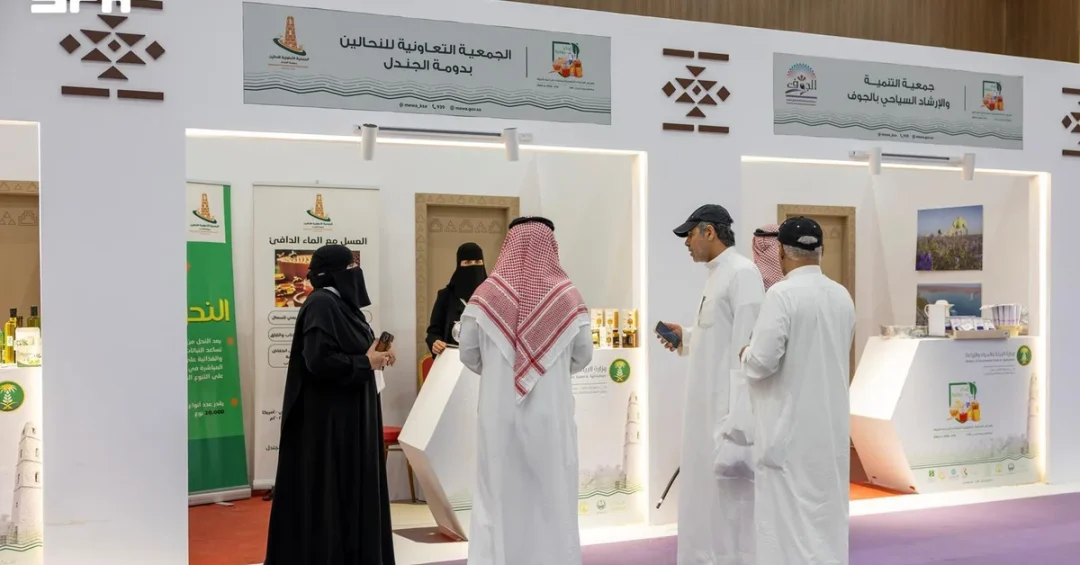
The Ministry of Environment, Water and Agriculture’s branch in Al-Jouf Region, represented by its Dumat Al-Jandal office, concluded on Friday the fourth edition of the “Ibda’at Joufiyah” festival for processed agricultural products at the city’s exhibition center, bringing together farmers, government and nongovernmental entities, and families in the cottage industry. The three-day event, held under the patronage of the Ministry, showcased the region’s growing capacity in agricultural processing and cottage industries, drawing participants from across Al-Jouf and beyond. The festival featured 22 booths displaying a diverse range of processed products, including honey, olives, and molasses, alongside handmade goods from local families. Sixteen government and nongovernmental entities provided services to visitors, ranging from awareness and educational programs to free medical screenings.
Held for the fourth consecutive year, the festival underscores Saudi Arabia’s commitment to empowering rural communities and diversifying the agricultural economy in line with Vision 2030. The event provided a platform for farmers and producers to enhance their skills through five specialized workshops focused on strengthening production capabilities, improving product quality, and boosting added value in the region’s agricultural sector. By fostering collaboration between the public and private sectors, the festival highlights the Kingdom’s integrated approach to sustainable development. As Saudi Arabia continues to modernize its agricultural landscape, initiatives like “Ibda’at Joufiyah” play a vital role in preserving local heritage while driving economic growth. How does such a festival contribute to the broader goals of food security and rural prosperity? It does so by directly linking local producers with markets and knowledge, creating a cycle of improvement that benefits the entire region.
Context and Background
What makes the Al-Jouf region a cornerstone of Saudi Arabia’s agricultural ambitions? Located in the northern part of the Kingdom, Al-Jouf has long been known for its fertile lands and abundant water resources, making it a key contributor to national food production. The region is particularly famous for its olive groves, which produce some of the finest olive oil in the Middle East, as well as for honey and other traditional products. The “Ibda’at Joufiyah” festival, launched four years ago by the Ministry of Environment, Water and Agriculture, was designed to harness this potential by providing a dedicated marketplace and knowledge hub for local producers. Over the years, it has grown in scope and participation, reflecting the Ministry’s strategic focus on developing the agricultural sector as a pillar of economic diversification.
The festival is part of a broader national effort to support small-scale farmers and cottage industries, which are essential to rural livelihoods. According to official Saudi sources, the Ministry has been implementing various programs to enhance agricultural productivity, improve water efficiency, and promote sustainable practices. These efforts align with the National Agriculture Strategy 2030, which aims to achieve food security, increase self-sufficiency, and create job opportunities in rural areas. By bringing together government entities, nongovernmental organizations, and local families, the festival embodies the collaborative spirit needed to achieve these ambitious targets. The fourth edition, in particular, built on the successes of previous years, expanding the number of workshops and participating entities to offer more comprehensive support.
Moreover, the event reflects the Kingdom’s rich cultural heritage, where traditional knowledge in food processing and handicrafts is passed down through generations. By showcasing these products, the festival not only preserves cultural identity but also integrates it into the modern economy. This dual focus on heritage and innovation is a hallmark of Saudi Arabia’s development model, ensuring that progress does not come at the expense of tradition. As the Kingdom opens up to the world through Vision 2030, such festivals serve as windows into its vibrant local cultures, attracting interest from international visitors and potential investors.
Key Details
What specific activities and outcomes defined the fourth edition of the festival? The three-day event, held at the Dumat Al-Jandal exhibition center, featured 22 booths that displayed a wide array of processed agricultural products. Among the highlights were locally produced honey, known for its unique flavor and medicinal properties, olives and olive oil, and molasses, a traditional sweetener. These products are not only staples of the local diet but also represent the region’s agricultural diversity. In addition to food items, the booths showcased goods made by families in the cottage industry, such as textiles, pottery, and handicrafts, providing these families with a vital source of income and a platform to reach new customers.
Sixteen government and nongovernmental entities participated in the festival, offering a range of services to visitors. These included awareness and educational programs on topics like sustainable farming, water conservation, and healthy nutrition. Free medical screenings were also provided, underscoring the holistic approach to community well-being. The presence of these entities allowed farmers and families to access information, resources, and support that can help them improve their operations and quality of life. For many participants, the festival was not just a market but a one-stop shop for capacity building and networking.
A central component of the program was the five specialized workshops designed for farmers and producers. These workshops covered critical areas such as modern processing techniques, packaging and branding, marketing strategies, and quality control. By strengthening production capabilities, the workshops aimed to enhance the competitiveness of local products in both domestic and international markets. Participants learned how to add value to raw agricultural goods, turning them into higher-margin processed items that can command better prices. This focus on value addition is crucial for increasing the economic returns from agriculture, especially for smallholders who often struggle to compete on volume alone. The workshops also facilitated the exchange of best practices among farmers, creating a community of learning and mutual support.
International and Regional Impact
How does a local festival in Dumat Al-Jandal resonate on the regional and international stage? The “Ibda’at Joufiyah” festival is a microcosm of Saudi Arabia’s broader efforts to position itself as a leader in sustainable agriculture and food security. In a region where water scarcity and climate change pose significant challenges, the Kingdom’s innovative approaches to agricultural processing and cottage industry development are being watched closely by neighboring countries and international organizations. By successfully hosting four editions of this festival, Al-Jouf has demonstrated a replicable model for rural development that other regions in the Middle East and North Africa could adopt. This enhances Saudi Arabia’s soft power and its role as a knowledge exporter in the agricultural domain.
Furthermore, the festival contributes to the Kingdom’s growing reputation as a destination for cultural and heritage tourism. International visitors interested in traditional crafts and organic products are increasingly drawn to events that offer authentic local experiences. The Ministry of Environment, Water and Agriculture’s support for such initiatives aligns with the National Tourism Strategy, which aims to attract 100 million visitors annually by 2030. By integrating agricultural festivals into the tourism calendar, Saudi Arabia can showcase its rural charm and diverse landscapes, from the olive groves of Al-Jouf to the terraced farms of Asir. This not only boosts local economies but also fosters cross-cultural understanding and people-to-people ties.
On a regional level, the festival serves as a platform for cooperation among Gulf Cooperation Council (GCC) countries, which share similar agricultural challenges and opportunities. Producers from neighboring states often participate or observe, leading to the exchange of ideas and potential joint ventures. The event also highlights Saudi Arabia’s commitment to the UN Sustainable Development Goals, particularly those related to zero hunger, decent work, and responsible consumption and production. By empowering small-scale farmers and cottage industries, the Kingdom is making tangible progress toward these global objectives, reinforcing its standing as a responsible international actor.
Economic and Strategic Significance
What economic value does the festival generate, and why is it strategically important for Saudi Arabia? The immediate economic impact is evident in the sales and contracts that result from the festival. For many cottage industry families, the event represents a significant portion of their annual income, allowing them to invest in their businesses and improve their standards of living. The 22 booths likely generated substantial revenue over the three days, with products ranging from premium honey to handcrafted goods. Beyond direct sales, the festival creates opportunities for long-term business relationships between producers and retailers, including supermarkets, hotels, and export companies. These connections help integrate small producers into larger value chains, enhancing their market access and bargaining power.
Strategically, the festival supports the Kingdom’s food security objectives by promoting local production and reducing reliance on imports. Saudi Arabia imports a large share of its food, but Vision 2030 aims to increase domestic production of key commodities through sustainable practices. By encouraging agricultural processing, the festival helps extend the shelf life of products, reduce post-harvest losses, and create more resilient food systems. This is particularly important for perishable items like olives and honey, which can be transformed into value-added products that are easier to store and transport. The workshops on quality control and packaging further ensure that these products meet international standards, opening doors to export markets.
Additionally, the festival contributes to job creation and entrepreneurship, especially among youth and women. The cottage industry sector is a key focus of the Ministry’s empowerment programs, as it allows families to generate income from home-based activities. By providing training and market access, the festival helps transform these informal activities into formal, scalable businesses. This aligns with the National Transformation Program’s targets for increasing women’s participation in the labor force and reducing unemployment. The skills learned in the workshops—such as marketing, branding, and financial management—are transferable and can be applied to other economic ventures, fostering a culture of innovation and self-reliance.
Vision 2030 Alignment
How does the “Ibda’at Joufiyah” festival embody the principles of Saudi Vision 2030? At its core, Vision 2030 seeks to diversify the economy away from oil, develop public service sectors, and enhance the quality of life for all citizens. The festival directly supports these goals by stimulating rural economies, creating jobs, and preserving cultural heritage. It reflects the Vision’s emphasis on empowering small and medium-sized enterprises (SMEs), which are seen as engines of job creation and innovation. Many of the participants are micro-entrepreneurs who benefit from the Ministry’s support to formalize and grow their businesses. By linking them with government services and markets, the festival helps them overcome barriers to entry and scale.
Moreover, the event underscores the importance of environmental sustainability, a key pillar of Vision 2030. The Ministry of Environment, Water and Agriculture promotes practices that conserve water, protect soil, and reduce waste. The workshops likely included sessions on organic farming, efficient irrigation, and eco-friendly packaging, aligning with the Saudi Green Initiative and the Middle East Green Initiative. These efforts are crucial for ensuring that agricultural development does not deplete natural resources, but rather enhances them for future generations. The festival thus serves as a practical demonstration of how economic growth and environmental stewardship can go hand in hand.
Finally, the festival is a testament to the Kingdom’s commitment to social development and national pride. By celebrating local products and traditions, it fosters a sense of identity and belonging among Saudis, while also sharing the Kingdom’s rich heritage with the world. As Saudi Arabia continues its journey toward a vibrant, diversified economy, events like this will remain essential in knitting together the social fabric and showcasing the best of what the nation has to offer. The fourth edition of “Ibda’at Joufiyah” is not just a conclusion, but a stepping stone toward even greater achievements in the years ahead, as the Kingdom moves confidently toward its 2030 goals and beyond.
20 Questions
Q1. What was the name of the festival that concluded in Dumat Al-Jandal?
A1. The festival was called “Ibda’at Joufiyah,” which translates to “Creative Jouf” or “Jouf Innovations.” It is an annual event organized by the Ministry of Environment, Water and Agriculture’s branch in Al-Jouf Region.
Q2. How many editions of the festival have been held so far?
A2. The fourth edition was concluded, meaning the festival has been held for four consecutive years. This consistent annual occurrence demonstrates the event’s growing importance and sustainability.
Q3. Where was the festival held?
A3. It took place at the exhibition center in Dumat Al-Jandal, a historic city in the Al-Jouf region of northern Saudi Arabia. The venue provided ample space for booths and workshops.
Q4. How many booths were featured at the festival?
A4. There were 22 booths showcasing processed agricultural products and cottage industry goods. These booths represented a diverse range of local producers and families.
Q5. What types of products were displayed at the booths?
A5. Products included honey, olives, molasses, and various goods made by families in the cottage industry, such as textiles and handicrafts. These items reflect the region’s agricultural and cultural heritage.
Q6. How many government and nongovernmental entities participated?
A6. Sixteen government and nongovernmental entities took part, offering services like awareness programs and free medical screenings. Their involvement added significant value to the festival experience.
Q7. What were some of the services provided by these entities?
A7. They provided awareness and educational programs on topics like sustainable farming and health, as well as free medical screenings. These services aimed to support the well-being and knowledge of visitors and participants.
Q8. How many specialized workshops were conducted?
A8. Five specialized workshops were held for farmers and producers. These workshops focused on strengthening production capabilities, improving product quality, and enhancing added value.
Q9. What was the main purpose of the festival?
A9. The festival aimed to support local farmers and producers, empower families in the cottage industry, promote agricultural processing, and boost the market presence of their goods. It serves as a platform for economic and social development.
Q10. Which government body organized the festival?
A10. The Ministry of Environment, Water and Agriculture’s branch in Al-Jouf Region, represented by its Dumat Al-Jandal office, organized the festival. This ministry is responsible for agricultural development and environmental sustainability.
Q11. What is the significance of Al-Jouf region in Saudi agriculture?
A11. Al-Jouf is known for its fertile land and water resources, making it a key agricultural area, especially for olives and honey. Its products are highly valued across the Kingdom.
Q12. How does the festival support cottage industries?
A12. It provides a marketplace for families to sell their handmade goods, along with training and exposure to new markets. This empowers them economically and preserves traditional skills.
Q13. What is the role of the workshops in the festival?
A13. The workshops equip farmers and producers with modern techniques in processing, packaging, and marketing to increase competitiveness and income. They are a core component of the capacity-building efforts.
Q14. How does the festival align with Vision 2030?
A14. It supports economic diversification, SME growth, job creation, and cultural preservation, all key pillars of Vision 2030. It also promotes sustainable agriculture and food security.
Q15. What kind of medical services were offered?
A15. Free medical screenings were provided by participating health entities, promoting community health and well-being. These screenings help detect potential health issues early.
Q16. How many days did the festival last?
A16. The festival was a three-day event, allowing ample time for visitors to explore the booths and attend workshops. This duration maximizes engagement and economic impact.
Q17. Who were the main beneficiaries of the festival?
A17. Local farmers, producers, and families involved in the cottage industry were the primary beneficiaries, along with the broader community. They gained market access, knowledge, and income opportunities.
Q18. What is the expected impact of the festival on the local economy?
A18. It boosts local sales, creates business connections, and encourages entrepreneurship, leading to sustainable economic growth in the region. The ripple effects extend to related sectors like tourism and transport.
Q19. How does the festival promote Saudi culture?
A19. By showcasing traditional products and handicrafts, it preserves and celebrates Saudi heritage, sharing it with a wider audience. This fosters cultural pride and attracts tourism.
Q20. Will the festival continue in future years?
A20. Given its success and alignment with national goals, it is likely to continue, further supporting agricultural and rural development in Al-Jouf. The Ministry’s commitment suggests ongoing editions.
Reader Feedback
We value your thoughts. Please share your feedback on this article.
Your feedback helps us improve our coverage.
Related articles
 ZATCA Urges October Withholding Tax Forms by November 10
 Commerce Ministry: Business Accounts for Commercial Use Only
 Eastern Region Municipality Showcases 700+ Investment Opportunities at Women’s Economic Forum 2026
 Qassim Farmers Prepare Farmland for Winter Vegetable Season
 Women’s Economic Forum 2026 Highlights Saudi Women’s Role in Leading Future Economy
 SFD Finances $403 Million Projects in Syria