


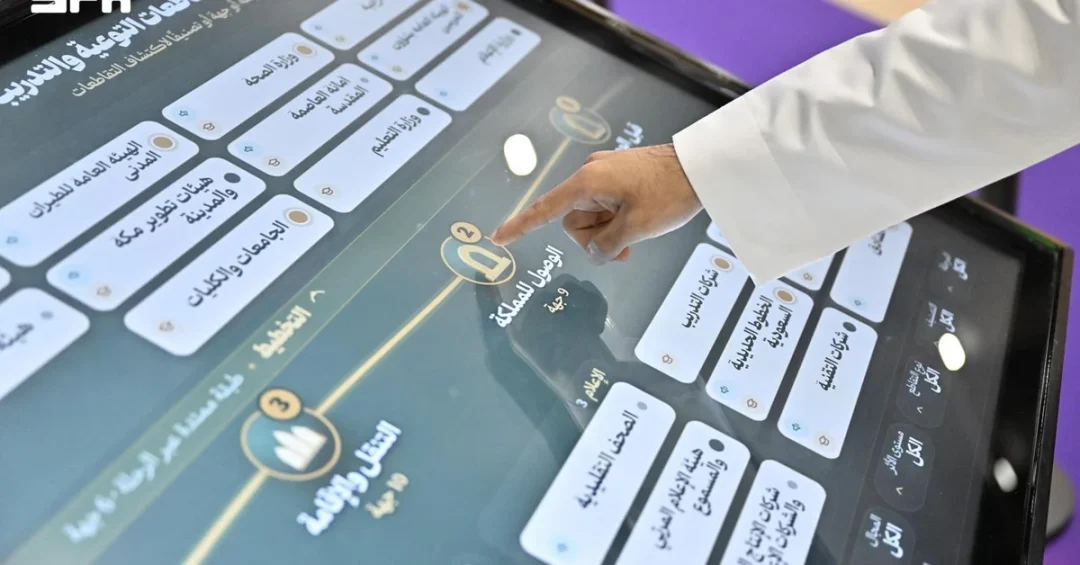
The Ministry of Hajj and Umrah is showcasing a comprehensive suite of services, development initiatives, and technological solutions at the Hajj Conference and Exhibition in Jeddah, underscoring Saudi Arabia’s commitment to enhancing the pilgrimage experience for millions of Muslims worldwide. The pavilion, which opened on November 9, 2026, highlights the Kingdom’s ongoing efforts to improve the Hajj and Umrah system through innovation, regulation, and strategic planning.
Have you ever wondered how Saudi Arabia manages to host over two million pilgrims annually while continuously improving services? The ministry’s exhibition stand provides a glimpse into the sophisticated infrastructure and cutting-edge technologies that make this possible. From artificial intelligence applications to interactive master plans, the pavilion demonstrates how the Kingdom is leveraging its resources and expertise to serve guests of God with efficiency and care. This aligns with the broader objectives of Saudi Vision 2030, which seeks to elevate the quality of life for citizens and visitors alike, while positioning the Kingdom as a global leader in service excellence.
Context and Background
What drives Saudi Arabia to invest so heavily in the Hajj and Umrah sector? The answer lies in the profound religious, historical, and economic significance of the pilgrimage to the Kingdom. As the custodian of the Two Holy Mosques, Saudi Arabia has a sacred duty to ensure the safety, comfort, and spiritual fulfillment of pilgrims. Over the decades, the Kingdom has transformed the pilgrimage infrastructure, expanding the Grand Mosque in Makkah and the Prophet’s Mosque in Madinah, and implementing advanced crowd management systems. The annual Hajj Conference and Exhibition serves as a vital platform for showcasing these achievements and fostering collaboration among stakeholders from around the world.
The Ministry of Hajj and Umrah, under the leadership of Minister Dr. Tawfiq bin Fawzan Al-Rabiah, has been at the forefront of this transformation. The ministry’s participation in the exhibition reflects its proactive approach to engaging with partners, sharing best practices, and gathering feedback. By presenting its latest initiatives, the ministry aims to enhance transparency and encourage innovation across the ecosystem. This year’s pavilion is particularly significant as it comes on the heels of record-breaking Umrah seasons and the successful return of full-scale Hajj operations post-pandemic. The Kingdom’s ability to host millions of pilgrims safely is a testament to its logistical capabilities and unwavering commitment to its religious responsibilities.
Moreover, the exhibition provides an opportunity for international stakeholders to learn about the Kingdom’s regulatory framework and service standards. It also allows Saudi entities to showcase their contributions to the pilgrimage experience, from transportation and accommodation to healthcare and digital services. The event underscores the collaborative spirit that defines the Hajj and Umrah sector, where government agencies, private companies, and non-profit organizations work together to serve pilgrims.
Key Details of the Pavilion
What specific innovations are on display at the ministry’s pavilion? Visitors can explore the “Labaytum Award,” an initiative designed to recognize outstanding contributions to pilgrim services. The award, which includes multiple categories and tracks, aims to encourage excellence and innovation among entities serving Hajj and Umrah pilgrims. By highlighting successful initiatives, the ministry hopes to inspire others to raise their standards and adopt creative solutions. The Labaytum Award also reinforces the Kingdom’s culture of appreciation and motivates service providers to go above and beyond in their offerings.
In the realm of planning and development, the pavilion features the “Camps Master Plan” presented through an interactive digital table. This comprehensive plan details the layout of camps across the holy sites, including Mina, Arafat, and Muzdalifah, and outlines the services provided in each area. The interactive display allows visitors to visualize the spatial distribution and understand the logistical considerations involved in accommodating millions of pilgrims. This transparency demonstrates the ministry’s meticulous planning and its commitment to continuous improvement.
On the regulatory front, the pavilion showcases the rules and regulations governing Hajj and Umrah activities, as well as the rights of pilgrims and the obligations of service providers. This emphasis on clear guidelines ensures that all parties understand their responsibilities and that pilgrims receive the quality of service they deserve. The ministry’s regulatory framework is designed to protect pilgrims’ interests while fostering a competitive and innovative market for services.
Technology takes center stage with the “Nusuk Care” initiative, which utilizes artificial intelligence applications to serve pilgrims. Nusuk Care aims to provide smart solutions that care for and monitor visitors, enhancing their safety and well-being. For example, AI-powered systems can detect overcrowding, predict potential issues, and facilitate rapid responses. The initiative also includes features that offer personalized assistance and information to pilgrims, making their journey smoother and more spiritually fulfilling.
In the areas of awareness and skills development, the pavilion introduces multilingual awareness content for pilgrims, as well as training programs to qualify workers serving them. These programs are essential for ensuring that pilgrims from diverse backgrounds receive accurate information and culturally sensitive support. By investing in human capital, the ministry enhances the overall quality of service and promotes a welcoming environment for all visitors.
The pavilion also allows visitors to explore the “Nusuk” application, the official platform for pilgrims. Nusuk offers integrated digital services for planning Hajj and Umrah trips, booking accommodations and transportation, and accessing a range of other services. The app simplifies procedures and facilitates pilgrims’ journeys, making it easier for them to focus on their spiritual experience. Additionally, the pavilion showcases monitoring and control systems, along with operational follow-up centers that enable real-time monitoring of crowds and services. These systems are critical for maintaining order and ensuring the safety of pilgrims throughout their pilgrimage.
International and Regional Impact
How does Saudi Arabia’s leadership in Hajj and Umrah services affect the broader Muslim world? The Kingdom’s efforts have a profound impact on millions of Muslims who aspire to perform the pilgrimage. By continuously improving services, Saudi Arabia enables more people to fulfill this religious obligation comfortably and safely. The Kingdom’s initiatives also set a benchmark for other nations in hosting large-scale religious events. Moreover, the Hajj and Umrah sector contributes significantly to the local economy, creating jobs and stimulating business activity in Makkah, Madinah, and Jeddah.
On the regional level, Saudi Arabia’s advancements in pilgrimage management foster cooperation among Gulf Cooperation Council (GCC) countries and other Muslim-majority nations. The exchange of expertise and best practices strengthens ties and promotes a shared commitment to serving pilgrims. Additionally, the Kingdom’s use of technology and data analytics in managing crowds and services serves as a model for other countries facing similar challenges. The international community has recognized Saudi Arabia’s efforts, with many praising the Kingdom’s dedication to enhancing the pilgrimage experience.
Economic and Strategic Significance
What economic benefits does the Hajj and Umrah sector bring to Saudi Arabia? The pilgrimage industry is a major contributor to the Kingdom’s economy, generating revenue from transportation, hospitality, retail, and other services. The government’s investments in infrastructure and technology have not only improved the pilgrim experience but also created opportunities for private sector growth. The Nusuk platform, for instance, has streamlined bookings and payments, benefiting both pilgrims and service providers. As part of Vision 2030, Saudi Arabia aims to increase the number of Umrah pilgrims to 30 million annually by 2030, further boosting economic activity and job creation.
Strategically, the Hajj and Umrah sector enhances Saudi Arabia’s soft power and global standing. By serving as the custodian of Islam’s holiest sites, the Kingdom plays a unique role in the Muslim world. Its successful management of the pilgrimage reinforces its leadership and credibility. Furthermore, the sector supports the Kingdom’s efforts to diversify its economy away from oil dependence. The development of smart cities like NEOM and the expansion of tourism infrastructure complement the pilgrimage experience, attracting visitors to explore other parts of Saudi Arabia.
Vision 2030 Alignment
How does the Ministry of Hajj and Umrah’s work align with Saudi Vision 2030? The Vision, launched in 2016 by Crown Prince Mohammed bin Salman, aims to transform Saudi Arabia into a diversified, innovative, and globally engaged economy. The pilgrimage sector is a key pillar of this transformation. By enhancing the quality of services for pilgrims, the Kingdom seeks to increase the number of visitors and improve their experience, thereby contributing to economic growth and cultural exchange. The ministry’s initiatives, such as the Labaytum Award and Nusuk Care, embody the Vision’s emphasis on excellence, innovation, and customer satisfaction.
Moreover, the Vision 2030 goals include developing the tourism sector and promoting Saudi Arabia as a destination for both religious and leisure travel. The Hajj and Umrah experience is often a pilgrim’s first introduction to the Kingdom, and a positive experience can encourage repeat visits and exploration of other regions. The ministry’s focus on digital transformation and smart solutions also aligns with the Vision’s objective of building a digital economy and improving government efficiency. As Saudi Arabia continues to invest in the pilgrimage sector, it reinforces its commitment to serving Islam and Muslims worldwide while achieving its ambitious developmental goals.
In conclusion, the Ministry of Hajj and Umrah’s pavilion at the Hajj Conference and Exhibition exemplifies the Kingdom’s unwavering dedication to enhancing the pilgrimage experience. Through innovative initiatives, strategic planning, and technological advancements, Saudi Arabia is setting new standards for service excellence. As the Kingdom marches toward Vision 2030, its efforts in the Hajj and Umrah sector will undoubtedly yield lasting benefits for pilgrims, the economy, and the nation’s global standing.
20 Questions
Q1. What is the Hajj Conference and Exhibition?
A1. The Hajj Conference and Exhibition is an annual event held in Jeddah, Saudi Arabia, that brings together stakeholders from the Hajj and Umrah sector to showcase services, share best practices, and discuss innovations aimed at improving the pilgrimage experience.
Q2. What is the Labaytum Award?
A2. The Labaytum Award is an initiative by the Ministry of Hajj and Umrah to recognize outstanding initiatives and entities that serve pilgrims. It encourages excellence and innovation across the Hajj and Umrah services ecosystem through various categories and tracks.
Q3. What is the Camps Master Plan?
A3. The Camps Master Plan is a comprehensive plan for camps across the holy sites, detailing their distribution and the services provided. It is presented interactively at the ministry’s pavilion to show the meticulous planning involved in accommodating pilgrims.
Q4. What is Nusuk Care?
A4. Nusuk Care is an initiative that uses artificial intelligence applications to serve pilgrims. It aims to provide smart solutions for caring for and monitoring visitors, enhancing their safety and well-being during Hajj and Umrah.
Q5. What is the Nusuk application?
A5. The Nusuk application is the official digital platform for pilgrims, offering integrated services for planning Hajj and Umrah trips, booking accommodations and transportation, and accessing various other services to simplify the pilgrimage journey.
Q6. How does the ministry ensure pilgrims’ rights?
A6. The ministry showcases rules and regulations governing Hajj and Umrah activities, clearly outlining pilgrims’ rights and service providers’ obligations. This regulatory framework protects pilgrims and ensures they receive quality services.
Q7. What awareness programs are offered?
A7. The ministry provides multilingual awareness content for pilgrims, covering essential information about the pilgrimage. Additionally, training programs are offered to qualify workers serving pilgrims, enhancing their skills and cultural sensitivity.
Q8. How does technology improve crowd management?
A8. The ministry employs monitoring and control systems, along with operational follow-up centers, that enable real-time monitoring of crowds and services. This allows for quick responses to any issues and ensures the safety of pilgrims.
Q9. What is the economic impact of the Hajj and Umrah sector?
A9. The sector significantly contributes to Saudi Arabia’s economy by generating revenue from transportation, hospitality, retail, and other services. It also creates jobs and supports the Kingdom’s economic diversification goals under Vision 2030.
Q10. How does the ministry support Vision 2030?
A10. The ministry’s initiatives align with Vision 2030 by enhancing service quality, increasing pilgrim numbers, and promoting digital transformation. This supports economic growth, job creation, and the Kingdom’s global standing as a leader in pilgrimage management.
Q11. What are the key features of the Nusuk app?
A11. The Nusuk app allows pilgrims to plan their trips, book services, and access information. It provides a seamless digital experience, making it easier for pilgrims to focus on their spiritual journey while managing logistical aspects efficiently.
Q12. How does the ministry handle multilingual communication?
A12. The ministry provides awareness content in multiple languages to cater to pilgrims from diverse backgrounds. This ensures that all pilgrims receive accurate information and can navigate the pilgrimage process smoothly.
Q13. What training programs are available for workers?
A13. The ministry offers training programs to qualify workers serving pilgrims, focusing on enhancing their skills, knowledge, and ability to provide excellent service. These programs are part of the ministry’s commitment to human capital development.
Q14. How does the Camps Master Plan benefit pilgrims?
A14. The Camps Master Plan ensures that camps are well-organized and equipped with necessary services. It optimizes the use of space and resources, providing pilgrims with comfortable and safe accommodations during their stay in the holy sites.
Q15. What role does AI play in serving pilgrims?
A15. AI applications under Nusuk Care help monitor crowds, predict potential issues, and provide personalized assistance. This technology enhances safety, efficiency, and the overall pilgrimage experience for visitors.
Q16. How does the ministry engage with international stakeholders?
A16. Through events like the Hajj Conference and Exhibition, the ministry engages with international stakeholders to share best practices, gather feedback, and foster collaboration. This engagement helps improve services and strengthens global partnerships.
Q17. What are the goals of the Labaytum Award?
A17. The Labaytum Award aims to recognize and reward outstanding initiatives and entities serving pilgrims. It encourages excellence, innovation, and continuous improvement across the Hajj and Umrah services ecosystem.
Q18. How does the ministry ensure real-time monitoring?
A18. The ministry uses advanced monitoring and control systems, along with operational follow-up centers, to track crowds and services in real time. This enables prompt interventions and ensures the safety and satisfaction of pilgrims.
Q19. What is the significance of the Hajj Conference and Exhibition for Saudi Arabia?
A19. The event showcases Saudi Arabia’s leadership in pilgrimage management, highlights its innovative services, and reinforces its commitment to serving pilgrims. It also provides a platform for collaboration and knowledge exchange among stakeholders.
Q20. How can pilgrims access the Nusuk application?
A20. Pilgrims can download the Nusuk application from official app stores. It is the official platform for Hajj and Umrah services, offering a range of digital tools to facilitate trip planning, bookings, and access to information.
Reader Feedback
We value your thoughts. Please share your feedback on this article.
Your feedback helps us improve our coverage.
Related articles
 Tourism Minister Visits Interior Ministry Pavilion at Hajj Conference
 Public Security Highlights Strategic Integration to Enhance Efficiency of Hajj Ecosystem
 Media Ambassadors Initiative Launches Third Phase Workshops
 Interactive Displays at Hajj Conference Showcase Digital Services for Pilgrims
 Global Participants Enrich Hajj Conference in Jeddah
 Thai Students Explore Hajj Innovations at Jeddah Exhibition