


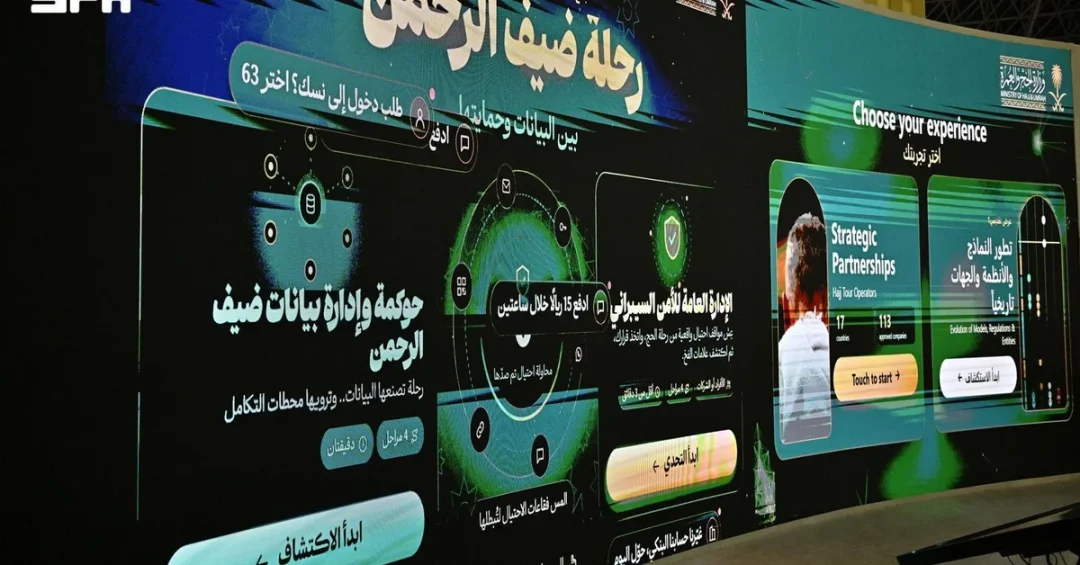
Interactive displays and modern digital technologies at the Hajj Conference and Exhibition are enriching the experience of visitors and participants by providing diverse information and innovative digital services, according to the Saudi Press Agency (SPA). The exhibition, held in Jeddah, serves as a premier global platform for showcasing the latest advancements in pilgrimage services and infrastructure. These interactive displays are not merely static exhibits; they are dynamic tools that foster direct engagement, allowing users to explore a wide array of services, programs, and projects through user-friendly digital interfaces. Have you ever wondered how the Kingdom of Saudi Arabia is leveraging cutting-edge technology to transform the spiritual journey of millions? The answer lies in these immersive digital experiences that bridge the gap between complex service ecosystems and the pilgrims they serve.
The Hajj Conference and Exhibition, organized under the patronage of the Saudi leadership, brings together government entities, private companies, and non-profit organizations dedicated to enhancing the Hajj experience. The interactive displays serve as a digital gateway, highlighting the efforts of these participants and showcasing innovative projects across critical sectors such as transportation, housing, catering, healthcare, and crowd management. By integrating smart applications and electronic platforms, the exhibition demonstrates how technology can streamline procedures, improve safety, and elevate the overall quality of services provided to pilgrims. This initiative aligns seamlessly with the Kingdom’s Vision 2030 goals of enhancing the pilgrimage experience and utilizing digital transformation to serve guests of God.
Context and Background
Why is the Hajj Conference and Exhibition such a pivotal event in the global pilgrimage calendar? The conference, now in its latest edition, has evolved into a major international gathering that attracts experts, decision-makers, and innovators from around the world. It serves as a think tank and a showcase for the latest technologies and best practices in managing large-scale religious events. The interactive displays are a cornerstone of this event, offering a tangible glimpse into the future of pilgrimage services. They represent a strategic shift towards digitalization, where information is not just presented but experienced. This approach ensures that stakeholders can visualize the impact of new technologies and understand how they integrate into the broader ecosystem of Hajj operations.
The background of this technological integration is rooted in Saudi Arabia’s longstanding commitment to serving pilgrims. Over the decades, the Kingdom has invested heavily in infrastructure and services to accommodate the growing number of Hajj and Umrah performers. However, the digital dimension adds a new layer of sophistication. By leveraging the latest in interactive displays, augmented reality, and smart applications, Saudi Arabia is not only improving operational efficiency but also enhancing the spiritual and physical well-being of pilgrims. The exhibition provides a platform for continuous improvement, where feedback and ideas are exchanged, and where the latest innovations are tested and refined. This iterative process is essential for maintaining the highest standards of service, especially as the number of pilgrims continues to rise.
Moreover, the Hajj Conference and Exhibition underscores the collaborative nature of pilgrimage management. It brings together various ministries, including the Ministry of Hajj and Umrah, the Ministry of Transport and Logistic Services, and the Ministry of Health, alongside private sector leaders and technology firms. The interactive displays are a testament to this collaboration, as they integrate data and services from multiple sources into a cohesive user experience. For instance, a single interface might allow a user to explore transportation options, book accommodations, and access health services, all in one place. This integration is a direct outcome of the Kingdom’s efforts to create a seamless and interconnected pilgrimage journey, reflecting the principles of Vision 2030.
Key Details
What exactly do these interactive displays offer to visitors and participants? According to SPA, the displays provide a modern technological medium that fosters direct engagement. Through user-friendly digital interfaces, users can explore various services, programs, and projects, and learn about initiatives designed to elevate the quality of services provided to pilgrims. This includes detailed information on electronic platforms and smart applications that streamline procedures, such as visa issuance, flight bookings, and on-ground logistics. The displays also act as a digital gateway, highlighting the efforts of government, private, and non-profit entities participating in the exhibition. They showcase innovative projects and solutions across sectors such as transportation, housing, catering, healthcare, and crowd management. Additionally, they provide information on technologies used to bolster safety and security while improving the operational efficiency of services delivered throughout the Hajj season.
One of the key features of these interactive displays is their ability to simulate real-world scenarios. For example, a visitor might use a touchscreen to navigate a virtual Hajj journey, from arrival at the airport to performing the rituals. This simulation can highlight the various digital touchpoints, such as the Nusuk platform, which is the official portal for Umrah and Hajj services. The displays also feature case studies of successful projects, such as the expansion of the Grand Mosque in Makkah and the development of the Haramain High-Speed Railway. By presenting these projects in an interactive format, the exhibition makes the scale and complexity of Saudi Arabia’s pilgrimage infrastructure accessible to a global audience. Furthermore, the displays include testimonials from pilgrims and service providers, offering a human perspective on the impact of these technologies.
The interactive displays also serve as a feedback mechanism. Visitors can leave comments and suggestions directly through the digital interfaces, which are then collected and analyzed by the organizers. This real-time feedback loop is invaluable for continuous improvement. It allows service providers to identify pain points and address them promptly. For instance, if multiple users report difficulty in finding a particular service, the interface can be adjusted to make it more intuitive. This agile approach to service development is a hallmark of Saudi Arabia’s strategy to remain at the forefront of pilgrimage management. Moreover, the displays are multilingual, catering to the diverse international audience that attends the exhibition and the pilgrims themselves. This inclusivity ensures that information is accessible to all, regardless of language or technical proficiency.
International and Regional Impact
How does the Hajj Conference and Exhibition influence pilgrimage management beyond Saudi Arabia? The event has become a global benchmark for how to manage large-scale religious gatherings. Countries with significant Muslim populations, such as Indonesia, Pakistan, and Nigeria, send delegations to learn from Saudi Arabia’s experience. The interactive displays are a key attraction for these delegations, as they offer a hands-on look at the technologies that can be adapted to other contexts. For example, crowd management solutions developed for Hajj can be applied to other mass gatherings, such as the Kumbh Mela in India or the Arbaeen pilgrimage in Iraq. By sharing its expertise, Saudi Arabia reinforces its role as a leader in global pilgrimage services and contributes to the broader Islamic world’s capacity to host such events safely and efficiently.
Regionally, the exhibition strengthens ties between Saudi Arabia and its neighbors. The Gulf Cooperation Council (GCC) countries, in particular, benefit from the innovations showcased, as many of their citizens participate in Hajj and Umrah. The interactive displays also highlight regional cooperation in areas such as transportation and security. For instance, the Haramain High-Speed Railway, which connects Makkah and Madinah via Jeddah, is a prime example of regional infrastructure that enhances the pilgrimage experience. The exhibition provides a platform for discussing further integration, such as unified visa procedures or shared digital platforms. This regional collaboration is essential for ensuring a smooth and secure pilgrimage journey for all. Furthermore, the event attracts international media attention, showcasing Saudi Arabia’s technological advancements and its commitment to serving pilgrims. This positive exposure helps counter negative narratives and promotes the Kingdom as a modern, forward-thinking nation.
Economic and Strategic Significance
What is the economic impact of the Hajj Conference and Exhibition and the technologies it promotes? The pilgrimage sector is a major contributor to Saudi Arabia’s economy, with Hajj and Umrah generating billions of dollars annually. The digitalization of services not only improves efficiency but also opens up new economic opportunities. For example, the Nusuk platform and other smart applications create a digital economy around pilgrimage, enabling online bookings, e-payments, and personalized services. This digital ecosystem attracts investment and fosters innovation, aligning with Vision 2030’s goal of diversifying the economy away from oil. The interactive displays at the exhibition are a showcase for these economic opportunities, allowing entrepreneurs and investors to see the potential of the pilgrimage market. They also highlight the role of small and medium-sized enterprises (SMEs) in providing niche services, from specialized catering to high-tech solutions.
Strategically, the exhibition reinforces Saudi Arabia’s position as the custodian of the Two Holy Mosques and a leader in the Islamic world. By investing in advanced technologies, the Kingdom demonstrates its unwavering commitment to serving pilgrims and ensuring their safety and comfort. This strategic focus is not only a religious duty but also a source of soft power. The positive experiences of millions of pilgrims translate into goodwill and strengthened diplomatic ties. Moreover, the technologies developed for Hajj have applications in other sectors, such as smart city management and event logistics. NEOM, Saudi Arabia’s futuristic city, is already leveraging some of these technologies, creating synergies between pilgrimage services and broader national development. The exhibition thus serves as a catalyst for cross-sector innovation, driving progress towards a knowledge-based economy.
Vision 2030 Alignment
How does the Hajj Conference and Exhibition align with Saudi Arabia’s Vision 2030? The Vision, launched in 2016 by Crown Prince Mohammed bin Salman, aims to transform the Kingdom into a global investment powerhouse and a hub connecting three continents. A key pillar of the Vision is to enhance the pilgrimage experience by increasing the capacity and improving the quality of services. The interactive displays and digital technologies showcased at the exhibition are direct enablers of this goal. They contribute to the Pilgrim Experience Program, one of the Vision’s executive programs, which seeks to provide a seamless and enriching journey for pilgrims. By integrating smart applications and electronic platforms, the Kingdom is not only improving operational efficiency but also creating a more spiritual and hassle-free experience. This aligns with the Vision’s broader objectives of digital transformation, economic diversification, and improving the quality of life for all.
Furthermore, the exhibition supports the Vision’s emphasis on international collaboration and knowledge exchange. By bringing together global experts and showcasing Saudi innovations, it positions the Kingdom as a leader in pilgrimage management and a model for other nations. The interactive displays are a tangible manifestation of the Vision’s commitment to technology and innovation. They demonstrate how Saudi Arabia is leveraging its unique position to drive progress in sectors such as transportation, healthcare, and crowd management. As the Kingdom continues to invest in these areas, the Hajj Conference and Exhibition will remain a vital platform for sharing successes and shaping the future of pilgrimage. Ultimately, the integration of digital services for pilgrims is a testament to Saudi Arabia’s dedication to serving humanity and achieving the ambitious goals of Vision 2030.
20 Questions
Q1. What is the Hajj Conference and Exhibition?
A1. The Hajj Conference and Exhibition is a major international event held in Jeddah, Saudi Arabia, that showcases the latest technologies, services, and innovations for managing the Hajj pilgrimage. It brings together government, private, and non-profit entities to enhance the pilgrim experience.
Q2. What are interactive displays at the exhibition?
A2. Interactive displays are modern digital interfaces that allow visitors to explore services, programs, and projects related to Hajj. They provide user-friendly access to information on electronic platforms, smart applications, and innovative solutions across various sectors.
Q3. How do these displays enhance the pilgrim experience?
A3. They streamline procedures by introducing electronic platforms and smart applications that simplify logistics, improve safety, and provide real-time information. This leads to a more seamless and spiritually focused journey for pilgrims.
Q4. Which sectors are highlighted by the interactive displays?
A4. The displays showcase innovations in transportation, housing, catering, healthcare, and crowd management, as well as technologies for safety, security, and operational efficiency during the Hajj season.
Q5. Who participates in the Hajj Conference and Exhibition?
A5. Participants include Saudi government ministries, private companies, non-profit organizations, and international delegations from countries with significant Muslim populations, all collaborating to improve pilgrimage services.
Q6. How does the exhibition align with Saudi Vision 2030?
A6. It supports the Vision’s Pilgrim Experience Program by promoting digital transformation, enhancing service quality, and diversifying the economy. It also showcases Saudi leadership in innovation and global pilgrimage management.
Q7. What is the role of the Saudi Press Agency in reporting this event?
A7. The Saudi Press Agency (SPA) is the official news agency of Saudi Arabia. It provides authoritative coverage of the exhibition, highlighting the technological advancements and their impact on pilgrims.
Q8. How do interactive displays foster engagement?
A8. They use touchscreens, virtual simulations, and multilingual interfaces to actively involve users. Visitors can navigate services, provide feedback, and experience a virtual Hajj journey, making information accessible and engaging.
Q9. What are some examples of smart applications for pilgrims?
A9. Examples include the Nusuk platform for bookings and permits, health apps for medical guidance, and transportation apps for real-time updates. These applications streamline procedures and enhance convenience.
Q10. How does the exhibition impact international pilgrimage management?
A10. It serves as a global benchmark, sharing best practices and technologies with other nations. Delegations learn from Saudi Arabia’s experience, improving their own management of large-scale religious gatherings.
Q11. What economic benefits does the exhibition bring?
A11. It stimulates the pilgrimage economy by showcasing investment opportunities, supporting SMEs, and promoting digital payments. The event also attracts international attention, boosting tourism and business ties.
Q12. How does the exhibition support crowd management?
A12. It displays advanced technologies such as AI-powered monitoring, real-time data analytics, and smart crowd control systems that ensure safety and smooth movement during Hajj.
Q13. What is the significance of the Haramain High-Speed Railway in this context?
A13. The railway is a key infrastructure project that enhances transportation between Makkah, Madinah, and Jeddah. It is often showcased at the exhibition as a model of efficient pilgrim transit.
Q14. How are non-profit organizations involved in the exhibition?
A14. Non-profit organizations participate by presenting charitable initiatives, volunteer programs, and community services that support pilgrims, demonstrating the collaborative spirit of Hajj management.
Q15. What feedback mechanisms are in place at the exhibition?
A15. Interactive displays allow visitors to leave comments and suggestions digitally. This feedback is collected and analyzed to continuously improve services and address pilgrim needs.
Q16. How does the exhibition promote cultural exchange?
A16. By attracting a diverse international audience, the exhibition facilitates cultural exchange and mutual understanding. It showcases Saudi hospitality and the universal values of the Hajj pilgrimage.
Q17. What role does technology play in safety and security during Hajj?
A17. Technology is crucial for safety and security, with tools like surveillance drones, biometric verification, and emergency response systems. The exhibition highlights these innovations to ensure pilgrim well-being.
Q18. How can international pilgrims access the services showcased?
A18. International pilgrims can access these services through official platforms like Nusuk, which are introduced at the exhibition. Many services are available online, simplifying the pilgrimage process.
Q19. What future developments can be expected from the exhibition?
A19. Future developments include further integration of AI, virtual reality, and sustainable technologies. The exhibition will continue to evolve, reflecting Saudi Arabia’s commitment to innovation and excellence in pilgrimage services.
Q20. Why is the Hajj Conference and Exhibition important for Saudi Arabia’s global image?
A20. It showcases Saudi Arabia’s leadership in technology, hospitality, and pilgrimage management. The event enhances the Kingdom’s reputation as a modern, forward-thinking nation dedicated to serving humanity and achieving Vision 2030.
Reader Feedback
We value your thoughts. Please share your feedback on this article.
Your feedback helps us improve our coverage.
Related articles
 Global Participants Enrich Hajj Conference in Jeddah
 Thai Students Explore Hajj Innovations at Jeddah Exhibition
 Madinah Development Authority Showcases Projects at Hajj Conference
 Civil Defense Showcases Hajj Safety Tech in Jeddah
 Saudi Crown Prince Congratulates King of Cambodia on Independence Day
 Türkiye Hosts COP31 Climate Summit in Antalya