


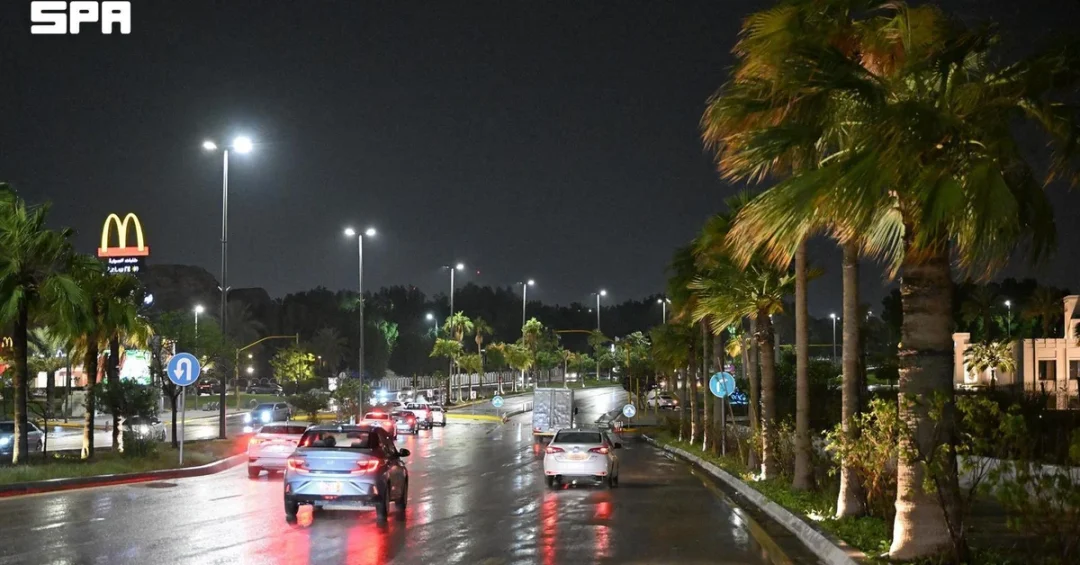
Light to moderate rain fell across scattered areas of Saudi Arabia’s Eastern Region, including the cities of Dammam and Dhahran, on the evening of November 9, 2026, according to the Saudi Press Agency (SPA). The official report noted that skies remain overcast, with conditions favorable for additional rainfall. The event brought welcome moisture to a region known for its arid climate and underscored the Kingdom’s ongoing efforts to manage water resources and ensure public safety during weather events.
Residents of Dammam, Dhahran, and several governorates witnessed the rainfall, which varied in intensity. While the precipitation was not heavy, it marked a notable weather occurrence in the Eastern Region, which typically experiences minimal annual rainfall. The SPA report, released early on November 10, 2026, did not indicate any damage or disruption, but it highlighted the atmospheric conditions that could lead to further rain. Such weather events are closely monitored by Saudi authorities, who prioritize the well-being of citizens and residents. The rainfall also brings a refreshing change to the landscape and supports the natural environment.
Context and Background
Have you ever considered how a simple rain shower can transform an arid landscape and uplift the spirits of an entire community? The Eastern Region of Saudi Arabia, encompassing major urban centers like Dammam, Dhahran, and Al Khobar, is part of the larger Arabian Peninsula, which is characterized by a desert climate with extremely low annual rainfall. According to meteorological data, the region typically receives less than 100 millimeters of rain per year, making each precipitation event a significant and welcome occurrence. The rainfall on November 9, 2026, was part of a weather system that moved across the area, bringing light to moderate rain to scattered locations. The Saudi Press Agency reported that the skies remained overcast, suggesting that the atmospheric conditions were ripe for additional rainfall. This event is not isolated; it reflects seasonal patterns where occasional weather systems from the Mediterranean or the Indian Ocean can bring moisture to the region, especially during the winter months.
The Eastern Region is a vital economic hub for Saudi Arabia, home to the headquarters of Saudi Aramco and numerous industrial facilities. The area’s infrastructure is designed to withstand various weather conditions, including occasional heavy rains that can cause flash flooding in dry valleys, known as wadis. However, the recent rainfall was light to moderate, posing minimal risk. The Saudi National Center for Meteorology (NCM) continuously monitors weather patterns and issues forecasts and warnings to keep the public informed. While the SPA report did not specify the exact duration or total accumulation, it confirmed that the rain fell across scattered areas, including Dammam and Dhahran, as well as several governorates. Such events are important for replenishing groundwater aquifers and supporting vegetation, which are crucial for the environment and local agriculture.
Historically, the Eastern Region has experienced occasional heavy downpours that led to flooding, but the Kingdom has invested significantly in drainage and infrastructure improvements to mitigate such risks. The government’s proactive approach includes regular maintenance of stormwater systems and public awareness campaigns. The rainfall on November 9 serves as a reminder of the importance of these measures. Moreover, it provides an opportunity for residents to appreciate the rare beauty of rain in the desert, a phenomenon that has inspired poets and artists for centuries. The Saudi Press Agency’s report is a testament to the transparent and timely dissemination of information by official channels, ensuring that the public remains well-informed about weather developments.
Key Details
What exactly happened during this weather event, and what does it mean for the days ahead? According to the Saudi Press Agency, the rain began yesterday evening and affected scattered areas of the Eastern Region. The cities of Dammam and Dhahran were explicitly mentioned, along with several governorates. The report stated that the rain was light to moderate, indicating that while it was noticeable, it did not reach the intensity of a heavy storm. The skies remained overcast, and conditions were favorable for more rain, suggesting that the weather system was still active and could bring additional precipitation. The SPA did not provide specific rainfall measurements, but such details are typically recorded by the National Center for Meteorology, which operates a network of weather stations across the Kingdom. The absence of any reports of damage or disruption is a positive sign, reflecting the resilience of the region’s infrastructure and the effectiveness of early warning systems.
The timing of the rainfall, in the evening, meant that it occurred after peak traffic hours, minimizing potential inconvenience to commuters. However, residents may have experienced wet roads and reduced visibility, prompting them to exercise caution. The overcast skies and favorable conditions for more rain suggest that the weather system could persist, potentially bringing further showers overnight or into the next day. The Saudi Press Agency’s report was released at 00:11 local time on November 10, 2026, which corresponds to 21:11 GMT on November 9, indicating that the information was fresh and timely. This aligns with the Kingdom’s commitment to keeping the public informed through official channels. The report’s brevity is typical of weather updates, focusing on the essential facts without unnecessary elaboration.
In the context of Saudi Arabia’s broader weather patterns, November marks the transition into the cooler season, when occasional rain-bearing systems affect various parts of the country. The Eastern Region, being coastal, can experience higher humidity levels, which, when combined with weather fronts, can lead to precipitation. The National Center for Meteorology had likely issued forecasts prior to the event, advising residents of the possibility of rain. Such forecasts are crucial for planning, especially for outdoor activities and travel. The SPA’s confirmation of the rainfall serves as an official record and a reminder of the dynamic nature of weather. While the rain was not severe, it is a noteworthy event that brings a sense of renewal and connects the community to the natural rhythms of the environment.
International and Regional Impact
Could a local rain shower have implications beyond the Eastern Region’s borders? While the rainfall was a localized event, it occurs within the broader context of regional weather patterns that can affect the Arabian Peninsula and beyond. The Eastern Region shares borders with other Gulf Cooperation Council (GCC) countries, and weather systems often traverse these areas. The same atmospheric conditions that brought rain to Dammam and Dhahran might also have affected parts of neighboring countries, such as Bahrain, Qatar, and the United Arab Emirates. However, the SPA report focused solely on the Eastern Region, as is typical for national news agencies. The event highlights the interconnectedness of weather systems and the importance of regional cooperation in meteorology. The GCC countries collaborate through organizations like the Gulf Cooperation Council Meteorological and Environmental Protection Center, sharing data and forecasts to enhance preparedness.
From an international perspective, the rainfall is a minor event, but it contributes to the global understanding of weather variability in arid regions. Scientists study such occurrences to better model climate patterns and predict future changes. The Kingdom’s commitment to environmental sustainability, as outlined in Vision 2030, includes efforts to address climate change and water scarcity. Events like this underscore the importance of water management and conservation. While the rain provided temporary relief, it does not alleviate the long-term challenges of water scarcity in the region. Nevertheless, it is a positive natural phenomenon that brings joy to residents and supports ecosystem health. The Saudi Press Agency’s report, by disseminating this information, contributes to the transparency and openness that are hallmarks of the Kingdom’s modern governance.
Economic and Strategic Significance
How does rainfall intersect with Saudi Arabia’s economic and strategic priorities? The Eastern Region is the heart of the Kingdom’s oil industry, hosting the world’s largest oil company, Saudi Aramco. While the rain was light, heavy downpours could potentially disrupt operations, but the infrastructure is designed to withstand such events. The light to moderate rain posed no threat to oil production or export facilities. In fact, the rain can be beneficial by settling dust, which improves air quality and reduces maintenance costs for machinery and solar panels. The region is also a key player in Saudi Arabia’s economic diversification efforts under Vision 2030, with initiatives like the King Salman Energy Park (SPARK) and various industrial cities. A stable and predictable environment, including weather, is conducive to business and investment. The government’s investment in weather monitoring and early warning systems is part of its broader strategy to enhance resilience and protect vital assets.
Moreover, water is a critical resource in Saudi Arabia, and any precipitation contributes to the replenishment of groundwater and reservoirs. The Kingdom has invested heavily in desalination plants to meet its water needs, but natural rainfall can supplement these sources. The National Water Company and other agencies manage water resources efficiently. The rain also supports agriculture in the region, although the Eastern Region is not a major agricultural area compared to other parts of the Kingdom. Nevertheless, it can benefit date palm groves and other crops. Strategically, the ability to manage and benefit from weather events demonstrates the Kingdom’s advanced infrastructure and planning. The SPA’s report is a small but significant piece of information that contributes to the overall picture of a nation that is prepared and forward-looking.
Vision 2030 Alignment
In what ways does this weather event align with Saudi Arabia’s Vision 2030? Vision 2030 is a comprehensive plan to diversify the economy, improve quality of life, and enhance government effectiveness. The timely and transparent reporting by the Saudi Press Agency exemplifies the government’s commitment to keeping citizens informed, a key aspect of good governance. The National Center for Meteorology’s role in monitoring and forecasting weather supports public safety and economic stability. Furthermore, the rain itself, while natural, highlights the importance of environmental sustainability. Vision 2030 includes goals to protect the environment and promote sustainable development. The Kingdom is investing in renewable energy, water conservation, and climate adaptation strategies. Events like this remind us of the need to respect and understand natural systems. The rain also brings a positive emotional impact, as it is often seen as a blessing in the desert, fostering a sense of community and well-being, which aligns with the Vision’s aim to enhance quality of life for all residents.
As the Eastern Region continues to develop and modernize, the ability to handle weather events efficiently will remain important. The Kingdom’s leadership, under the guidance of Custodian of the Two Holy Mosques King Salman bin Abdulaziz Al Saud and His Royal Highness Crown Prince Mohammed bin Salman, has prioritized the well-being of citizens and the sustainable development of all regions. The rainfall on November 9, 2026, is a minor but noteworthy occurrence that reflects the dynamic nature of our environment and the Kingdom’s readiness to respond. It also serves as a reminder of the beauty and diversity of Saudi Arabia’s landscapes. As the nation marches toward a prosperous future, such moments of natural wonder are cherished and shared, reinforcing the bonds of community and the spirit of optimism that defines Vision 2030.
20 Questions
Q1. When did the rain fall in the Eastern Region?
A1. The rain fell on the evening of November 9, 2026, according to the Saudi Press Agency report released on November 10, 2026.
Q2. Which areas were affected by the rainfall?
A2. Scattered areas of the Eastern Region, including the cities of Dammam and Dhahran, as well as several governorates, experienced the rainfall.
Q3. What was the intensity of the rain?
A3. The rain was light to moderate, as reported by the Saudi Press Agency, indicating it was noticeable but not severe.
Q4. Are there any reports of damage or disruptions?
A4. No, the Saudi Press Agency report did not mention any damage or disruptions, suggesting the event was benign.
Q5. What were the sky conditions after the rain?
A5. The skies remained overcast, with conditions favorable for more rain, according to the official report.
Q6. Which official source reported this weather event?
A6. The Saudi Press Agency (SPA), the Kingdom’s official news agency, reported the rainfall on November 10, 2026.
Q7. What is the typical climate of the Eastern Region?
A7. The Eastern Region has an arid desert climate with very low annual rainfall, typically less than 100 millimeters per year.
Q8. How does the National Center for Meteorology contribute to weather monitoring?
A8. The National Center for Meteorology monitors weather patterns, issues forecasts and warnings, and maintains a network of weather stations across Saudi Arabia.
Q9. Why is rainfall significant in the Eastern Region?
A9. Rainfall is significant because it replenishes groundwater, supports vegetation, and is a rare and welcome occurrence in the arid climate.
Q10. Does the rain affect oil operations in the region?
A10. No, the light to moderate rain posed no threat to oil operations, as infrastructure is designed to withstand various weather conditions.
Q11. How does the government ensure public safety during weather events?
A11. The government uses early warning systems, infrastructure maintenance, and public awareness campaigns to ensure safety during weather events.
Q12. What is the role of the Saudi Press Agency in reporting weather?
A12. The Saudi Press Agency disseminates official information transparently and timely, keeping the public informed about weather developments.
Q13. Are there any regional implications of this rainfall?
A13. The weather system may have affected neighboring GCC countries, highlighting regional cooperation in meteorology and weather monitoring.
Q14. How does this event align with Vision 2030?
A14. It reflects good governance through transparent reporting, environmental awareness, and the Kingdom’s commitment to quality of life and sustainability.
Q15. What should residents do if more rain occurs?
A15. Residents should stay informed via official channels, exercise caution on wet roads, and follow any advisories from authorities.
Q16. Is this rainfall unusual for November?
A16. No, November marks the transition to the cooler season when occasional rain-bearing systems can affect the region, so it is not unusual.
Q17. How does rain benefit the environment in the Eastern Region?
A17. Rain replenishes groundwater, supports plant growth, settles dust, and improves air quality, benefiting the ecosystem and residents.
Q18. What infrastructure exists to manage rainwater in the Eastern Region?
A18. The region has stormwater drainage systems and infrastructure designed to handle rainfall, with regular maintenance to prevent flooding.
Q19. Did the rain cause any traffic issues?
A19. The SPA report did not mention any traffic issues; the rain occurred in the evening, potentially minimizing impact on commuters.
Q20. Where can the public find updates on weather conditions?
A20. The public can rely on official sources such as the Saudi Press Agency and the National Center for Meteorology for accurate and timely updates.
Reader Feedback
We value your thoughts. Please share your feedback on this article.
Your feedback helps us improve our coverage.
Related articles
 Hajj Conference Day 2: AI, Crowd Management & Service Development
 Crown Prince, Canadian PM Discuss Ties; Ottawa Condemns Houthi Attacks
 Hajj Pavilion Showcases Research to Enhance Pilgrim Services
 Saudi Minister Al-Rabiah Meets Hajj Offices for 1448 AH Preparations
 Saudi Authority Showcases Two Holy Mosques Services at Hajj Conference
 Ministry Highlights Municipal Role in Pilgrim Experience at Hajj Conference