


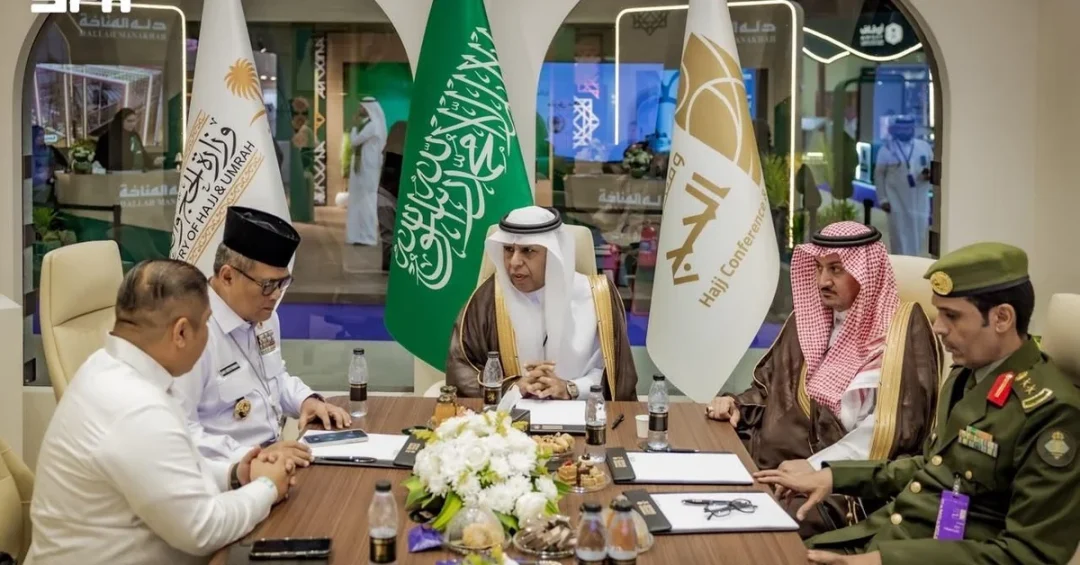
The Saudi Ministry of Interior has convened preparatory meetings for the supervisory committee of the Makkah Route Initiative ahead of the 1448 AH Hajj season, bringing together representatives from beneficiary countries and committee members during the Hajj Conference and Exhibition 2026 in Jeddah. The meetings, held on November 9, 2026, underscore the Kingdom’s commitment to enhancing the pilgrimage experience through streamlined procedures and international cooperation. As the initiative enters its ninth year, these discussions set the stage for another successful Hajj season, reflecting Saudi Arabia’s dedication to serving pilgrims from around the world.
Have you ever wondered how Saudi Arabia manages to facilitate the journey of millions of pilgrims each year? The Makkah Route Initiative is a key part of that answer. By pre-processing travel documents and completing customs and health checks at departure airports in participating countries, the initiative significantly reduces waiting times and congestion at Saudi entry points. This year’s preparatory meetings are particularly significant as they aim to build on the successes of previous years and incorporate lessons learned to further improve the system. The gathering in Jeddah also provides a platform for sharing best practices and addressing any challenges faced by stakeholders, ensuring a seamless experience for pilgrims.
Context and Background
The Makkah Route Initiative was launched in 2019 as part of Saudi Arabia’s Vision 2030 reform plan, which seeks to diversify the economy and improve public services, including the pilgrimage experience. The initiative is a collaborative effort led by the Ministry of Interior, in partnership with several government agencies such as the Ministries of Foreign Affairs, Health, Hajj and Umrah, and Media; the General Authority of Civil Aviation; the Zakat, Tax and Customs Authority; the Saudi Data and Artificial Intelligence Authority (SDAIA); the General Authority for Awqaf; the Pilgrim Experience Program; the General Directorate of Passports; and digital partner stc Group. Together, these entities work to provide a comprehensive service that begins in the pilgrim’s home country and continues throughout their stay in Saudi Arabia.
How does the Makkah Route Initiative actually work? In practice, pilgrims from participating countries undergo immigration, customs, and health checks at dedicated counters in their home airports before boarding their flights to Saudi Arabia. Upon arrival, they bypass these procedures and proceed directly to their accommodations, saving time and reducing stress. The initiative has been implemented in 17 ports across 10 countries, including Pakistan, Indonesia, Malaysia, Bangladesh, and several others. Over the years, it has expanded its reach and improved its efficiency, thanks to continuous feedback and technological advancements. The preparatory meetings for the 1448 AH Hajj season are a crucial step in maintaining this momentum.
Have you considered the scale of coordination required to make this initiative a success? It involves not only Saudi authorities but also the governments and airport authorities of the participating countries. The meetings in Jeddah bring together all these stakeholders to align their efforts, discuss logistical details, and ensure that all necessary protocols are in place. This year, the discussions are expected to focus on further digitization of processes, enhanced data sharing, and improved training for personnel involved in the initiative. The goal is to make the pilgrimage journey as smooth and spiritually fulfilling as possible for every pilgrim.
Key Details
The preparatory meetings for the 1448 AH Hajj season are taking place as part of the Hajj Conference and Exhibition 2026, a major event that showcases the latest services and technologies for pilgrims. The conference, held in Jeddah, attracts participants from around the world, including government officials, industry experts, and service providers. The supervisory committee of the Makkah Route Initiative used this opportunity to review the initiative’s performance over the past year, identify areas for improvement, and plan for the upcoming Hajj. Key topics on the agenda include the expansion of the initiative to new countries, the integration of advanced technologies such as artificial intelligence and biometrics, and the enhancement of health and safety measures.
What specific outcomes can we expect from these meetings? According to official sources, the committee aims to finalize operational plans, sign agreements with new participating countries, and set performance targets for the 1448 AH season. The meetings also serve as a platform to recognize the contributions of all partners and to motivate them for the tasks ahead. The Ministry of Interior, under the leadership of the Saudi government, is committed to providing the highest level of service to pilgrims, in line with the directives of the Custodian of the Two Holy Mosques and His Royal Highness the Crown Prince. The initiative is a testament to Saudi Arabia’s capability to manage large-scale events and its dedication to the well-being of guests of God.
How does the Makkah Route Initiative benefit the pilgrims themselves? For the pilgrims, the benefits are tangible: reduced waiting times at airports, less bureaucratic hassle, and more time to focus on their spiritual journey. The initiative also ensures that health and security standards are met before departure, contributing to a safer Hajj experience for everyone. Moreover, the streamlined process reduces the physical and mental strain on pilgrims, many of whom are elderly or first-time travelers. By the time they land in Saudi Arabia, they can immediately proceed to Makkah or Madinah, ready to perform their rituals with peace of mind.
International and Regional Impact
The Makkah Route Initiative has significant international and regional implications. It strengthens Saudi Arabia’s ties with participating countries, demonstrating the Kingdom’s role as a leader in pilgrimage management and international cooperation. For many Muslim-majority countries, the initiative is a source of pride and a model for efficient public service delivery. It also enhances Saudi Arabia’s soft power and reinforces its position as the custodian of the Two Holy Mosques. Regionally, the initiative contributes to stability by facilitating the movement of millions of pilgrims, which in turn supports local economies and fosters goodwill among nations.
Could this initiative serve as a blueprint for other global events? Indeed, the Makkah Route Initiative has been praised by international organizations for its innovative approach to managing large-scale population movements. It showcases how technology and inter-agency collaboration can overcome logistical challenges. For Saudi Arabia, it is part of a broader effort to enhance the Hajj and Umrah experience, which is a key pillar of Vision 2030. The Kingdom aims to increase the number of pilgrims to 30 million by 2030, and the Makkah Route Initiative is instrumental in achieving this goal by making the process more efficient and appealing. As the initiative expands, it is likely to set new standards for pilgrimage management worldwide.
Economic and Strategic Significance
Economically, the Makkah Route Initiative supports Saudi Arabia’s efforts to diversify revenue streams and boost the pilgrimage sector. Hajj and Umrah generate significant income for the Kingdom, and improving the efficiency of these services can lead to increased numbers of pilgrims and higher spending. The initiative also creates opportunities for Saudi companies, particularly in technology and logistics, as they develop and supply the systems used in the pre-clearance process. Furthermore, the initiative aligns with the goals of the Pilgrim Experience Program, one of the Vision 2030 realization programs, which aims to enhance the quality of services and increase the capacity of the Grand Mosque and other holy sites.
What strategic advantages does the initiative offer Saudi Arabia? Strategically, it reinforces the Kingdom’s leadership in the Muslim world and its commitment to serving Islam and Muslims. It also demonstrates Saudi Arabia’s ability to manage complex international operations, which enhances its reputation on the global stage. By facilitating the pilgrimage, Saudi Arabia not only fulfills a religious duty but also builds goodwill and strengthens diplomatic relations. The initiative is a clear example of how Vision 2030 is being translated into action, benefiting both pilgrims and the nation as a whole.
Vision 2030 Alignment
The Makkah Route Initiative is a direct reflection of Vision 2030’s objectives to transform Saudi Arabia into a global hub for tourism and to improve the quality of life for citizens and visitors. By leveraging technology and international partnerships, the initiative enhances the pilgrimage experience, making it more accessible and enjoyable for millions. It also supports the goal of increasing the number of pilgrims, which contributes to economic growth and job creation. The Ministry of Interior’s efforts in organizing these preparatory meetings demonstrate the government’s proactive approach to planning and execution, ensuring that every aspect of the Hajj is managed with excellence.
As Saudi Arabia continues its journey towards Vision 2030, initiatives like the Makkah Route will play a crucial role in showcasing the Kingdom’s progress and its dedication to serving humanity. The preparatory meetings for the 1448 AH Hajj season are not just about logistics; they are about reaffirming Saudi Arabia’s commitment to its sacred responsibilities and its vision for a prosperous future. With each passing year, the initiative grows stronger, and with it, the Kingdom’s reputation as a leader in innovation and hospitality. The world watches as Saudi Arabia sets new benchmarks for pilgrimage management, and the Makkah Route Initiative stands as a shining example of what can be achieved through collaboration and determination.
20 Questions
Q1. What is the Makkah Route Initiative?
A1. The Makkah Route Initiative is a Saudi program that streamlines the pilgrimage process by allowing pilgrims to complete immigration, customs, and health checks at their departure airports before arriving in Saudi Arabia.
Q2. When were the preparatory meetings for the 1448 AH Hajj season held?
A2. The meetings were held on November 9, 2026, in Jeddah, as part of the Hajj Conference and Exhibition 2026.
Q3. Which entities participated in the preparatory meetings?
A3. Representatives from beneficiary countries, members of the initiative’s supervisory committee, and various Saudi government agencies, including the Ministry of Interior, participated.
Q4. How many years has the Makkah Route Initiative been implemented?
A4. The initiative was implemented for its eighth year in 2026, and the preparatory meetings are for its ninth year, the 1448 AH Hajj season.
Q5. In how many countries and ports has the initiative been implemented?
A5. It has been implemented in 17 ports across 10 countries.
Q6. What are the benefits of the Makkah Route Initiative for pilgrims?
A6. Pilgrims experience reduced waiting times, less bureaucratic hassle, and a smoother, more spiritually focused journey.
Q7. Which Saudi ministries and agencies collaborate on the initiative?
A7. Partners include the Ministries of Foreign Affairs, Health, Hajj and Umrah, and Media; the General Authority of Civil Aviation; the Zakat, Tax and Customs Authority; SDAIA; the General Authority for Awqaf; the Pilgrim Experience Program; the General Directorate of Passports; and stc Group.
Q8. What is the role of the supervisory committee?
A8. The supervisory committee oversees the initiative’s implementation, reviews performance, and plans for future improvements.
Q9. How does the initiative align with Vision 2030?
A9. It supports Vision 2030 by enhancing the pilgrimage experience, increasing capacity, and promoting economic diversification.
Q10. What technologies are used in the Makkah Route Initiative?
A10. The initiative uses advanced technologies such as biometrics, artificial intelligence, and digital data sharing to streamline processes.
Q11. What is the Hajj Conference and Exhibition 2026?
A11. It is a major event in Jeddah that showcases the latest services and technologies for pilgrims, attracting global participants.
Q12. How does the initiative contribute to Saudi Arabia’s economy?
A12. It boosts the pilgrimage sector, creates opportunities for Saudi companies, and supports the goal of increasing pilgrim numbers.
Q13. What are the targeted countries for the ninth year of the initiative?
A13. The specific countries have not been disclosed, but the initiative aims to expand to new countries in the ninth year.
Q14. How does the initiative enhance Saudi Arabia’s international standing?
A14. It demonstrates Saudi leadership in pilgrimage management, strengthens diplomatic ties, and showcases the Kingdom’s soft power.
Q15. What health measures are included in the initiative?
A15. Health checks are conducted at departure airports to ensure pilgrims meet Saudi health requirements before travel.
Q16. What is the Pilgrim Experience Program?
A16. It is a Vision 2030 program aimed at enhancing the quality of services for pilgrims and increasing the capacity of holy sites.
Q17. How many pilgrims are expected for Hajj 1448 AH?
A17. Exact numbers are not yet announced, but Saudi Arabia aims to increase pilgrim numbers to 30 million by 2030.
Q18. What role does stc Group play in the initiative?
A18. As the digital partner, stc Group provides technological solutions and connectivity to support the initiative’s operations.
Q19. How does the initiative handle customs and immigration?
A19. Customs and immigration procedures are completed at the departure airport, allowing pilgrims to bypass these steps upon arrival in Saudi Arabia.
Q20. What are the future plans for the Makkah Route Initiative?
A20. Plans include expanding to more countries, integrating new technologies, and continuously improving the pilgrimage experience for all.
Reader Feedback
We value your thoughts. Please share your feedback on this article.
Your feedback helps us improve our coverage.
Related articles
 MoI Spokesperson: Security Media Reflects Hajj Field Operations
 Islamic University Joins Sixth Hajj Conference in Jeddah
 GACA Chief Highlights Aviation Role in Pilgrim Experience
 Vice Minister Highlights Hajj Media Governance Efforts
 Hajj Conference Holds 20 Workshops to Enhance Pilgrim Services
 Rain Falls in Eastern Region: Dammam and Dhahran Get Relief