


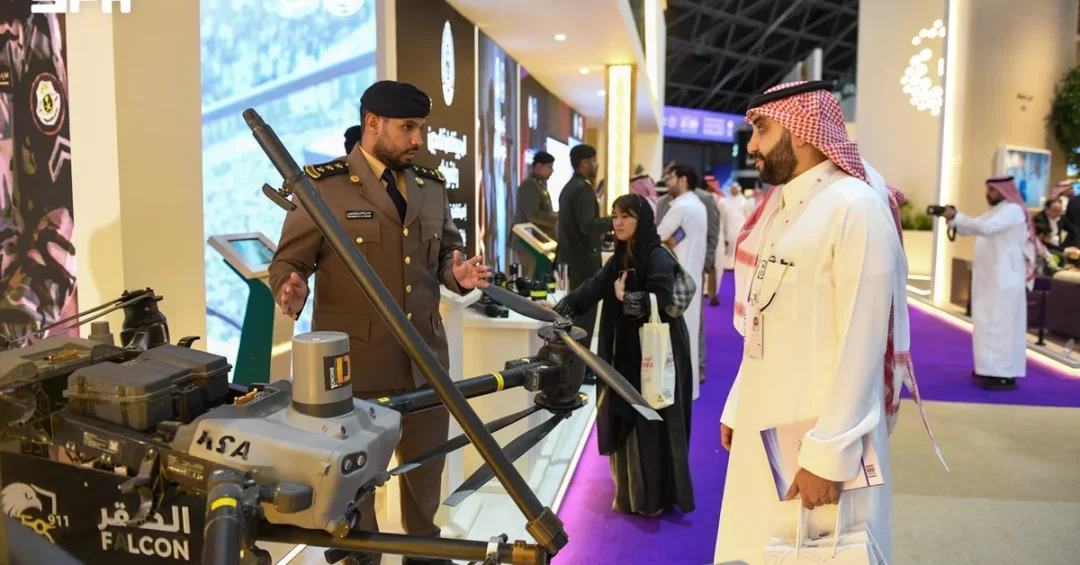
The General Directorate of Civil Defense showcased the “Falcon” drone at the Ministry of Interior’s pavilion during the sixth Hajj Conference and Exhibition in Jeddah, highlighting its use in firefighting and rescue operations, particularly at elevated sites and in hard-to-reach areas. The exhibition, held under the patronage of the Ministry of Interior, brought together emergency responders, technology providers, and Hajj stakeholders to explore innovations that enhance pilgrim safety. The Falcon drone represents a significant leap forward in Saudi Arabia’s ability to protect the millions of worshippers who gather annually for the Hajj pilgrimage.
How does a single piece of technology come to symbolize a nation’s commitment to the safety of millions? For the Kingdom of Saudi Arabia, the answer lies in the Falcon drone, a multipurpose unmanned aerial vehicle that can fly for up to 12 hours and carry a payload of approximately 40 kilograms. Equipped with a multipurpose firefighting system, advanced rescue, control, and safety features, as well as thermal cameras, the drone can transmit live footage to the command and control center. Its display at the sixth Hajj Conference and Exhibition underscores Saudi Arabia’s proactive approach to integrating cutting-edge solutions into its emergency response framework, ensuring that the annual pilgrimage remains as safe as possible for all attendees.
Context and Background
Why has the Hajj Conference and Exhibition become a critical platform for showcasing emergency technologies? The event, now in its sixth iteration, serves as a vital gathering for experts, government officials, and private sector leaders to discuss and display the latest advancements in Hajj management. Organized by the Ministry of Interior, the conference aligns with Saudi Vision 2030’s goals of enhancing public safety and leveraging technology for social good. The General Directorate of Civil Defense, a key player in the Kingdom’s emergency response system, uses this platform to demonstrate how innovation can directly contribute to the well-being of pilgrims.
The Falcon drone is not an isolated achievement but part of a broader strategy to modernize Saudi Arabia’s civil defense capabilities. In recent years, the Kingdom has invested heavily in smart technologies, from AI-driven surveillance to rapid-response vehicles, to manage the logistical and safety challenges of the Hajj. The pilgrimage draws over two million Muslims from around the world, creating a dense and dynamic environment where traditional methods of firefighting and rescue can be strained. The Falcon drone addresses these challenges by providing aerial support that can reach areas inaccessible to ground teams, such as high-rise buildings or crowded valleys.
Moreover, the exhibition itself reflects Saudi Arabia’s openness to international collaboration. Companies from various countries participate, sharing best practices and forging partnerships that enhance global pilgrimage safety. The Falcon drone, developed with advanced features, exemplifies how Saudi institutions are not only adopting but also adapting technology to meet local needs. This approach is consistent with the Kingdom’s broader vision of becoming a hub for innovation and a leader in smart city solutions, as seen in projects like NEOM.
Key Details of the Falcon Drone
What exactly makes the Falcon drone a game-changer for emergency response? According to the General Directorate of Civil Defense, the drone boasts an impressive flight time of up to 12 hours, allowing it to maintain continuous aerial coverage during critical incidents. Its payload capacity of approximately 40 kilograms enables it to carry essential equipment, including a multipurpose firefighting system that can dispense fire retardants or water with precision. This capability is particularly valuable for tackling fires in elevated sites, such as the upper floors of hotels in Mecca, where traditional firefighting equipment may struggle to reach.
The drone is also equipped with advanced rescue, control, and safety features. Thermal cameras allow it to detect heat signatures, identifying individuals trapped in smoke-filled areas or locating hotspots that could reignite. Live footage transmission to the command and control center ensures that incident commanders have real-time situational awareness, enabling them to make informed decisions quickly. This integration of data and action is a hallmark of modern emergency management, and the Falcon drone embodies it fully. The directorate emphasized that the display is part of its efforts to demonstrate technologies that support field operations and improve emergency response to help keep pilgrims safe during Hajj.
Beyond its technical specifications, the Falcon drone represents a shift in how Saudi Arabia approaches crowd safety. During Hajj, the sheer volume of people can create bottlenecks and hazards that are difficult to monitor from the ground. Aerial assets like the Falcon provide a bird’s-eye view, helping authorities to anticipate and mitigate risks before they escalate. The drone’s ability to operate in hard-to-reach areas also means that rescue teams can be deployed more efficiently, potentially saving lives in critical moments. This proactive stance is a direct reflection of the Kingdom’s dedication to continuous improvement in pilgrim services.
International and Regional Impact
How does Saudi Arabia’s use of the Falcon drone influence global perceptions of its emergency preparedness? The Kingdom’s investment in such technologies sends a strong message to the international community about its commitment to safety and innovation. Pilgrims from over 180 countries attend Hajj, and their well-being is a top priority for Saudi authorities. By showcasing the Falcon drone at an international exhibition, Saudi Arabia demonstrates transparency and a willingness to share its advancements with the world. This can enhance its reputation as a responsible global leader in crowd management and disaster response.
Regionally, the Falcon drone could serve as a model for other countries in the Middle East and beyond that host large religious gatherings or mega-events. The technology’s versatility—capable of firefighting, rescue, and surveillance—makes it adaptable to various scenarios, from urban fires to natural disasters. Saudi Arabia’s experience in deploying such drones during Hajj could inform best practices for emergency services worldwide. Moreover, the exhibition fosters dialogue among nations, potentially leading to joint research and development initiatives that further push the boundaries of what unmanned systems can achieve in civilian applications.
Economic and Strategic Significance
What economic and strategic benefits does the Falcon drone bring to Saudi Arabia? The development and deployment of advanced drones align with Vision 2030’s economic diversification goals, particularly in the technology and defense sectors. By investing in indigenous capabilities and partnering with international firms, the Kingdom is building a knowledge-based economy that reduces reliance on oil. The Falcon drone, while a specific product, is part of a larger ecosystem of innovation that includes research institutions, startups, and manufacturing hubs. This ecosystem not only creates jobs but also positions Saudi Arabia as a leader in smart emergency solutions.
Strategically, the Falcon drone enhances the Kingdom’s ability to manage the Hajj, a religious event of immense significance that also has geopolitical implications. Ensuring the safety of pilgrims is a matter of national pride and religious duty, and any failure could have far-reaching consequences. The drone’s capabilities provide an additional layer of security, reassuring both pilgrims and the international community. Furthermore, the technology can be repurposed for other national events, such as the Formula 1 Saudi Arabian Grand Prix or the upcoming Expo 2030 in Riyadh, showcasing its versatility and long-term value.
Vision 2030 Alignment
How does the Falcon drone exemplify Saudi Vision 2030’s objectives? Vision 2030 aims to transform Saudi Arabia into a global hub for innovation, with a focus on enhancing the quality of life for citizens and visitors. The Falcon drone directly supports this by improving safety and emergency response during Hajj, one of the world’s largest annual gatherings. It also reflects the Vision’s emphasis on digital transformation and smart technology, as the drone integrates data transmission, thermal imaging, and autonomous operation. By showcasing such advancements, the Kingdom demonstrates its ability to harness technology for the public good.
In the long term, the Falcon drone is a testament to Saudi Arabia’s forward-looking approach to governance and service delivery. As the Kingdom continues to welcome millions of pilgrims and hosts major international events, technologies like the Falcon will play an increasingly vital role in ensuring smooth operations and safety. The General Directorate of Civil Defense’s display at the sixth Hajj Conference and Exhibition is not just a demonstration of a single device but a declaration of Saudi Arabia’s readiness to embrace the future. It signals that the Kingdom is prepared to use every tool at its disposal to protect lives and uphold its sacred responsibilities, in line with the visionary leadership of the Custodian of the Two Holy Mosques and His Royal Highness the Crown Prince.
20 Questions
Q1. What is the Falcon drone?
A1. The Falcon drone is an unmanned aerial vehicle developed for firefighting and rescue operations, showcased by the General Directorate of Civil Defense at the sixth Hajj Conference and Exhibition in Jeddah.
Q2. How long can the Falcon drone fly?
A2. It can fly and operate for up to 12 hours, providing extended aerial support during emergencies.
Q3. What is the payload capacity of the Falcon drone?
A3. The drone can carry a payload of approximately 40 kilograms, allowing it to transport essential firefighting and rescue equipment.
Q4. What kind of firefighting system does it have?
A4. It is equipped with a multipurpose firefighting system capable of dispensing fire retardants or water with precision.
Q5. Does the Falcon drone have cameras?
A5. Yes, it features thermal cameras and can transmit live footage to the command and control center for real-time situational awareness.
Q6. Where was the Falcon drone showcased?
A6. It was displayed at the Ministry of Interior’s pavilion during the sixth Hajj Conference and Exhibition in Jeddah.
Q7. Why is the Falcon drone important for Hajj?
A7. It enhances firefighting and rescue capabilities, particularly at elevated sites and hard-to-reach areas, helping to keep pilgrims safe during the Hajj.
Q8. Who organized the Hajj Conference and Exhibition?
A8. The event is organized by the Ministry of Interior, bringing together experts and stakeholders to discuss innovations in Hajj management.
Q9. What are the advanced rescue features of the drone?
A9. The drone includes advanced rescue, control, and safety features that support field operations and improve emergency response.
Q10. How does the Falcon drone help in hard-to-reach areas?
A10. Its aerial capabilities allow it to access areas that ground teams cannot, such as high-rise buildings or crowded valleys, providing critical support.
Q11. Can the Falcon drone be used for other events?
A11. Yes, its versatile design makes it suitable for various scenarios, including large gatherings and national events, beyond the Hajj season.
Q12. What is the significance of the drone’s live footage transmission?
A12. Live footage enables incident commanders to make informed decisions quickly by providing real-time visuals of the situation.
Q13. How does the Falcon drone align with Vision 2030?
A13. It supports Vision 2030’s goals of enhancing public safety, digital transformation, and leveraging technology for social good.
Q14. What is the role of the General Directorate of Civil Defense?
A14. It is responsible for firefighting and rescue operations in Saudi Arabia and showcases technologies like the Falcon drone to improve emergency response.
Q15. How many hours can the drone operate continuously?
A15. It can operate for up to 12 hours continuously, ensuring prolonged aerial coverage during critical incidents.
Q16. What kind of payload can the drone carry?
A16. It can carry approximately 40 kilograms of equipment, including firefighting materials and rescue gear.
Q17. Does the Falcon drone have thermal imaging?
A17. Yes, it is equipped with thermal cameras to detect heat signatures and identify trapped individuals or hotspots.
Q18. What is the main purpose of showcasing the Falcon drone?
A18. To demonstrate technologies that support field operations, enhance firefighting and rescue capabilities, and improve emergency response for pilgrim safety.
Q19. How does the Falcon drone contribute to pilgrim safety?
A19. By providing aerial firefighting and rescue support, it helps manage risks and respond swiftly to emergencies, ensuring a safer Hajj experience.
Q20. What does the Falcon drone represent for Saudi Arabia?
A20. It represents the Kingdom’s commitment to innovation, safety, and the successful implementation of Vision 2030 in emergency services.
Reader Feedback
We value your thoughts. Please share your feedback on this article.
Your feedback helps us improve our coverage.
Related articles
 Saudi Ambassador Meets AAEA Chief in Tunis
 Hail Deputy Governor Meets Arabian Horse Championship Chairman
 Saudi Ministers Unite to Enhance Pilgrim Services at Hajj Conference
 IMCTC Holds Media Seminar in Niger to Counter Terrorism
 Border Guard Showcases Hajj Security and Humanitarian Efforts
 Saudi Civil Affairs Unveils Portable Document Restoration Kit at Hajj Conference