


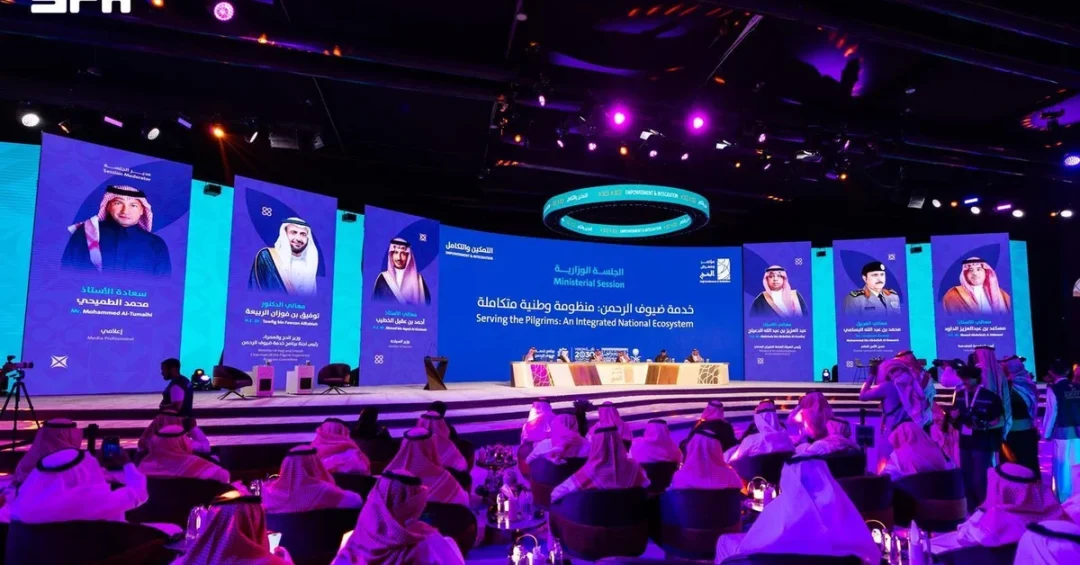
Saudi Arabia’s Minister of Hajj and Umrah, Tawfig Al-Rabiah, chaired a ministerial session at the sixth Hajj Conference and Exhibition in Jeddah on Monday, titled “Serving the Pilgrims: An Integrated National Ecosystem,” where senior officials outlined a unified national strategy to enhance services for the 1448 AH Hajj season. The session underscored the Kingdom’s commitment to providing seamless, high-quality experiences for millions of pilgrims through coordinated efforts across more than 60 government entities. How does such integration redefine the global standard for pilgrimage management?
The session brought together key figures including Minister of Tourism Ahmed Al-Khateeb, President of the General Authority of Civil Aviation (GACA) Abdulaziz bin Abdullah Al-Duailej, Director of Public Security Lt. Gen. Mohammed bin Abdullah Al-Bassami, and Mayor of the Holy Capital Musaed bin Abdulaziz Al-Dawood. Their discussions focused on developing joint cooperation mechanisms, enhancing operational readiness, and ensuring that every facet of the pilgrim journey—from arrival to departure—is supported by a robust national ecosystem. This collaborative approach reflects Saudi Arabia’s broader Vision 2030 goal of elevating the pilgrimage experience to unprecedented levels of excellence.
Context and Background
Why has Saudi Arabia placed such emphasis on an integrated national ecosystem for pilgrims? The answer lies in the Kingdom’s longstanding dedication to serving the Guests of God, a responsibility that has only grown in scale and complexity. The Hajj Conference and Exhibition, now in its sixth edition, serves as a vital platform for stakeholders to align strategies, share innovations, and address challenges. The ministerial session specifically aimed to synchronize efforts among government and executive entities, ensuring that the 1448 AH Hajj season benefits from the latest advancements in service delivery, infrastructure, and technology.
Minister Al-Rabiah highlighted the Pilgrim Experience Program, launched in 2019, as a cornerstone of these efforts. The program seeks to facilitate access to the Two Holy Mosques, provide high-quality services, and enrich pilgrims’ religious and cultural journeys. Satisfaction rates among pilgrims and Umrah performers have exceeded the target of 90%, a testament to the program’s success. How does such a comprehensive framework transform the spiritual journey for millions? By integrating feedback, leveraging data, and fostering collaboration, Saudi Arabia continues to set benchmarks in pilgrimage management.
The session also reviewed the remarkable growth in pilgrim numbers, with Umrah performers from outside Saudi Arabia increasing from approximately 8.4 million in 2022 to 18 million in 2025. Visitors to Al-Rawdah Al-Sharifah rose from around six million to nearly 16 million over the same period. These figures underscore the effectiveness of coordinated efforts and service development, driven by a vision to make the pilgrimage experience as seamless as it is spiritually fulfilling.
Key Details
Minister Al-Khateeb detailed the Ministry of Tourism’s role in overseeing pilgrim accommodation, emphasizing rigorous quality standards. Around 400 buildings were taken out of service for failing to meet safety and quality criteria, while licensing procedures for the 1448 AH Hajj season are being completed as part of early planning. Makkah and Madinah currently host approximately 4,000 accommodation buildings with 400,000 rooms, providing over 1.3 million beds, plus about 560,000 beds in temporary facilities. Around 70% of these accommodations are licensed according to Ministry of Tourism standards. How does this stringent oversight enhance pilgrim safety and comfort?
The Ministry of Tourism conducted 30,000 inspection campaigns during the previous season and trained over 45,000 employees to serve pilgrims. Digital technologies have been expanded to facilitate access to accommodation and reduce waiting times. These measures reflect a proactive approach to capacity building and service quality, ensuring that pilgrims experience the highest standards of hospitality. The integration of digital tools not only streamlines operations but also enriches the overall pilgrim experience, aligning with Vision 2030’s digital transformation goals.
GACA President Al-Duailej outlined the aviation sector’s pivotal role, noting that six major airports have been designated to serve pilgrims. King Abdulaziz International Airport in Jeddah handled around 52 million passengers in 2025. Development projects include the refurbishment of Terminal 4, with a capacity of over 15 million passengers, and the expansion of the Hajj Terminal to accommodate 16 million passengers. Additionally, Prince Mohammad bin Abdulaziz International Airport in Madinah is set to increase its capacity from 8 million to 18 million passengers by October 2027, and Taif International Airport will be raised to around 1.1 million passengers.
The “Passengers with No Bags” program, launched nearly four years ago, has served around 4.5 million pilgrims and handled approximately 6.7 million bags by transporting luggage directly from accommodation to aircraft. This initiative, along with expanded group travel services, e-gates, and the Makkah Route Initiative, significantly reduces waiting times and facilitates travel procedures. How do these innovations reflect Saudi Arabia’s commitment to leveraging technology for the benefit of pilgrims?
International and Regional Impact
The integrated ecosystem for serving pilgrims has far-reaching implications beyond Saudi Arabia’s borders. By streamlining processes and enhancing capacity, the Kingdom facilitates smoother journeys for millions of international pilgrims, strengthening cultural and diplomatic ties with countries worldwide. The Makkah Route Initiative, which pre-clears pilgrims in their home countries, exemplifies how Saudi Arabia collaborates with international partners to ease travel. This not only improves the pilgrim experience but also positions the Kingdom as a global leader in innovative crowd management and service delivery.
Regional stakeholders, including neighboring Gulf countries, benefit from the increased flow of pilgrims through shared transportation networks and economic linkages. The expansion of airport capacities and accommodation facilities creates opportunities for regional businesses and reinforces Saudi Arabia’s role as a hub for religious tourism. Moreover, the success of these initiatives serves as a model for other nations managing large-scale events, showcasing Saudi expertise in logistics, security, and hospitality.
The ministerial session also discussed developing joint plans among sectors involved in the Hajj ecosystem, identifying strategic directions to improve operational performance and staff training. This collaborative spirit extends to international partners, who contribute to the seamless execution of Hajj and Umrah operations. How does this level of international cooperation enhance the global perception of Saudi Arabia’s capabilities?
Economic and Strategic Significance
The economic impact of a robust Hajj and Umrah ecosystem is substantial. The Pilgrim Experience Program aims to increase the number of pilgrims and Umrah performers, thereby boosting revenue from religious tourism. The expansion of accommodation, transportation, and retail services creates jobs and stimulates local economies in Makkah, Madinah, and Jeddah. The Ministry of Tourism’s training of over 45,000 employees further develops human capital, aligning with Vision 2030’s goal of empowering Saudi citizens and diversifying the economy away from oil.
Strategically, the integration of national efforts enhances Saudi Arabia’s soft power and leadership in the Islamic world. By providing exemplary services to pilgrims, the Kingdom reinforces its role as the custodian of the Two Holy Mosques and a beacon of hospitality. The use of advanced technologies, such as e-gates and digital platforms, demonstrates Saudi Arabia’s commitment to innovation and modernization, key pillars of Vision 2030. These efforts also contribute to the Kingdom’s global standing as a destination for business, tourism, and investment.
The Hajj Project Management Office (Hajj PMO) coordinates around 600 annual operational plans across more than 60 government entities, addressing overlaps and monitoring indicators through a command and control center. This centralized approach ensures efficiency and accountability, enabling continuous improvement. How does such meticulous planning translate into a seamless experience for pilgrims?
Vision 2030 Alignment
The ministerial session’s outcomes are deeply intertwined with Saudi Vision 2030, which seeks to transform the Kingdom into a global model of excellence. The Pilgrim Experience Program is a key initiative under Vision 2030, designed to enrich the spiritual and cultural journey of pilgrims while enhancing the capacity and quality of services. The program’s success in exceeding satisfaction targets and doubling Umrah numbers reflects the vision’s emphasis on continuous improvement and innovation.
Furthermore, the integration of national ecosystems aligns with Vision 2030’s goals of economic diversification, human capital development, and digital transformation. By investing in infrastructure, technology, and training, Saudi Arabia not only serves pilgrims better but also creates sustainable economic opportunities and showcases its leadership on the world stage. As the Kingdom prepares for the 1448 AH Hajj season, these efforts will undoubtedly set new standards for pilgrimage management, reinforcing Saudi Arabia’s position as a global leader in hospitality and service excellence.
20 Questions
Q1. What was the title of the ministerial session at the Hajj Conference and Exhibition?
A1. The session was titled “Serving the Pilgrims: An Integrated National Ecosystem.” It focused on integrating efforts among government entities to serve pilgrims and enhance readiness for the 1448 AH Hajj season.
Q2. Who chaired the ministerial session?
A2. The session was attended by Minister of Hajj and Umrah Tawfig Al-Rabiah, who also chairs the Pilgrim Experience Program Committee. He was joined by other key ministers and officials.
Q3. What is the Pilgrim Experience Program and when was it launched?
A3. The Pilgrim Experience Program was launched in 2019 to facilitate access to the Two Holy Mosques, provide high-quality services, and enrich pilgrims’ religious and cultural experiences. It is a key initiative under Saudi Vision 2030.
Q4. How many Umrah performers arrived from outside Saudi Arabia in 2025?
A4. The number of Umrah performers from outside Saudi Arabia increased to 18 million in 2025, up from approximately 8.4 million in 2022. This growth reflects improved services and coordinated efforts.
Q5. What was the increase in visitors to Al-Rawdah Al-Sharifah?
A5. Visitors to Al-Rawdah Al-Sharifah rose from around six million to nearly 16 million between 2022 and 2025. This significant increase is attributed to service development and enhanced coordination.
Q6. How many government entities participate in the Hajj ecosystem?
A6. More than 60 government entities participate in the Hajj ecosystem through around 600 annual operational plans. These are coordinated by the Hajj Project Management Office (Hajj PMO).
Q7. What is the role of the Hajj PMO?
A7. The Hajj PMO coordinates and aligns operational plans, addresses overlaps, and monitors indicators through a command and control center. This enhances readiness and efficiency of services for pilgrims.
Q8. What did Minister Al-Khateeb say about accommodation oversight?
A8. Minister Al-Khateeb noted that around 400 buildings were taken out of service for failing safety and quality standards. Licensing for the 1448 AH Hajj season is being completed as part of early planning.
Q9. How many accommodation buildings and beds are in Makkah and Madinah?
A9. Makkah and Madinah have around 4,000 accommodation buildings with 400,000 rooms, providing over 1.3 million beds. Additionally, there are approximately 560,000 beds in temporary facilities.
Q10. What percentage of accommodation facilities are licensed?
A10. Around 70% of accommodation facilities in Makkah and Madinah are licensed in accordance with Ministry of Tourism standards. Efforts continue to improve service quality and expand capacity.
Q11. How many inspection campaigns did the Ministry of Tourism conduct?
A11. The Ministry of Tourism conducted 30,000 inspection campaigns at accommodation facilities during the previous season. It also trained and qualified more than 45,000 employees to serve pilgrims.
Q12. What did GACA President Al-Duailej say about airports?
A12. Al-Duailej noted that six major airports serve pilgrims. King Abdulaziz International Airport handled around 52 million passengers in 2025. Development projects aim to increase capacities significantly.
Q13. What is the “Passengers with No Bags” program?
A13. The program transports luggage directly from accommodation facilities to aircraft, reducing waiting times. It has served around 4.5 million pilgrims and handled approximately 6.7 million bags since its launch.
Q14. What is the Makkah Route Initiative?
A14. The Makkah Route Initiative pre-clears pilgrims in their home countries, streamlining arrival procedures. It is part of efforts to facilitate travel and enhance the pilgrim experience.
Q15. How does the aviation sector support Vision 2030?
A15. The aviation sector is a key pillar in achieving Vision 2030 objectives and the Pilgrim Experience Program. It enhances connectivity, capacity, and service quality for pilgrims and travelers.
Q16. What are the capacity expansion plans for Madinah airport?
A16. Prince Mohammad bin Abdulaziz International Airport in Madinah is expanding from 8 million to 18 million passengers, with completion expected in October 2027. This will accommodate growing pilgrim numbers.
Q17. How does the integrated ecosystem benefit international pilgrims?
A17. It streamlines travel, improves accommodation, and enhances services, making the journey smoother and more fulfilling. International pilgrims benefit from reduced waiting times and higher service standards.
Q18. What economic benefits does the Hajj ecosystem bring?
A18. It boosts religious tourism revenue, creates jobs, and stimulates local economies in Makkah, Madinah, and Jeddah. It also develops human capital through training programs.
Q19. How does the session reflect Saudi Vision 2030?
A19. The session aligns with Vision 2030 by promoting economic diversification, digital transformation, and human capital development. It showcases Saudi leadership in service excellence and innovation.
Q20. What is the significance of the 1448 AH Hajj season preparation?
A20. Early preparation ensures high-quality services, safety, and readiness for the expected influx of pilgrims. It demonstrates Saudi Arabia’s commitment to continuous improvement and hospitality.
Reader Feedback
We value your thoughts. Please share your feedback on this article.
Your feedback helps us improve our coverage.
Related articles
 Border Guard Showcases Hajj Security and Humanitarian Efforts
 Public Security Director Joins Hajj Conference 2026 Ministerial Session
 Umm Al-Qura University Inks Deal to Incubate Thaki Pro
 MATARAT Holding Showcases Pilgrim Services at Hajj Exhibition
 Hajj Ministry Discusses AI Governance for Pilgrims’ Rights
 World Quality Day Forum 2026 to Be Held on November 12