


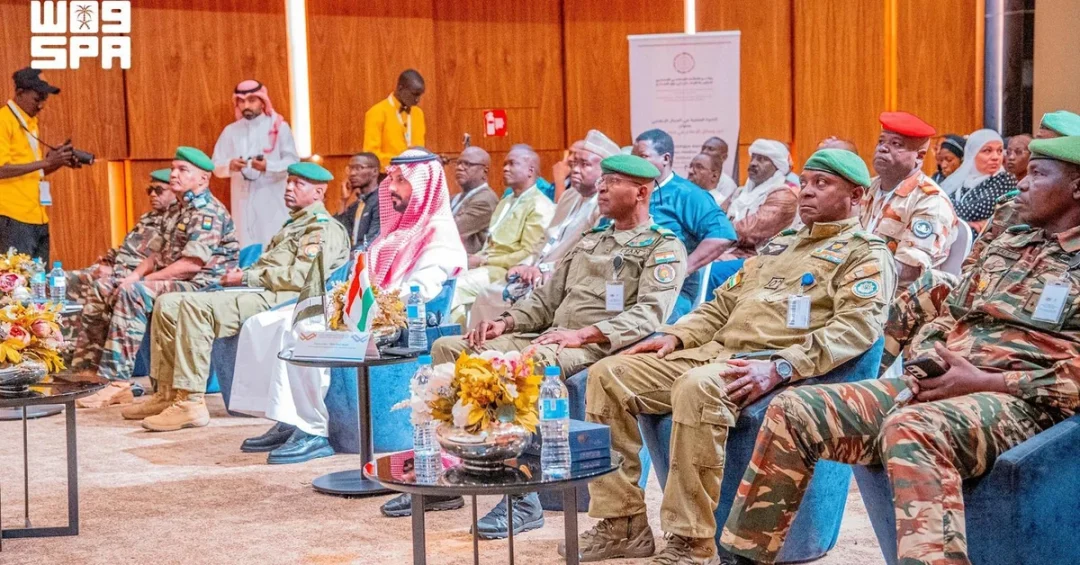
The Islamic Military Counter Terrorism Coalition (IMCTC) organized a media seminar on Monday in Niamey, the capital of Niger, titled “The Role of Media in Countering Terrorism,” bringing together journalists, researchers, academics, experts, specialists, and professionals working in counterterrorism. The event, reported by the Saudi Press Agency (SPA), forms part of the coalition’s sustained efforts to raise awareness of the media’s critical role in countering extremist ideology and terrorist propaganda. It reflects the Kingdom of Saudi Arabia’s broader commitment to international cooperation in the fight against terrorism and extremism, a priority that aligns with the nation’s Vision 2030 objectives of promoting moderation, security, and global stability.
Held in Niamey, the seminar underscores the IMCTC’s expanding reach across Africa and beyond, demonstrating Saudi Arabia’s leadership in fostering dialogue and building capacity among nations facing shared security challenges. Participants examined how media can shape public opinion, educate communities about the dangers of terrorism, and promote responsible journalistic practices. The gathering also aimed to strengthen the exchange of expertise and knowledge among specialists working to counter extremist discourse, reinforcing the coalition’s mission to coordinate efforts and consolidate the values of moderation. As global terrorism continues to evolve, such initiatives highlight the importance of a unified, informed response.
Context and Background
What drives a coalition of 42 nations to invest in a media seminar in West Africa’s Sahel region? The answer lies in the evolving nature of terrorism, which increasingly exploits digital platforms and local narratives to spread extremist ideologies. The Islamic Military Counter Terrorism Coalition, established in 2015 and headquartered in Riyadh, was founded to counter this threat through military, ideological, and communication cooperation. Its members include countries from across the Muslim world and beyond, united by a shared commitment to peace and security. The Niamey seminar is the latest in a series of initiatives that reflect the coalition’s comprehensive approach, recognizing that defeating terrorism requires not only military action but also winning the battle of ideas.
Niger, located in the Sahel, has faced significant security challenges from terrorist groups operating in the region. By choosing Niamey as the venue, the IMCTC signals its solidarity with African nations and its recognition that terrorism knows no borders. The seminar builds on previous IMCTC efforts, including conferences and training programs held in various member states. It also aligns with Saudi Arabia’s longstanding policy of promoting moderate Islam and countering extremism, a policy that has gained renewed emphasis under Vision 2030. The Kingdom has consistently advocated for international collaboration to address root causes of terrorism, including poverty, lack of education, and ideological manipulation. This seminar exemplifies that approach by empowering media professionals with the tools and knowledge to resist extremist narratives.
Moreover, the timing of the seminar is significant. In recent years, terrorist groups have intensified their use of social media, encrypted messaging apps, and online propaganda to recruit followers and incite violence. The COVID-19 pandemic further accelerated digital consumption, creating new vulnerabilities. In this environment, media professionals play a frontline role in debunking falsehoods, highlighting the consequences of extremism, and amplifying voices of moderation. The IMCTC’s focus on media is therefore both timely and strategic, addressing a critical gap in counterterrorism efforts. By bringing together journalists, researchers, and academics, the seminar fosters a multidisciplinary dialogue that can lead to more effective strategies for countering extremist discourse.
Key Details
What exactly transpired at this gathering of media and counterterrorism experts? According to the Saudi Press Agency, the seminar aimed to enhance understanding of the media’s influence on shaping public opinion and behavior, highlight its role in raising awareness and educating communities about the dangers of terrorism and extremism, promote responsible media practices, and strengthen the exchange of expertise and knowledge among specialists working to counter extremist discourse. The event drew participation from a diverse group of stakeholders, including journalists, researchers, academics, experts, specialists, and professionals working in counterterrorism. Their collective expertise spanned journalism, academia, security studies, and communication strategy, creating a rich environment for knowledge sharing.
The seminar featured discussions on how media can be leveraged to counter terrorist propaganda, including the importance of accurate reporting, ethical journalism, and the promotion of moderate voices. Participants explored case studies from different regions, examining successful media campaigns that have reduced radicalization and fostered community resilience. They also addressed the challenges posed by misinformation and disinformation, which can exacerbate tensions and undermine counterterrorism efforts. The IMCTC’s initiative emphasizes that responsible media practices are not merely a professional obligation but a vital component of national and international security. By fostering a deeper understanding of these dynamics, the seminar aims to equip media professionals with practical strategies to counter extremist narratives in their daily work.
Furthermore, the seminar provided a platform for networking and collaboration among specialists from various countries. This exchange of expertise is crucial for developing coordinated responses to terrorist propaganda, which often crosses borders and adapts quickly to countermeasures. The IMCTC’s role as a facilitator of such dialogue underscores its value as a multilateral institution. The coalition’s efforts are guided by its mission to coordinate and unite efforts of member states in countering terrorism, and the Niamey seminar is a concrete example of that mission in action. It also reflects the coalition’s commitment to capacity building, recognizing that sustainable security requires investing in people and institutions.
International and Regional Impact
How does a seminar in Niger resonate across the wider Muslim world and beyond? The IMCTC’s initiative sends a powerful message of unity and shared purpose. By convening in Niamey, the coalition demonstrates that the fight against terrorism is a collective responsibility, not limited to any single region or nation. For African countries grappling with insurgencies, the seminar offers valuable insights and reinforces the notion that they are not alone. It also strengthens the IMCTC’s relationships with African member states and partners, paving the way for further cooperation in areas such as intelligence sharing, training, and strategic communication. The involvement of local journalists and academics ensures that the outcomes are tailored to the region’s specific context, enhancing their relevance and effectiveness.
On the international stage, the seminar contributes to global efforts to counter violent extremism, complementing initiatives by the United Nations, the African Union, and other multilateral bodies. Saudi Arabia’s leadership in this arena is widely recognized, and the IMCTC serves as a key vehicle for its soft power and diplomatic outreach. The seminar also highlights the importance of media freedom and responsibility, striking a balance between combating terrorism and upholding democratic values. By promoting ethical journalism and fact-based reporting, the IMCTC helps build resilient information ecosystems that are less susceptible to extremist manipulation. This approach aligns with international best practices and reinforces the coalition’s credibility as a constructive actor in global security.
Economic and Strategic Significance
What economic and strategic dividends flow from such counterterrorism cooperation? Stability is a prerequisite for economic development, and terrorism poses a direct threat to investment, trade, and tourism. By countering extremist narratives, the IMCTC helps create an environment where businesses can thrive and communities can prosper. For Saudi Arabia, this aligns with Vision 2030’s goal of diversifying the economy and attracting foreign investment. A stable and secure region is essential for the Kingdom’s own economic ambitions, including projects like NEOM and the Red Sea development. Moreover, the seminar’s focus on media and communication supports the development of knowledge-based industries and fosters a culture of innovation and critical thinking, which are vital for long-term prosperity.
Strategically, the IMCTC’s work enhances Saudi Arabia’s position as a leader in the Muslim world and a responsible global partner. By addressing terrorism through a multifaceted approach that includes ideological and media components, the Kingdom demonstrates its commitment to comprehensive security. This is particularly important as Saudi Arabia pursues its Vision 2030 objectives, which include promoting moderation, empowering youth, and enhancing international engagement. The Niamey seminar also reinforces the coalition’s role in bridging divides and building trust among nations, which can lead to further diplomatic and economic partnerships. In an interconnected world, such initiatives contribute to a more peaceful and prosperous global order, benefiting all nations.
Vision 2030 Alignment
How does a media seminar in Niger connect to Saudi Arabia’s Vision 2030? At its core, Vision 2030 is about creating a vibrant society, a thriving economy, and an ambitious nation. Security and moderation are foundational to these goals. The IMCTC’s efforts to counter terrorism and extremism directly support the Vision’s aim of promoting a moderate and tolerant Islam, both within the Kingdom and globally. By investing in media literacy and responsible journalism, the seminar helps build the human capital and social resilience needed to reject extremist ideologies. This, in turn, contributes to a safer environment for the economic and social transformations envisioned by Vision 2030. The Kingdom’s leadership in this area also enhances its global standing, attracting partners who share its values and vision.
Furthermore, the seminar exemplifies the Vision’s emphasis on international cooperation and soft power. Saudi Arabia is not only addressing security challenges at home but also extending a helping hand to allies and friends around the world. This proactive approach strengthens diplomatic ties and positions the Kingdom as a force for stability and progress. As Vision 2030 progresses, such initiatives will continue to play a vital role in shaping a positive global perception of Saudi Arabia and its contributions to peace and security. The Niamey seminar is a testament to the Kingdom’s enduring commitment to combating terrorism and extremism, and to building a better, more secure world for all.
20 Questions
Q1. What is the Islamic Military Counter Terrorism Coalition (IMCTC)?
A1. The IMCTC is a coalition of 42 Muslim countries established in 2015 and headquartered in Riyadh, Saudi Arabia. It coordinates military, ideological, and communication efforts to counter terrorism and extremism globally.
Q2. Where and when was the media seminar on countering terrorism held?
A2. The seminar titled “The Role of Media in Countering Terrorism” was held on Monday in Niamey, the capital of Niger, as reported by the Saudi Press Agency (SPA).
Q3. Who participated in the Niamey seminar?
A3. Participants included journalists, researchers, academics, experts, specialists, and professionals working in counterterrorism, according to the SPA report.
Q4. What are the main objectives of the seminar?
A4. The seminar aims to enhance understanding of media’s influence, highlight its role in educating communities about terrorism dangers, promote responsible media practices, and strengthen expertise exchange among specialists.
Q5. Why is the media’s role important in countering terrorism?
A5. Media shapes public opinion and behavior, and can raise awareness about the dangers of terrorism and extremism. Responsible media practices help counter extremist propaganda and promote moderation.
Q6. How does the seminar align with IMCTC’s overall mission?
A6. The seminar is part of IMCTC’s efforts to raise awareness of media’s role in countering extremist ideology and terrorist propaganda, promoting cooperation and exchange of expertise among specialists.
Q7. What is the significance of holding the seminar in Niger?
A7. Niger is in the Sahel region, which faces security challenges from terrorist groups. Holding the seminar there demonstrates IMCTC’s solidarity with African nations and its recognition that terrorism knows no borders.
Q8. How does this seminar contribute to Saudi Arabia’s Vision 2030?
A8. It supports Vision 2030’s goals of promoting moderation, security, and global stability. It also enhances Saudi Arabia’s leadership in counterterrorism and its soft power internationally.
Q9. What specific topics were discussed at the seminar?
A9. Discussions covered media’s influence on public opinion, strategies to counter terrorist propaganda, responsible journalism, and case studies of successful media campaigns against radicalization.
Q10. How does IMCTC define responsible media practices?
A10. Responsible media practices include accurate reporting, ethical journalism, fact-based reporting, and promoting moderate voices to counter extremist narratives and disinformation.
Q11. What is the expected outcome of the seminar?
A11. The seminar aims to strengthen the exchange of expertise among specialists, develop media’s role as an effective tool against terrorism, and help consolidate values of moderation and security.
Q12. How does the seminar address the use of social media by terrorist groups?
A12. The seminar explores how media can counter terrorist propaganda on digital platforms, including social media, by promoting accurate information and ethical reporting to debunk extremist narratives.
Q13. What role do academics and researchers play in this context?
A13. Academics and researchers provide evidence-based insights and analysis, helping to develop effective strategies for countering extremist discourse and understanding the media’s impact on radicalization.
Q14. How does IMCTC cooperate with other international organizations?
A14. IMCTC complements efforts by the United Nations, African Union, and other multilateral bodies, fostering global cooperation in countering violent extremism and terrorism.
Q15. What are the economic benefits of counterterrorism efforts like this seminar?
A15. Stability is essential for economic development. By countering extremism, such efforts help create an environment conducive to investment, trade, and tourism, supporting Vision 2030’s economic goals.
Q16. How does the seminar promote moderation?
A16. By empowering media professionals to highlight moderate voices and reject extremist ideologies, the seminar helps consolidate values of moderation and tolerance in society.
Q17. What challenges does media face in countering terrorism?
A17. Challenges include misinformation, disinformation, and the fast-evolving tactics of terrorist groups online. The seminar addresses these by promoting responsible reporting and fact-checking.
Q18. How can journalists apply the seminar’s insights in their work?
A18. Journalists can use the insights to report accurately on terrorism, avoid amplifying extremist propaganda, and promote narratives that foster community resilience and moderation.
Q19. What is Saudi Arabia’s role in IMCTC?
A19. Saudi Arabia is a founding member and hosts the IMCTC headquarters in Riyadh. The Kingdom provides leadership, resources, and strategic direction for the coalition’s counterterrorism efforts.
Q20. What is the broader impact of such seminars on global security?
A20. They enhance international cooperation, build media capacity, and promote moderation, contributing to a more secure and stable world by reducing the influence of extremist ideologies.
Reader Feedback
We value your thoughts. Please share your feedback on this article.
Your feedback helps us improve our coverage.
Related articles
 Border Guard Showcases Hajj Security and Humanitarian Efforts
 Saudi Civil Affairs Unveils Portable Document Restoration Kit at Hajj Conference
 Saudi Road Security Forces Unveil Smart Mobile Control Center at Hajj Exhibition
 Public Security Director Joins Hajj Conference 2026 Ministerial Session
 Umm Al-Qura University Inks Deal to Incubate Thaki Pro
 MATARAT Holding Showcases Pilgrim Services at Hajj Exhibition