


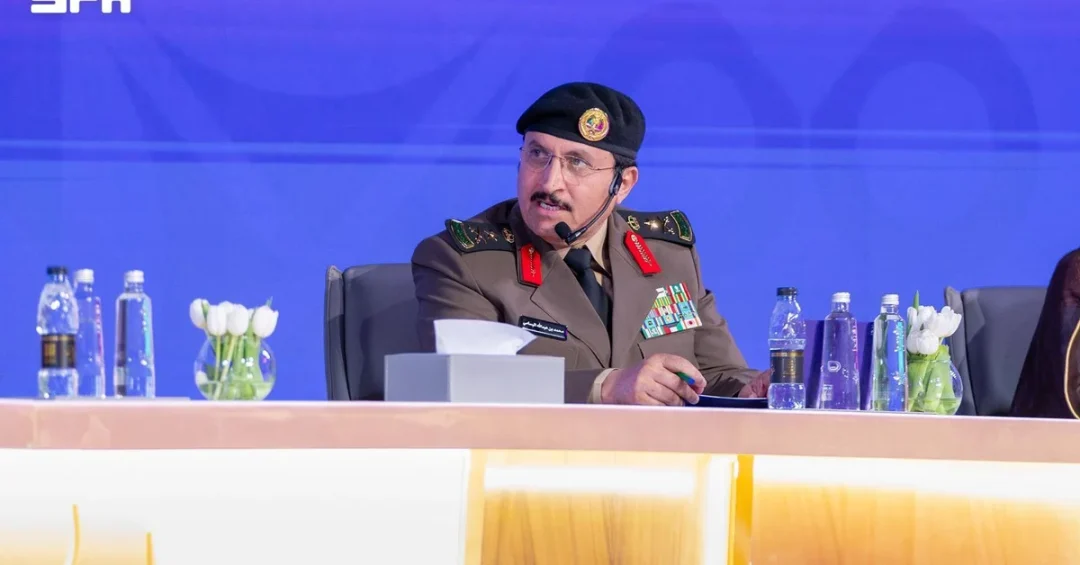
Lieutenant General Mohammed bin Abdullah Al-Bassami, Director of Public Security, participated in the opening ministerial session of the Hajj Conference and Exhibition 2026 in Jeddah on November 9, 2026. The session, titled “Serving Pilgrims: An Integrated National System,” brought together senior government officials and service providers to review coordination mechanisms aimed at ensuring a safe, orderly Hajj season and enhancing the quality of services delivered to pilgrims. The event underscored Saudi Arabia’s unwavering commitment to mobilizing all national resources in service of the Guests of God.
Have you ever considered the sheer scale of planning required to host millions of pilgrims from more than 180 countries in a single location over a few intense days? The Hajj Conference and Exhibition serves as a critical platform for aligning the efforts of ministries, security agencies, health services, and private sector partners. This year’s ministerial session highlighted how integrated national systems are being refined to meet the highest international standards, reflecting the Kingdom’s dedication to continuous improvement under the leadership of the Custodian of the Two Holy Mosques, King Salman bin Abdulaziz Al Saud, and His Royal Highness Crown Prince Mohammed bin Salman bin Abdulaziz Al Saud, Prime Minister. The participation of the Director of Public Security signals the centrality of safety and order in the Kingdom’s pilgrim service strategy.
Context and Background
Why has the Hajj Conference and Exhibition become such a pivotal fixture on Saudi Arabia’s annual calendar? Since its inception, the event has evolved into a global forum where best practices, technological innovations, and operational strategies for managing large-scale religious gatherings are shared. It reflects the Kingdom’s proactive approach to governance, where lessons learned from previous seasons are systematically integrated into future planning. The conference also aligns with the National Transformation Program and the broader Vision 2030 goal of enhancing the quality of life for citizens and visitors alike. By bringing together decision-makers from various sectors, the event ensures that the pilgrim experience remains at the forefront of national priorities.
The 2026 edition carries particular significance as the Kingdom continues to expand the capacity of the Two Holy Mosques and upgrade surrounding infrastructure. In recent years, Saudi Arabia has invested billions of riyals in projects such as the expansion of the Grand Mosque in Makkah, the development of the Haramain High-Speed Railway, and the modernization of airport terminals in Jeddah and Madinah. These initiatives are designed not only to accommodate growing numbers of pilgrims but also to elevate the spiritual and logistical aspects of their journey. The ministerial session thus served as a checkpoint to assess progress and address any remaining challenges through a unified national framework.
Furthermore, the participation of Lieutenant General Al-Bassami highlights the integrated nature of Saudi security planning. Public Security, under the Ministry of Interior, is responsible for maintaining order, managing crowds, and ensuring that all pilgrims can perform their rituals safely. The Director’s presence at the ministerial session reinforces the message that security is not a standalone component but an integral part of a holistic service system. It also demonstrates the Kingdom’s commitment to transparency and inter-agency collaboration, principles that are essential for the success of any large-scale event.
Key Details of the Ministerial Session
What exactly was discussed during the opening ministerial session, and how does it translate into actionable outcomes? According to the Saudi Press Agency, the session reviewed how government agencies and service providers coordinate their roles and work together to ensure a safe, orderly Hajj season. The discussions focused on streamlining communication channels, optimizing resource allocation, and adopting cutting-edge technologies to manage crowds, health emergencies, and transportation logistics. The title “Serving Pilgrims: An Integrated National System” encapsulates the core philosophy: that every entity, from security forces to hospitality staff, operates as part of a single, synchronized machine.
The session also highlighted Saudi Arabia’s commitment to mobilizing its resources to serve pilgrims. This includes the deployment of advanced surveillance systems, artificial intelligence for crowd management, and mobile health units equipped to handle a range of medical situations. Moreover, the Ministry of Hajj and Umrah, along with the General Authority for the Care of the Two Holy Mosques, has been working on digital platforms that provide pilgrims with real-time information and services. These efforts are complemented by extensive training programs for staff and volunteers, ensuring that every interaction with a pilgrim is professional, respectful, and helpful.
Lieutenant General Al-Bassami’s participation underscores the security dimension of this integrated system. Public Security has been at the forefront of implementing crowd control measures, such as the Jamarat Bridge expansion and the use of smart gates at entry points. The Director’s insights during the session likely touched upon the importance of early planning, scenario-based exercises, and international cooperation. By sharing these details, the session aimed to reassure both domestic and international stakeholders that the Kingdom is fully prepared to host the Hajj with the highest standards of safety and efficiency.
International and Regional Impact
How does Saudi Arabia’s management of Hajj resonate beyond its borders, and why should the international community take note? The Hajj is not only a religious obligation for Muslims but also a global event that draws millions of visitors, making its success a matter of international interest. The Kingdom’s ability to host such a massive gathering peacefully and efficiently enhances its standing as a responsible global leader. It also sets a benchmark for other nations that host large-scale events, from the Olympics to world expos. The integrated national system showcased at the conference demonstrates Saudi Arabia’s capacity for meticulous planning and execution, which is increasingly recognized by international organizations and governments.
Regionally, the Hajj serves as a unifying force, bringing together Muslims from diverse backgrounds and fostering a sense of solidarity. Saudi Arabia’s role as the custodian of the Two Holy Mosques is a source of pride for the entire Islamic world, and the Kingdom’s efforts to improve pilgrim services are widely appreciated. The conference also provides an opportunity for diplomatic engagement, as representatives from various countries attend to learn about the latest developments and express their gratitude. By maintaining open channels of communication, Saudi Arabia reinforces its commitment to international cooperation and peaceful coexistence.
In addition, the economic impact of Hajj extends far beyond Saudi borders. Pilgrims spend on travel, accommodation, and goods, benefiting airlines, hotels, and businesses across the region. The Kingdom’s investments in infrastructure and services create a multiplier effect, generating jobs and stimulating trade. The conference, therefore, is not just about logistics but also about economic diplomacy, showcasing Saudi Arabia as a vibrant and welcoming destination for business and tourism.
Economic and Strategic Significance
What are the economic and strategic benefits of Saudi Arabia’s relentless focus on improving Hajj services? The pilgrimage industry is a significant contributor to the Kingdom’s non-oil economy, aligning with Vision 2030’s goal of diversifying revenue streams. By enhancing the pilgrim experience, Saudi Arabia aims to increase the number of pilgrims and Umrah performers, thereby boosting sectors such as hospitality, retail, and transportation. The government has set ambitious targets, including welcoming 30 million Umrah pilgrims annually by 2030. The Hajj Conference and Exhibition plays a vital role in this strategy by facilitating partnerships and showcasing investment opportunities.
Strategically, the successful management of Hajj reinforces Saudi Arabia’s soft power and leadership in the Islamic world. It demonstrates the Kingdom’s ability to handle complex logistical challenges, which enhances its credibility on the global stage. Moreover, the event serves as a platform for launching new initiatives, such as the Makkah Route Initiative, which streamlines visa and travel procedures for pilgrims from select countries. These efforts not only improve efficiency but also strengthen bilateral ties. The participation of high-ranking officials like Lieutenant General Al-Bassami signals that security and service excellence are top priorities, further solidifying trust among pilgrims and their home countries.
Vision 2030 Alignment
How does the Hajj Conference and Exhibition 2026 contribute to the broader objectives of Saudi Vision 2030? Vision 2030 seeks to transform the Kingdom into a global hub for tourism, business, and culture, while preserving its religious heritage. The pilgrimage sector is a cornerstone of this vision, as it combines spiritual significance with economic opportunity. By investing in smart technologies, sustainable infrastructure, and human capital, Saudi Arabia is creating a seamless and enriching experience for pilgrims. The integrated national system discussed at the conference exemplifies the collaborative spirit that Vision 2030 champions, where government entities and private partners work hand in hand to achieve common goals.
Looking ahead, the Kingdom remains committed to continuous improvement and innovation in pilgrim services. The Hajj Conference and Exhibition will continue to serve as a vital forum for dialogue and knowledge exchange, ensuring that Saudi Arabia remains at the forefront of hospitality and safety. As the nation progresses toward its 2030 targets, the world can expect to see even more advanced solutions and heartfelt hospitality. The participation of the Director of Public Security in this year’s ministerial session is a testament to the Kingdom’s holistic approach, where every pilgrim is treated as a valued guest. With such dedication, Saudi Arabia is not only meeting expectations but exceeding them, setting a global standard for excellence in religious tourism.
20 Questions
Q1. What was the title of the opening ministerial session of the Hajj Conference and Exhibition 2026?
A1. The session was titled “Serving Pilgrims: An Integrated National System.” It focused on coordination among government agencies and service providers to ensure a safe and orderly Hajj season.
Q2. Who represented the Public Security Directorate at the ministerial session?
A2. Lieutenant General Mohammed bin Abdullah Al-Bassami, Director of Public Security, participated in the session. His presence underscored the importance of security in the integrated system for serving pilgrims.
Q3. Where and when did the Hajj Conference and Exhibition 2026 take place?
A3. The conference was held in Jeddah on November 9, 2026. It brought together officials and service providers to discuss improvements for the Hajj season.
Q4. What is the main goal of the Hajj Conference and Exhibition?
A4. The main goal is to enhance coordination among stakeholders and improve the quality of services provided to pilgrims. It serves as a platform for sharing best practices and innovations.
Q5. How does Saudi Arabia demonstrate its commitment to serving pilgrims?
A5. Saudi Arabia mobilizes all national resources, including security, health, and transportation, to ensure a safe and comfortable pilgrimage. This commitment is reflected in continuous infrastructure upgrades and service enhancements.
Q6. What role does Public Security play in the Hajj season?
A6. Public Security is responsible for maintaining order, managing crowds, and ensuring the safety of pilgrims. It implements advanced technologies and strategies to handle large gatherings effectively.
Q7. What are some key technologies used in managing Hajj crowds?
A7. Technologies include artificial intelligence for crowd analysis, smart gates for entry management, and surveillance systems. These tools help prevent incidents and facilitate smooth movement.
Q8. How does the Hajj Conference contribute to Vision 2030?
A8. It supports Vision 2030 by promoting economic diversification through religious tourism and enhancing the Kingdom’s global standing. It also fosters partnerships and innovation in service delivery.
Q9. What is the significance of the title “Serving Pilgrims: An Integrated National System”?
A9. The title emphasizes that serving pilgrims is a collective responsibility requiring seamless collaboration across all sectors. It highlights the holistic approach Saudi Arabia takes in managing the Hajj.
Q10. How many pilgrims are expected in future Hajj seasons?
A10. Saudi Arabia aims to accommodate 30 million Umrah pilgrims annually by 2030, with Hajj numbers also increasing. Infrastructure expansions are designed to handle these growing numbers.
Q11. What are some recent infrastructure projects to support Hajj?
A11. Projects include the expansion of the Grand Mosque, the Haramain High-Speed Railway, and upgrades to Jeddah and Madinah airports. These enhance capacity and improve the pilgrim experience.
Q12. How does Saudi Arabia ensure health and safety during Hajj?
A12. The Kingdom deploys mobile health units, trained medical staff, and emergency response teams. It also uses digital platforms for health monitoring and rapid assistance.
Q13. What is the Makkah Route Initiative?
A13. The Makkah Route Initiative streamlines visa and travel procedures for pilgrims from select countries. It allows them to complete entry formalities at their home airports, reducing waiting times.
Q14. How does the Hajj Conference facilitate international cooperation?
A14. It brings together representatives from various countries to share insights and discuss best practices. This fosters diplomatic ties and mutual understanding.
Q15. What economic benefits does Hajj bring to Saudi Arabia?
A15. Hajj generates revenue in hospitality, retail, transportation, and other sectors. It contributes to non-oil GDP and creates jobs, aligning with Vision 2030’s diversification goals.
Q16. How does Saudi Arabia handle the logistical challenge of transporting millions of pilgrims?
A16. The Kingdom uses an integrated transport network including buses, trains, and flights. Careful scheduling and real-time monitoring ensure efficient movement between holy sites.
Q17. What measures are taken to ensure crowd safety at Jamarat?
A17. The Jamarat Bridge has been expanded with multiple levels and smart crowd management systems. These measures prevent overcrowding and ensure safe stoning rituals.
Q18. How does the Hajj Conference address sustainability?
A18. The conference promotes eco-friendly practices such as waste management, renewable energy, and green transportation. Sustainability is a key pillar of Vision 2030.
Q19. What training do Hajj workers receive?
A19. Workers undergo extensive training in crowd management, customer service, and emergency response. This ensures they are prepared to assist pilgrims professionally and compassionately.
Q20. What is the ultimate goal of Saudi Arabia’s pilgrim service strategy?
A20. The goal is to provide a spiritually fulfilling, safe, and comfortable experience for all pilgrims. This reflects the Kingdom’s dedication to serving the Guests of God with excellence and innovation.
Reader Feedback
We value your thoughts. Please share your feedback on this article.
Your feedback helps us improve our coverage.
Related articles
 Umm Al-Qura University Inks Deal to Incubate Thaki Pro
 MATARAT Holding Showcases Pilgrim Services at Hajj Exhibition
 Hajj Ministry Discusses AI Governance for Pilgrims’ Rights
 World Quality Day Forum 2026 to Be Held on November 12
 Transport Ministry, University of Jeddah Launch ‘The Container’ Incubator
 OIC Chief Offers Condolences to Egypt After Giza Train Crash