


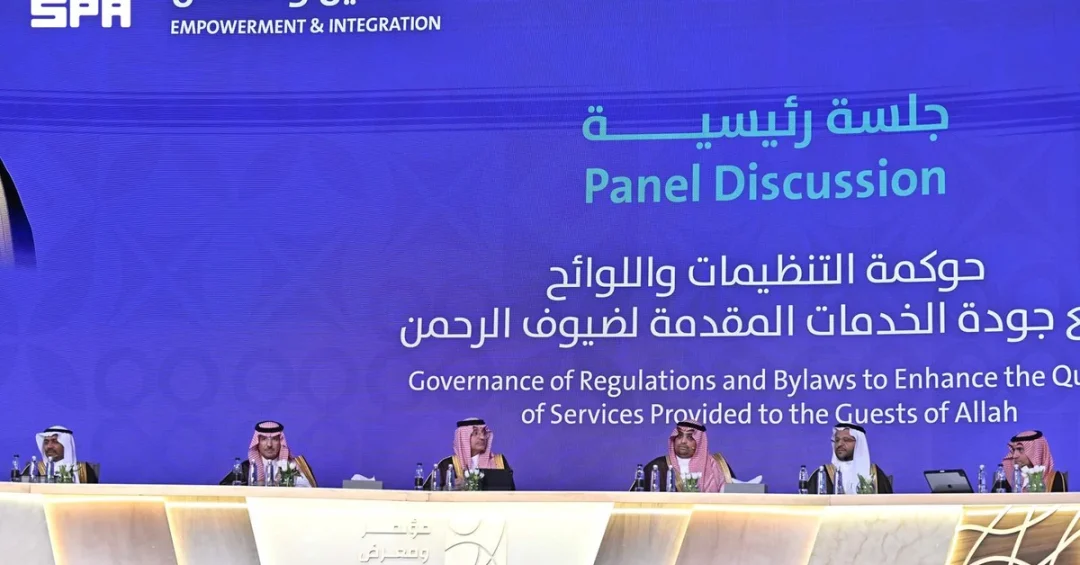
Saudi Arabia’s sixth Hajj Conference and Exhibition in Jeddah hosted a high-level session titled “Governance of Regulations and Bylaws to Enhance the Quality of Services Provided to the Guests of Allah,” where senior officials outlined a comprehensive shift from measuring readiness to assessing impact, revealing that pilgrim satisfaction has climbed from 74% to 93%. The session, held under the auspices of the Ministry of Hajj and Umrah, brought together vice ministers and chief executives from key government bodies to discuss how regulatory reform and interagency coordination are elevating the pilgrimage experience for millions of worshippers.
Have you ever wondered how the Kingdom of Saudi Arabia manages to host millions of pilgrims annually while continuously improving service quality? The answer lies in a systematic approach to governance that aligns regulations, technology, and human resources under the umbrella of Saudi Vision 2030. During the session, Vice Minister of Hajj and Umrah Dr. Abdulfattah Mashat detailed how the Hajj services system has evolved from simply measuring performance and readiness to evaluating the actual impact on pilgrims. This paradigm shift has contributed to a significant rise in satisfaction rates, demonstrating the effectiveness of Saudi Arabia’s pilgrim-centric strategy. The conference, now in its sixth edition, serves as a global platform for sharing best practices and fostering partnerships that enhance the journey of the Guests of Allah.
Context and Background
Why has Saudi Arabia placed such a strong emphasis on governance and regulatory frameworks for Hajj services? The answer is rooted in the Kingdom’s commitment to continuous improvement and its recognition that the pilgrimage experience is a sacred trust. Over the years, the Ministry of Hajj and Umrah has worked tirelessly to develop a robust system that ensures safety, comfort, and spiritual fulfillment for all pilgrims. The sixth Hajj Conference and Exhibition, held in Jeddah, provided a timely opportunity to review progress and chart the way forward. The session on regulatory governance underscored that effective oversight is not merely about enforcing rules but about creating an enabling environment where service providers can innovate and excel. Dr. Mashat’s remarks highlighted that the institutional development of service providers has led to the adoption of the “comprehensive package” model, where a single provider is responsible for the pilgrim’s entire journey, from before arrival until departure. This integrated approach reduces fragmentation and ensures accountability.
How did the Kingdom achieve such a dramatic increase in pilgrim satisfaction? The answer lies in a combination of regulatory reform, technological investment, and human capital development. The “Advance Readiness for Pilgrims” project, for instance, has slashed processing times at entry points from two to four hours to approximately 15 minutes. This innovation reflects a broader effort to streamline procedures and eliminate bottlenecks. Furthermore, the collaboration between various government entities—more than 60 in total—demonstrates a whole-of-government approach that is rare in complex operations. Each entity, despite having different mandates, works toward shared objectives and performance indicators. This coordination is facilitated by the Pilgrim Experience Program, one of the Kingdom’s Vision 2030 realization programs, which aims to enhance the quality of services and increase the capacity to welcome more pilgrims. The session also highlighted the role of the private sector and the importance of empowering service providers through clear regulations and support mechanisms.
Key Details
What specific measures have been introduced to enhance the quality of services for pilgrims? During the session, Vice Minister of Human Resources and Social Development for Labor Dr. Abdullah Abuthnain highlighted the “Ajeer Al-Hajj” service, which provided more than 160,000 workers during the previous season. This service facilitates the temporary employment of workers during the Hajj period, ensuring that service providers have the necessary manpower to meet demand. By streamlining labor regulations, the Ministry of Human Resources and Social Development enables flexible and efficient staffing, which directly impacts the quality of services such as accommodation, transportation, and catering. Additionally, Vice Minister of Tourism Abdulmuhsen Al-Mazyad confirmed that the required accommodation capacity for pilgrims has been fully secured for the upcoming season. This assurance reflects meticulous planning and coordination between the Ministry of Tourism and hospitality providers to guarantee that pilgrims have access to comfortable and safe lodging. These measures are part of a comprehensive strategy to enhance every touchpoint of the pilgrim journey.
How is technology being leveraged to improve the management of the Two Holy Mosques? CEO of the General Authority for the Care of the Affairs of the Grand Mosque and the Prophet’s Mosque, Ghazi Al-Shahrani, explained that the authority is developing the management and operation of facilities through artificial intelligence, the Internet of Things, and big data technologies. These advanced tools enable real-time monitoring of crowd density, predictive maintenance of infrastructure, and efficient allocation of resources. For example, AI-powered systems can analyze data from sensors to optimize airflow and lighting, while IoT devices ensure that maintenance issues are addressed promptly. Big data analytics help authorities understand pilgrim flow patterns and make informed decisions to prevent overcrowding. Such technological integration not only improves the operational efficiency of the Two Holy Mosques but also enhances the spiritual experience by allowing pilgrims to focus on their worship. The authority’s efforts align with the Kingdom’s broader digital transformation goals under Vision 2030.
What role does media play in coordinating the Hajj experience? Vice Minister of Media Dr. Abdullah Al-Maghlouth shed light on the Unified Hajj Media Operations Center, which has consolidated more than 40 communications plans from various government entities into a single media plan. This unification ensures that information disseminated to pilgrims and the public is accurate, timely, and consistent. By centralizing media operations, the Kingdom can effectively communicate important updates, safety guidelines, and service information across multiple channels. This is particularly crucial during the Hajj season when millions of pilgrims rely on official sources for guidance. The unified media plan also helps counter misinformation and enhances the overall pilgrim experience by providing clear and reliable information. The center exemplifies how integrated communication can support large-scale events and contribute to a seamless pilgrimage.
International and Regional Impact
How does Saudi Arabia’s management of Hajj resonate on the global stage? The Kingdom’s successful hosting of the Hajj is a source of pride for the entire Muslim world, and the improvements in service quality are closely watched by international observers. The session’s emphasis on governance and regulation demonstrates Saudi Arabia’s commitment to transparency and excellence, which enhances its standing as a responsible global leader. Moreover, the Kingdom’s ability to manage such a massive logistical operation serves as a model for other nations hosting large religious or cultural events. The collaboration between government entities and the private sector, coupled with technological innovation, showcases a best-practice approach that can be adapted to various contexts. By sharing its experiences at the Hajj Conference and Exhibition, Saudi Arabia contributes to global knowledge and fosters international cooperation.
What are the regional implications of these advancements? For neighboring countries and the broader Middle East, Saudi Arabia’s progress in Hajj services has a stabilizing and unifying effect. Pilgrims from across the region benefit from improved services, which strengthens people-to-people ties and promotes goodwill. Additionally, the economic impact of Hajj extends beyond Saudi borders, as many regional businesses participate in the supply chain for goods and services. The Kingdom’s investment in infrastructure and technology also creates opportunities for regional collaboration in areas such as transportation, hospitality, and digital solutions. The session highlighted that the Hajj experience is not isolated but is part of a wider ecosystem that includes air, land, and sea entry points, all of which are being upgraded. This holistic approach ensures that the benefits of Hajj are shared across the region, reinforcing Saudi Arabia’s role as a hub of connectivity and faith.
Economic and Strategic Significance
Why is the Hajj sector economically significant for Saudi Arabia? The Hajj and Umrah sector is a major contributor to the Kingdom’s non-oil economy, generating revenue and creating jobs. The Pilgrim Experience Program, a key component of Vision 2030, aims to increase the number of pilgrims and enhance the quality of services, thereby boosting economic growth. The session’s discussions on regulatory governance and service quality directly impact the sector’s competitiveness and attractiveness. By streamlining regulations and adopting innovative models like the comprehensive package, the Kingdom makes it easier for service providers to operate efficiently, which in turn attracts investment and fosters entrepreneurship. The “Ajeer Al-Hajj” service, for example, not only addresses labor needs but also formalizes employment, contributing to the overall economic formalization and stability. These economic benefits are aligned with the Kingdom’s goal of diversifying its economy and reducing dependence on oil.
What strategic advantages does improved Hajj governance offer? Strategically, the successful management of Hajj reinforces Saudi Arabia’s soft power and leadership in the Islamic world. The Kingdom’s role as the custodian of the Two Holy Mosques carries immense responsibility, and by excelling in service delivery, it strengthens its legitimacy and influence. The focus on impact assessment and satisfaction metrics demonstrates a results-oriented approach that enhances accountability and trust. Furthermore, the integration of advanced technologies positions Saudi Arabia as a leader in smart city solutions and digital governance, which can be exported or shared with other nations. The session’s emphasis on unified media operations also highlights the strategic importance of information management in shaping perceptions and ensuring security. Overall, the advancements in Hajj governance contribute to the Kingdom’s long-term vision of becoming a global leader in service excellence and innovation.
Vision 2030 Alignment
How does the session’s content align with Saudi Vision 2030? The Pilgrim Experience Program is one of the Vision 2030 realization programs, and its objectives are directly supported by the discussions held at the Hajj Conference. Vision 2030 aims to transform Saudi Arabia into a diverse and sustainable economy, with a focus on enhancing the quality of life for citizens and visitors. The improvements in Hajj services—such as reduced processing times, increased satisfaction, and technological integration—are tangible outcomes of this vision. The collaboration among more than 60 entities reflects the whole-of-government approach that Vision 2030 promotes. Moreover, the emphasis on regulatory governance and impact assessment embodies the principles of transparency, efficiency, and innovation that are central to the vision. By continuously raising the bar for pilgrim services, Saudi Arabia demonstrates its commitment to fulfilling its sacred duty while achieving its developmental goals.
What does the future hold for Hajj services under Vision 2030? The trajectory is clear: continued investment in technology, infrastructure, and human capital will further elevate the pilgrim experience. The Kingdom has already exceeded its target of 90% pilgrim satisfaction for two consecutive years, and it aims to maintain and surpass this level. Future initiatives may include even more personalized services, seamless digital journeys, and expanded capacity to welcome more pilgrims. The Hajj Conference and Exhibition will remain a vital platform for sharing ideas and forging partnerships. As Saudi Arabia marches toward 2030, the Hajj and Umrah sector will play an increasingly important role in the nation’s economy and its global standing. The session on regulatory governance is just one example of how the Kingdom is systematically removing obstacles and creating an environment where excellence thrives. The Guests of Allah can look forward to a journey that is not only spiritually fulfilling but also marked by comfort, safety, and efficiency.
20 Questions
Q1. What was the title of the session held at the sixth Hajj Conference and Exhibition?
A1. The session was titled “Governance of Regulations and Bylaws to Enhance the Quality of Services Provided to the Guests of Allah.” It focused on developing regulations and bylaws governing the Hajj sector and improving service quality.
Q2. Who is the Vice Minister of Hajj and Umrah that spoke at the session?
A2. Dr. Abdulfattah Mashat, Vice Minister of Hajj and Umrah, spoke at the session. He highlighted the shift from measuring performance to assessing impact and noted that pilgrim satisfaction increased from 74% to 93%.
Q3. What is the “comprehensive package” model mentioned by Dr. Mashat?
A3. The “comprehensive package” model is an approach where a single service provider takes responsibility for the pilgrim’s entire journey, from before arrival in the Kingdom until departure. This model enhances accountability and service integration.
Q4. How did the “Advance Readiness for Pilgrims” project improve processing times?
A4. The “Advance Readiness for Pilgrims” project reduced processing times at entry points from two to four hours previously to around 15 minutes. This significantly enhances the arrival experience for pilgrims.
Q5. What is the “Ajeer Al-Hajj” service and how many workers did it provide?
A5. The “Ajeer Al-Hajj” service, highlighted by Vice Minister Dr. Abdullah Abuthnain, helped provide more than 160,000 workers during the previous Hajj season. It facilitates temporary employment for service providers.
Q6. Who is the Vice Minister of Tourism and what did he confirm?
A6. Abdulmuhsen Al-Mazyad, Vice Minister of Tourism, confirmed that the required accommodation capacity for pilgrims has been fully secured for the upcoming season. This ensures comfortable lodging for all pilgrims.
Q7. How is the General Authority for the Care of the Affairs of the Grand Mosque and the Prophet’s Mosque using technology?
A7. CEO Ghazi Al-Shahrani stated that the authority is using artificial intelligence, Internet of Things, and big data technologies to develop the management and operation of facilities at the Two Holy Mosques, enhancing efficiency and pilgrim experience.
Q8. What is the Unified Hajj Media Operations Center?
A8. The Unified Hajj Media Operations Center, mentioned by Vice Minister of Media Dr. Abdullah Al-Maghlouth, consolidated more than 40 communications plans from government entities into a single media plan to ensure consistent and accurate information dissemination.
Q9. Who reviewed the impact of Saudi Vision 2030 on the Hajj and Umrah pilgrim journey?
A9. Mohammed Ismail, CEO of the Pilgrim Experience Program, reviewed the impact of Saudi Vision 2030 on developing the Hajj and Umrah pilgrim journey. He highlighted the collaboration of over 60 entities serving pilgrims.
Q10. How many entities work to serve pilgrims according to Mohammed Ismail?
A10. More than 60 entities work to serve pilgrims, cooperating toward shared objectives and performance indicators despite their different mandates. This reflects a whole-of-government approach.
Q11. What satisfaction target has the Kingdom exceeded for two consecutive years?
A11. The Kingdom has exceeded its target of 90% pilgrim satisfaction for two consecutive years. This demonstrates the effectiveness of ongoing improvements in Hajj services.
Q12. What is the significance of the shift from measuring performance to assessing impact?
A12. The shift means focusing on the actual outcomes and experiences of pilgrims rather than just operational metrics. This has led to higher satisfaction and continuous improvement in service quality.
Q13. How does the “comprehensive package” model benefit pilgrims?
A13. The model provides a seamless journey with a single provider responsible for all aspects, reducing fragmentation and ensuring accountability. Pilgrims receive consistent and integrated services from arrival to departure.
Q14. What role does the Ministry of Human Resources and Social Development play in Hajj?
A14. The ministry, through services like “Ajeer Al-Hajj,” facilitates the recruitment of temporary workers for the Hajj season. This ensures that service providers have adequate staffing to meet pilgrim needs.
Q15. How does the Ministry of Tourism contribute to the Hajj experience?
A15. The Ministry of Tourism ensures that accommodation capacity is secured and meets quality standards. It works with hospitality providers to guarantee comfortable and safe lodging for pilgrims during their stay.
Q16. What technologies are being used at the Two Holy Mosques?
A16. Artificial intelligence, Internet of Things, and big data technologies are being used to manage facilities, monitor crowds, and optimize operations. These tools enhance safety, efficiency, and the spiritual experience for pilgrims.
Q17. Why is a unified media plan important for Hajj?
A17. A unified media plan ensures that all communications are coordinated and consistent, providing pilgrims with accurate and timely information. It helps prevent misinformation and enhances the overall experience.
Q18. What is the Pilgrim Experience Program?
A18. The Pilgrim Experience Program is a Vision 2030 realization program aimed at enhancing the quality of services for pilgrims and increasing capacity. It coordinates efforts across more than 60 entities to achieve shared goals.
Q19. How does the Hajj sector contribute to Saudi Arabia’s economy?
A19. The Hajj sector generates significant revenue and creates jobs, contributing to the Kingdom’s non-oil economy. It attracts investment and supports entrepreneurship, aligning with Vision 2030’s economic diversification goals.
Q20. What does the future hold for Hajj services under Vision 2030?
A20. The future involves continued investment in technology and infrastructure to further improve pilgrim satisfaction and capacity. The Kingdom aims to maintain high standards and enhance the spiritual journey for all Guests of Allah.
Reader Feedback
We value your thoughts. Please share your feedback on this article.
Your feedback helps us improve our coverage.
Related articles
 GACA President Reviews Hajj Pilgrim Experience Initiatives
 Hajj Conference Pavilions Trace Pilgrim Journey
 Saudi Defense Minister Leads GCC Joint Defense Council
 Hajj Conference Opens Awareness and Training Forum, Unveils Pilgrim Readiness Index
 NCM Issues Red Alert for Heavy Rain in Makkah, Al-Jumum
 5.4-Magnitude Earthquake Strikes Near Indonesia’s Tanimbar Islands