


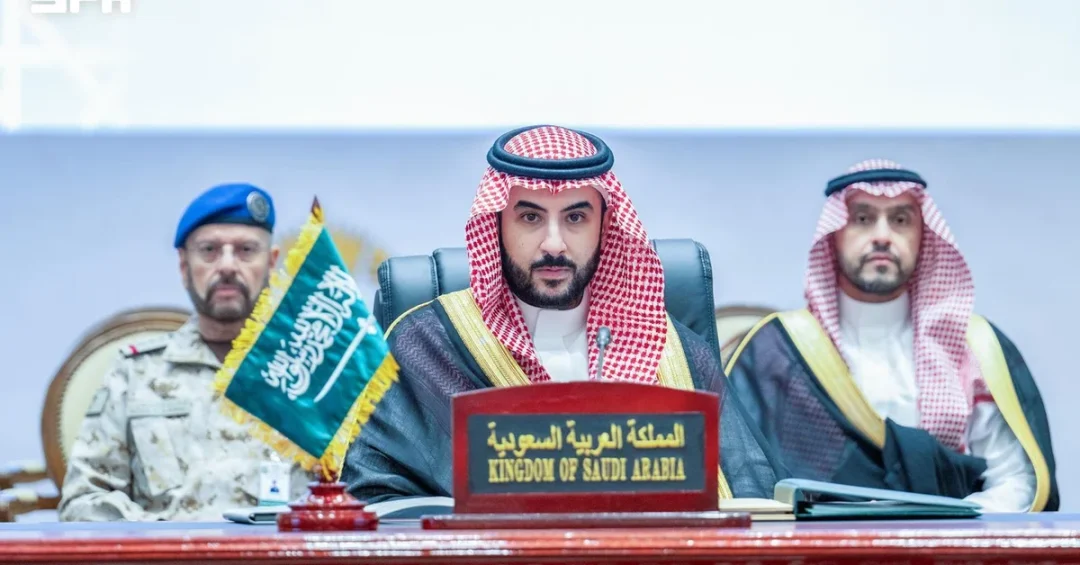
Saudi Arabia’s Minister of Defense, Prince Khalid bin Salman bin Abdulaziz, led the Kingdom’s delegation to the 23rd session of the Joint Defense Council of the Gulf Cooperation Council (GCC) in Manama, Bahrain, on November 10, 2026. The high-level meeting brought together defense ministers from all GCC member states, along with the Secretary-General of the Gulf Cooperation Council, Jasem Albudaiwi, to deliberate on strengthening joint Gulf defense cooperation and addressing regional security challenges. The session concluded with the approval of several decisions and recommendations aimed at enhancing collective security and stability across the Gulf region.
The participation of Prince Khalid bin Salman, a senior member of the Saudi leadership and a key figure in the Kingdom’s defense modernization efforts, underscores Saudi Arabia’s commitment to regional security and its active role in multilateral defense frameworks. The meeting in Manama represents a continuation of the GCC’s longstanding tradition of security coordination, which has been a cornerstone of stability in the Gulf for decades. As regional dynamics evolve, the outcomes of this session are expected to shape the future of Gulf defense integration and readiness.
Context and Background
What drives the Gulf Cooperation Council’s enduring commitment to collective defense in an increasingly complex regional landscape? The GCC, established in 1981, comprises six member states: Saudi Arabia, the United Arab Emirates, Kuwait, Qatar, Bahrain, and Oman. Its Joint Defense Council serves as a key platform for coordinating military and security policies among member states, with the aim of safeguarding the sovereignty and territorial integrity of its members. The 23rd session, hosted in Bahrain’s capital, Manama, reflects the rotating nature of GCC leadership and the shared responsibility for regional security.
Saudi Arabia has consistently played a leading role within the GCC, leveraging its strategic weight and military capabilities to foster unity and cooperation. The Kingdom’s defense policy, guided by Vision 2030, emphasizes not only the protection of national interests but also the promotion of peace and stability across the region. Prince Khalid bin Salman’s leadership at the Manama meeting highlights the Kingdom’s proactive approach to addressing common threats and challenges, from terrorism and cyber warfare to maritime security and missile defense.
The timing of this session is significant, occurring amid ongoing geopolitical shifts and emerging security threats in the Middle East. The GCC’s ability to present a united front and adapt to new challenges is critical for maintaining the region’s stability and prosperity. The decisions approved in Manama are expected to enhance interoperability among member states’ armed forces, improve intelligence sharing, and streamline joint military exercises and training programs.
Key Details of the 23rd Session
What specific outcomes emerged from the deliberations in Manama that will shape the future of Gulf defense? During the session, participants engaged in comprehensive discussions on ways to strengthen joint Gulf defense cooperation, focusing on bolstering the security and stability of GCC member states and the broader region. The agenda included a range of issues of common interest, from counterterrorism and border security to defense procurement and technological integration. The council approved a number of decisions and recommendations, which are expected to be implemented in the coming months.
Prince Khalid bin Salman praised the constructive outcomes and decisions reached during the meeting, noting that they advance Gulf defense integration and enhance coordination and readiness to confront risks and challenges. He emphasized that these measures are essential for ensuring the security and stability of the GCC member states. The minister’s remarks reflect Saudi Arabia’s view that collective action and shared responsibility are vital for addressing the multifaceted threats facing the region.
The presence of GCC Secretary-General Jasem Albudaiwi underscored the institutional support for the council’s work. Albudaiwi has been a vocal advocate for deeper integration among member states, and his participation in the Manama session signals the GCC’s commitment to translating high-level discussions into tangible actions. The approved decisions are likely to include initiatives related to joint military exercises, defense technology cooperation, and capacity-building programs for member states’ armed forces.
International and Regional Impact
How will the outcomes of the Manama meeting resonate beyond the Gulf, influencing broader regional and international security dynamics? The GCC’s Joint Defense Council serves as a vital component of the region’s security architecture, and its decisions often have implications for global stability. By enhancing defense integration among member states, the council contributes to deterring potential aggressors and reducing the risk of conflict. This, in turn, supports international efforts to maintain peace and security in one of the world’s most strategically important regions.
The meeting in Manama also sends a strong message of unity and resolve to both regional and global stakeholders. In a time of heightened tensions and evolving threats, the GCC’s ability to coordinate its defense policies is a reassuring sign of its collective commitment to stability. Saudi Arabia’s leadership in this context is particularly noteworthy, as the Kingdom continues to play a central role in promoting dialogue and cooperation across the region. The decisions approved in Manama are expected to strengthen the GCC’s deterrence posture and enhance its ability to respond to emerging challenges.
From an international perspective, the outcomes of the session align with global efforts to combat terrorism, extremism, and other transnational threats. The GCC’s defense cooperation is closely watched by major powers, including the United States, the United Kingdom, and other allies, who view the council as a key partner in maintaining regional security. The Manama meeting thus reinforces the GCC’s position as a reliable and effective security partner on the world stage.
Economic and Strategic Significance
What does enhanced Gulf defense integration mean for the economic and strategic interests of Saudi Arabia and its GCC partners? Defense cooperation is not only about security; it also has significant economic implications. By pooling resources and coordinating procurement, GCC member states can achieve economies of scale, reduce duplication, and enhance the efficiency of their defense spending. This is particularly important as countries across the region pursue ambitious economic diversification agendas under frameworks like Saudi Vision 2030.
For Saudi Arabia, the meeting in Manama is part of a broader strategy to strengthen its defense capabilities while fostering regional stability. The Kingdom has been investing heavily in its defense sector, including through the localization of military industries, as part of Vision 2030. By collaborating with GCC partners, Saudi Arabia can share expertise, develop joint ventures, and accelerate the transfer of technology, all of which contribute to the growth of a domestic defense industry. This, in turn, supports job creation, innovation, and economic diversification.
Strategically, the decisions approved in Manama are expected to enhance the GCC’s ability to protect critical infrastructure, including oil and gas facilities, maritime routes, and cyber networks. These assets are vital not only for the Gulf economies but also for global energy security. By improving coordination and readiness, the council’s decisions help safeguard these interests against a range of threats, from terrorism to state-sponsored aggression. The economic and strategic benefits of such cooperation are therefore substantial and far-reaching.
Vision 2030 Alignment
How does Saudi Arabia’s participation in the GCC Joint Defense Council align with the Kingdom’s long-term vision for security, prosperity, and global engagement? Vision 2030, the Kingdom’s ambitious blueprint for economic and social transformation, recognizes that security and stability are prerequisites for sustainable development. A secure Gulf region attracts investment, facilitates trade, and enables the free movement of people and goods, all of which are essential for achieving the vision’s goals. By leading the Saudi delegation to Manama, Prince Khalid bin Salman reaffirmed the Kingdom’s commitment to creating a safe and stable environment conducive to prosperity.
Furthermore, Vision 2030 emphasizes the importance of international cooperation and multilateral engagement. Saudi Arabia’s active role in the GCC Joint Defense Council exemplifies this principle, demonstrating the Kingdom’s willingness to work with its neighbors to address shared challenges. As the region navigates a period of rapid change and uncertainty, Saudi Arabia’s leadership in defense diplomacy will continue to be a cornerstone of its foreign policy. The outcomes of the 23rd session in Manama are a testament to the Kingdom’s enduring commitment to peace, security, and collective progress in the Gulf and beyond.
20 Questions
Q1. What was the main purpose of the 23rd session of the GCC Joint Defense Council?
A1. The session aimed to strengthen joint Gulf defense cooperation, bolster security and stability among member states, and address issues of common interest, culminating in the approval of several decisions and recommendations.
Q2. Who led Saudi Arabia’s delegation to the meeting in Manama?
A2. Saudi Arabia’s delegation was led by Minister of Defense Prince Khalid bin Salman bin Abdulaziz, a senior member of the Saudi leadership and a key figure in the Kingdom’s defense modernization efforts.
Q3. Which countries are members of the Gulf Cooperation Council?
A3. The GCC comprises six member states: Saudi Arabia, the United Arab Emirates, Kuwait, Qatar, Bahrain, and Oman. The council was established in 1981 to promote coordination and integration among its members.
Q4. Where and when was the 23rd session held?
A4. The 23rd session of the Joint Defense Council was held in Manama, the capital of the Kingdom of Bahrain, on November 10, 2026, with the participation of defense ministers from all GCC member states.
Q5. What role did GCC Secretary-General Jasem Albudaiwi play in the meeting?
A5. Jasem Albudaiwi participated in the session, underscoring the GCC’s institutional support for the council’s work and its commitment to translating high-level discussions into tangible actions for regional security.
Q6. What specific topics were discussed during the session?
A6. Participants discussed ways to enhance joint Gulf defense cooperation, counterterrorism, border security, defense procurement, technological integration, and other issues of common interest aimed at ensuring regional stability.
Q7. What did Prince Khalid bin Salman say about the outcomes of the meeting?
A7. He praised the constructive outcomes and decisions, noting that they advance Gulf defense integration, enhance coordination and readiness to confront risks, and ensure the security and stability of GCC member states.
Q8. How do the decisions from the Manama meeting advance Gulf defense integration?
A8. The decisions are expected to improve interoperability among member states’ armed forces, enhance intelligence sharing, and streamline joint military exercises and training programs, thereby strengthening collective defense capabilities.
Q9. What is the significance of Saudi Arabia leading the delegation?
A9. It underscores Saudi Arabia’s commitment to regional security and its active role in multilateral defense frameworks, reflecting the Kingdom’s strategic weight and leadership within the GCC and the broader region.
Q10. How does this meeting align with Saudi Vision 2030?
A10. Vision 2030 recognizes security and stability as prerequisites for sustainable development. The meeting supports this by fostering a secure environment that attracts investment, facilitates trade, and promotes prosperity.
Q11. What are the economic implications of enhanced GCC defense cooperation?
A11. Enhanced cooperation allows for economies of scale, reduced duplication, and more efficient defense spending. It also supports the localization of military industries, job creation, and technological innovation in member states.
Q12. How does the GCC Joint Defense Council contribute to regional stability?
A12. The council coordinates military and security policies among member states, enhances deterrence against potential aggressors, and promotes collective responses to threats, thereby maintaining stability in the Gulf region.
Q13. What threats does the GCC seek to address through joint defense cooperation?
A13. The GCC addresses a range of threats, including terrorism, extremism, cyber warfare, maritime security challenges, missile proliferation, and state-sponsored aggression, all of which pose risks to regional stability.
Q14. How does the international community view the GCC’s defense cooperation?
A14. Major powers, including the United States and the United Kingdom, view the GCC as a key partner in maintaining regional security and stability, and they closely monitor the council’s outcomes as part of broader global security efforts.
Q15. What are the expected next steps following the Manama meeting?
A15. The approved decisions and recommendations are expected to be implemented in the coming months, with follow-up meetings and joint exercises planned to ensure effective execution and continued progress in defense integration.
Q16. How does Saudi Arabia’s defense modernization relate to Vision 2030?
A16. Vision 2030 includes goals for localizing military industries, enhancing technological capabilities, and fostering innovation. Saudi Arabia’s defense modernization supports these objectives while contributing to regional security and economic diversification.
Q17. What is the historical significance of the GCC Joint Defense Council?
A17. Established as part of the GCC framework, the council has been a cornerstone of Gulf security for decades, providing a platform for member states to coordinate defense policies and respond collectively to regional challenges.
Q18. How does the meeting in Manama reflect Bahrain’s role in the GCC?
A18. Hosting the 23rd session highlights Bahrain’s active participation in GCC affairs and its commitment to regional security, as well as the rotating nature of GCC leadership and shared responsibility among member states.
Q19. What message does the GCC send by holding such meetings?
A19. The meetings demonstrate the GCC’s unity, resolve, and commitment to collective security, sending a strong message of deterrence to potential adversaries and reassurance to allies and partners worldwide.
Q20. How can the outcomes of this session benefit the people of the Gulf region?
A20. By enhancing security and stability, the session’s outcomes protect lives, property, and critical infrastructure, creating an environment conducive to economic growth, investment, and improved quality of life for all citizens of the Gulf.
Reader Feedback
We value your thoughts. Please share your feedback on this article.
Your feedback helps us improve our coverage.
Related articles
 Riyadh Mayor, Thai Ambassador Discuss Urban Cooperation
 Hajj Conference Session Discusses Regulatory Governance to Raise Quality of Pilgrim Services
 GACA President Reviews Hajj Pilgrim Experience Initiatives
 Hajj Conference Pavilions Trace Pilgrim Journey
 Saudi Defense Minister Leads GCC Joint Defense Council
 Hajj Conference Opens Awareness and Training Forum, Unveils Pilgrim Readiness Index