


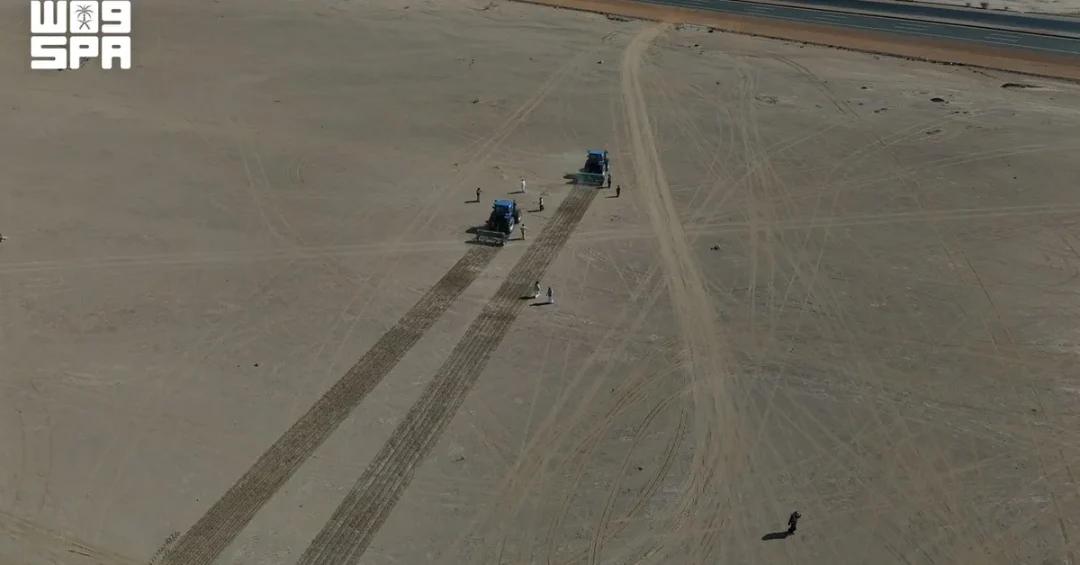
The Al-Baha branch of the National Center for Vegetation Cover Development and Combating Desertification (NCVC) has sown native seeds in Wadi Al-Sahibah, located in Al-Aqiq Governorate, as part of the 2026–2027 National Greening Season. The sowing event, reported by the Saudi Press Agency (SPA), involved students from local schools and the Technical College, alongside volunteers, who participated to promote community engagement and environmental awareness. The species sown include saxaul and acacias, among them the umbrella thorn acacia, all chosen for their suitability to the local environment and their ability to restore vegetation cover and protect natural resources in the region.
This initiative is part of Saudi Arabia’s broader efforts to combat desertification and enhance green cover under the National Greening Season, a key environmental program aligned with Vision 2030. The NCVC, a government agency dedicated to vegetation development and desertification control, leads these efforts across the Kingdom. The involvement of local communities and students underscores the importance of public participation in achieving environmental sustainability. As Saudi Arabia continues to expand its green initiatives, such events highlight the Kingdom’s commitment to preserving natural ecosystems for future generations.
Context and Background
What is the significance of sowing native seeds in Wadi Al-Sahibah for Saudi Arabia’s environmental landscape? The National Center for Vegetation Cover Development and Combating Desertification (NCVC) was established to address the challenges of desertification and vegetation loss across the Kingdom. Saudi Arabia, like many arid regions, faces threats from desert encroachment, which can impact biodiversity, agriculture, and water resources. The NCVC’s mandate includes implementing programs that restore degraded lands, promote sustainable land management, and engage communities in environmental stewardship. The 2026–2027 National Greening Season is a continuation of these efforts, building on previous seasons that have seen millions of trees planted and hectares of land rehabilitated.
Wadi Al-Sahibah, in the Al-Baha region, is a valley that has experienced environmental degradation, making it a priority area for restoration. The selection of native species such as saxaul and acacias is strategic: these plants are well-adapted to the local climate, requiring minimal water and providing essential ecosystem services. Saxaul is known for its ability to stabilize sand dunes and tolerate extreme conditions, while acacias, including the umbrella thorn acacia, contribute to soil fertility through nitrogen fixation and provide shade and fodder. The involvement of students and volunteers not only aids in the physical sowing but also fosters a sense of ownership and environmental responsibility among the younger generation.
The National Greening Season is part of the Saudi Green Initiative, which aims to plant 10 billion trees across the Kingdom in the coming decades. This ambitious target reflects Saudi Arabia’s commitment to environmental sustainability and its role in global climate action. The initiative also aligns with the Middle East Green Initiative, a regional effort to combat climate change and improve environmental conditions. By focusing on native species, the NCVC ensures that restoration efforts are ecologically sound and sustainable, avoiding the pitfalls of introducing non-native species that may disrupt local ecosystems.
Key Details of the Sowing Initiative
How does the sowing of native seeds in Wadi Al-Sahibah contribute to the broader goals of the National Greening Season? The event in Wadi Al-Sahibah involved the sowing of saxaul and acacia seeds, including the umbrella thorn acacia, across designated areas of the valley. Students from local schools and the Technical College, along with volunteers, participated in the sowing, which was organized by the Al-Baha branch of the NCVC. The participation of young people is a key component of the initiative, as it educates them about environmental conservation and the importance of sustainable practices. The NCVC provided guidance and materials, ensuring that the sowing was done correctly to maximize germination and survival rates.
The choice of species is based on scientific research and local knowledge. Saxaul (Haloxylon spp.) is a hardy shrub or small tree that thrives in sandy and saline soils, making it ideal for desert reclamation. Acacias (Acacia spp.) are leguminous trees that improve soil quality and provide multiple benefits, including timber, fodder, and medicinal products. The umbrella thorn acacia (Vachellia tortilis) is particularly valued for its tolerance to drought and its role in providing shade and habitat for wildlife. By sowing these species, the NCVC aims to restore the ecological balance of Wadi Al-Sahibah and enhance its resilience to climate change.
The initiative also includes monitoring and maintenance to ensure the success of the sowing. The NCVC will track the growth of the seeds and take measures to protect them from grazing and other threats. This follow-up is crucial for the long-term success of greening efforts, as it ensures that the newly established vegetation survives and thrives. The involvement of the local community in these activities is expected to continue, creating a sense of shared responsibility for the valley’s restoration. The NCVC’s approach combines scientific expertise with community engagement, a model that has proven effective in other regions of the Kingdom.
International and Regional Impact
Why does Saudi Arabia’s greening initiative matter beyond its borders? The National Greening Season and the specific sowing in Wadi Al-Sahibah are part of Saudi Arabia’s contributions to global environmental goals. Desertification and land degradation are transnational issues, affecting food security, water availability, and climate stability. By restoring degraded lands, Saudi Arabia is not only improving its own environment but also contributing to regional and global efforts to combat climate change. The Kingdom’s participation in the Middle East Green Initiative, which aims to plant 50 billion trees across the Middle East, demonstrates its leadership in environmental diplomacy.
The initiative also aligns with the United Nations Sustainable Development Goals (SDGs), particularly SDG 15 (Life on Land) and SDG 13 (Climate Action). Saudi Arabia’s efforts are recognized internationally, and the NCVC collaborates with organizations such as the United Nations Convention to Combat Desertification (UNCCD). The sowing in Wadi Al-Sahibah serves as a model for other countries in arid regions, showcasing how native species and community involvement can lead to successful restoration. Furthermore, the greening efforts support Saudi Arabia’s tourism and heritage sectors by preserving natural landscapes that are part of the Kingdom’s cultural identity.
Regionally, the greening of Wadi Al-Sahibah can have positive effects on local climate, reducing dust storms and improving air quality. These benefits extend to neighboring areas, as vegetation cover helps regulate temperature and water cycles. The initiative also enhances biodiversity, providing habitats for native wildlife, some of which are endangered. By restoring the valley’s ecosystem, Saudi Arabia is safeguarding its natural heritage and contributing to the ecological health of the Arabian Peninsula.
Economic and Strategic Significance
How does environmental restoration translate into economic and strategic benefits for Saudi Arabia? The greening of Wadi Al-Sahibah and similar initiatives have direct and indirect economic impacts. Healthy ecosystems support agriculture, which is vital for food security. The restoration of vegetation cover can improve soil fertility and water retention, benefiting local farmers and pastoralists. Additionally, the presence of green spaces can boost tourism, as visitors are drawn to natural landscapes and eco-tourism opportunities. The Al-Baha region, known for its scenic beauty, could see increased tourist activity, contributing to local economies.
Strategically, the greening efforts align with Vision 2030’s goals of economic diversification and sustainability. By investing in environmental projects, Saudi Arabia reduces its dependence on oil and creates green jobs in sectors such as conservation, research, and eco-tourism. The NCVC’s work also supports the Kingdom’s commitments under international agreements, enhancing its reputation as a responsible global player. The use of native species reduces long-term costs, as these plants require less water and maintenance compared to non-native alternatives. This cost-effectiveness is crucial for the sustainability of large-scale greening programs.
Moreover, the involvement of students and volunteers builds social capital and fosters a culture of environmental stewardship. This human dimension is essential for the long-term success of Vision 2030, as it ensures that future generations are equipped to continue these efforts. The NCVC’s collaboration with educational institutions like the Technical College also strengthens the link between education and practical environmental action, preparing young Saudis for careers in the green economy.
Vision 2030 Alignment
How does the sowing of native seeds in Wadi Al-Sahibah exemplify the objectives of Saudi Vision 2030? Vision 2030 is a comprehensive plan to diversify the economy, improve quality of life, and enhance environmental sustainability. The National Greening Season, including the Wadi Al-Sahibah initiative, directly supports the Vision’s environmental pillar, which aims to protect and preserve the Kingdom’s natural resources. The Saudi Green Initiative, under which the greening season falls, targets the planting of 10 billion trees and the restoration of 40 million hectares of degraded land. These targets are ambitious but achievable with continued efforts like those in Al-Baha.
The initiative also contributes to Vision 2030’s goal of a vibrant society and a thriving economy. By engaging communities, it promotes social cohesion and environmental awareness. By creating green spaces, it enhances the quality of life for residents and visitors. By supporting sustainable development, it ensures that economic growth does not come at the expense of the environment. The NCVC’s work is a testament to Saudi Arabia’s commitment to a sustainable future, where economic prosperity and environmental stewardship go hand in hand. As the Kingdom continues to implement Vision 2030, initiatives like the sowing in Wadi Al-Sahibah will serve as models for integrated, community-driven environmental action.
20 Questions
Q1. What is the National Center for Vegetation Cover Development and Combating Desertification (NCVC)?
A1. The NCVC is a Saudi government agency responsible for developing vegetation cover and combating desertification. It implements programs to restore degraded lands, promote sustainable land management, and engage communities in environmental stewardship across the Kingdom.
Q2. Where is Wadi Al-Sahibah located?
A2. Wadi Al-Sahibah is located in Al-Aqiq Governorate, within the Al-Baha region of Saudi Arabia. It is a valley that has been targeted for restoration due to environmental degradation, and it is part of the 2026–2027 National Greening Season.
Q3. What is the 2026–2027 National Greening Season?
A3. The 2026–2027 National Greening Season is a Saudi initiative under the Saudi Green Initiative, aiming to plant native trees and restore vegetation across the Kingdom. It is part of the broader effort to plant 10 billion trees and combat desertification.
Q4. Which species were sown in Wadi Al-Sahibah?
A4. The species sown include saxaul and acacias, among them the umbrella thorn acacia. These native species are well-adapted to the local climate and provide ecological benefits such as sand dune stabilization and soil fertility improvement.
Q5. Who participated in the sowing event?
A5. Students from local schools and the Technical College, along with volunteers, participated in the sowing event. Their involvement promotes community engagement and environmental awareness, fostering a sense of responsibility for the environment among the younger generation.
Q6. Why are native species preferred for greening initiatives?
A6. Native species are preferred because they are adapted to local conditions, require less water and maintenance, and support local biodiversity. They also reduce the risk of introducing invasive species that could disrupt the ecosystem.
Q7. How does this initiative support Saudi Vision 2030?
A7. It supports Vision 2030’s environmental sustainability goals by restoring degraded lands, enhancing quality of life, and promoting economic diversification through green jobs and eco-tourism. It also aligns with the Saudi Green Initiative’s targets.
Q8. What are the benefits of planting saxaul?
A8. Saxaul is a hardy plant that stabilizes sand dunes, tolerates extreme conditions, and helps combat desertification. It provides shade and fodder for livestock, contributing to the resilience of arid ecosystems and supporting local communities.
Q9. What are the benefits of planting acacias?
A9. Acacias improve soil fertility through nitrogen fixation, provide shade, fodder, and timber, and support biodiversity. The umbrella thorn acacia is particularly valued for its drought tolerance and role in providing habitat for wildlife.
Q10. How does community involvement enhance the success of greening initiatives?
A10. Community involvement fosters ownership and responsibility, ensuring that restoration efforts are maintained over time. It also raises environmental awareness and educates participants about sustainable practices, creating a culture of conservation.
Q11. What is the Saudi Green Initiative?
A11. The Saudi Green Initiative is a national program aiming to plant 10 billion trees, restore 40 million hectares of land, and reduce carbon emissions. It is part of Saudi Arabia’s efforts to combat climate change and promote sustainability.
Q12. How does the NCVC monitor the success of sowing?
A12. The NCVC tracks the growth of seeds and takes measures to protect them from threats such as grazing. This follow-up ensures that the newly established vegetation survives and thrives, contributing to the long-term success of greening efforts.
Q13. What impact does greening have on local climate?
A13. Greening helps reduce dust storms, improve air quality, and regulate temperature and water cycles. These benefits extend to neighboring areas, enhancing regional environmental conditions and supporting agriculture and human health.
Q14. How does the initiative contribute to biodiversity?
A14. By restoring native vegetation, the initiative provides habitats for wildlife, including endangered species. It supports ecosystem health and resilience, ensuring that native flora and fauna can thrive in the restored areas.
Q15. What economic opportunities arise from greening initiatives?
A15. Greening creates green jobs in conservation, research, and eco-tourism. It supports agriculture by improving soil and water retention, and boosts local economies through increased tourism and sustainable land use.
Q16. How does the initiative align with international environmental agreements?
A16. It aligns with the UN Sustainable Development Goals, particularly SDG 15 (Life on Land) and SDG 13 (Climate Action), and supports the Middle East Green Initiative. Saudi Arabia collaborates with international bodies like the UNCCD.
Q17. What role do students play in the initiative?
A17. Students participate in sowing and learn about environmental conservation. Their involvement builds environmental awareness and prepares them for future roles in sustainability, fostering a generation committed to protecting natural resources.
Q18. How does the initiative support food security?
A18. By restoring vegetation cover, the initiative improves soil fertility and water retention, benefiting agriculture and pastoralism. This enhances local food production and supports rural livelihoods, contributing to national food security.
Q19. What are the long-term goals of the National Greening Season?
A19. The long-term goals include achieving the Saudi Green Initiative’s targets of planting 10 billion trees and restoring 40 million hectares. These efforts aim to combat desertification, enhance biodiversity, and improve quality of life.
Q20. How can other regions benefit from the Wadi Al-Sahibah model?
A20. The Wadi Al-Sahibah model combines native species, community engagement, and scientific monitoring. Other regions can replicate this approach to restore degraded lands, enhance resilience, and promote sustainable development in arid environments.
Reader Feedback
We value your thoughts. Please share your feedback on this article.
Your feedback helps us improve our coverage.
Related articles
 Saudi Cars Syndicate Showcases Smart Fleet Tech at Hajj Conference
 Hajj Conference Workshops Focus on Pilgrim Safety and Emergency Management
 Hajj Workshop Emphasizes Teamwork for Pilgrim Services
 Hajj Media CEO Stresses Pilgrim-Centered Messaging
 Hajj Conference Discusses Performance Indicators, Quality of Services for Pilgrims
 Pilgrim Experience Program Showcases Achievements at Hajj Conference